8 Ways Perfumers Use Goldenrod Essential Oil in Fine Fragrance
Goldenrod essential oil rarely gets top billing on a fragrance label, yet inside the studios of natural perfumers it shows up more often than most people realize. Distilled from the flowering tops of Solidago canadensis, the oil carries a warm, honeyed, faintly herbaceous character that sits somewhere between a floral and an amber. It is not loud. It does not announce itself the way jasmine or rose does. Instead, goldenrod essential oil perfumery uses tend to be structural: it fills gaps, extends other notes, and adds a golden warmth that is hard to name but easy to notice once it is gone.
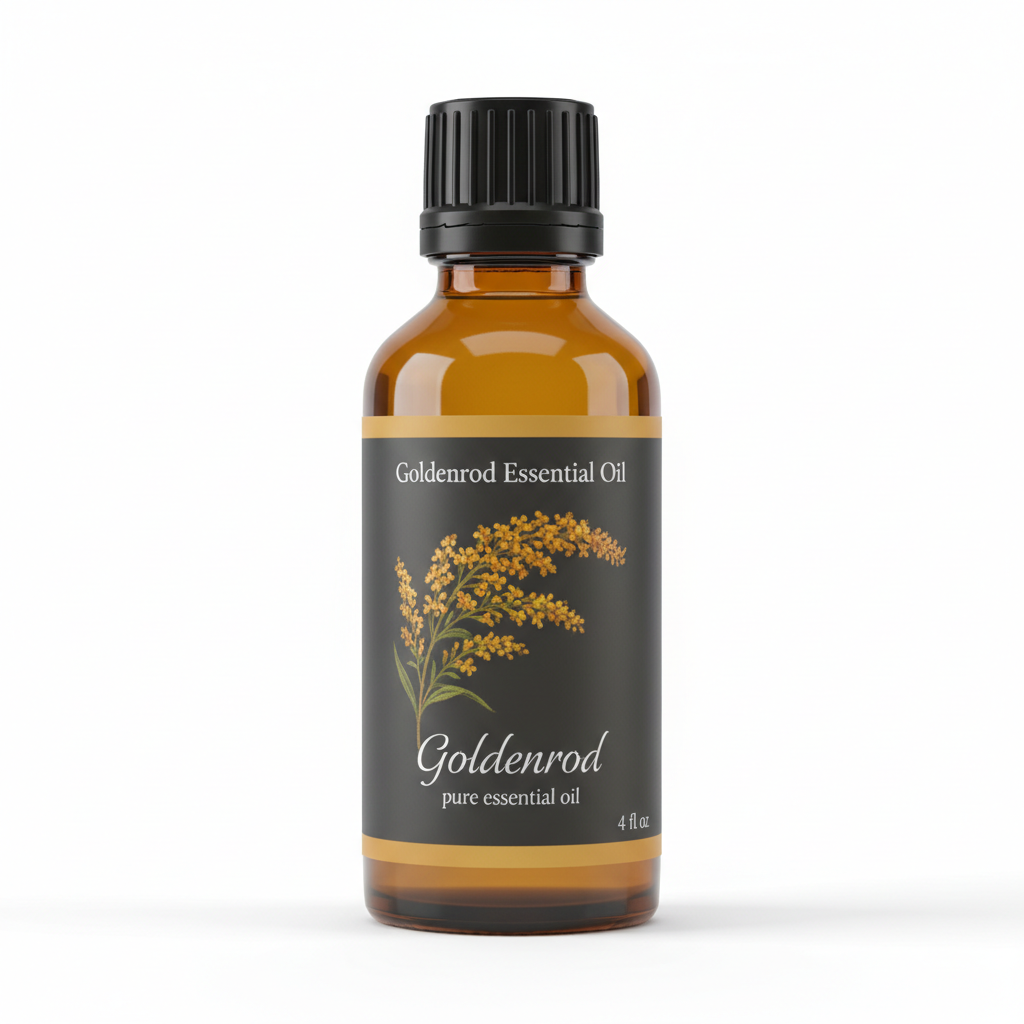
Goldenrod Essential Oil
Our own Goldenrod Essential Oil, in sizes from 0.5 oz to bulk.
From $15.99
Shop Now →This list walks through eight ways goldenrod oil natural perfumery work actually happens on the bench, from base-note construction to seasonal accords. Each entry includes a practical takeaway so you can recognize the technique if you smell it, or try it yourself if you blend.
1. Building Honeyed Depth Into Base Accords
Most fine fragrances rest on a base accord, the slow-moving foundation that lingers after the top and heart notes fade. Perfumers often reach for goldenrod oil here because its natural warmth reads as honeyed and slightly resinous without tipping into the heaviness of true resins like benzoin or labdanum. A few drops folded into a base of sandalwood or amber can round out sharp edges and add a sense of golden afternoon light to the composition.
What makes this application interesting is how goldenrod behaves differently depending on what surrounds it. Paired with vanilla, it leans sweeter and more gourmand. Paired with dry woods, it reads more like sun-warmed hay. Perfumers describe this as a chameleon quality, and it is one reason the oil keeps a quiet but loyal following among people who blend by hand.
Because goldenrod is potent even in small amounts, most formulators start at half a percent of the total base weight and adjust from there. Overdoing it can push a blend toward a hay-like sharpness that fights the other base notes rather than supporting them.
Practical takeaway: if you are experimenting with a home blend, add goldenrod oil last and in very small increments to a base accord, waiting a full day between additions so you can judge how it settles rather than how it smells wet.
2. Extending the Life of Floral Hearts
A recurring challenge in fine fragrance is keeping delicate floral notes from disappearing too quickly on the skin. Notes like chamomile, linden blossom, or meadowsweet are gorgeous on first application but can fade within an hour if nothing anchors them. Goldenrod oil is sometimes used as a support note precisely because its own scent profile leans floral-herbaceous, which lets it blend into a floral heart without announcing a foreign ingredient.
The effect is subtle rather than dramatic. Perfumers who use this technique describe it as buying the floral heart another twenty to thirty minutes of presence before the base notes take over completely. That extra window matters in fine fragrance, where the transition between heart and base is meant to feel seamless rather than abrupt.
This pairing shows up often in blends built around wildflower or meadow themes, where goldenrod's own field-grown origin makes it a natural companion to other late-summer botanicals.
Practical takeaway: if a floral blend keeps fading faster than expected, try introducing goldenrod at a low concentration alongside the floral note itself, rather than only in the base, to help the transition feel more gradual.
3. Adding a Green, Herbaceous Top Note
Before the honeyed warmth develops, goldenrod essential oil opens with a brighter, greener character that some perfumers use deliberately as a top note element. This green facet reads as slightly bitter and herbal, closer to a meadow grass or a crushed herb than a sweet flower. In small doses it can add complexity to a top accord that would otherwise rely entirely on citrus or classic aromatic herbs.
This use case is less common than the base-note applications above, mostly because the top-note phase of goldenrod is short lived. Perfumers working with it at this stage tend to combine it with faster-evaporating materials so the two fade together rather than leaving an odd gap once the green note disappears.
Some independent perfumers specifically seek this out for fragrances built around an outdoor or agrarian theme, where a slightly wild, uncultivated opening note supports the overall story of the scent.
Practical takeaway: pair goldenrod's green opening with quick top notes like bergamot or clary sage rather than long-lasting citrus, so the transition into the heart accord feels intentional instead of jarring.
4. Working as a Natural Fixative
A fixative slows the evaporation rate of more volatile materials, helping a fragrance hold together and last longer on the skin. Many traditional fixatives come from resins, mosses, or animal-derived materials, but some natural perfumers include goldenrod oil in this role because of its own relatively slow evaporation and its affinity for blending smoothly with a wide range of other naturals.
It is worth noting that goldenrod is a moderate fixative rather than a heavyweight one. It will not do the work of oakmoss or ambergris substitutes on its own, but combined with other slow-moving base materials, it can contribute meaningfully to how long a composition lasts overall. Perfumers who favor an all-botanical formula sometimes lean on goldenrod partly for this reason, since it lets them reduce reliance on stronger-smelling fixative materials that might otherwise dominate a blend.
This fixative role is closely tied to the honeyed base-note use described earlier. In practice, the two functions overlap in most formulas rather than existing as separate steps.
Practical takeaway: in an all-natural formula, try substituting a portion of a stronger fixative material with goldenrod oil to see whether it maintains longevity while softening the overall base.
5. Creating Wild Meadow and Field Accords
Goldenrod is a genuinely wild plant, growing along roadsides, meadows, and field edges across much of North America. Its distilled oil carries that origin story into the bottle, and perfumers use it deliberately to build accords meant to evoke an untended meadow rather than a cultivated garden. This is one of the more literal ways perfumers use goldenrod oil: as a scent memory of a specific landscape.
Building a convincing meadow accord usually means combining goldenrod with other field-grown materials such as chamomile, yarrow, or dried grass notes, along with a touch of something green and slightly bitter to avoid the blend reading as purely sweet. The goal is a composition that feels sun-warmed and slightly dusty, like walking through late-summer overgrowth rather than a manicured flower bed.
These accords have become more common in niche and independent perfumery over the past decade, as consumer interest has shifted toward fragrances tied to specific places and seasons rather than abstract floral or fruity themes.
Practical takeaway: if you want to build a meadow accord, start with goldenrod as roughly a third of the floral portion and adjust the ratio of green to sweet materials until the blend feels outdoors rather than indoors.
6. Grounding Woody and Earthy Compositions
While goldenrod is often associated with lighter, floral-adjacent blends, it also has a place in heavier, woodier compositions. Its honeyed warmth can soften the dryness of woods like cedar, vetiver, or patchouli, giving an earthy base a touch of sweetness without introducing an obviously floral character. This makes it useful in unisex or masculine-leaning fragrances that want warmth without leaning overtly floral.
Perfumers working in this direction typically use goldenrod sparingly, treating it more as a bridge material than a headline note. Its job here is to soften a transition between a sharper top accord and a heavier base, smoothing what might otherwise feel like an abrupt shift from bright to dark.
This application also plays to goldenrod's natural pairing with amber and resinous materials, since both share a similar warm, slightly sweet register even though their sources are entirely different.
Practical takeaway: in a woody base, use goldenrod as a bridging note between 15 and 25 percent through the drydown period, adding it in small test batches to see how it interacts with your specific wood materials.
7. Signature Ingredient in Small-Batch and Artisan Perfumery
Because goldenrod essential oil is not a mainstream perfumery material, independent and small-batch perfumers sometimes use it precisely for that reason: it offers a point of differentiation. A fragrance built around an uncommon botanical has a built-in story, and goldenrod's regional, wild-harvested character fits well with brands that emphasize sourcing and provenance.
This use case is less about a specific technical function and more about identity. A perfumer working in this space might build an entire fragrance around goldenrod as the signature note, supporting it with more familiar materials rather than the other way around. The result tends to be a fragrance that smells distinctly different from mass-market offerings, which is often exactly the goal for artisan perfumers competing on originality rather than recognizability.
This also connects to a broader trend in natural perfumery toward regional and seasonal materials, where the specific origin of an ingredient becomes part of the fragrance's narrative.
Practical takeaway: if you are developing a signature scent, consider letting goldenrod lead the composition rather than support it, then build supporting notes around its honeyed, herbaceous profile instead of the reverse.
8. Layering Into Autumn and Late-Summer Seasonal Blends
Goldenrod blooms in late summer and early autumn, and many perfumers lean into that seasonal association when building fragrances meant for that time of year. The oil's warm, slightly dusty sweetness pairs naturally with other autumnal materials like clove bud, cardamom, or dried orange peel, creating compositions that feel transitional, neither as bright as summer citrus blends nor as heavy as deep winter ambers.
This seasonal use often overlaps with the meadow accords described earlier, but the intent is slightly different. A meadow accord is about place; a seasonal blend is about time of year. Perfumers building autumn-themed fragrances might use goldenrod specifically to mark that shift, giving a composition a sense of harvest-time warmth without relying on the more obvious spice-forward route.
Limited or seasonal release fragrances are a natural home for this kind of ingredient, since goldenrod's specific character suits a narrower window of the year rather than an all-purpose, year-round formula.
Practical takeaway: for an autumn-themed blend, try goldenrod alongside one warm spice note and one dry wood note, keeping the overall composition simple so the seasonal character stays clear rather than muddled.
Working With Goldenrod Oil in Your Own Blends
Across all eight of these applications, a few things hold true. Goldenrod essential oil perfumery uses tend to be supportive rather than dominant, which is part of why the oil has stayed something of an insider's material rather than a mainstream one. It rewards patience: its character shifts noticeably between the first sniff and the way it settles hours later, so any blending decision benefits from waiting before adjusting further.
If you are new to working with it, start with small test batches and keep detailed notes on ratios and drydown times. Goldenrod oil is potent, and what reads as pleasantly honeyed at a low concentration can turn sharp and hay-like if overused. As with any concentrated botanical, always dilute appropriately for skin contact, patch test any new blend on a small area before wider use, and consult a qualified healthcare provider if you have known sensitivities or are pregnant or nursing before introducing a new essential oil into your routine.
For a distilled, honeyed note that carries a genuine sense of late-summer field air into a composition, goldenrod remains one of the more quietly useful materials a natural perfumer can keep on the shelf.