Buying Goldenrod Essential Oil in Bulk: A Guide for Studios
Goldenrod essential oil has a small, tight supply chain. It is steam-distilled from wild or semi-cultivated Solidago canadensis, the plant blooms for a few weeks in late summer, and yield per pound of plant material is low. That combination makes goldenrod one of the harder florals to source in production quantities, and it means a studio buying by the pound needs a different playbook than a hobbyist buying a 5 ml bottle. This guide walks through what to check before you commit to a bulk order, how to compare suppliers, and where the actual price breaks tend to fall for soap and candle studios sourcing bulk goldenrod essential oil.
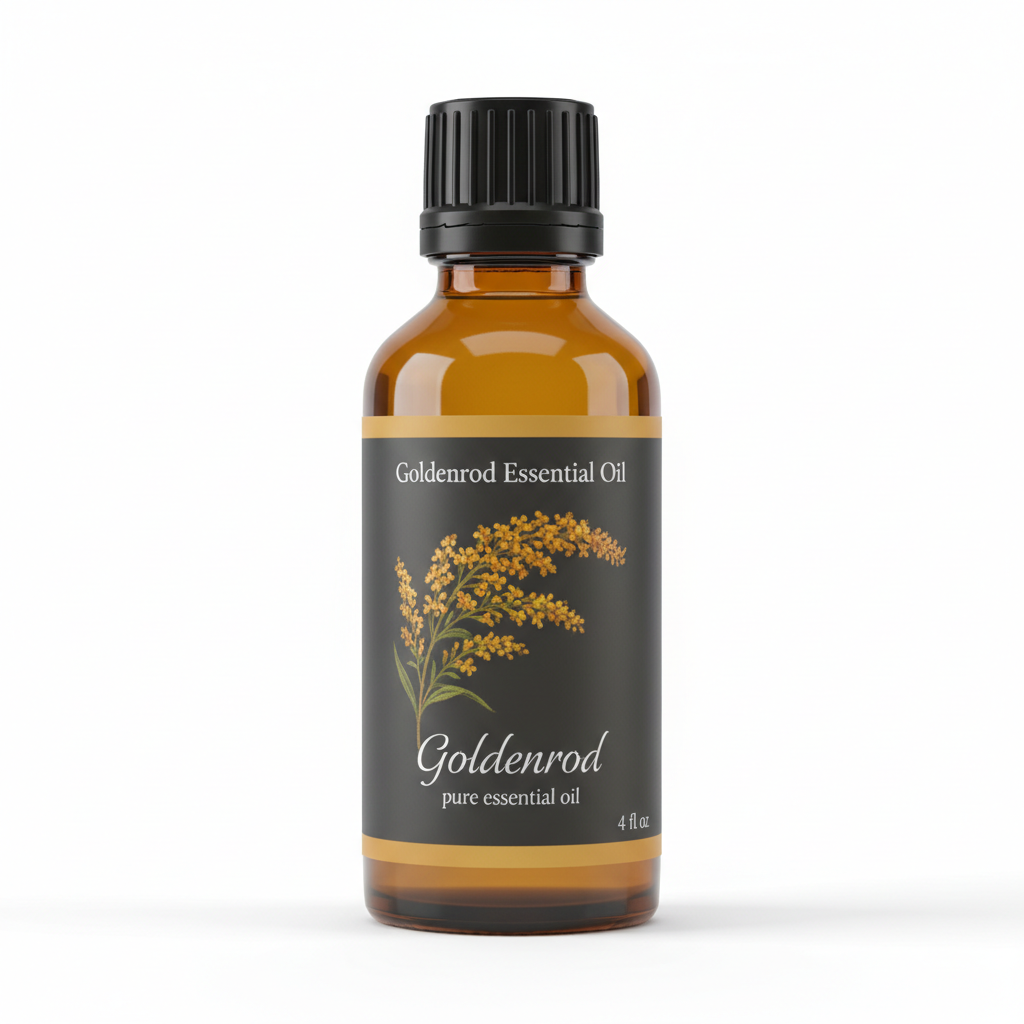
Goldenrod Essential Oil
Our own Goldenrod Essential Oil, in sizes from 0.5 oz to bulk.
From $15.99
Shop Now →What to Look For in a Bulk Goldenrod Oil Supplier
Buying a single bottle forgives a lot of vague sourcing. Buying eight ounces or a pound does not. A bad lot at retail size is an annoyance; a bad lot bought in bulk is a batch of soap or a season of candles you cannot sell with confidence. Before you request a quote, look for these baseline quality indicators, and hold every supplier you consider to the same standard.
Botanical Name and Species Match
The label or product page should say Solidago canadensis, not just "goldenrod." A handful of related Solidago species exist across North America, and some suppliers are loose with the naming, especially resellers who never handled the raw plant material themselves. If a listing cannot tell you the species, ask directly before you order. A supplier who distills their own material, or who works closely with the distiller, will know the answer without checking a spreadsheet.
A Real GC-MS Report, Not a Stock PDF
Gas chromatography mass spectrometry testing shows the actual constituent breakdown of the specific lot you are buying, things like germacrene D and bornyl acetate levels, which shift somewhat from harvest to harvest depending on rainfall, bloom timing, and where the plants grew. Ask whether the report you are shown is lot-specific or a generic document reused across every batch the company has ever sold. A lot-specific report with a batch or lot number that matches what is printed on your bottle, or on your invoice, is the standard worth holding suppliers to. Anything less and you are buying on trust alone.
Harvest Year and Lot Number
Because goldenrod blooms once a year, every bottle traces back to a specific harvest. A supplier who can tell you the harvest year and lot number is also usually one who can tell you when the next harvest is expected, and roughly how that season's yield is shaping up. That matters when you are planning a candle line around a fall scent and need to know whether this season's stock will realistically last through your production run.
Distillation Method and Plant Source
Steam distillation is the standard method for goldenrod, and any supplier offering something unusual, like a solvent-extracted version sold as an essential oil, deserves a direct question about it. Ask what plant part was distilled, typically the flowering tops, and whether the material was wild-harvested or cultivated on a small farm. Neither answer is automatically better for a studio's purposes, but a supplier who can answer specifically is more likely to be distilling in-house, or working directly with a named distiller, rather than reselling an unknown drum that changed hands two or three times before reaching them.
Color and Clarity
Look at the oil itself if a sample is available before you commit to a bulk order. Fresh goldenrod essential oil tends toward a pale yellow to amber color and should be clear rather than cloudy. Color shifts somewhat between harvests and is not, on its own, a reliable purity test, but a sample that looks noticeably different from the batch description, or that has visible sediment, is worth asking about before a larger order goes out.
Key Features to Compare Across Suppliers
Once you have confirmed a supplier clears the basic quality bar, the comparison shifts to the practical details that affect your studio's bottom line and day-to-day workflow.
| Feature | What to ask | Why it matters for a studio |
|---|---|---|
| Minimum order quantity | Is there a bulk tier below 8 oz, or does it jump straight to a pound? | Small studios testing a new scent line don't want to commit to a pound on the first order. |
| Price per ounce at volume | What does the price look like at 4 oz, 8 oz, 1 lb, and beyond? | Goldenrod rarely gets dramatically cheaper per ounce at scale the way a common floral does, since yield stays low regardless of order size. |
| Lot-to-lot consistency | Can you get a sample from the exact lot you'd be buying, not a "representative" sample? | Scent profile shifts modestly between harvest years; a candle studio building a signature blend needs to know before reformulating mid-run. |
| Documentation included | Does a Safety Data Sheet ship with the order, or only on request? | Studios need SDS on file for workplace safety and often for retail compliance. |
| Packaging for production use | Amber glass with a reducer cap, or a bulk jug you'll have to repackage? | Repackaging a viscous, strongly scented oil into smaller working bottles adds labor and spill risk. |
| Lead time and next-harvest timing | Is current stock from the most recent harvest, and when does it typically sell out? | Goldenrod supply tightens by late winter most years; planning a fall candle drop means ordering earlier than instinct suggests. |
Minimum order size matters more than it seems at first glance. A studio testing goldenrod as a new signature note doesn't want to commit to a full pound on the first order, and a supplier without a smaller bulk tier is effectively asking you to bet on an untested scent. On the other end, a studio that already knows goldenrod works for its line wants a supplier who can meaningfully scale past a pound without treating every order as a special request.
Price per ounce is worth comparing carefully, but temper your expectations. Goldenrod rarely gets dramatically cheaper per ounce at higher volumes the way a common floral like lavender does, because the distillation yield stays low regardless of how much material a distiller processes in a season. A modest volume discount at the pound tier is normal and reasonable. A supplier promising a steep discount at scale is either working from a much larger, possibly blended, supply than most goldenrod distillers have access to, or cutting corners somewhere in the process.
Lot-to-lot consistency deserves its own conversation with any supplier you are considering for repeat wholesale orders. Ask whether you can get a small sample from the exact lot you would actually be buying, not a generic sample pulled from a different batch. Scent profile shifts modestly between harvest years due to weather and bloom conditions, and a candle studio building a signature blend around goldenrod needs to know about that shift before reformulating mid-run, not after a batch of candles smells slightly different from the last one.
Documentation should travel with the order by default, not live behind an email request that takes a week to answer. A current Safety Data Sheet, specific to goldenrod essential oil rather than a generic botanical oil template, should ship with the order or be available for immediate download.
Packaging matters more for bulk purchases than most buyers expect going in. Ask whether a pound order arrives in amber glass with a reducer cap ready for studio use, or in a plain bulk jug you will need to repackage yourself. Repackaging a strongly scented, somewhat viscous oil into smaller working bottles adds labor time and real spill risk, especially if your studio doesn't already have a dedicated decanting setup.
Lead time is the detail most new bulk buyers underestimate. Ask directly whether current stock is from the most recent harvest, and roughly when that stock has historically sold out in past seasons. Goldenrod supply tends to tighten by late winter most years, which means planning a fall candle drop means ordering earlier than instinct suggests, often months before you'd place a similar order for a more commonly available oil.
Top Picks at Different Price Points
Bulk goldenrod essential oil pricing tends to land in a few rough bands. These are general guideposts for how wholesale goldenrod oil for soap makers and candle studios is typically structured, not fixed prices, since a wild floral like this shifts with harvest yield from one year to the next.
Budget Tier: Sampling and Small-Batch Testing
At the low end, look for a 1 oz or 2 oz working sample sold at a modest per-ounce premium over the true bulk price. This tier is not meant to save money, and studios shouldn't shop it looking for a bargain. It exists so a studio can run a test batch of soap, or a small handful of test candles, before committing to a genuine bulk goldenrod essential oil order. If a supplier does not offer any sample size at all and only sells starting at a pound, treat that as a minor red flag on its own. It usually means the business is set up to move large volume to established accounts, not to work with a small studio still finding its footing with this particular oil.
Mid Tier: 4 oz to 8 oz Working Stock
This range is the sweet spot for most independent soap and candle studios placing a repeat order once they've settled on goldenrod for a line. At this size you should expect full lot documentation as a matter of course, a real GC-MS report tied to your specific batch, and a per-ounce price that reflects goldenrod's genuine scarcity rather than a suspiciously low number that undercuts every other supplier you've compared it against. This is also the size at which it's worth asking a supplier about a standing order or a harvest-season reservation, since supply for the year can run out well before the next bloom arrives.
Premium Tier: Pound and Multi-Pound Lots
Studios scaling a candle line, or running goldenrod as a signature note across an entire soap collection, will eventually move to pound and multi-pound lots. At this tier, price per ounce should improve modestly over the mid tier, and a supplier serious about wholesale relationships should be willing to discuss reserving a portion of a specific harvest for you ahead of time, rather than telling you to check back once the season's oil is ready. If a seller cannot offer any volume discount at all at a full pound, that's worth questioning directly, since it often suggests they are simply repackaging retail-sized stock rather than selling from genuine bulk inventory built for wholesale accounts.
Red Flags to Avoid
Because goldenrod is a rare, low-yield oil, the bulk market attracts a few recurring problems that are worth watching for specifically, since they show up more often here than with a common, high-volume floral.
- Prices well below the going rate for a pound. Given the low distillation yield, a bulk goldenrod oil priced close to a common floral like lavender is a signal to ask hard questions about purity, dilution, or mislabeling.
- No lot number printed on the bottle or invoice. Without one, you cannot match your oil to a specific test report, and you have no way to trace a quality issue back to its source.
- A generic "essential oil" Safety Data Sheet that doesn't name goldenrod specifically. Some resellers attach a boilerplate document that was never written for this plant.
- Vague answers about wild-harvest sourcing. "Sourced from North America" without a region or supplier relationship usually means the seller is several steps removed from the distiller.
- No sample size offered before a bulk commitment. A supplier confident in lot-to-lot consistency will usually let you test a small amount first.
- Listings that blur essential oil and fragrance oil terminology. A true essential oil is distilled from the plant; a fragrance oil is a formulated scent that may not contain any goldenrod at all. For candle work in particular, confirm which one you are actually being quoted, since the two behave differently in wax and are priced very differently.
Where to Buy Goldenrod Oil in Bulk
A handful of sourcing channels cover most of the studio market for this particular oil, and each comes with a different tradeoff between price, relationship, and consistency.
Direct From a Small-Batch Distiller
Buying straight from a distiller, rather than a reseller, gives you the most direct line to harvest timing, lot documentation, and the ability to reserve stock ahead of a season. This is generally the strongest option for a studio planning to use goldenrod as a recurring, signature ingredient rather than a one-off seasonal experiment, since the relationship itself becomes part of your supply security.
Established Wholesale Essential Oil Suppliers
Several wholesale suppliers that already serve soap and candle makers carry goldenrod oil as one line among many others. These vendors are convenient if you are already ordering carrier oils or other essential oils from them and want to consolidate shipments, but confirm the same documentation standards apply to goldenrod specifically. A supplier can be excellent on their high-volume, easy-to-source oils and noticeably thinner on a niche one like this.
Marketplace Listings
Bulk goldenrod oil does show up on general marketplaces from time to time. Treat these listings exactly the way you would treat any other supplier: request the lab report and lot number before ordering, and don't assume a high review count on the platform reflects anything meaningful about this specific product's testing or freshness.
Trade Shows and Regional Distillers
Because goldenrod grows across much of North America, some smaller regional distillers sell primarily through trade shows, farmers markets, or direct outreach rather than a polished storefront. These can be worth pursuing if your studio wants a closer relationship with the actual source of its oil, though ordering volume and consistency across seasons may be more limited than with an established wholesale supplier used to handling recurring accounts.
Soap Studios vs. Candle Studios: Different Considerations
Soap and candle studios sourcing goldenrod run into somewhat different practical questions once the oil is in hand, and it's worth planning for both if your studio works across product categories.
For cold-process soap, goldenrod essential oil can shift the color of a bar over time as the soap cures, something worth testing on a small batch before committing a full production run to a specific formulation. Usage rate as a percentage of total oils should follow standard cosmetic guidelines for the category, and any studio selling finished soap should keep records of the rate used per batch alongside the lot number of the goldenrod oil itself, in case a question ever comes up about a specific run.
For candle work, ask your supplier about flash point and compatibility with your specific wax system, since this is standard technical information any legitimate essential oil supplier should have on hand. Scent throw in a finished candle depends on usage rate, wax type, and cure time, and it's worth running a small test pour with a new lot of goldenrod before scaling to a full production batch, since subtle differences between harvests can show up more noticeably once the oil is diluted into wax and burned.
Planning Your Order Around the Harvest Calendar
Goldenrod blooms in late summer, and distillation happens shortly after. That means the freshest lot of the year typically becomes available in early fall, with supply gradually tightening as the months pass and studios around the country place their own orders against the same limited harvest. A candle studio planning a fall release should place orders well before the season they're actually selling into, ideally locking in stock from the current harvest rather than waiting and risking a sold-out supplier right when demand peaks. Soap makers working goldenrod into a rotating scent lineup should budget similarly: this is not an oil to reorder on a week's notice the way you might reorder a more common, year-round floral.
If you are new to sourcing this particular oil, it's worth asking any supplier directly what percentage of a harvest they typically sell through, and by roughly when in the season. A supplier who tracks this closely, and can give you a real, specific answer rather than a vague reassurance, is generally a supplier worth building a repeat wholesale relationship with over multiple seasons.
Storing Bulk Stock Once It Arrives
Keep goldenrod essential oil in dark amber or cobalt glass, away from direct light and heat, the same as you would any essential oil, but at bulk volumes it's worth decanting working stock into smaller bottles for daily studio use rather than repeatedly opening a full pound container. Frequent air exposure speeds oxidation and can shift the scent profile over the course of a production season, which matters more when you're relying on that pound to last through several months of batches rather than a handful of uses.
Goldenrod essential oil is potent and should always be diluted before contact with skin, whether in a finished soap bar, a lotion, or a sample testing strip handled during formulation. Follow standard dilution guidelines for the finished product category you're making, and patch test any new formulation before a full production run. Check current usage-rate guidance for your specific application, since safe percentages vary by product type and by regulatory category in your region, and keep the Safety Data Sheet on file for your own records and any retail requirements that apply to your studio.
Frequently Asked Questions
How much should a studio order for a first test batch?
Most studios start with a 1 oz or 2 oz sample sized for a small test run of soap or candles before scaling up to a 4 oz or 8 oz working order.
Does goldenrod essential oil price drop significantly at higher volumes?
Not as dramatically as with common, high-yield florals. Expect a modest discount at the pound tier rather than a steep one, since distillation yield stays low regardless of order size.
Is goldenrod essential oil the same as goldenrod fragrance oil?
No. An essential oil is distilled directly from the plant; a fragrance oil is a formulated scent that may or may not contain any actual goldenrod. Confirm which one a listing is describing before ordering, especially for candle work.
How far ahead should a studio order before a fall product launch?
Given goldenrod's late-summer bloom and limited yield, ordering months ahead of a planned launch, rather than weeks, gives a studio the best chance of securing stock from the current harvest.
A Quick Pre-Order Checklist
- Species confirmed as Solidago canadensis
- Lot-specific lab report available, not a generic document
- Harvest year and lot number printed on the bottle or invoice
- Safety Data Sheet included or readily available
- Sample size offered before a full bulk commitment
- Price per ounce reasonable for a low-yield floral, not suspiciously discounted
- Clear answer on essential oil versus fragrance oil, if shopping candle-specific listings
- Realistic lead time discussed against your production calendar
Goldenrod rewards a little extra diligence at the sourcing stage. It is not an oil where you can grab the cheapest bulk listing and assume consistency the way you might with a widely produced, high-volume floral. Take the time to vet the lot in front of you, keep the documentation on file for every batch you buy, and order early enough in the season that a sold-out supplier doesn't derail your studio's production schedule right when you need it most.