DIY Goldenrod Solid Perfume Balm: A Beeswax Recipe
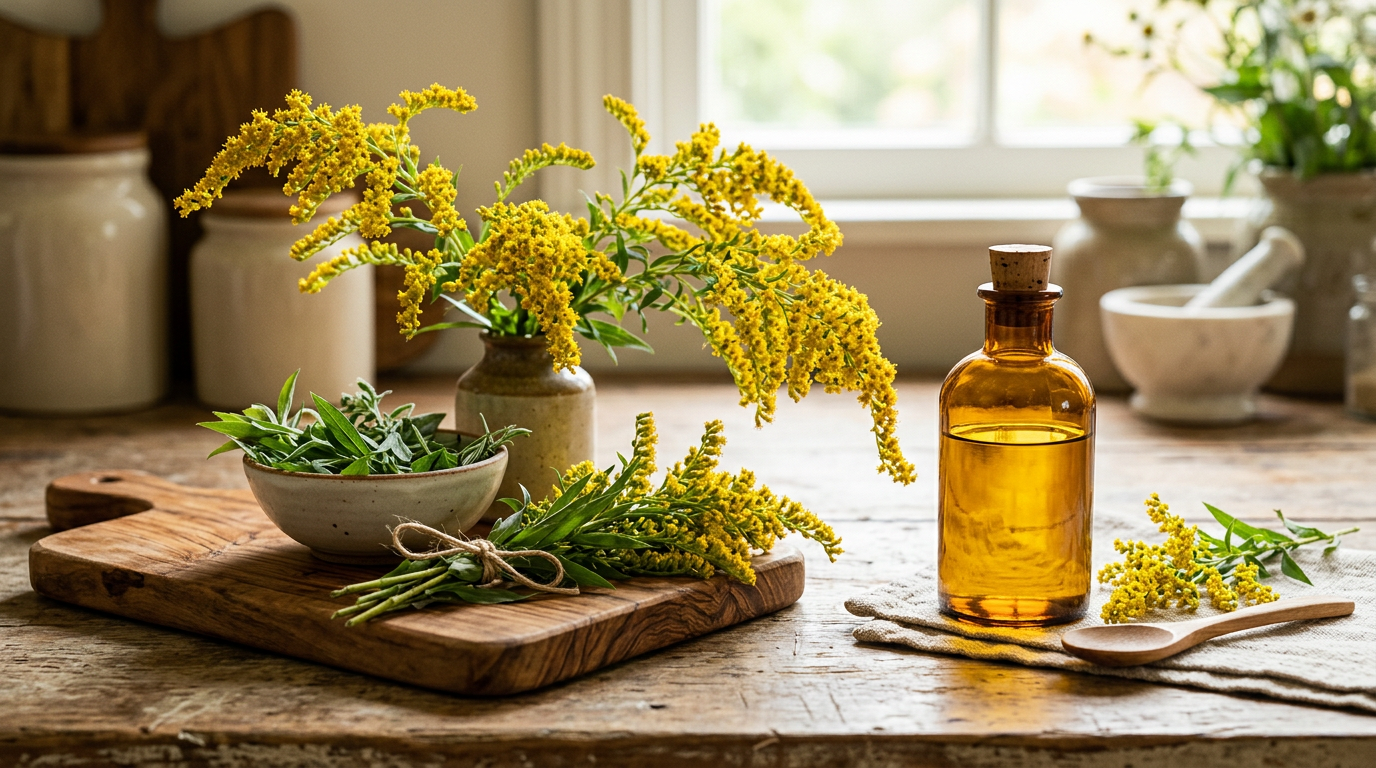
Goldenrod essential oil has a warm, honeyed, slightly green scent that sits somewhere between a field in late summer and a jar of wildflower honey. It is not an oil most people reach for first, but once you smell it steeped into a solid perfume balm, you start to understand why perfumers keep a bottle on the shelf. This goldenrod solid perfume recipe uses a simple beeswax and jojoba base, the kind of formula that has been used in balm-making for generations, and it is sized to fill one or two small travel tins. No fancy equipment, no alcohol, no long cure time. Just melt, mix, and pour.
Goldenrod Essential Oil
Our own Goldenrod Essential Oil, in sizes from 0.5 oz to bulk.
From $15.99
Shop Now →Below you will find full measurements, a walk-through of the process, and the safety information every DIY solid perfume balm essential oil project deserves, especially around dilution and skin sensitivity. Goldenrod belongs to the Asteraceae plant family, the same family as ragweed and chamomile, so a little extra caution is worth building in from the start.
Difficulty and Prep Time
- Difficulty: Beginner
- Active prep time: 15 to 20 minutes
- Cooling and set time: 1 to 2 hours at room temperature
- Yield: Two 0.5 oz (15 ml) tins, or one 1 oz (30 ml) tin
Ingredients
This beeswax perfume balm goldenrod recipe keeps the ratio simple: one part beeswax to four parts carrier oil, with the essential oil blended in at a safe cosmetic dilution once the base has cooled slightly.
- 1 tablespoon (about 0.35 oz / 10 g) yellow beeswax pellets, cosmetic grade
- 4 tablespoons (about 2 oz / 60 ml) jojoba oil
- 1 teaspoon (5 ml) fractionated coconut oil (optional, for a softer set)
- 18 to 20 drops goldenrod essential oil
- Optional: 4 to 6 drops of a complementary essential oil, such as sweet orange or ylang ylang, to round out the blend
That drop count keeps the finished balm at roughly a 3% dilution for a 2 oz batch, which is a standard, well-tolerated strength for a leave-on skin product used occasionally. If you are making a smaller or larger batch, scale the essential oil proportionally rather than eyeballing it.
Equipment
- Small heatproof glass measuring cup or a clean glass jar
- Small saucepan for a double boiler setup
- Glass stirring rod or a wooden coffee stirrer
- Two 0.5 oz metal perfume tins with lids, or one 1 oz tin
- Kitchen scale (a set of measuring spoons works if you do not have one)
Step-by-Step Instructions
- Set up a double boiler. Fill the saucepan with about an inch of water and bring it to a gentle simmer. Place the glass measuring cup or jar inside so it sits above, not in, the water.
- Melt the beeswax. Add the beeswax pellets to the glass container and let them melt slowly, stirring occasionally. This usually takes 4 to 6 minutes.
- Add the carrier oils. Once the beeswax is fully liquid, stir in the jojoba oil and the fractionated coconut oil, if using. Keep stirring until the mixture is smooth and fully combined.
- Remove from heat and cool slightly. Take the container off the double boiler and let it sit for about 90 seconds. You want it warm enough to still pour, but no longer hot, since adding essential oil to a very hot base can cause some of the more delicate aromatic compounds to evaporate before they ever reach your skin.
- Add the goldenrod essential oil. Stir in the 18 to 20 drops of goldenrod essential oil (and any complementary oil you are using) with slow, even strokes for about 20 seconds. Avoid whipping air into the mixture.
- Pour into tins. Working quickly before the balm starts to set, pour it into your prepared tins. Fill just below the rim to leave room for the lid.
- Let it set. Leave the tins uncovered on a flat, stable surface for 1 to 2 hours, or until fully solid. Resist the urge to move them while the balm is setting, since jostling can create an uneven surface.
- Label and cap. Once solid, wipe the rims clean, add the lids, and label each tin with the contents and the date you made it.
Dilution and Safety Guidelines
Essential oils are concentrated plant extracts, and goldenrod is no exception. A few guidelines matter for any goldenrod essential oil perfume balm, or really any leave-on essential oil project:
- Stay within a cosmetic dilution. This recipe lands around 3%, which is a commonly cited upper range for adult leave-on body products. If you want a lighter scent, cut the drop count to 10 to 12 for a gentler 1.5 to 2% dilution.
- Never apply essential oil undiluted (neat) to skin. Goldenrod essential oil should always be blended into a carrier like the jojoba oil in this recipe before it touches skin.
- Patch test before regular use. Apply a small amount of the finished balm to the inside of your forearm. Wait 24 to 48 hours and watch for redness, itching, or irritation before applying it to your neck, wrists, or other areas you use for scent.
- Keep it away from eyes, ears, and broken skin. If the balm gets into your eyes, rinse thoroughly with a carrier oil, not water, and seek guidance from a qualified healthcare provider if irritation continues.
- Store out of reach of children and pets. Solid perfume balms look and smell appealing, but they are not meant to be ingested.
Who Should Be Cautious
Goldenrod is part of the Asteraceae (daisy) plant family, alongside ragweed, chamomile, and chrysanthemum. If you know you react to other plants in this family, patch test extra carefully, or consider choosing a different floral note instead. Pregnant or nursing individuals, and anyone applying products to young children, should check with a qualified healthcare provider before introducing a new essential oil into a routine. As with any new botanical product, if you have a known skin sensitivity, ask a qualified healthcare provider before adding this balm to your routine.
Storage and Shelf Life
Stored properly, this beeswax perfume balm goldenrod recipe should hold its scent and texture well:
- Where to store: A cool, dry spot out of direct sunlight. A bathroom cabinet or bedside drawer works better than a windowsill or car.
- Shelf life: Approximately 12 months, based on the typical shelf stability of jojoba oil, which resists going rancid far longer than many other carrier oils, combined with beeswax's naturally long stability.
- Signs it is time to toss it: A sour or off smell, a change in color, or a grainy, separated texture. When in doubt, make a fresh batch rather than using an old one.
- Travel tip: The solid format makes it TSA-friendly for carry-on travel, since it is not a liquid, gel, or aerosol.
Variations and Substitutions
Once you have the base ratio down, this recipe is easy to adjust:
- Carrier oil swap: No jojoba oil on hand? Sweet almond oil or fractionated coconut oil both work, though jojoba's long shelf life makes it the best choice for a product you will keep for months.
- Vegan version: Replace the beeswax with the same weight of candelilla wax. Candelilla is firmer, so you may want to reduce it slightly, to about 3/4 tablespoon, for the same soft-solid texture.
- Layered scent profile: Goldenrod's honeyed base pairs well with brighter top notes. Try adding a few drops of bergamot or sweet orange for lift, or a touch of cedarwood for depth.
- Tin size: This recipe scales linearly. Double every ingredient, essential oil included, for a 2 oz batch, or halve it for a single small sample tin.
- Color: A pinch of alkanet root powder infused briefly into the warm oils will tint the balm a soft rose gold, purely a cosmetic touch with no effect on the scent.
A Few Final Notes
Solid perfume balms are forgiving to make, and goldenrod rewards a light hand. Because the scent is already warm and rich on its own, resist the temptation to overload the drop count in hopes of a stronger throw. A well-diluted balm applied to pulse points, wrists, and the sides of the neck will release its scent gradually throughout the day, which is really the appeal of a solid format over a spray. If this is your first time working with goldenrod essential oil, this balm is a good, low-commitment way to get to know it before building it into other DIY projects.