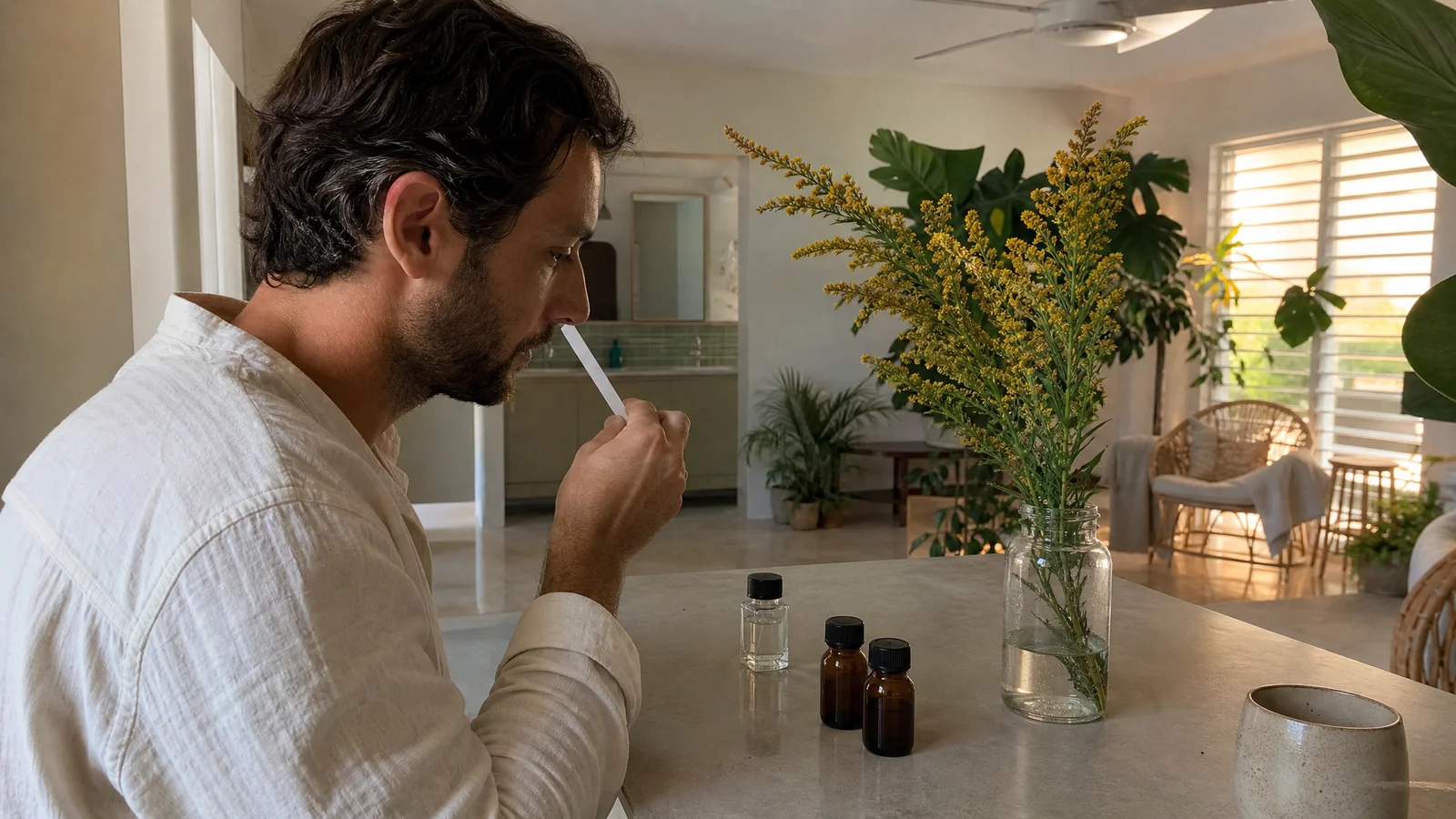
Goldenrod Cologne Accord: A Formula on Paper
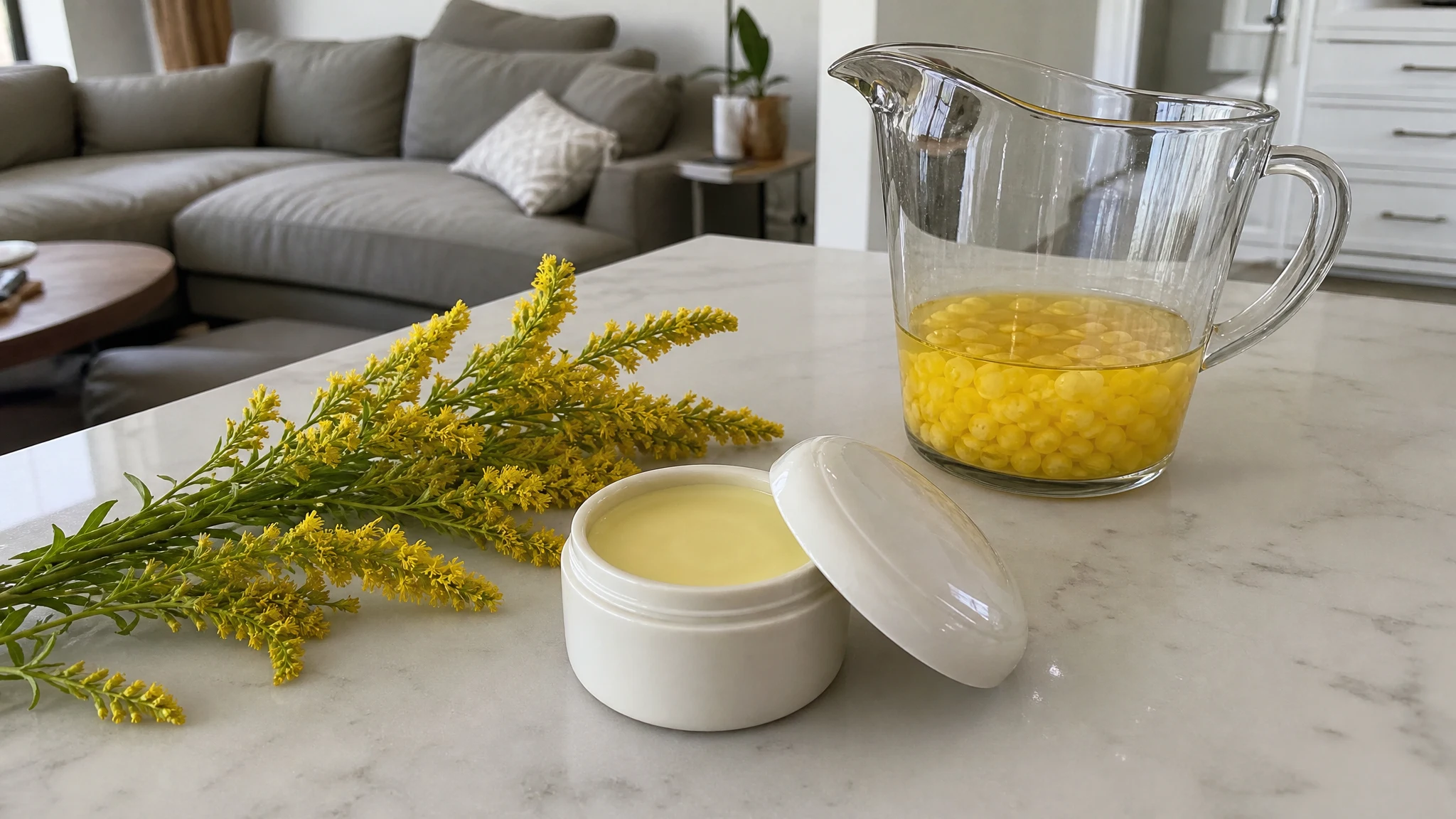
Most colognes start with the shimmer on top and the woods underneath. Goldenrod does something different: it is a middle note, with a honeyed, grassy, floral sweetness that settles toward a faintly balsamic, hay-like base. So we would put it in the heart and build the rest of the accord around it. What follows is a formulation worked out from published guidance and simple arithmetic, for a 50 g bottle.
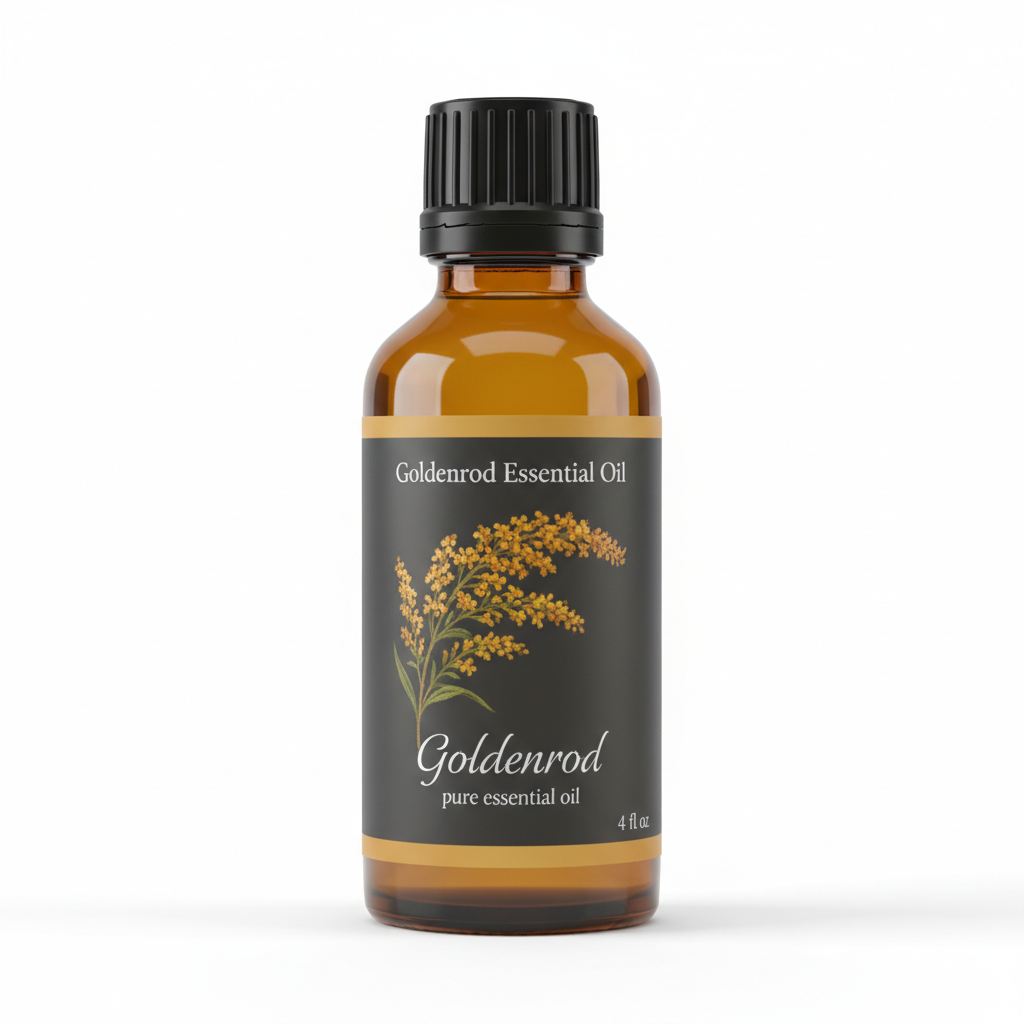
Goldenrod Essential Oil
Our own Goldenrod Essential Oil, in sizes from 0.5 oz to bulk.
From $17.99
Shop Now →Set the ceilings first
A cologne has two numbers to decide before you choose a single scent. The first is the total concentration of aromatics. The Delacourte Fragrance Guide gives eau de cologne as roughly 2% to 6% concentrate in alcohol, eau de toilette 3% to 20% and eau de parfum 7% to 30%, as typical ranges rather than a rule. We use 3%, a classic cologne strength.
The second is goldenrod's own share. Our guidance for skin is 0.5% to 2% in a carrier with a patch test first, and we hold goldenrod to 1% of the finished cologne, half our top figure. The Tisserand Institute dilution guide puts body oils and lotions at 1% to 3% and facial products at 0.5% to 1.2%, so a 3% total belongs on the body, not the face or underarm. It lists no goldenrod-specific figure, and its ranges apply to oils without specific restrictions. Fragrance materials can also carry IFRA limits, so ask each supplier for an IFRA certificate for a leave-on alcoholic fragrance and check it against your percentages.
The accord
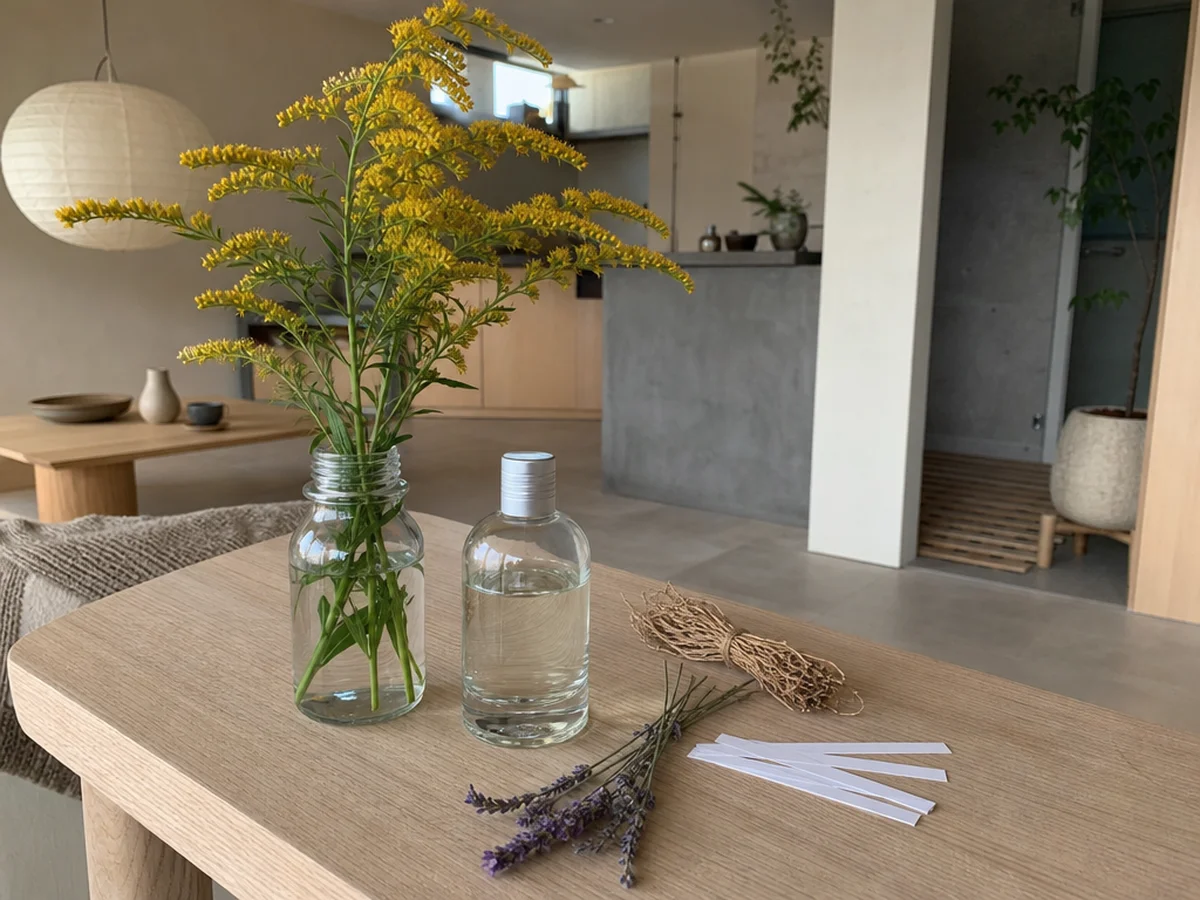
We pair goldenrod with lavender, clary sage and citrus, so the frame uses those. We sell only the goldenrod oil, so the others come from an aromatherapy or perfumery supplier.
| Role | Material | Grams in 50 g | % of finished |
|---|---|---|---|
| Top | Bergamot oil, bergapten-free (FCF) | 0.40 | 0.8% |
| Heart | Goldenrod essential oil | 0.50 | 1.0% |
| Heart | Clary sage oil | 0.35 | 0.7% |
| Heart to base | Lavender oil | 0.25 | 0.5% |
| Concentrate | 1.50 | 3.0% | |
| Perfumery-grade ethanol | 48.50 | 97.0% | |
The bergapten-free grade matters. Ordinary expressed bergamot contains bergapten, which is phototoxic, and the Tisserand phototoxicity page gives the IFRA maximum for ordinary bergamot as 0.4% in a leave-on product on sun-exposed skin, while the bergapten-free kind is considered non-phototoxic. At 0.8% this formula only works with the FCF grade, so do not swap in cold-pressed bergamot, lemon or lime without redoing the arithmetic.
Weigh, do not count drops
The Certificate of Analysis we publish gives a relative density of 0.880 for one batch, so 0.50 g of goldenrod is about 0.57 ml, or roughly 11 drops at the rough convention of 20 drops to the milliliter. The Tisserand guide notes that no two oils drop alike, and the other three oils will differ, so a scale that reads to 0.01 g is the better tool. Scaling up is easy: keep every line in the same proportion.
Putting it together
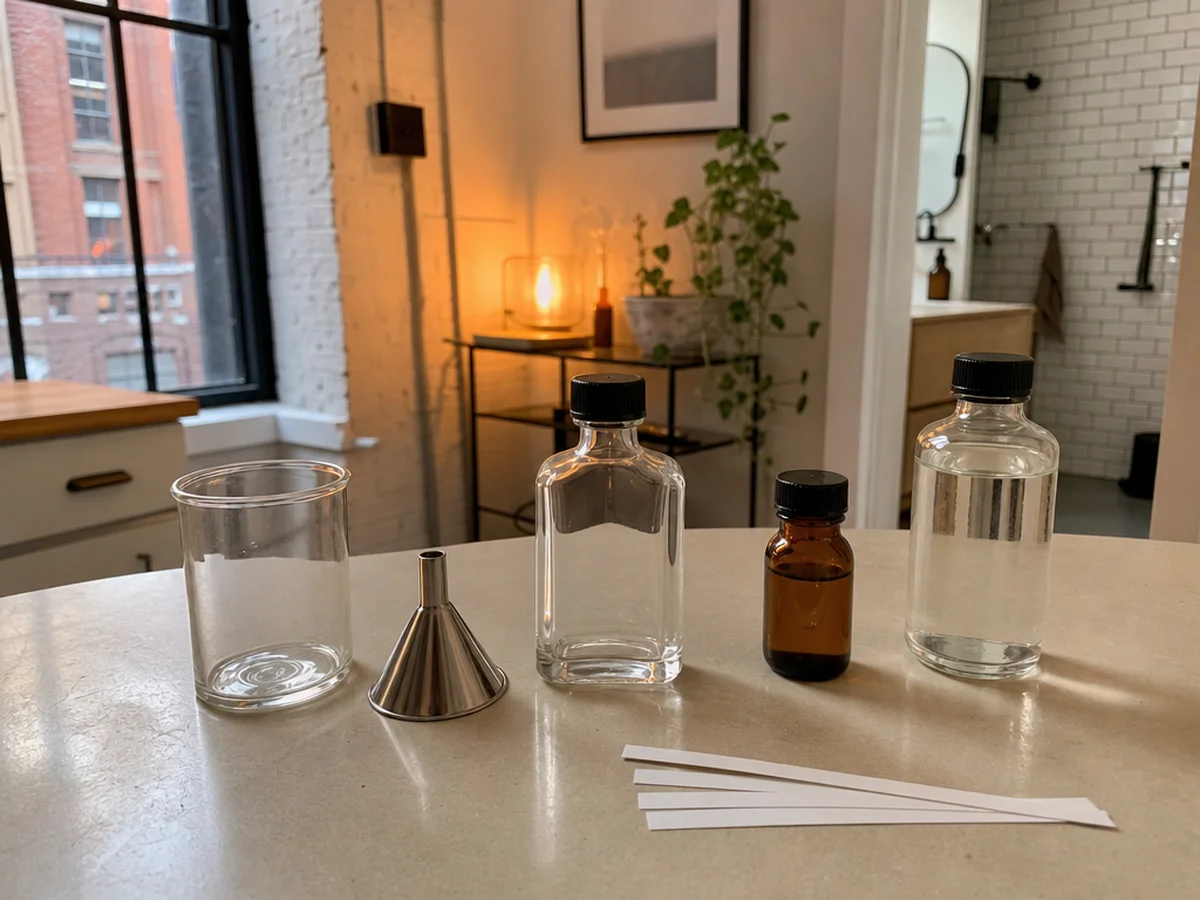
- Work away from flame and heat. The CDC's NIOSH Pocket Guide entry for ethanol lists a flash point of 55 F.
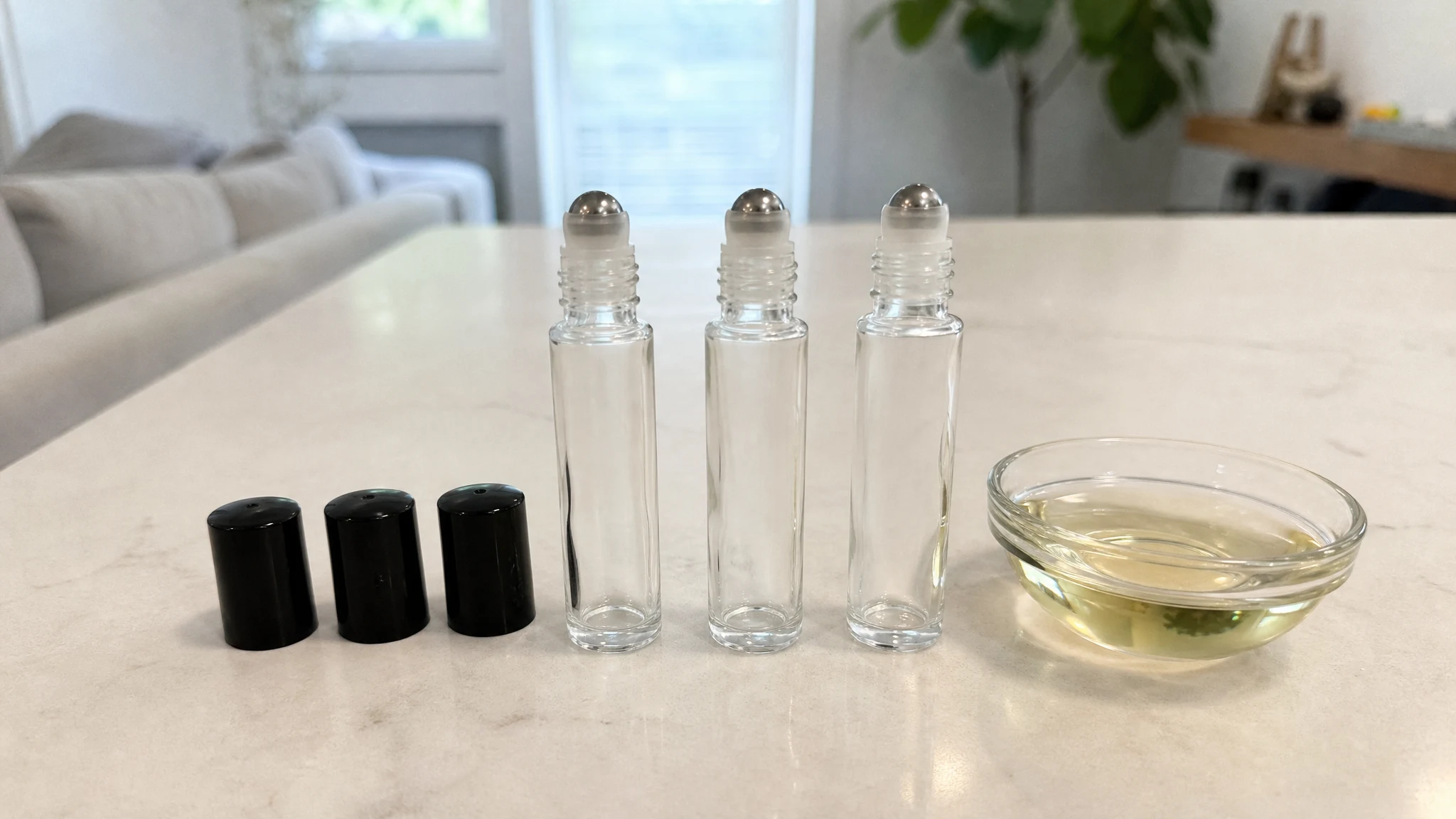
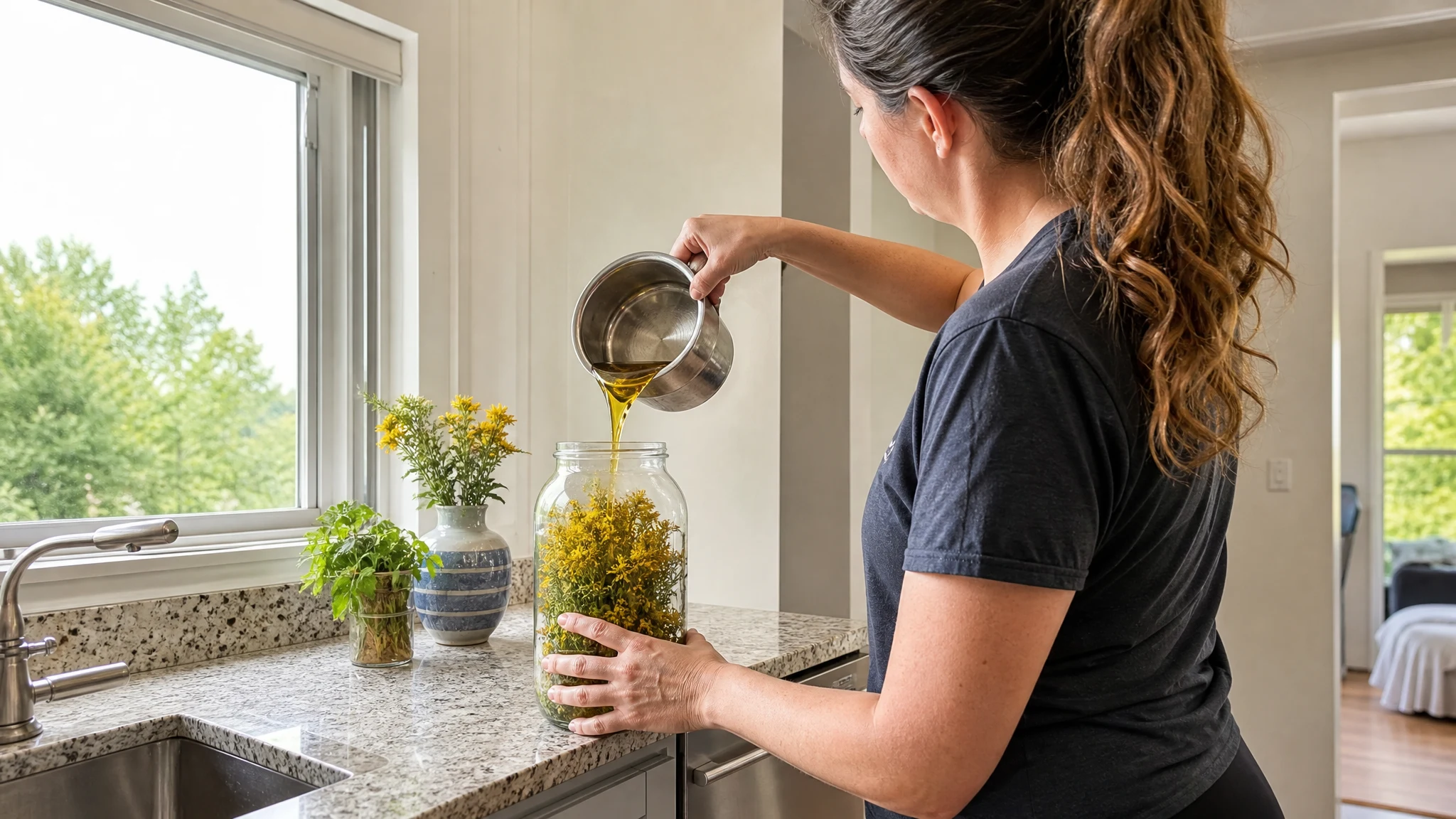
- Weigh the oils into a clean dark glass bottle, bergamot first and goldenrod second, and swirl gently.
- Add the ethanol, cap, and turn the bottle over a few times.
- Let it rest and sniff a paper strip from time to time. When the scent stops changing, it has settled.
- Label it with the date and every ingredient, and keep it cool and dark. We give the goldenrod oil a typical shelf life of 2 to 3 years stored that way; a blend is limited by its least stable ingredient.
Keep the first version this simple: four oils and ethanol. Water, glycerin or a fixative change how the oils dissolve and what a safety check has to cover.
Reading the cologne as it dries down
A paper strip tells the story in three acts. At first you will mostly smell the bright top, then within minutes the heart takes over, and that is where goldenrod's honeyed, grassy sweetness lives. Later, if you give the strip an hour or a day, what remains leans toward the faintly balsamic, hay-like base. Smell it at each stage and write down what changes.
If the heart seems thin, resist the urge to add goldenrod straight away. Try trimming the top first. Let the bottle rest for a few days before you pass final judgement, because a blend often smells different once its ingredients have settled together.
A trial size
For a first trial you do not need 50 g. Divide every line by five and make 10 g: 0.08 g bergamot, 0.10 g goldenrod, 0.07 g clary sage, 0.05 g lavender and 9.70 g ethanol. The proportions are the same, you waste very little, and a scale that reads to 0.01 g handles it.
Skin and sensitivities
Patch test on the inner forearm and wait a day. Ethanol is listed by NIOSH as a skin irritant, so use cologne on intact skin only. Goldenrod belongs to the daisy family, and DermNet notes that people sensitised to one member often react to others, so if ragweed, daisies or chamomile bother you, ask a dermatologist or allergist first. Our allergy article separates pollen from skin allergy, and the blending partners post goes further on pairings. If you plan to sell a cologne, it is a cosmetic, and labeling and safety assessment are questions for a cosmetic regulatory consultant. For bulk or private-label goldenrod, see our wholesale page.
The scent itself is the part a spreadsheet cannot settle. Smell the finished blend on a strip a few days in, and adjust the heart before you touch the top.
Goldenrod Essential Oil
Goldenrod Essential Oil from our own shop, in sizes from 0.5 oz to bulk.
From $17.99
Shop Now →