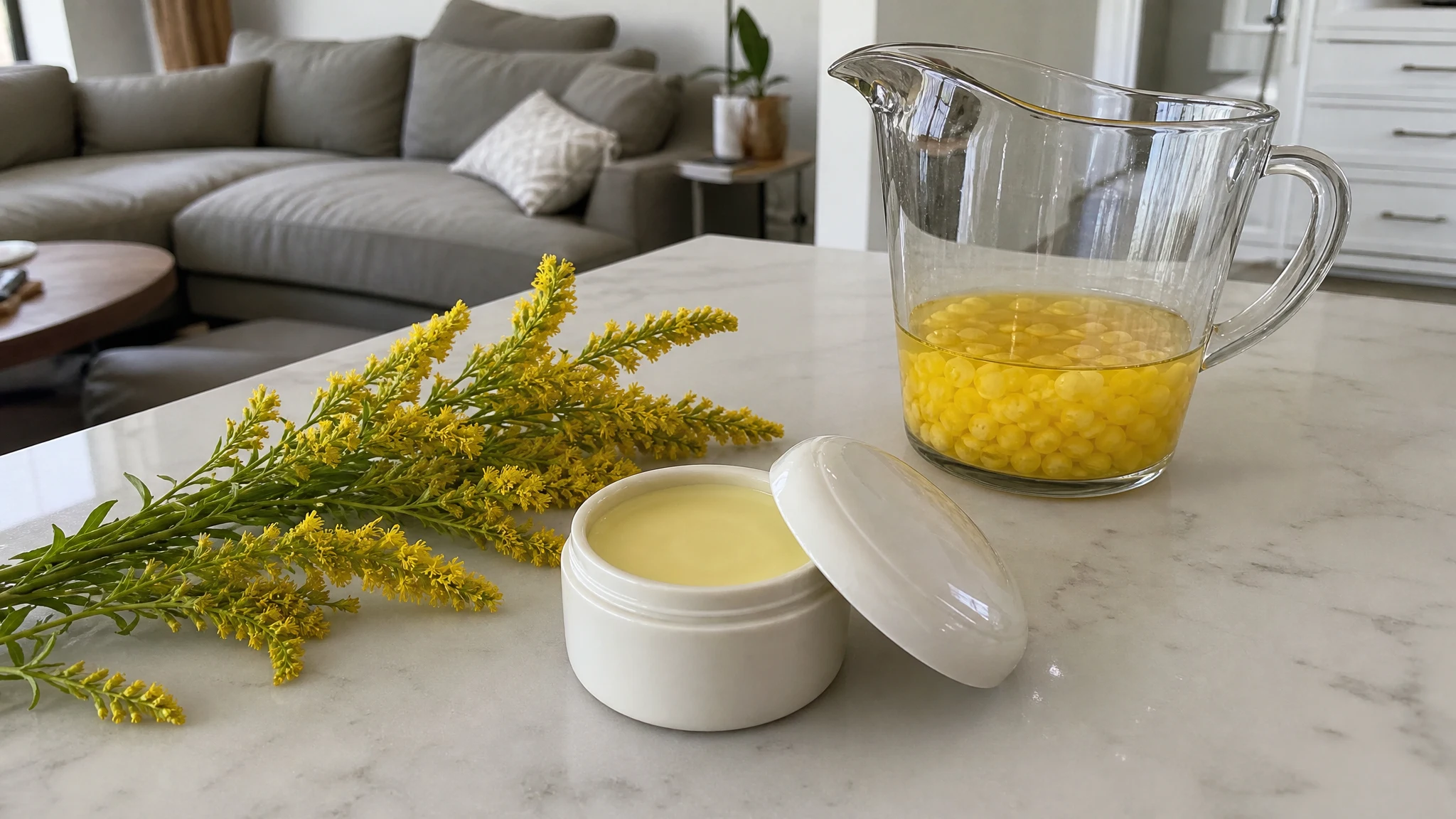
Goldenrod Solid Perfume Balm: A 30 g Recipe
A solid perfume is simple in principle: a little aromatic oil, a little beeswax, a carrier to carry it, and a tin. Where it goes right or wrong is almost never the wax. It is the percentage of essential oil, which is why we have written this one in grams. The formula below makes 30 g, enough to fill a few small tins, and every number has been worked out from the guidance cited alongside it.
Goldenrod Essential Oil
Our own Goldenrod Essential Oil, in sizes from 0.5 oz to bulk.
From $17.99
Shop Now →Pick the strength first
We recommend diluting goldenrod oil to 0.5% to 2% in a carrier before skin use, with a patch test first. The Tisserand Institute's dilution guide gives 1% to 3% for body products, 0.5% to 1.2% for face and underarm, 0.2% to 1% for sensitive or impaired skin, and up to 10% for rollerballs, for oils without specific restrictions. It lists no goldenrod figure, so we stay with our lower ceiling and offer two strengths: 1% as the place to start, and 2% as the most we would make.
Pulse points on the wrist are a small area, but the neck is close to the face. If you plan to wear the balm anywhere near your face, stay at 1%.
The formula, by weight
Weigh everything. Tisserand points out that no two oils drop alike, and in a small balm one extra drop is a bigger share than it looks.
| Ingredient | 1% version | 2% version |
|---|---|---|
| Yellow or white beeswax | 6.0 g (20%) | 6.0 g (20%) |
| Jojoba oil | 23.7 g (79%) | 23.4 g (78%) |
| Goldenrod essential oil | 0.30 g (1%) | 0.60 g (2%) |
| Total | 30.0 g | 30.0 g |
The wax share follows a common salve ratio: Mountain Rose Herbs uses 1 oz of beeswax to 4 oz of oil, checks firmness with a spoon chilled in the freezer, and removes the pot from the heat before adding essential oil. Six grams of wax to 23.7 g of oil lands close to that. A perfume you rub on with a fingertip is nicer slightly soft, so let the spoon test decide: too soft, add a pinch of wax; too firm, add a little jojoba. If you change the amounts, re-weigh the total and recalculate the oil share.
If you have no scale that reads to 0.01 g, here is the translation. The Certificate of Analysis we publish for one batch gives a relative density of 0.880 (that batch's best-by date, 01/31/2026, has passed, so treat the figure as a planning number). On that basis 0.30 g is about 0.34 ml and 0.60 g about 0.68 ml, which at the rough convention of 20 drops to the millilitre is around 7 and 14 drops. A scale is still better: in a 7-drop quantity, one stray drop adds about 14% to your intended oil share.
We sell only the goldenrod oil (see our shop), so the beeswax, jojoba and tins come from a soap and cosmetics supplier. Any carrier your skin already likes can stand in for jojoba, and our carrier oil comparison covers the options, including a note for anyone with nut allergies. If you make tins regularly, larger sizes are on our bulk page, and our guide to buying goldenrod essential oil in bulk explains how bulk buying works.
Order of work
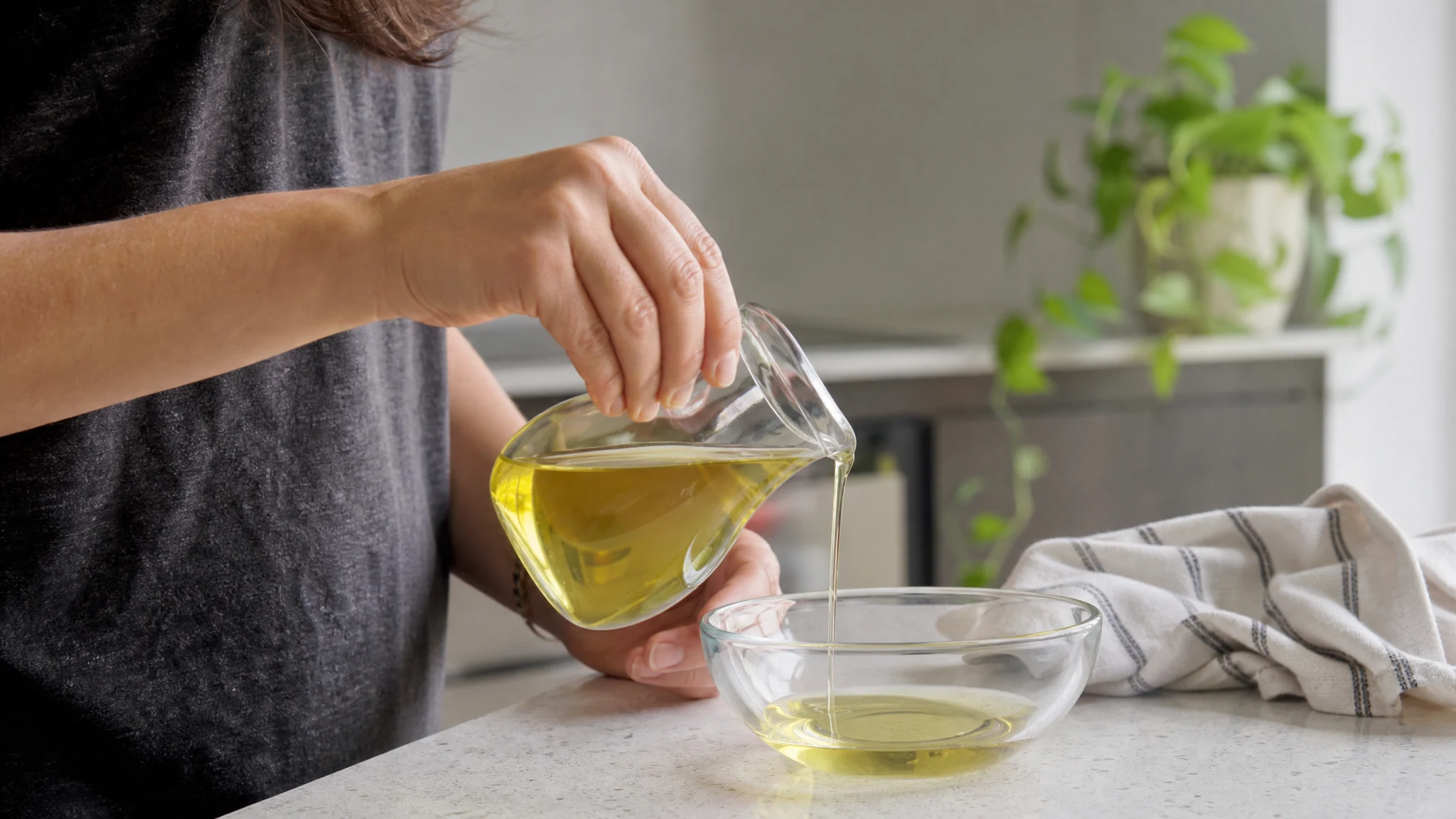
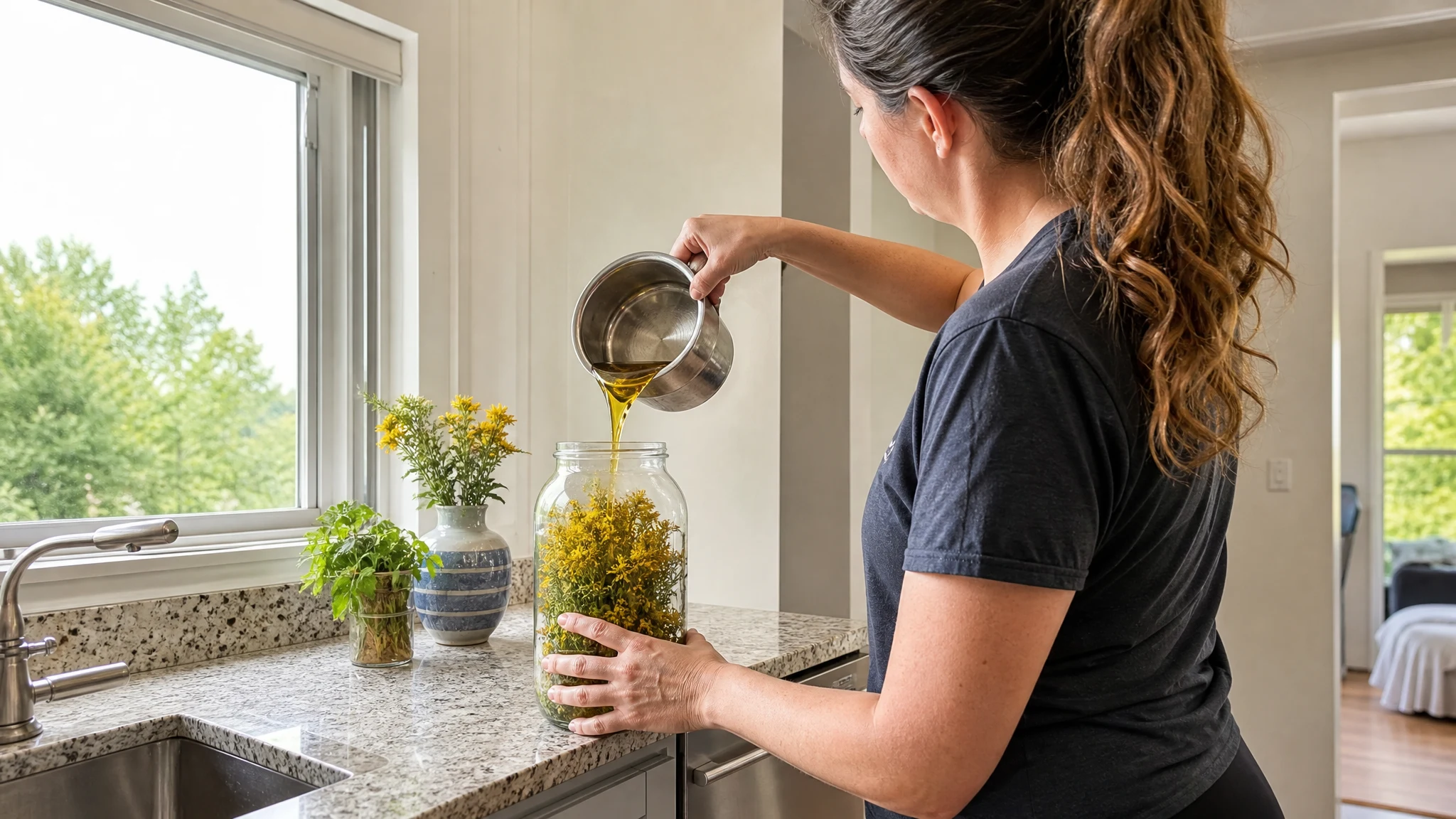
- Melt the beeswax and jojoba together gently, in a heat-safe jar set in a pot of simmering water. Gentle heat is plenty.
- Dab a little on a chilled spoon, check the texture, and adjust.
- Take the jar off the heat before adding the goldenrod. Mountain Rose gives the same instruction for essential oils, and there is a sound reason: roughly a third of goldenrod oil is light monoterpenes, the kind of small molecule that evaporates quickly, so a very hot melt gives them every chance to escape.
- Stir, pour quickly into clean tins, and leave the balm to set undisturbed.
- Label each tin with the date and the percentage.
How it wears
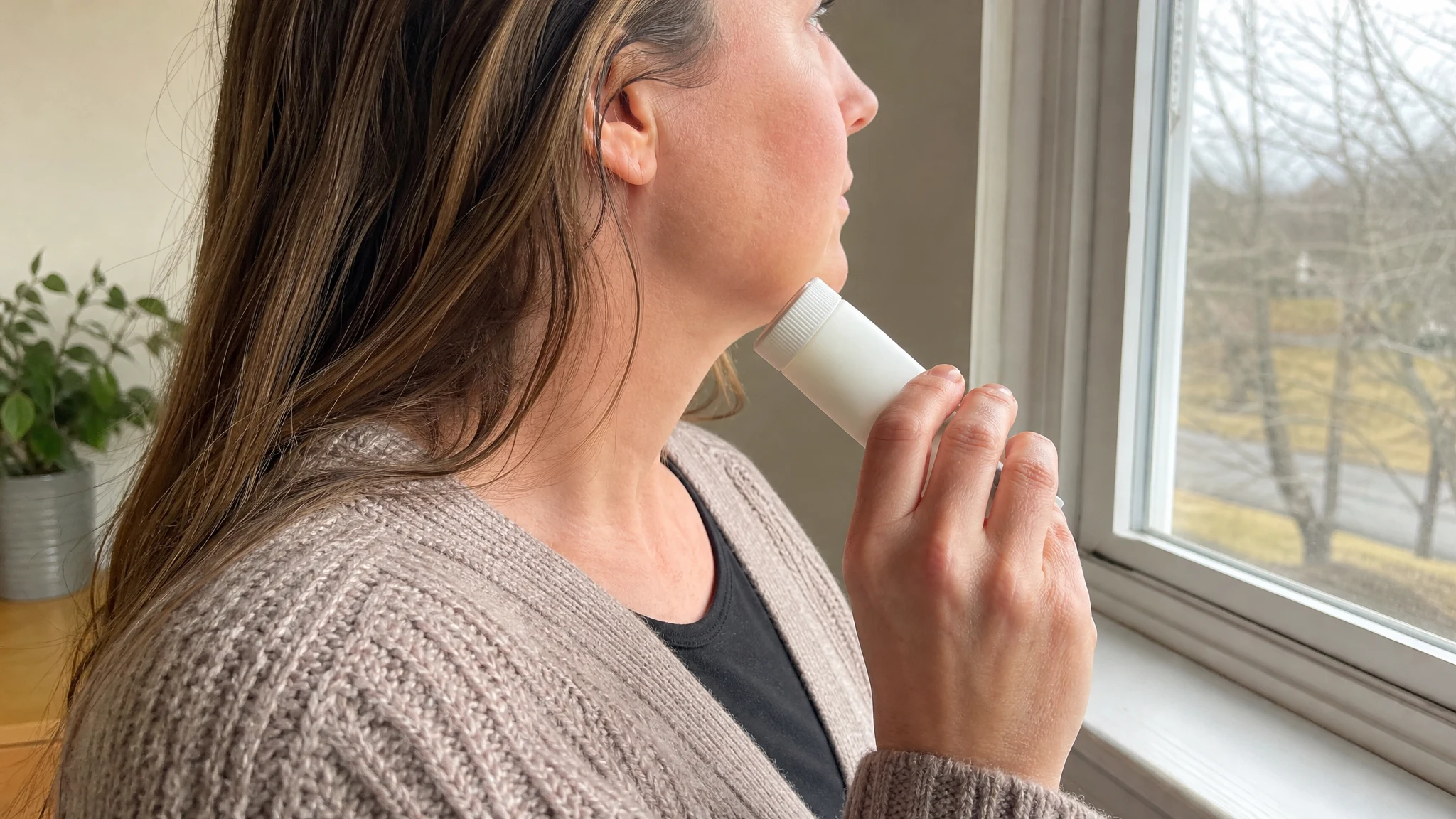
Rub a fingertip across the balm and press it to a wrist. You will notice the honeyed, grassy top first, which settles within a few minutes into a soft, hay-like warmth. A solid balm tends to feel closer to the skin than a spray, so it suits a quiet, personal scent.
Keeping it fresh
Mountain Rose puts a salve's life at one to three years in a cool place. Our oil typically keeps two to three years in a cool, dark place away from heat and sunlight. The Tisserand Institute explains that heat, light, moisture and extra air all speed oxidation, so the practical rule is simple: date the tin, keep it closed, and keep it out of a hot car or a warm bag. If the scent turns sharply different, it is time for a fresh batch. The formula contains no water, which is part of why it needs no water-phase preservative; that is our reasoning from the ingredient list, and a wet finger can still bring water in.
Patch test, and who should sit this one out
Test the finished balm, not the neat oil, on a small patch of inner forearm. The American Academy of Dermatology notes that allergic reactions can take time to appear, with clinic patches read at 48 hours and again at 4 to 7 days, so a clear result on day one is not yet an all-clear. Goldenrod is a daisy-family plant, and DermNet NZ names sesquiterpene lactones as the main allergens in that family, with cross-reactions common. If you react to ragweed, daisies or chamomile, this balm is not for you. Skip it, and ask a doctor, if you are pregnant or nursing, if it is for a child, or if the skin is broken or eczema-prone, and keep it away from pets.
For more on the skin side, see our skin basics article. If you would like a liquid format with the same arithmetic, the roller blends are the place to look, and the salve base article covers scenting a plain salve. Selling the balm adds obligations of its own, so have a cosmetic chemist review the formula first, and ask us in writing through our contact page for any lot documents you need.
If you make just one batch, make the 1% version, write the date on the tin, and wear it a few times before deciding whether it needs that extra half.
Goldenrod Essential Oil
Goldenrod Essential Oil from our own shop, in sizes from 0.5 oz to bulk.
From $17.99
Shop Now →Sources & Further Reading
- Tisserand Institute. Essential oil dilution. tisserandinstitute.org/dilution-essential-oils
- Mountain Rose Herbs. DIY herbal salves. blog.mountainroseherbs.com
- Tisserand Institute. Oxidized essential oils. tisserandinstitute.org/learn-more/oxidized
- American Academy of Dermatology. Patch testing. aad.org
- DermNet NZ. Compositae allergy. dermnetnz.org