Goldenrod in Perfume: Where a Middle Note Fits
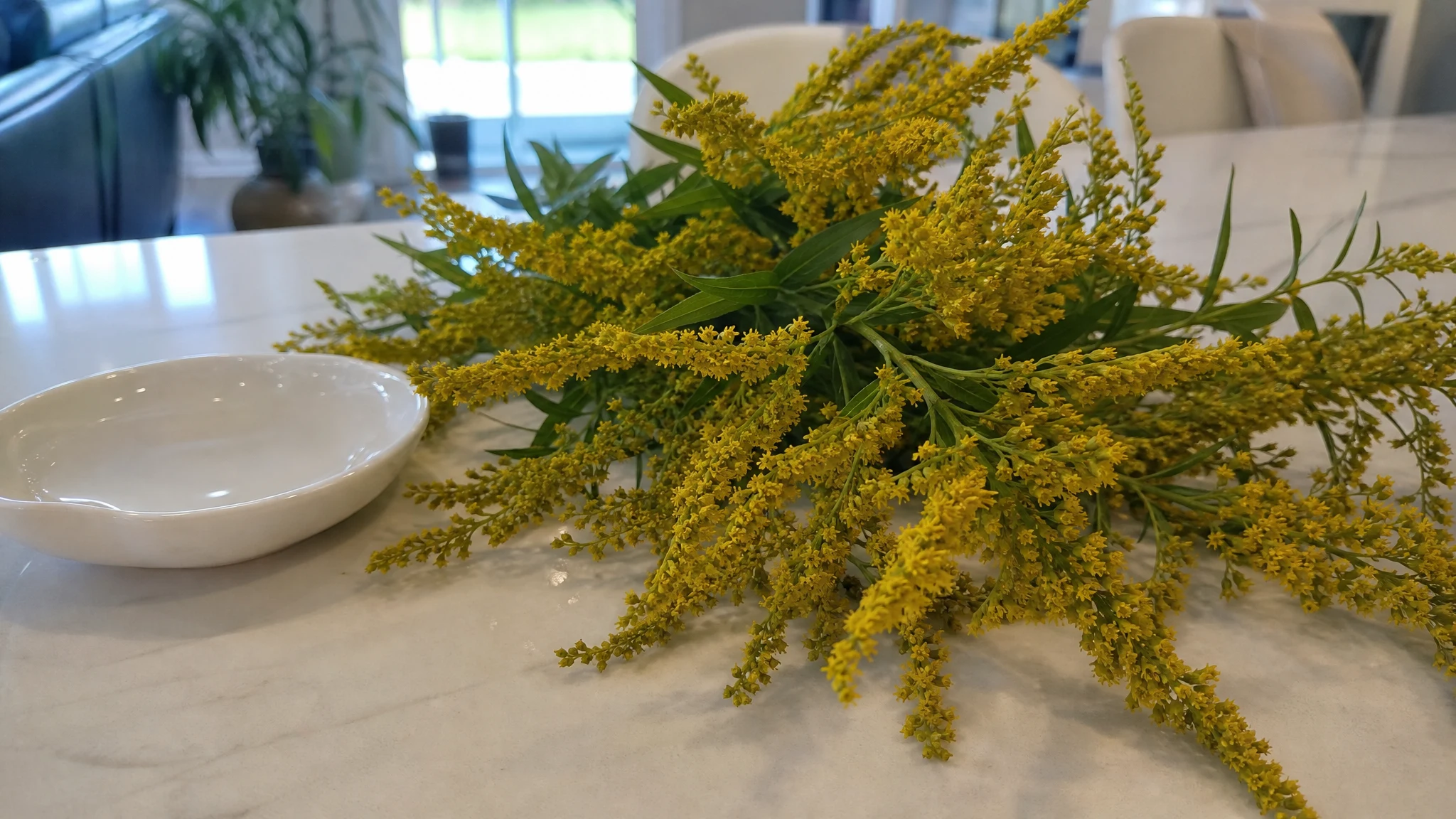
Put a drop of goldenrod oil on a paper strip and the first thing that stands out is how undramatic the opening is. We describe the aroma as honeyed, grassy and floral, with a soft sweetness settling into a faintly balsamic, hay-like base, and we list it as a middle note. That one label tells a perfumer most of what they need to plan around: this is a material for the heart of a formula, and it works best when it is not asked to do everything.
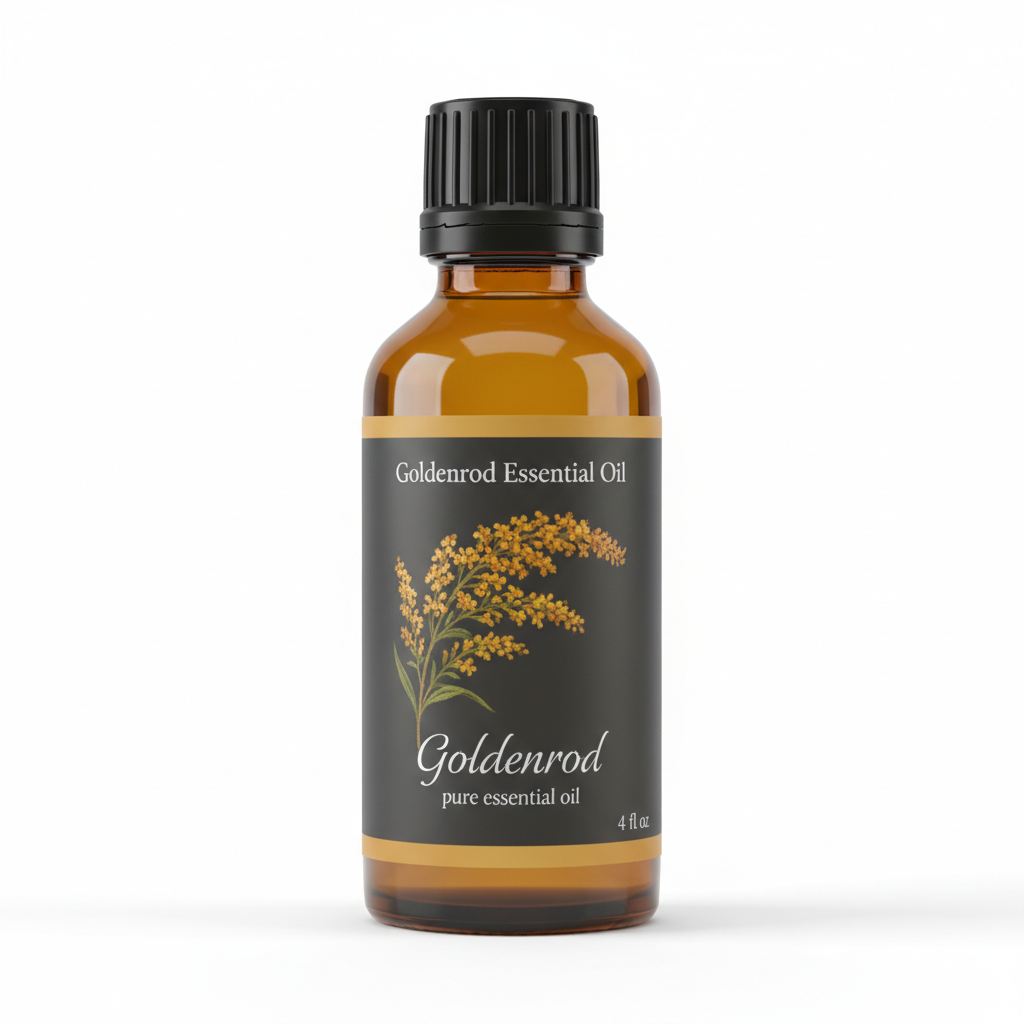
Goldenrod Essential Oil
Our own Goldenrod Essential Oil, in sizes from 0.5 oz to bulk.
From $17.99
Shop Now →Why it behaves like a middle note
Perfumers sort materials by how quickly they leave the skin. Wikipedia's overview of perfume describes top notes as small, light molecules that evaporate fast, and base notes as the ones that usually do not show up until about half an hour after application. Middle notes sit between, forming the body of the scent once the sparkle has faded.
Goldenrod's chemistry fits that middle position neatly. In a 2019 analysis of wild Solidago canadensis from Slovakia, roughly a third of the oil was light monoterpenes such as limonene and alpha-pinene, and over half was heavier sesquiterpenes led by germacrene D. Reasoning from that, the lighter third is what you meet first on a blotter, and the heavier half is what lingers. It is an inference from one sample, but it explains why goldenrod reads as a bridge rather than an opener or a finish.
It also explains why two bottles can differ. When a 2025 study distilled flowers, leaves and stems separately, the flower oil was led by alpha-pinene and the leaf oil by germacrene D. A flower-heavy cut and a leaf-heavy cut will not open in quite the same way, so we suggest smelling each new bottle against the last before you commit a formula to it.
Lead, support or accent
Here is the decision that shapes everything else. Our dilution guidance for skin is 0.5% to 2% in a carrier, with a patch test first, and a perfume is a skin product, so we treat 2% of the finished bottle as the ceiling for goldenrod. For comparison, the Tisserand Institute gives 1% to 3% for body products and 0.5% to 1.2% for face and underarm use, for oils without specific restrictions; it lists no goldenrod figure.
Now compare that with typical perfume strengths. Delacourte's fragrance guide gives about 2% to 6% aromatics for an eau de cologne, 3% to 20% for an eau de toilette and 7% to 30% for an eau de parfum. Dividing goldenrod's share of the bottle by the strength of the concentrate shows what role it can play:
| Finished strength | Goldenrod at 1% of the bottle | Goldenrod at 2% of the bottle |
|---|---|---|
| Cologne, 3% aromatics | a third of the concentrate | two thirds |
| Eau de toilette, 10% | 10% | 20% |
| Eau de parfum, 15% | under 7% | 13% |
The pattern is easy to read. In a light cologne goldenrod can genuinely be the heart. In an eau de parfum it becomes an accent, a touch of hay and honey running through other materials. We would rather you design around that than push past the ceiling to make it dominate.
Oil, not absolute
Goldenrod oil is steam-distilled, which makes it a lighter, more volatile material than the waxy absolutes many florals are sold as. If your formula needs the heavier character of a flower absolute, the oil is a different tool, and we compare the two in goldenrod versus mimosa absolute. We sell only the goldenrod oil, so absolutes and bases come from a perfumery supplier.
What to expect on the strip
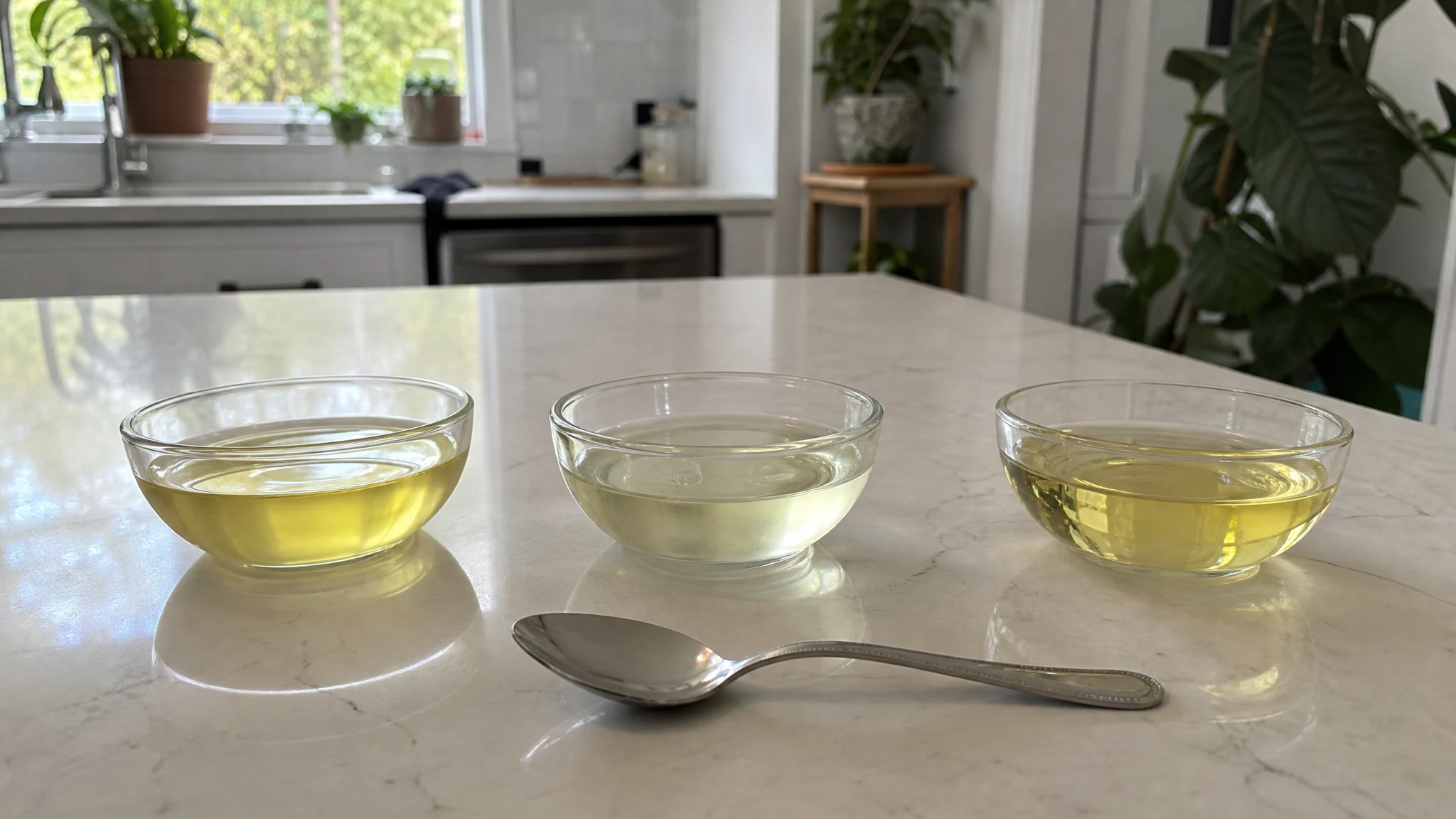
Before you plan a formula, spend some time with goldenrod alone. Dip a strip and sniff right away: you will notice a soft sweetness, some green, and a floral hint. Smell it again after ten minutes and the sweetness warms into something close to hay. After half an hour a faintly balsamic base is left. Those three stages are how it will behave in a blend, so write them down and plan around them.
Partners worth trying
We suggest chamomile, lavender, clary sage, citrus, rose and geranium as partners. There is a reasonable logic to citrus in particular: limonene is one of goldenrod's own components, so a citrus note repeats something already there and helps the two blend rather than contrast. That is chemistry reasoning, not a promise about how a particular pairing smells, so test on a strip. For a worked example with weights, see the cologne accord on paper, and for small-bottle arithmetic try the roller blends.
Building a simple sketch
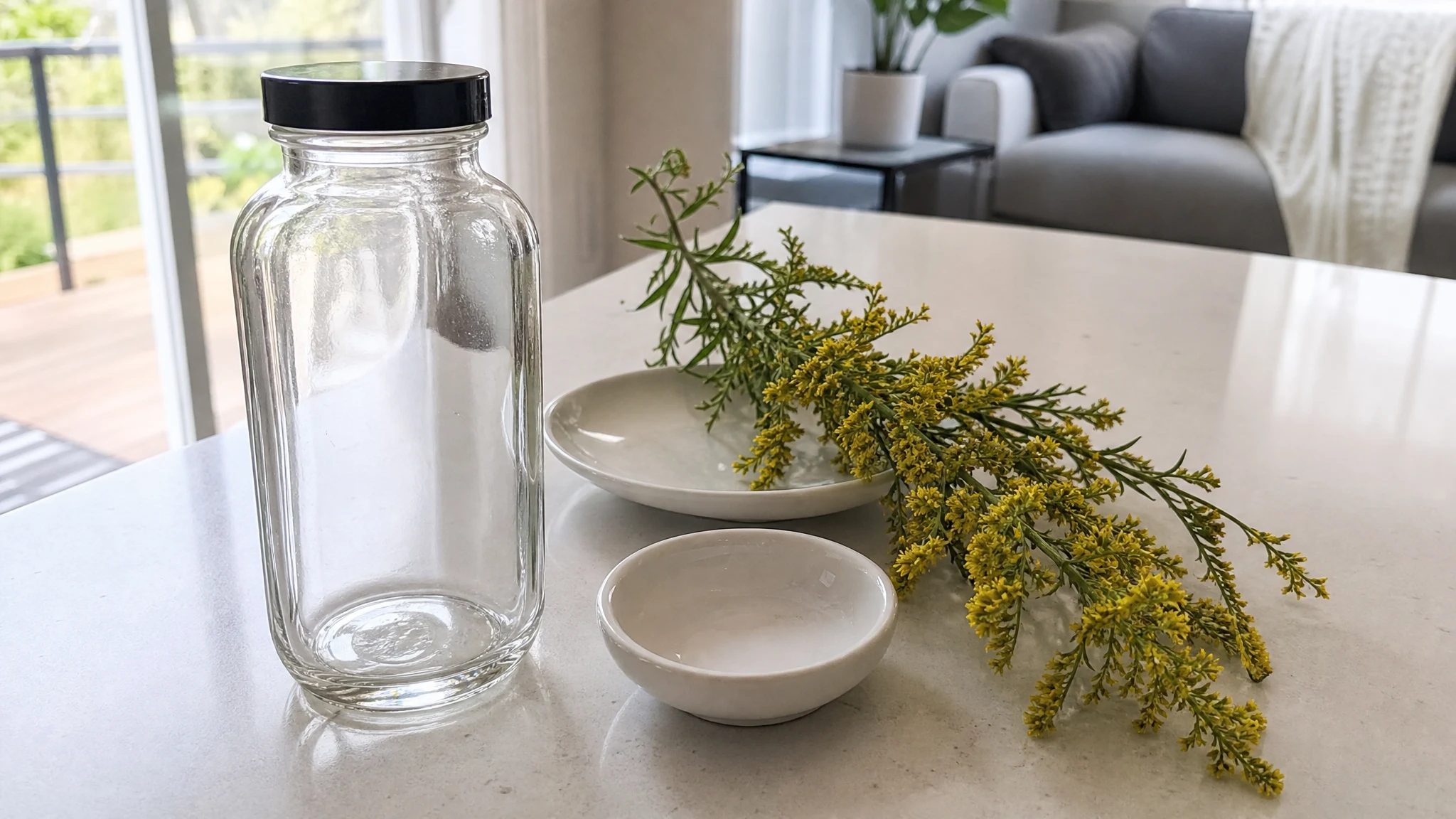
If you are new to composing, keep the first draft small. Choose one partner, mix two or three drops of each on a strip or in a small dish, and compare. Then change only one thing at a time: a drop more of the partner, then a drop less. It is slow, but it is also how you learn which combinations you like, and a notebook with the drop counts beside each sketch will save you from losing a lucky one.
Before you wear it or sell it
Goldenrod belongs to the daisy family, and DermNet NZ names sesquiterpene lactones as that family's main skin allergens. If you react to ragweed, daisies or chamomile, approach it carefully and patch test; if you are pregnant, nursing or scenting something for a child, ask your doctor first. Our piece on pollen versus skin allergy explains why hay fever and skin reactions are separate questions.
If you plan to sell a perfume, you will want lot-specific documents. The Certificate of Analysis we publish covers one batch and lists density, refractive index and optical rotation; for an IFRA or allergen document, or a constituent profile, ask us in writing through our contact page before you build a label around it.
Think of goldenrod as the warm, meadow-scented middle of a scent, sized by what skin can comfortably take, and keep a note of which bottle you used so the next one can be matched against it.
Goldenrod Essential Oil
Goldenrod Essential Oil from our own shop, in sizes from 0.5 oz to bulk.
From $17.99
Shop Now →Sources & Further Reading
- Elshafie HS et al., 2019. Antimicrobial Activity and Chemical Composition of Essential Oil Extracted from Solidago canadensis L. Growing Wild in Slovakia. Molecules. PMC6479883
- Yang JX et al., 2025. Multivariate Statistical Analysis of Solidago canadensis L. Essential Oil and Its Antifungal Mechanism Against Mulberry Sclerotinia Diseases. Int J Mol Sci. PMC12785313
- Wikipedia. Perfume. en.wikipedia.org/wiki/Perfume
- Delacourte. Perfume and concentration. blog.delacourte.com
- Tisserand Institute. Essential oil dilution. tisserandinstitute.org/dilution-essential-oils
- DermNet NZ. Compositae allergy. dermnetnz.org