Goldenrod Oil Allergy: Pollen vs Skin Reactions
Do you sneeze every September and wonder whether goldenrod oil is off the table? Pollen allergy and skin allergy are two different questions with two different tests, and an answer to one does not settle the other.
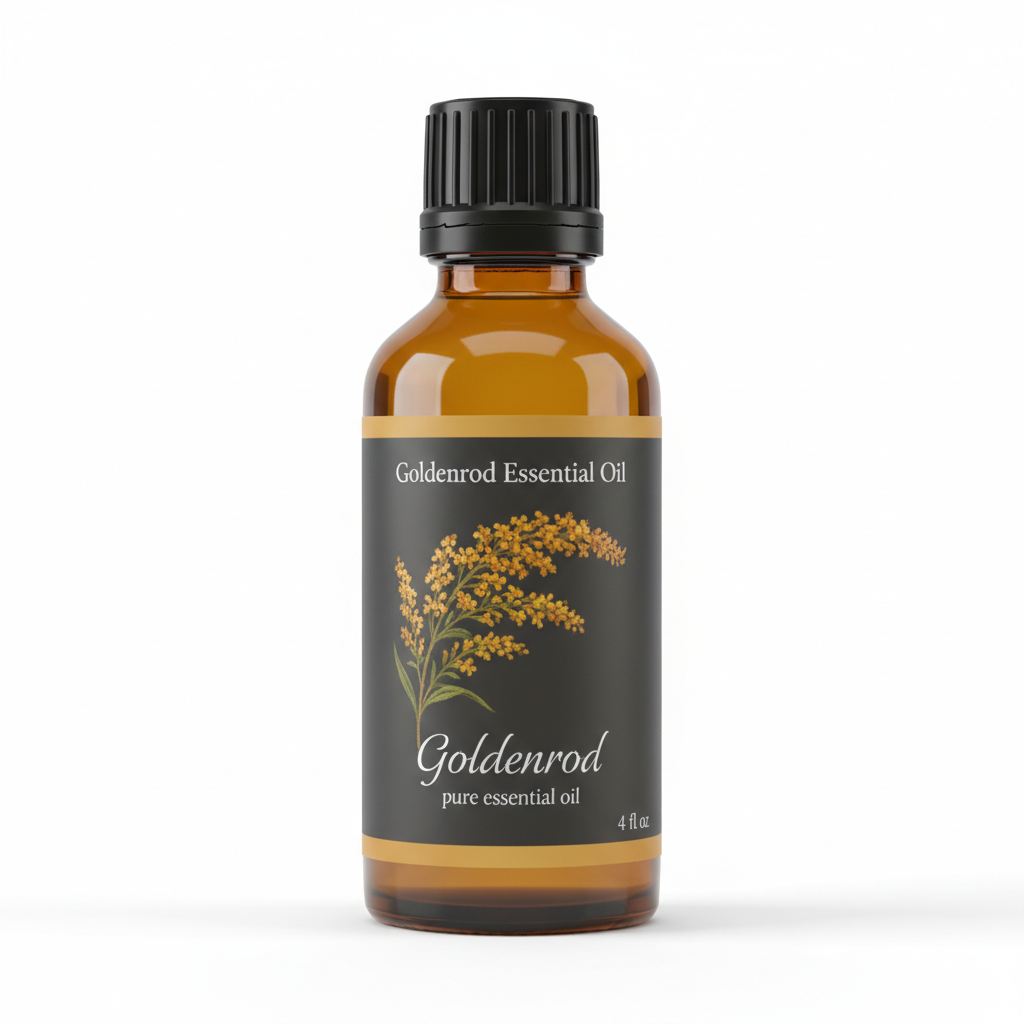
Goldenrod Essential Oil
Our own Goldenrod Essential Oil, in sizes from 0.5 oz to bulk.
From $17.99
Shop Now →Why goldenrod gets the blame
Illinois Extension puts it neatly: goldenrod blooms when autumn allergies peak, but timing is not cause. Goldenrod is insect-pollinated, with heavy, sticky pollen that does not travel far on the wind, while giant ragweed releases enormous quantities of light, wind-borne grains from flowers so green and plain you would never notice them. The Almanac says the same, and notes the two bloom together, from late summer through frost.
A different kind of reaction
An oil on your skin is a contact question, not an airway one. Goldenrod belongs to the daisy family (Asteraceae, also called Compositae), alongside ragweed, chamomile and many garden flowers. DermNet describes sesquiterpene lactones as the most important allergens of that family, present in the resin of leaf, stem and flower, with cross-reaction between plants common. Goldenrod appears in its list of common names.
How common is it? A Melbourne dermatology centre patch tested 3,679 patients to Compositae over ten years. Forty-four reacted, about 1.2%, and 19 of those reactions were judged relevant to something in the patient's life. Thirteen traced to direct plant contact, mostly gardening, and six to personal products such as cosmetics. These were people already referred for rashes, so the figure says nothing about the general public, and the study does not single out goldenrod. Its use for us is the direction: skin products appear on the list of exposures.
Why the test takes days, not minutes
The American Academy of Dermatology explains that patch testing looks for reactions that develop over hours or days, unlike a skin prick test for an immediate reaction. Its own patches stay on for 48 hours, with a return visit at 48 hours and again 4 to 7 days later, and it notes that it can take time for your skin to develop an allergic reaction. That has a practical consequence for anyone trying a new oil at home: checking after an hour tells you very little.
Oxidation adds a wrinkle. Researchers who tested 1,511 dermatitis patients at six European centers found 1.3% reacted to oxidized linalool and about 0.5% to oxidized caryophyllene, compounds that were not allergenic until air changed them. That study did not involve goldenrod oil, but it explains why we suggest capping the bottle and storing it cool and dark, and why an old bottle that smells different deserves a new test or a replacement. We keep that advice in our storage article.
A sneeze in September is not a verdict
Lots of us grew up hearing that goldenrod was the villain of fall. It is easy to see why: the gold plumes are everywhere, and you can point at them. The unfussy ragweed growing beside them is harder to notice. If that is the story you have been told, it is worth knowing it may have been told about the wrong plant.
That said, a good answer about pollen is not a promise about skin. Think of them as two separate rooms in a house. You can be fine in one and want to be careful in the other.
If you want to try it
- Dilute first. Our guidance is 0.5% to 2% in a carrier oil, never undiluted. At 0.5%, that is about one drop in 10 ml, at the usual 20 drops per ml.
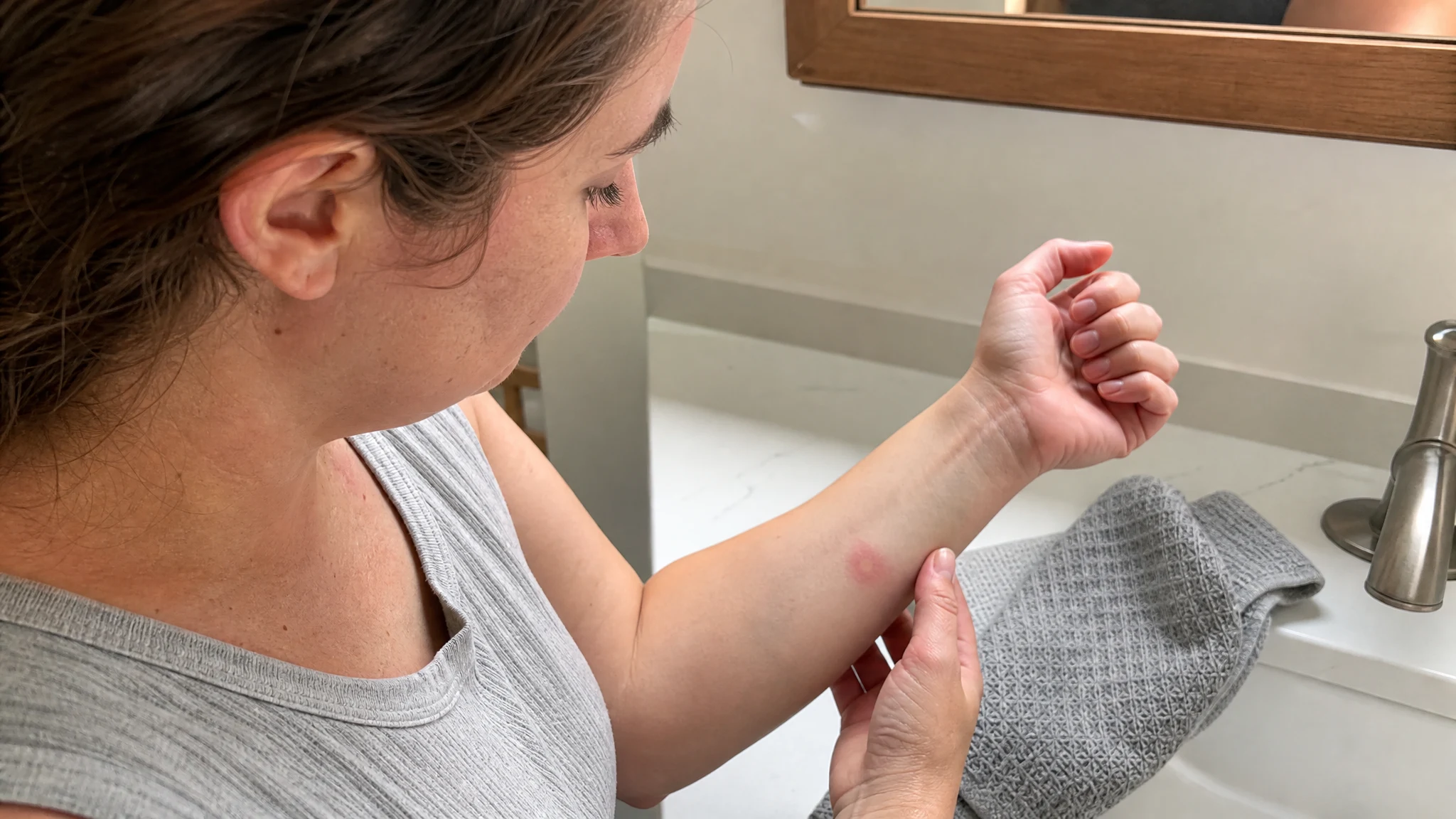
- Put a small dab of the diluted oil on the inner forearm, leave it alone, and watch it for a week. Wash it off if it itches, reddens or blisters. This is a household habit, not a clinic test.
- If you have a history of reactions to ragweed, daisies, chamomile or fragrance, ask a dermatologist or allergist before you start. Clinic panels use standardized allergen preparations that a bottle of oil does not replicate.
If you do react, wash the area, stop using the oil and anything it was mixed into, and see a physician or dermatologist if the reaction lingers, spreads or involves the face or eyes. Swelling, vomiting or trouble breathing need urgent care.
Keeping a calm head about it
Most of what is written about allergies is either breezy or alarming. The calm middle is a good place to be. Work slowly, change one thing at a time, and keep the bottle capped and stored cool so you are always testing the same oil. If a rash appears days later, you'll know what you used and when, and that is a great help to anyone you ask.
Where that leaves you
Hay fever alone is not a reason to avoid goldenrod oil, and not a clearance either; it is worth mentioning to the allergist who knows your results. A confirmed Compositae allergy is another matter, and we would not want you to buy an oil on the strength of a dilution chart. We make no health claims for goldenrod, and nothing here is advice for any one person. For the wider picture, see our safety guide, our Asteraceae oils guide and the skin basics article.
If you like to keep notes, write down what you tried, at what strength and on which day. A short record is the best thing you can bring if you ever do talk to a dermatologist.
The short version: dilute it, wait days rather than minutes, and let a dermatologist decide if your history says to skip it.
Goldenrod Essential Oil
Goldenrod Essential Oil from our own shop, in sizes from 0.5 oz to bulk.
From $17.99
Shop Now →Sources & Further Reading
- Swihart E., 2022. Autumn allergies: don't blame goldenrod. Good Growing, University of Illinois Extension. extension.illinois.edu
- Almanac.com. Goldenrod: The Fall Flower That's Not Causing Your Allergies. almanac.com
- DermNet. Compositae allergy. Sesquiterpene lactone contact allergy. dermnetnz.org/topics/compositae-allergy
- Punchihewa N., Palmer A., Nixon R., 2022. Allergic contact dermatitis to Compositae: An Australian case series. Contact Dermatitis 87(4):356-362. PMC9542089
- American Academy of Dermatology. Patch testing can find what's causing your rash. aad.org patch testing
- Matura M. et al., 2005. Selected oxidized fragrance terpenes are common contact allergens. Contact Dermatitis 52(6):320-328. pubmed.ncbi.nlm.nih.gov/15932583