Goldenrod Oil Safety: Simple Habits for Everyday Use
Goldenrod oil is a pleasure to work with once a few habits are in place, and none of them are complicated. Dilute it, keep it fresh, give your skin time to speak up, and know which readers should check with a professional first. Goldenrod is also a newcomer in the research literature, so we lean on what is known about essential oils in general and say so where we do.
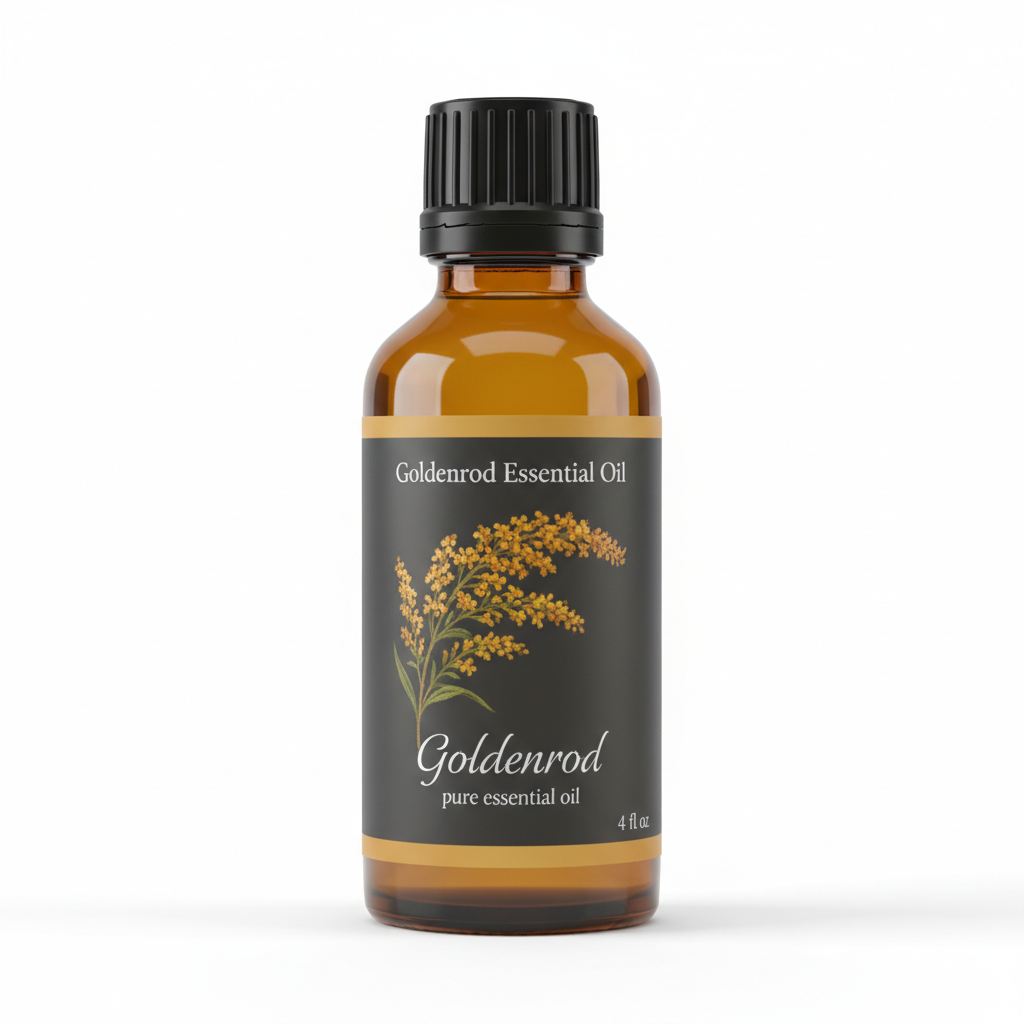
Goldenrod Essential Oil
Our own Goldenrod Essential Oil, in sizes from 0.5 oz to bulk.
From $17.99
Shop Now →Habit one: always a carrier
We sell our oil undiluted, so the mixing is yours. Our guidance is 0.5% to 2% in a carrier oil before any skin use, never neat. In a 10 ml bottle of carrier that is 0.05 ml to 0.2 ml, which at a rough 20 drops to the milliliter means one to four drops. Droppers vary, and at these volumes one drop is a big step, so starting at the low end is a sound instinct. The skin basics article turns the percentages into measurements for larger bottles, and keeps the Tisserand Institute ranges beside ours.
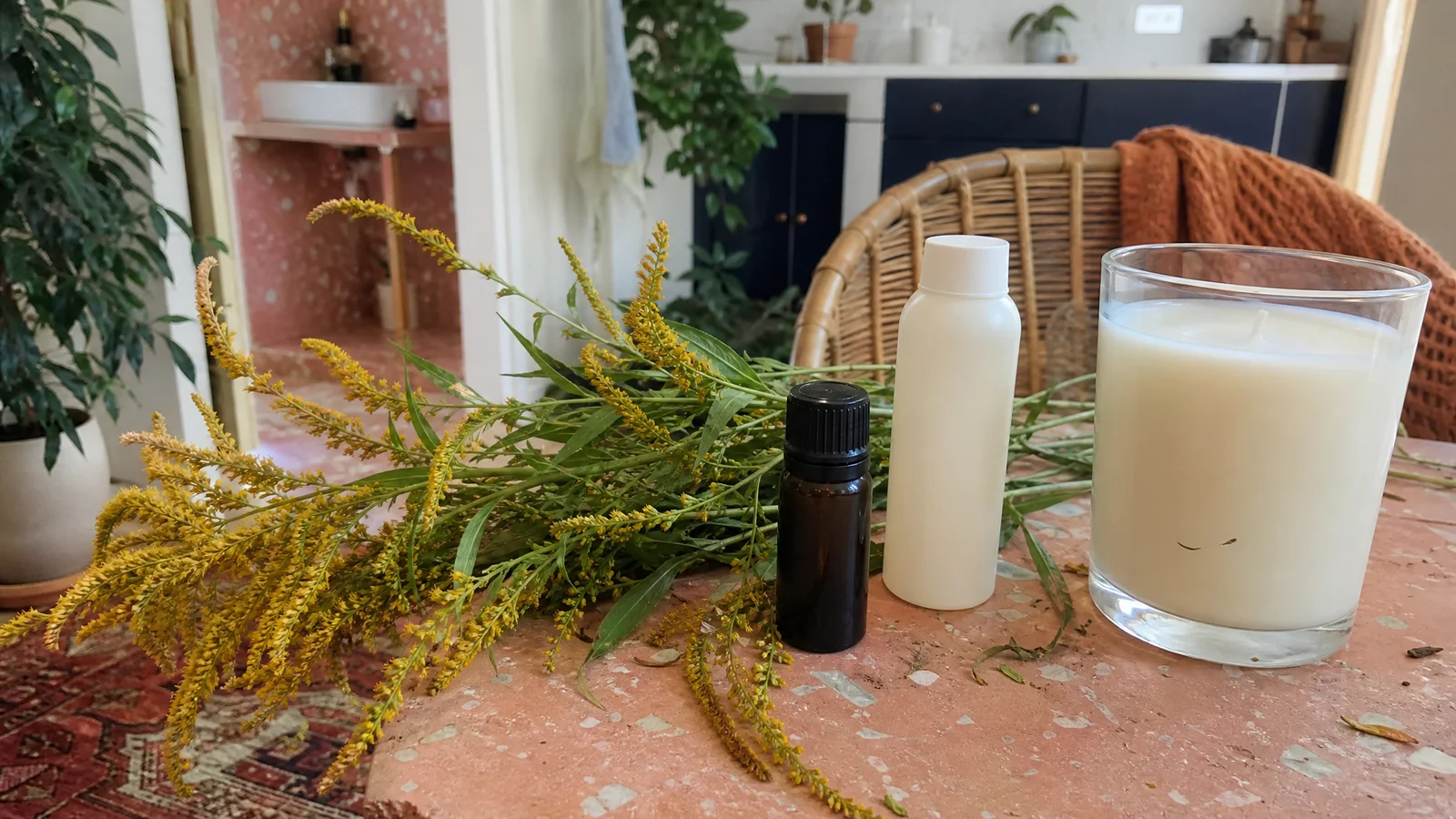
It helps to picture it as a routine at the bench rather than a list of rules. Set out a clean glass bottle, your carrier, a dropper and a pen. Label first, mix second, and wipe the dropper tip before you cap anything. Doing it in the same order every time is what makes it feel easy, and a tidy habit is a safe habit.
Habit two: fresh oil, sealed and cool
Essential oils change when they meet air. A study of 1,511 patients referred for dermatitis at six European centres found that oxidized linalool triggered reactions in 1.3% of them and oxidized caryophyllene in about 0.5%. Those patients were not a cross-section of the public, and the study did not test goldenrod oil. Still, it makes a good argument for the boring habits: amber glass, a tight cap, a cool dark cupboard. Our storage guide has the full routine. We suggest the same bottle-size thinking there: choose a size you will use up within a year or so.
Habit three: patience with the patch test
Patch testing is the sensible check, and the timing is what people overlook. The American Academy of Dermatology describes clinic patch tests as patches worn for 48 hours with a return visit four to seven days later, because it can take time for an allergic reaction to develop. So a dab on the forearm that you glance at after lunch tells you little. Mix the exact dilution you plan to use, leave a small spot alone for two days, keep watching for a week, and rinse it off right away if it stings or reddens.
When in doubt, go smaller
A good rule at the bench is that smaller is calmer: a smaller batch, a lower percentage, a shorter diffuser session, a smaller area for the first try. None of these cost you anything, and each one gives you room to change your mind. It is far easier to add a drop next week than to undo a blend that turned out too strong.
A word on how the oil should smell
Your nose is a useful safety tool, too. Our goldenrod oil is honeyed, grassy and floral, with a soft, hay-like base, so get to know that scent when the bottle is new. If you open it months later and it smells flat, sharp or sour compared with how you remember it, treat that as a nudge to set it aside for a paper strip and a diffuser at most, and keep it off your skin. The best time to learn the scent of a fresh bottle is the first day you have it.
Setting up a home for the bottle
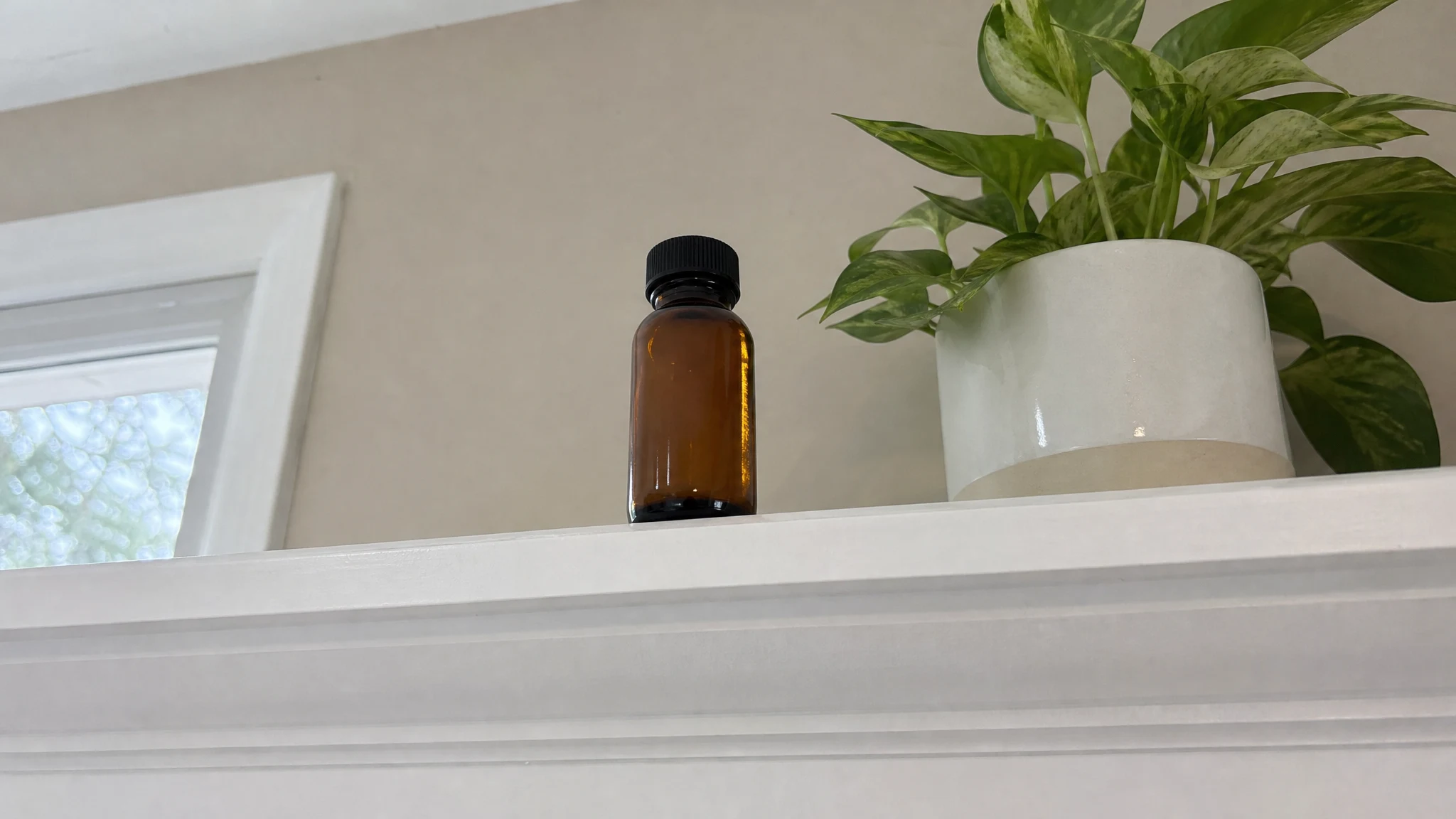
Choose one spot for your oils and make it the right spot: a closed cupboard, away from the stove and sunny windowsills, and well above a child's or a pet's reach. Keep the little cap on tight. Keep a small card with the date you opened it. And if you decant some into a smaller bottle for working, label that one too, since an unlabeled brown bottle is how mix-ups happen.
Who should check first
Goldenrod belongs to the daisy family (Asteraceae, also called Compositae). DermNet NZ lists goldenrod among the plants in that group, names sesquiterpene lactones as the main allergens, and notes that people who react to one member of the family often react to others. If ragweed, daisies or chamomile bother your skin, a dermatologist is the right first call. We cannot say whether a steam-distilled oil carries enough of those compounds to matter, which is exactly why we suggest asking. Our allergy article separates pollen allergy from skin allergy.
- Pregnant or nursing: see our pregnancy article and ask your midwife or obstetrician.
- Children: our article on children explains why we say to keep the bottle out of reach.
- Cats, dogs and birds: our pets article covers the home with animals.
- Broken, inflamed or sunburned skin: the National Capital Poison Center advises against essential oils there.
If something goes wrong
For a skin reaction, wash the area, stop using the oil, and see a physician or dermatologist if it persists or spreads. For swallowing, eye contact or a child or pet exposure, call a poison center right away (1-800-222-1222 in the United States). Our oil is not for internal use.
Put together, the picture is calm and practical. A well-diluted, fresh oil used in a ventilated room is how most people enjoy it, and the people with a reaction history have a clear next step.
Goldenrod Essential Oil
Goldenrod Essential Oil from our own shop, in sizes from 0.5 oz to bulk.
From $17.99
Shop Now →Sources & Further Reading
- Matura et al., 2005. Selected oxidized fragrance terpenes are common contact allergens (Contact Dermatitis 52(6):320-328)
- American Academy of Dermatology. Patch testing
- DermNet NZ. Compositae allergy
- Tisserand Institute. Dilution of essential oils
- National Capital Poison Center. Essential oils