How to Read a Goldenrod Oil Label, Line by Line
Pick up two bottles of goldenrod oil and the labels can look equally reassuring. The useful differences are small and specific: a Latin name, a lot number, the unit printed beside the volume. We think a label is worth reading slowly, so here is how we go through one, line by line, and what each line lets you ask.
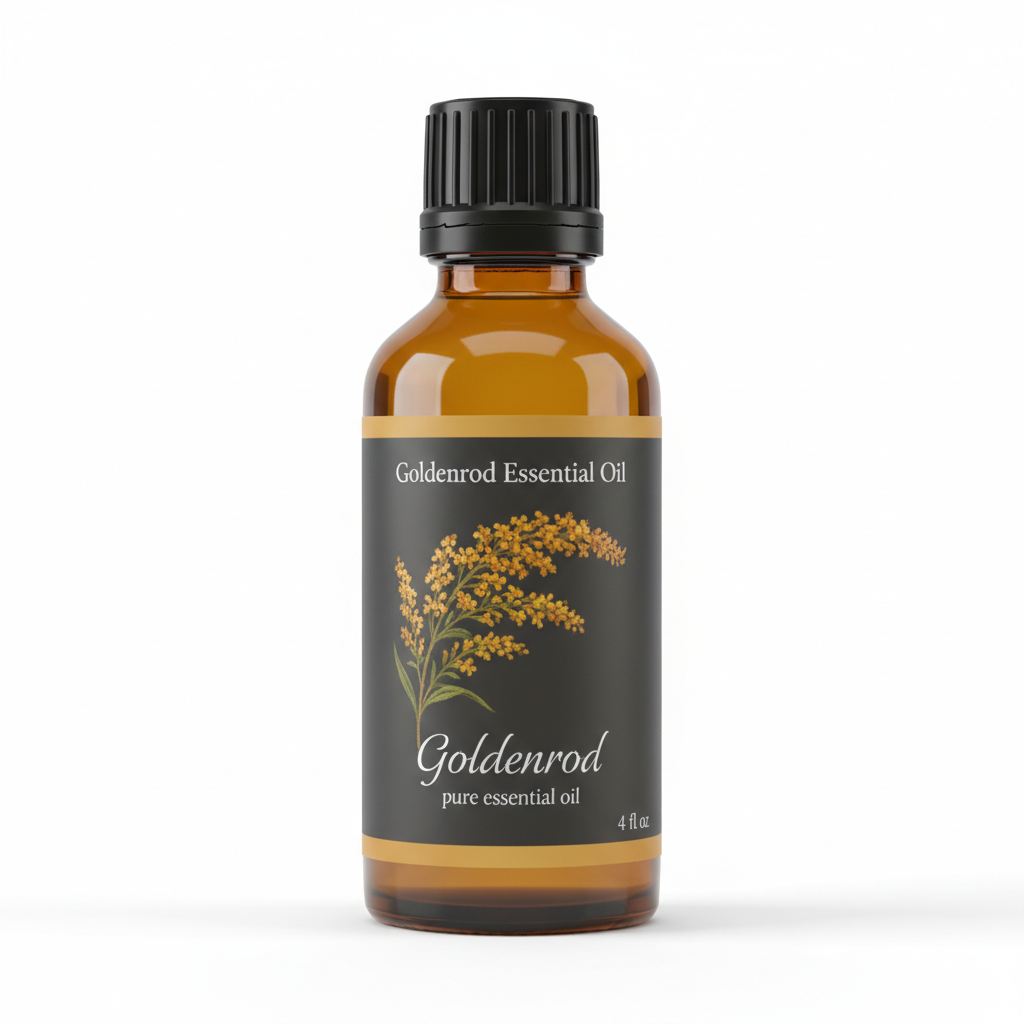
Goldenrod Essential Oil
Our own Goldenrod Essential Oil, in sizes from 0.5 oz to bulk.
From $17.99
Shop Now →The botanical name
Look for Solidago canadensis and not just "goldenrod". The common name covers a very large genus, and the Astereae Lab at the University of Waterloo uses S. canadensis in a fairly narrow sense: two races native to the northeastern quarter of the United States and adjacent Canada, with plants from farther north now assigned to S. bartramiana. A seller who writes the full name may mean the narrow species or a looser group. Our oil is Solidago canadensis, and if you want to know how a species was confirmed for a particular lot, you can ask us in writing through the contact page. Our species guide shows how the goldenrods differ from one another.
Method and material
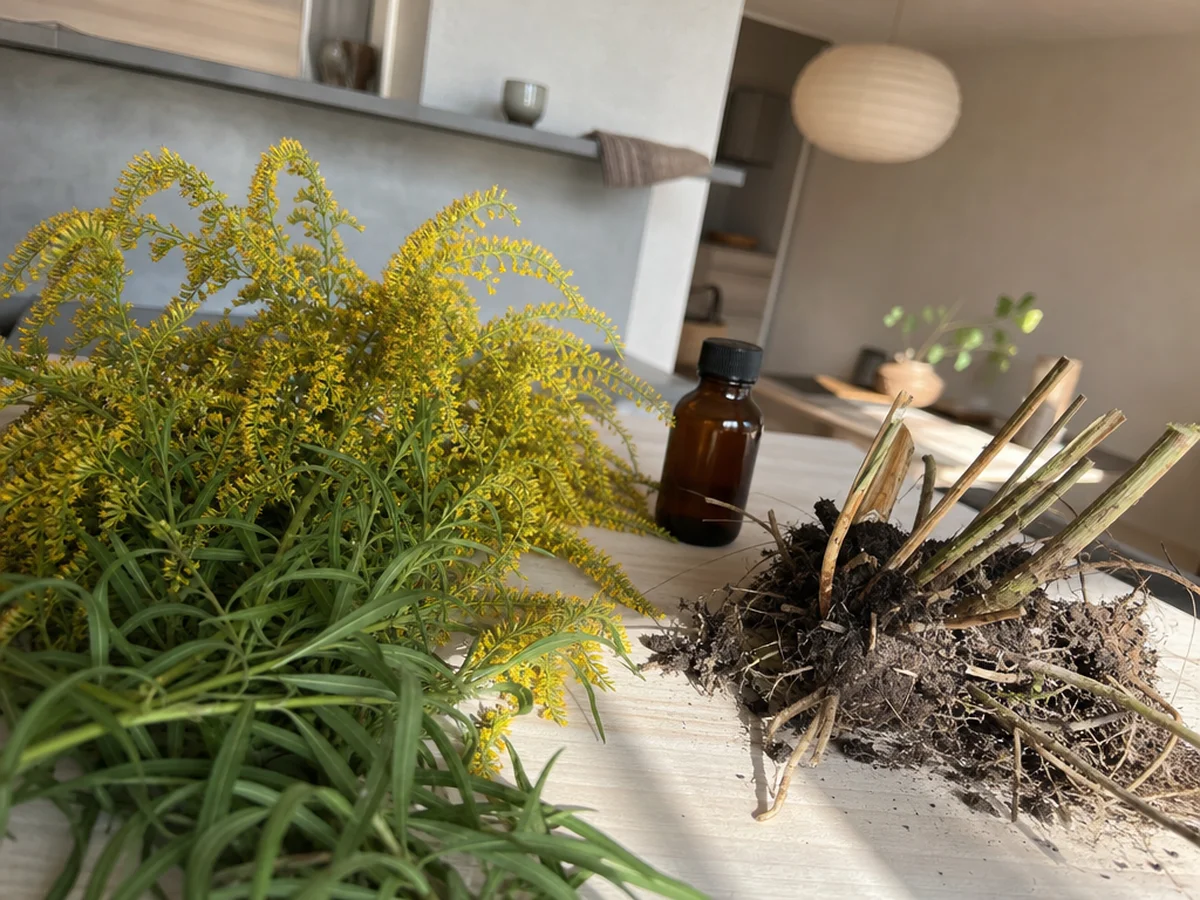
Ours is steam distilled, and that is the right thing to see on a label. It is also only the start of a description. A 2026 comparison of laboratory hydrodistillation with semi-industrial steam distillation, run across seven aromatic plants, found different yields and different volatile profiles, partly because drying, grinding and the size of the still all changed at once (Léva and Gál). The lesson is not that one method wins. It is that two oils become comparable only when you also know the material, whether it was fresh or dried, and how the run was managed. The plant part matters too: one study of S. canadensis gave 1.00% oil from flowers and 0.05% from stems. Our distillation explainer walks through why those numbers shape what a bottle costs to make.
Lot number and dates
Each of our bottles carries distillation and bottling dates along with a lot number. Those two things give you an age and a handle for any question you might have later. We say the oil typically keeps for two to three years in a cool, dark place, so a printed date lets you plan around that. If a seller prints a country and a harvest year instead, it is fair to ask what supports the claim, because a line on a label is a statement and not a measurement. Our storage guide covers keeping a bottle in good shape once it is open.

A certificate of analysis has its own date, too. The one we publish documents a single earlier batch, GLRQGUSCCAC002A, with a best-by date of 01/31/2026. It lists appearance, smell, a relative density of 0.880, a refractive index of 1.487 and an optical rotation of -8.16 degrees, each set against a stated range. It is a good example of what a certificate looks like. If you want a constituent profile or paperwork for the lot in your own bottle, ask us in writing before you order.
The ingredient list
US cosmetic rules ask for ingredients in descending order of predominance, and they allow a fragrance to be declared simply as "fragrance" (21 CFR 701.3). The FDA also notes there is no regulatory definition for "essential oils", and that plant-derived ingredients are treated like any other. In practice, a single-oil bottle should list one ingredient. We sell our goldenrod oil undiluted with no additives or fillers, so one entry is what you should see. A carrier oil in the list is a perfectly good product, but it is a different thing from a neat oil.
It also helps to know why a shopper cannot rely on a number alone. In a 2021 study of lavender, lemon and tea tree oils, adding vegetable oil left the normalised GC-MS percentages essentially unchanged; the dilution only showed up when absolute amounts were measured, and adulteration could be confirmed only against a reliable reference profile (Capetti and colleagues). A clear label plus a seller willing to answer questions does more for you than a single impressive figure. Our seller checklist sorts out what each document can and cannot show.
A short list to carry with you
- Is the full botanical name printed, not just "goldenrod"?
- Does it say how the oil was made?
- Is there a lot number, and can the seller tell you what it points to?
- Does the ingredient list show one entry?
- Is the volume given in fluid measure?
Net quantity: not every ounce is the same
For a liquid cosmetic, the net quantity goes on the front of the package in fluid measure, such as fl. oz. (21 CFR 701.13). A bottle that says only "1 oz" leaves you doing a sum. At a relative density of 0.880, like the batch on our certificate, 1 fl oz is 29.57 ml and weighs about 26.0 g, or 0.92 oz by weight. Going the other way, 1 oz by weight is 28.35 g and fills about 32.2 ml. That is a gap of roughly 9%, enough to matter when you compare two sellers. If you are choosing a first size, our first-bottle guide helps with that.
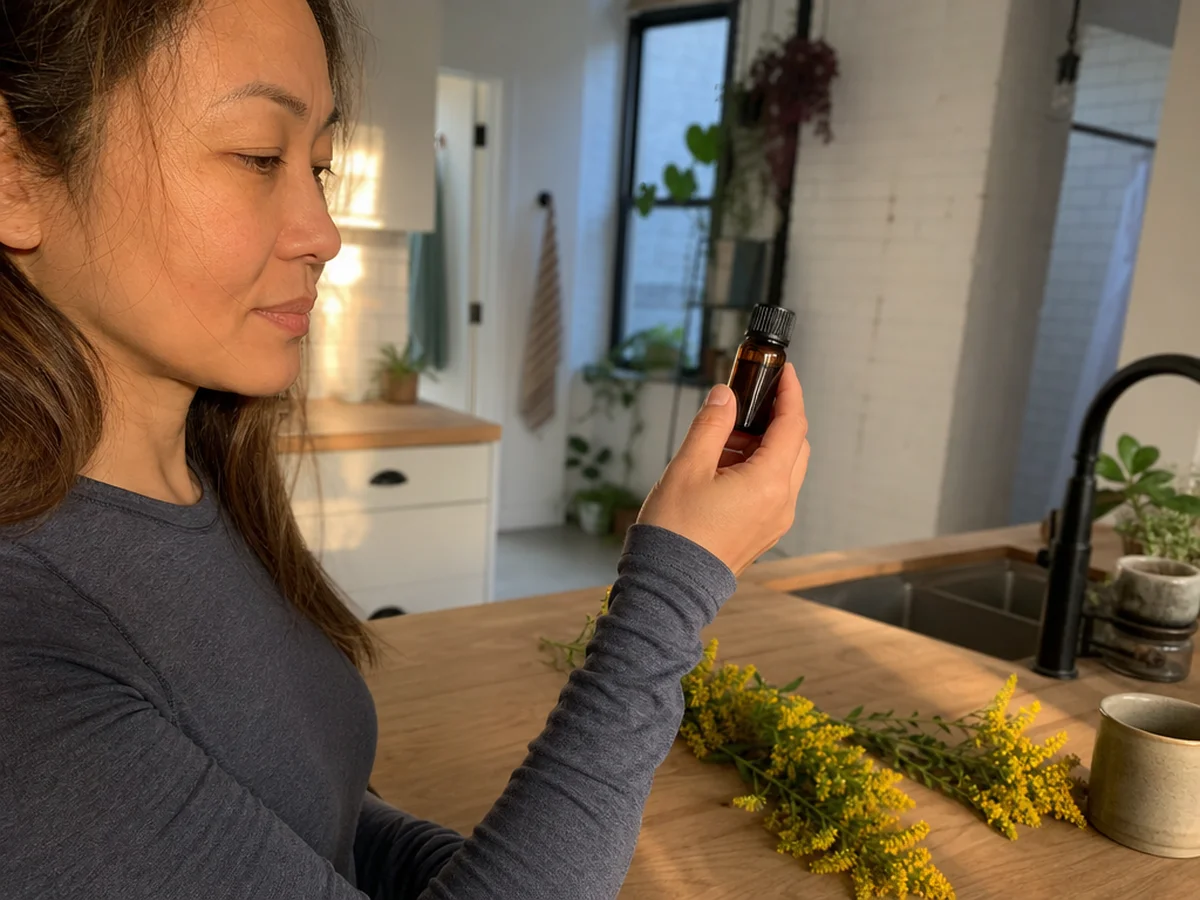
When you have a label in your hand, read it twice, once for what it says and once for what it leaves out. A tidy label does not need to be long, and a short one that answers your questions is a good sign.
No label is a guarantee. What it can do is make your questions specific enough that the answers mean something, and a seller who answers them plainly is one worth buying from.
Goldenrod Essential Oil
Goldenrod Essential Oil from our own shop, in sizes from 0.5 oz to bulk.
From $17.99
Shop Now →Sources & Further Reading
- Solidago canadensis, Astereae Lab, University of Waterloo
- Yang et al., 2025. Multivariate Statistical Analysis of Solidago canadensis L. Essential Oil and Its Antifungal Mechanism Against Mulberry Sclerotinia Diseases. Int J Mol Sci
- Léva and Gál, 2026. Impact of Extraction Scale and Method on the Chemical Profile of Essential Oils. Molecules
- Capetti et al., 2021. Adulteration of Essential Oils: A Multitask Issue for Quality Control. Molecules
- 21 CFR 701.3, Designation of ingredients
- 21 CFR 701.13, Declaration of net quantity of contents
- Fragrances in Cosmetics, FDA