Goldenrod Species Guide: How to Tell Solidago Apart
Say "goldenrod" to ten people and you may get ten different plants. The name covers a whole genus, Solidago, which the University of Waterloo's Astereae Lab puts at about 140 species worldwide. Most of them live in North America, so it is easy to see how a roadside plume in Ontario and a garden plant in Germany can share a name and look rather different.
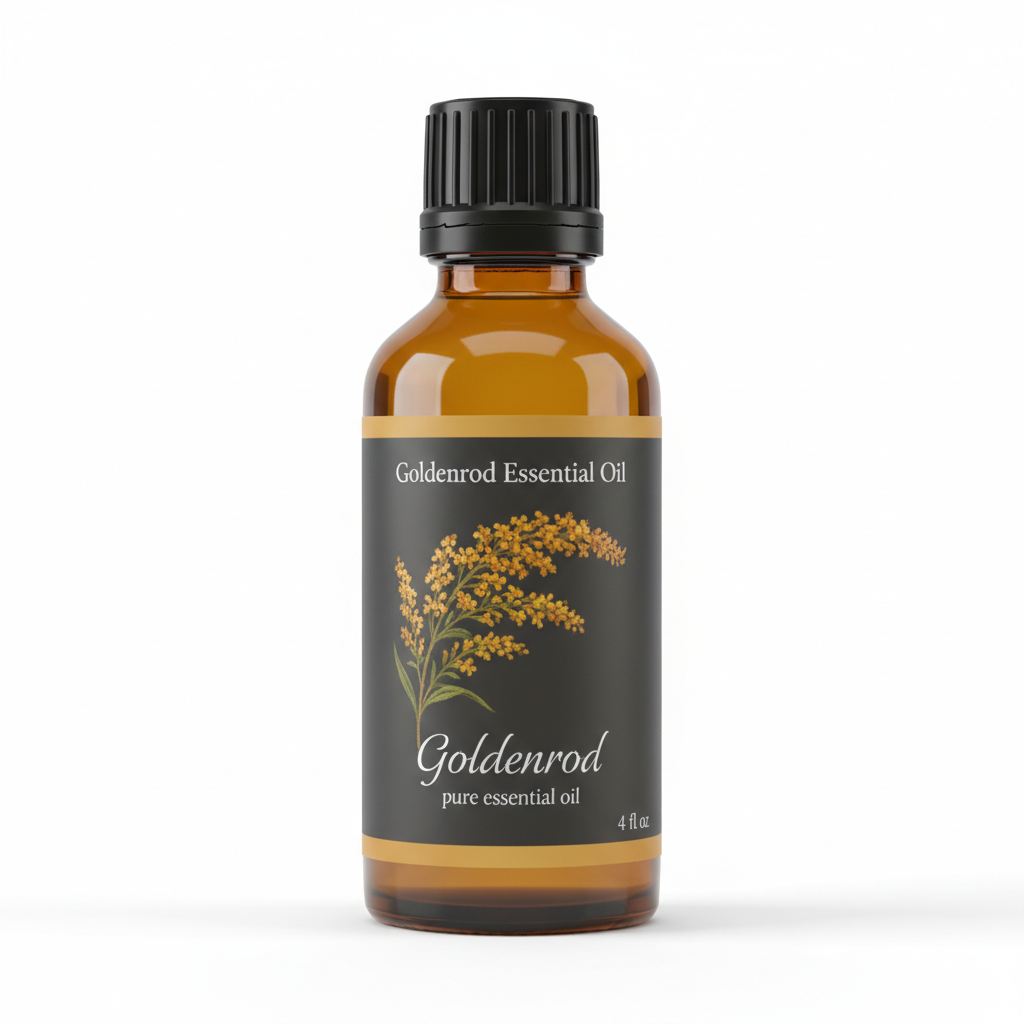
Goldenrod Essential Oil
Our own Goldenrod Essential Oil, in sizes from 0.5 oz to bulk.
From $17.99
Shop Now →Four you are likely to meet
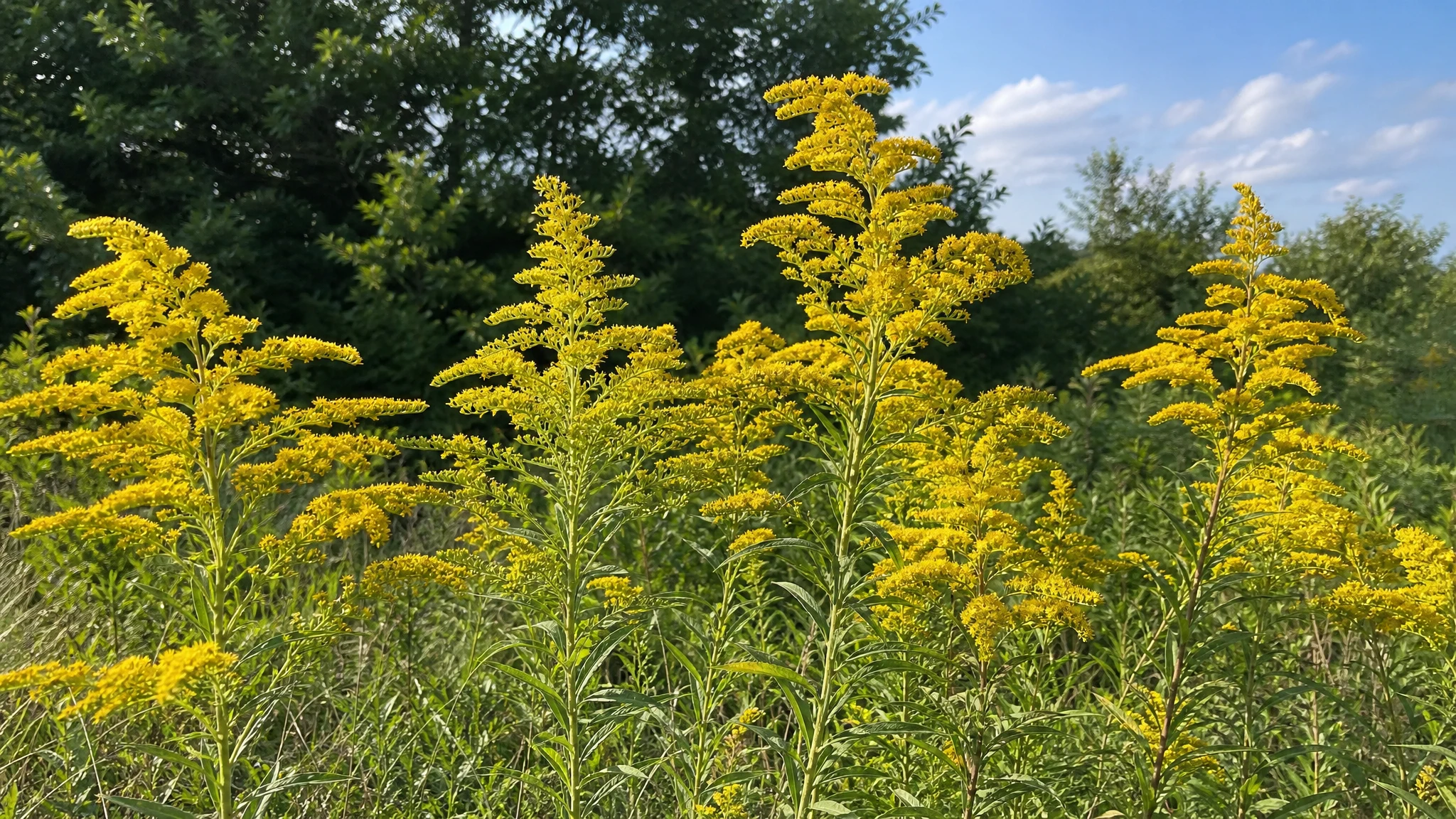
Our oil is from Solidago canadensis, Canada goldenrod, and the Certificate of Analysis we publish for one batch names it. It is a tall plant, from 2 to 6 feet by NC State's description, with a pyramid-shaped plume that carries 100 to more than 1,300 flower heads and blooms from August to October. The same page puts its range across much of the U.S. and Canada.
| Goldenrod | How to recognise it | Where |
|---|---|---|
| Canada goldenrod (S. canadensis) | Tall, sharply toothed leaves, dense pyramid plume | Broadly across the U.S. and Canada, depending on how the species is defined |
| Giant goldenrod (S. gigantea) | Usually the least hairy of its group, with an open, one-sided plume | Eastern Canada and eastern U.S., plus the Great Plains; invasive in Europe, Japan and South Africa |
| Sweet goldenrod (S. odora) | Smooth, untoothed leaves that smell of anise when crushed | Southern U.S., north along the coast to southern New England |
| European goldenrod (S. virgaurea) | Highly variable in size, from a few inches in alpine plants to nearly a metre in gardens | Mainly Europe |
Details come from the Waterloo Astereae Lab species pages, with the Canada goldenrod description from NC State. The anise-scented leaves of sweet goldenrod are a nice one to know about: crush a leaf between your fingers and you will understand how a plant can be named for its smell.
Take this guide outside
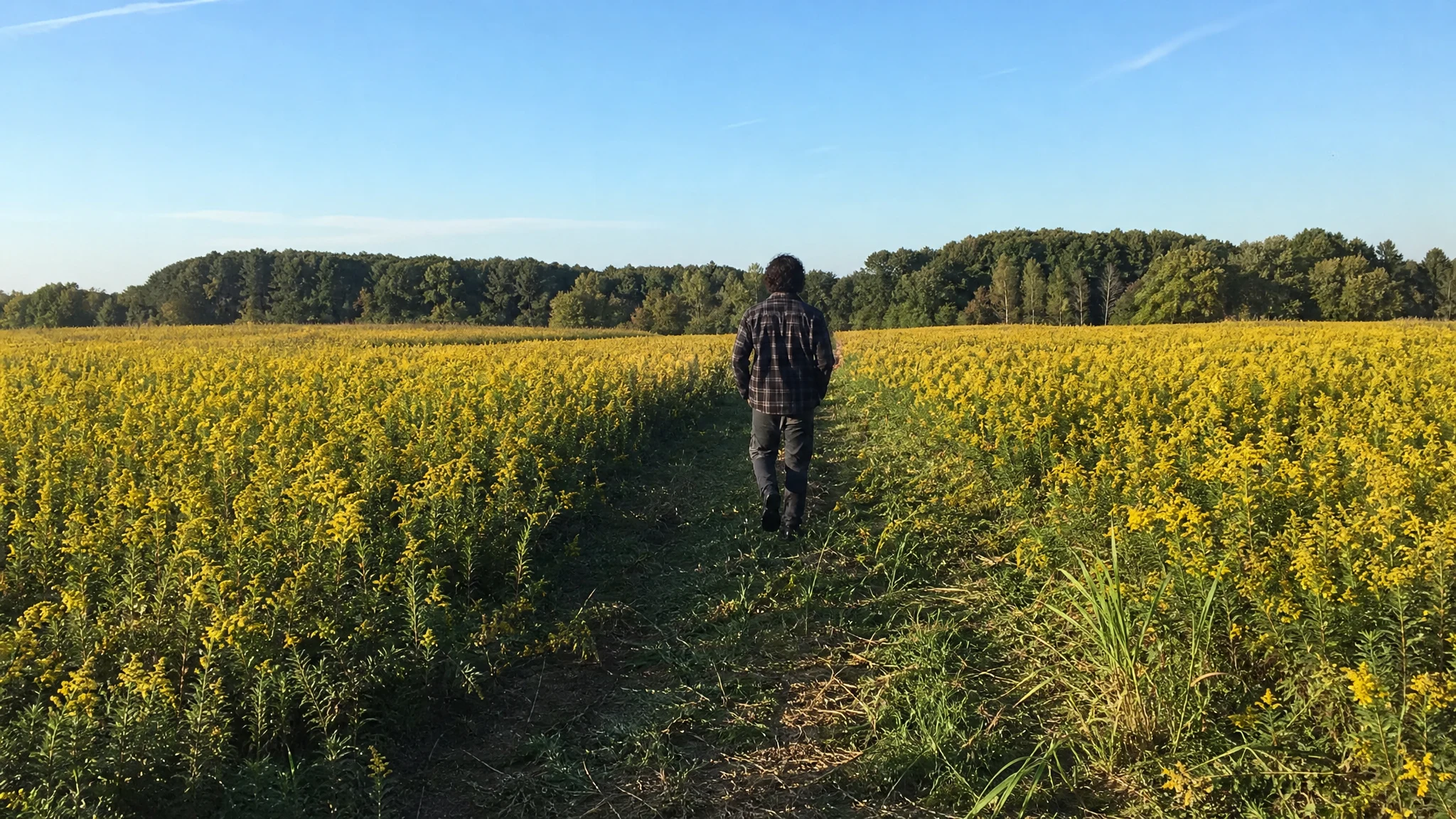
The best way to learn goldenrods is to go and look at them in late summer. Start with the leaves: are the edges toothed or smooth? Then crouch down by the plume and notice whether it rises in a neat pyramid or leans to one side like a comb. Rub a leaf between your fingers and smell it. Most give you only a green, grassy hint, but now and then one surprises you.
Bring a notebook or use your phone to jot down where you were, what the leaves felt like and how the plume was shaped. By your second or third walk you will start to see patterns that no table can give you. A field guide for your own region is a worthwhile companion, because the plants growing near you matter more than the continental picture.
Why botanists argue about the name
Even the name we use has more than one meaning. Waterloo uses S. canadensis in a narrow sense: two races native to the northeastern quarter of the United States and adjacent Canada, with northern Ontario, Quebec and Newfoundland plants now assigned to a different species, S. bartramiana. Older and broader usage, like NC State's, stretches the name across most of the continent. Both are fair ways to use the name, and it simply means that a Latin name on a label is a starting point.
Pressing a plant to remember it
If you enjoy a quiet hobby, try pressing a leaf or a small flower head between the pages of a heavy book. Write the date and place on a slip of paper and tuck it alongside. A few weeks later you will have a small keepsake of the plant you found, and a reference for the next walk. It is a lovely way to build your eye, and it costs next to nothing.
Why this matters for an oil
A plant is more than its name. In a Slovak laboratory study, wild S. canadensis aerial parts gave an oil led by germacrene D at 34.9%, with limonene and alpha-pinene next. The authors cite earlier work with germacrene D anywhere from 19.8% to 39.2%, and they note that composition shifts with climate, growth stage, harvest timing and distillation method. So two oils from the same species can differ, and that variety is part of what makes goldenrod interesting.
That is why we like to be specific. Our oil is Solidago canadensis, and the certificate we publish for one batch (batch GLRQGUSCCAC002A, whose best-by date has passed) reports a relative density of 0.880, a refractive index of 1.487 and an optical rotation of -8.16 degrees. If you want a constituent profile for the lot you are buying, ask us in writing through our contact page before you order.
How we think about a name on a bottle
When we talk about our oil, we like to say the Latin name out loud, because a common name like goldenrod covers so much ground. Think of the Latin name as the first line of an introduction. It tells you which plant is being discussed, and the lot, the dates and the plant part fill in the rest of the story. Once you get used to reading Latin names, a whole shelf of oils starts to make more sense, and pretty common names stop fooling you.
Questions worth asking any seller
- Which species, in Latin?
- Which plant part, and how was it distilled?
- Can you share lot information?
Our article on reading a goldenrod label goes through these in more detail, the compounds article covers the chemistry, and the foraging guide helps with finding the plant outdoors.
Once you know the plants apart, a late-summer walk gets a lot more interesting.
Goldenrod Essential Oil
Goldenrod Essential Oil from our own shop, in sizes from 0.5 oz to bulk.
From $17.99
Shop Now →Sources & Further Reading
- University of Waterloo Astereae Lab. Goldenrods. uwaterloo.ca
- University of Waterloo Astereae Lab. Solidago canadensis. uwaterloo.ca
- University of Waterloo Astereae Lab. Solidago gigantea. uwaterloo.ca
- University of Waterloo Astereae Lab. Solidago odora. uwaterloo.ca
- NC State Extension. Solidago canadensis plant toolbox page. plants.ces.ncsu.edu
- Elshafie H.S. et al., 2019. Molecules 24(7):1206. pmc.ncbi.nlm.nih.gov