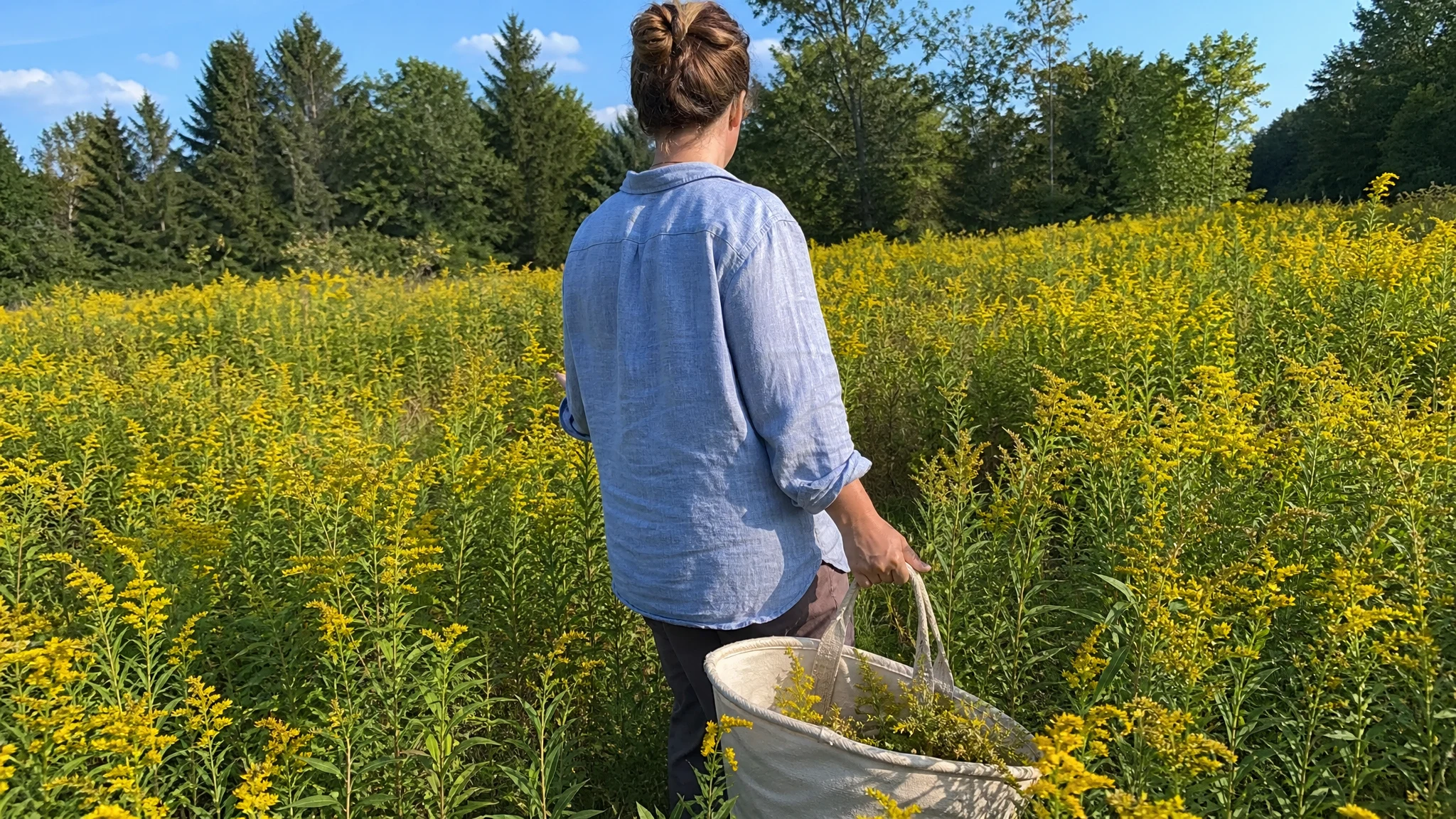
Can You Forage Goldenrod? Four Things to Check First
Late summer, and the roadside fields turn gold. It is easy to understand the pull to cut an armful. Before you do, four questions are worth asking in order: may you take it from this land, can you name the plant, is the ground clean, and how much can the stand spare?
Goldenrod Essential Oil
Our own Goldenrod Essential Oil, in sizes from 0.5 oz to bulk.
From $17.99
Shop Now →May you take it from here?
Rules vary by land and even by forest, so a blanket answer is unreliable. The Rio Grande National Forest, for example, says permits may be required for individual gathering and are always required for commercial gathering. It also asks gatherers not to collect specimens in Primitive, Wilderness, Research Natural, Botanical or Scenic areas. We found nothing comparable for state parks, county land or private property, and those differ again. The reliable habit is the same everywhere: ask the managing agency or the owner, and get the answer in writing if you plan to take more than a small bunch.
Can you name it?
"Goldenrod" covers many species, and botanists still debate the borders. The University of Waterloo's Astereae Lab describes Solidago canadensis in a narrow sense as diploid plants of the northeastern United States and adjacent Canada, with plants from far northern Ontario, Quebec and Newfoundland moved to a different species. NC State's plant guide describes it as two to six feet tall, blooming roughly August to October, with a pyramid of flower clusters carrying 100 to 1,300 or more small flower heads. Our species guide compares the family.
The bigger reason to be sure is look-alikes. The USDA Agricultural Research Service describes groundsels that flower in late summer and contain pyrrolizidine alkaloids, which primarily affect the liver. Its page is about livestock, not people, but it is a good reason to rely on positive identification: a local extension office or botanical garden can confirm a pressed specimen. Also remember that goldenrod is in the daisy family, so a person with a known skin reaction to ragweed, daisies or chamomile should check with a pharmacist or allergist before handling it in quantity. Anything beyond handling, such as tea, is a separate conversation, and our tea article shows how seriously the European regulators treat it.
A simple field kit
Foraging goes better with a little preparation. Sharp snips are kinder to the plant than tearing at stems, a paper bag or open basket keeps blooms from going soggy, and a notebook and pencil record the date, the place and who said yes. Wear gloves and long sleeves if you are handling a lot of plants. Take a phone photo of the whole plant, the leaves and the way the flowers branch, so you can check identification at home with a calm eye rather than in the middle of a field.
Is the ground clean?
The U.S. EPA advises siting gardens away from potential lead sources such as old painted buildings and roads with heavy traffic, and says soil above 400 ppm lead should not be used as is. It points to local health departments, state university labs and extension offices for soil testing. That page is about gardens rather than wild plants, so applying it to a ditch is our inference, but the logic carries: a stand beside a busy road or an old painted barn is exactly the case it flags. If a plant will touch skin, test the soil.
How much can the stand spare?
The Rio Grande forest's guidance is to harvest no more than one in twenty plants from a given population. Taking a few heads from many stems, rather than everything from a few, spreads the impact. Goldenrod is also a late-season meal for pollinators, so every plume you take is a plume they cannot, and our pollinator article tells that story.
What to do with the blooms
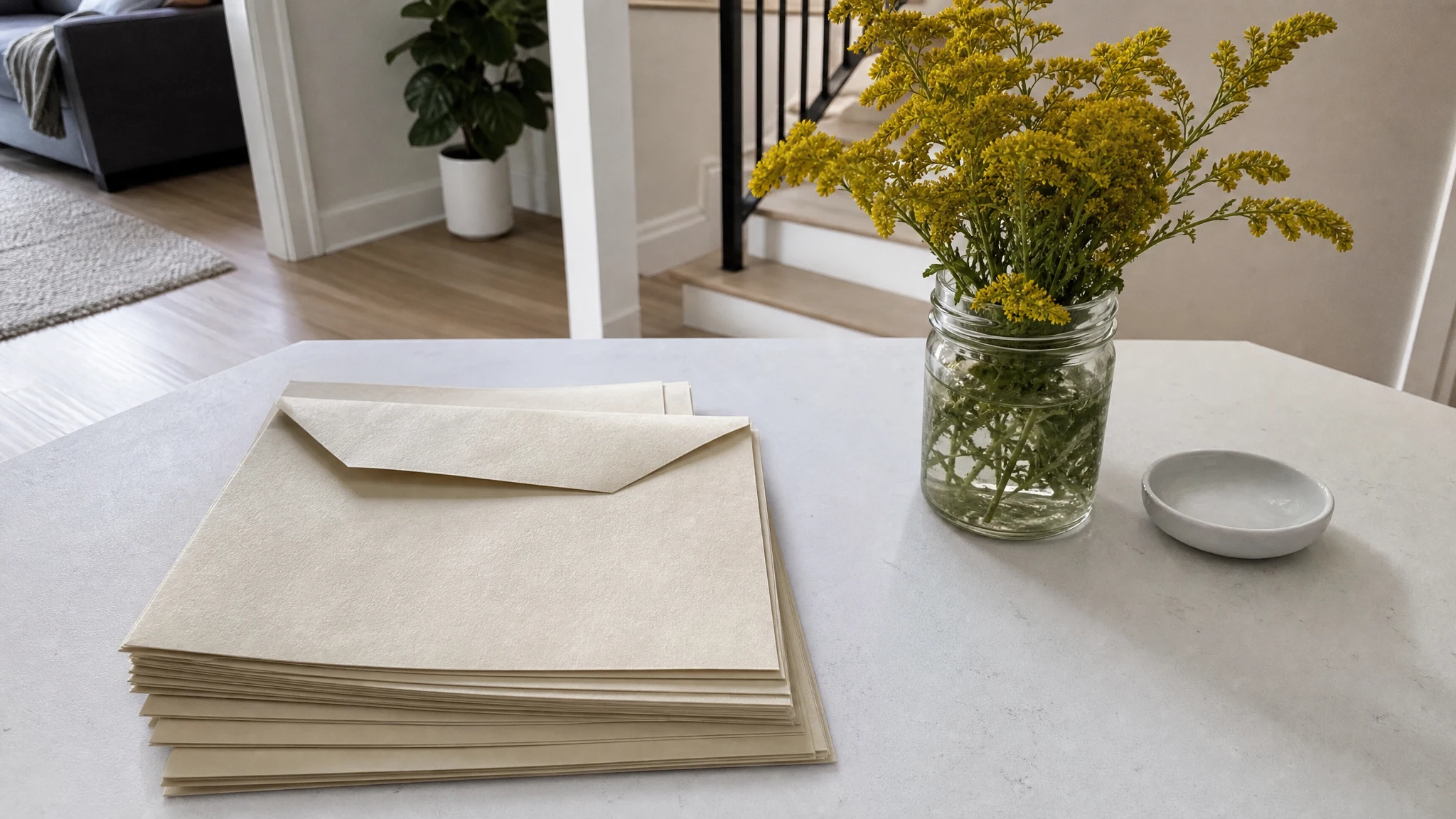
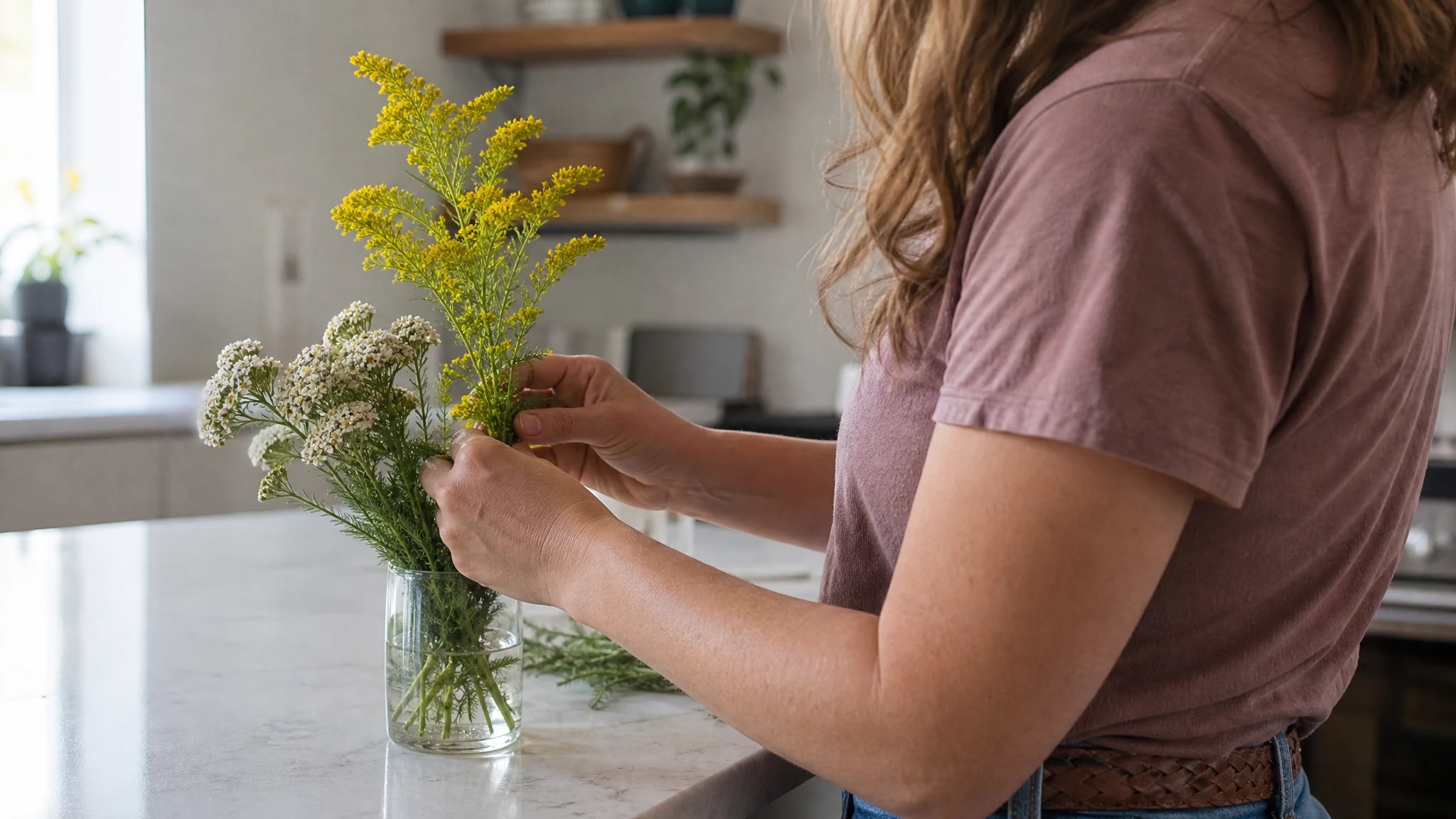
Be realistic about the pleasure on offer. A few plumes in a jar of water on the kitchen table are lovely, and you will probably notice a faint, sweet, grassy smell as the flowers open. Pressed between the pages of a heavy book, a stem keeps its shape and colour for years and makes a good reference specimen. Dried plumes hang well in a bunch in a dry, shaded room.
None of that is the same as an essential oil, which is why we treat the plant and the bottle as two separate hobbies. We sell only the oil.
A last practical point: go with someone, or tell someone where you are headed, especially if the stand is off a back road. Late summer fields hide ruts, ticks and uneven ground, and the best foraging trips are the ones that end with a story and not a sprained ankle. Dress for it, bring water, and take your time.
Will foraging fill a bottle?
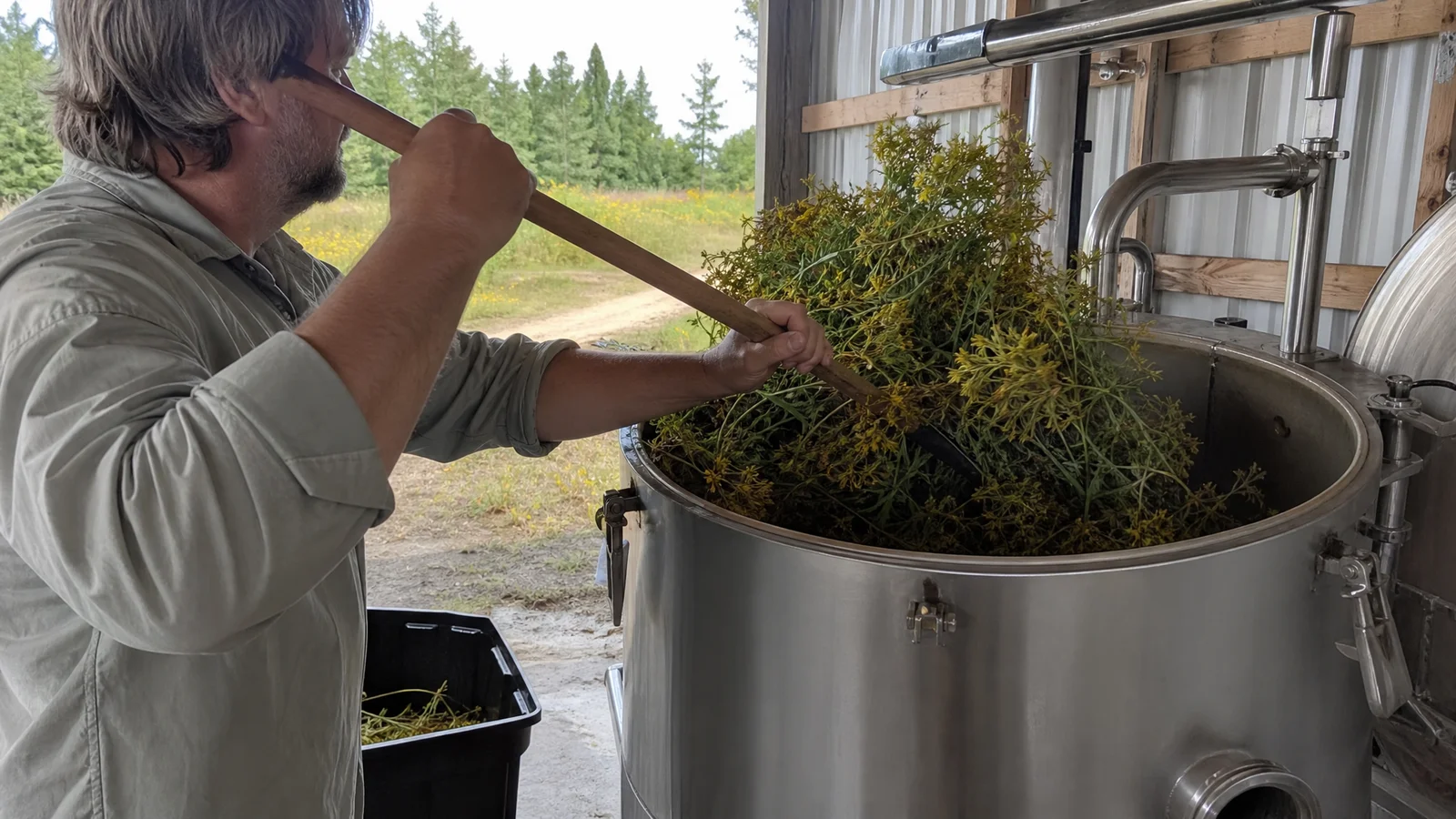
People sometimes ask whether gathering could replace buying. At a laboratory yield of 0.27% of dry weight, a half-ounce bottle (about 13 g of oil at the density on our Certificate of Analysis) needs roughly 4.8 kg of dried plant. That is reasoning from one lab figure, and fresh weight is far larger. It is a lovely way to learn how much meadow stands behind a little bottle, and the reason foraging is better spent on a vase of blooms or a pressed specimen. Our September bloom piece shows how to enjoy the season in other ways.
Keep a note of the date, the place and who gave permission, and leave the patch looking as you found it. A stand treated gently this year is a stand that blooms next year.
Goldenrod Essential Oil
Goldenrod Essential Oil from our own shop, in sizes from 0.5 oz to bulk.
From $17.99
Shop Now →Sources & Further Reading
- USDA Forest Service, Rio Grande National Forest. Forest Products Permits
- University of Waterloo Astereae Lab. Solidago canadensis
- NC State Extension. Solidago canadensis plant toolbox page
- USDA Agricultural Research Service. Threadleaf and Riddell's Groundsels (Senecio longilobus and S. riddellii)
- U.S. EPA. Healthy Gardening Practices to Reduce Exposure to Lead-Contaminated Soil
- Elshafie et al., 2019. Antimicrobial activity and chemical composition of essential oil extracted from Solidago canadensis L. growing wild in Slovakia (Molecules)