When Does Goldenrod Bloom? Why the Oil Is Seasonal
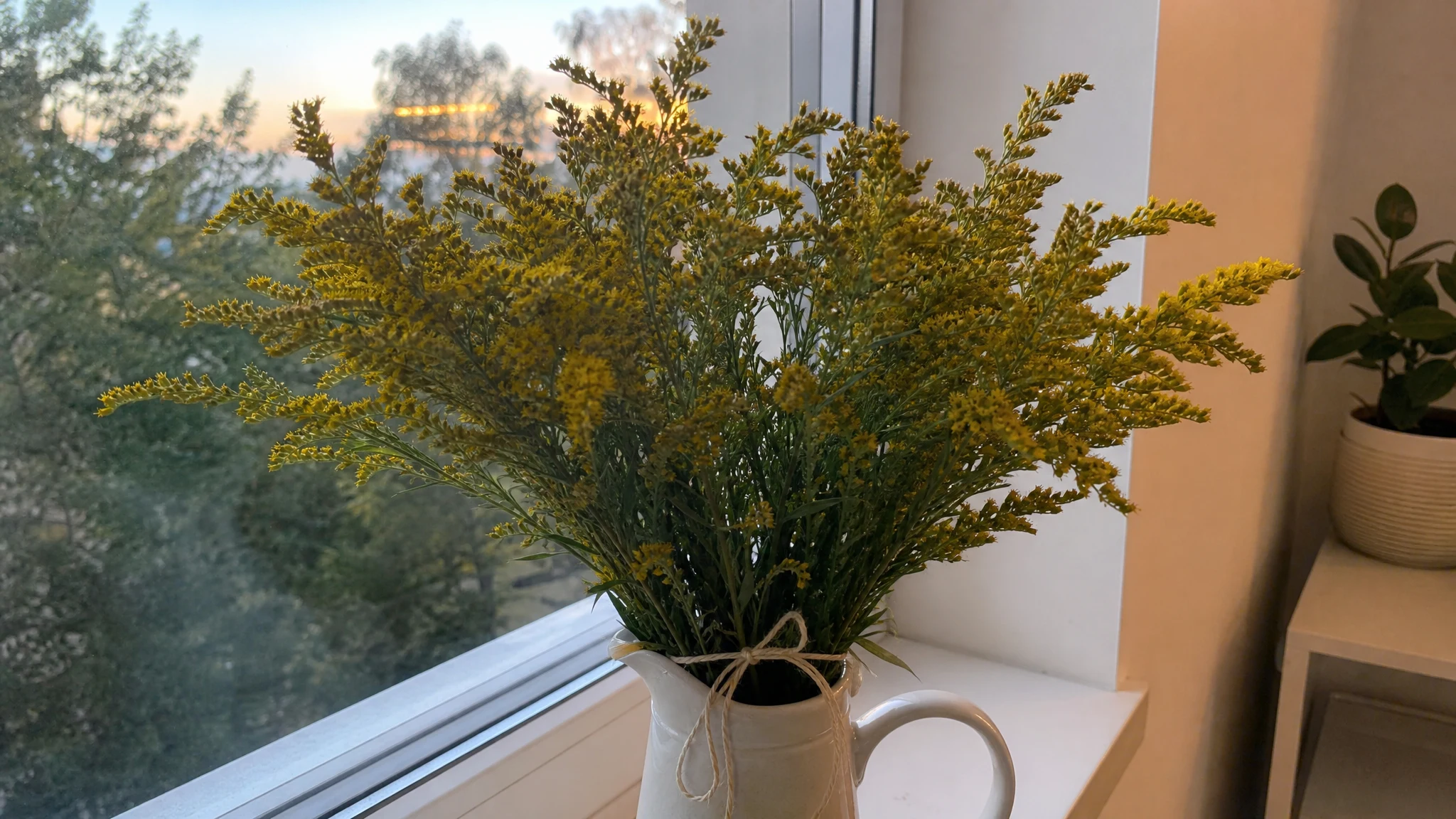
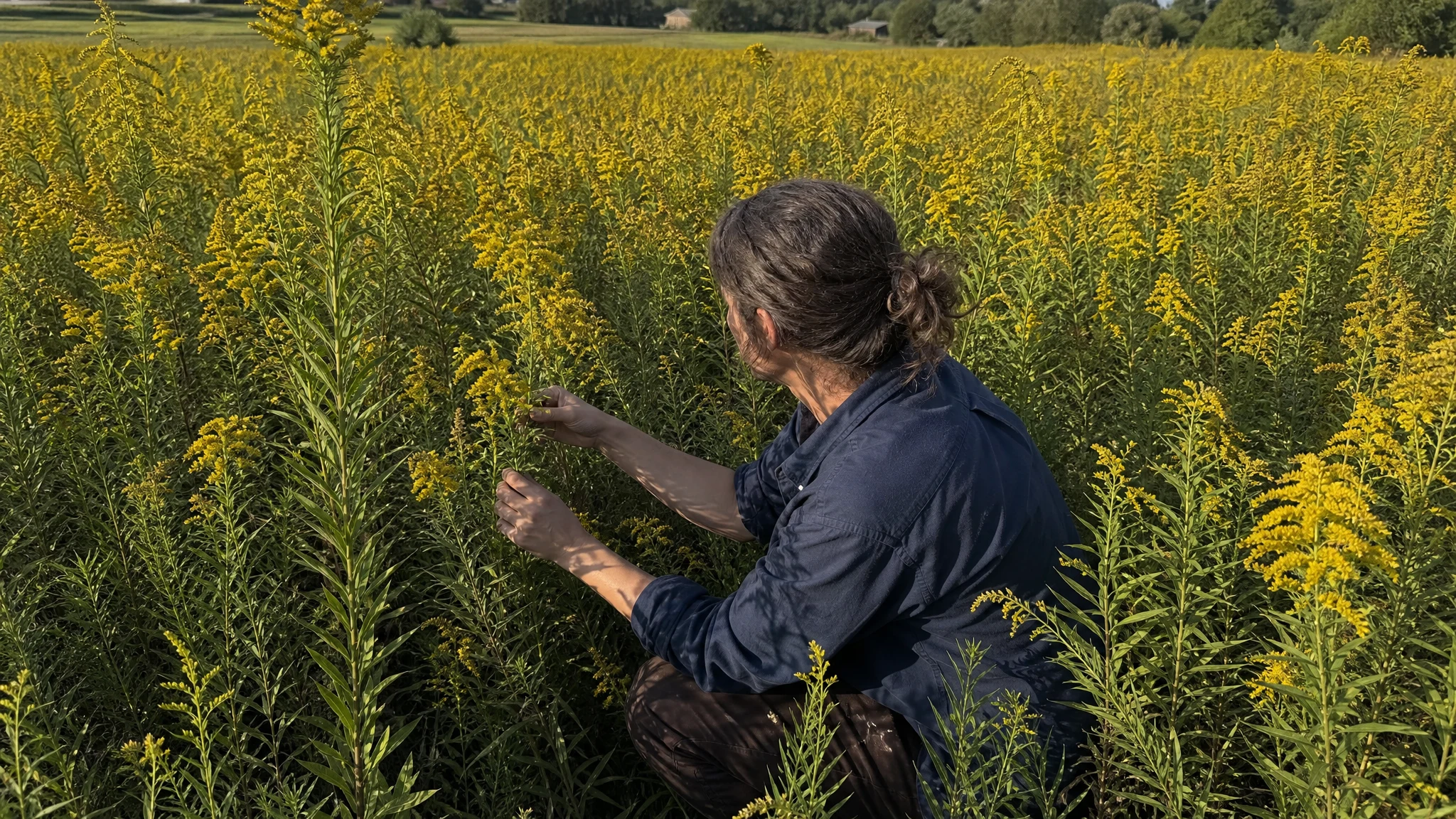
Around the end of August, ditches and meadows across eastern North America start to turn from green to gold, and by mid-September the colour is hard to miss. For a plant with such a loud entrance, the season is surprisingly short, and it shapes everything about goldenrod oil.
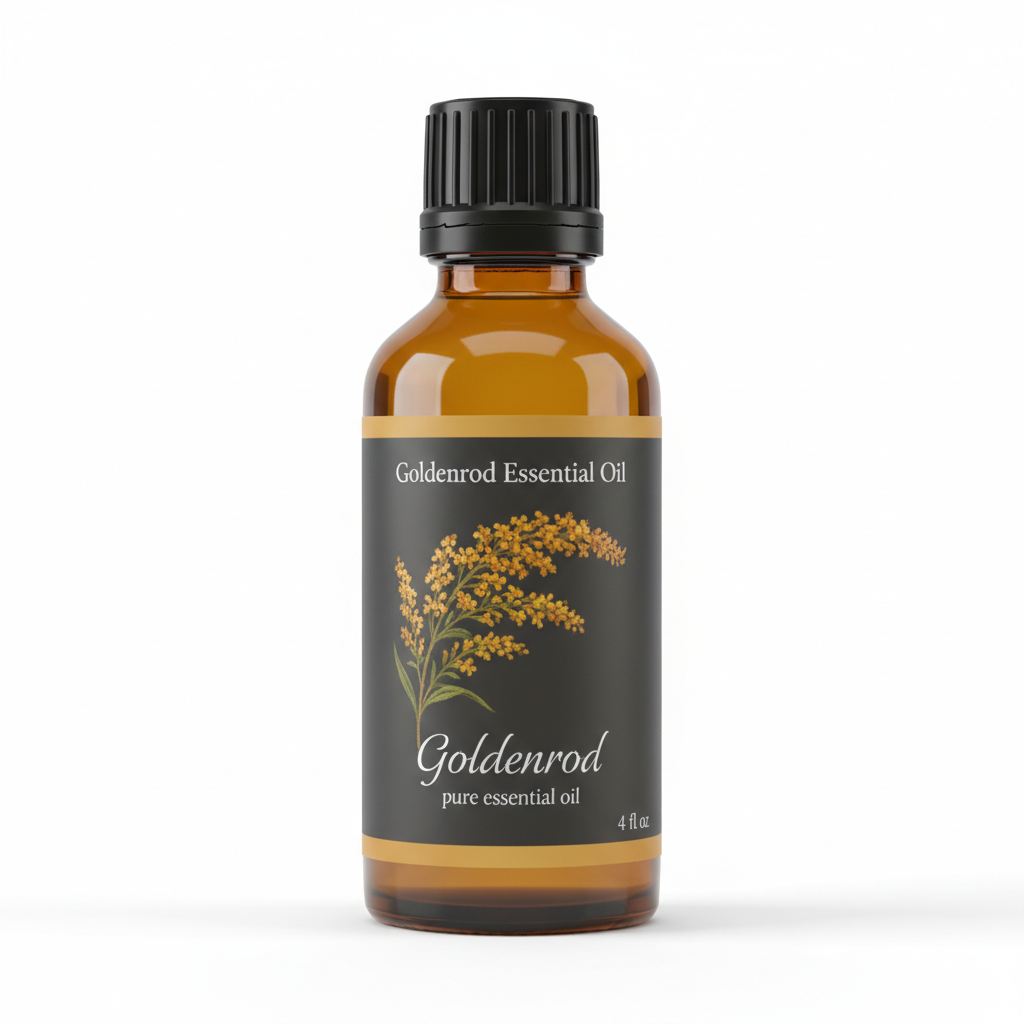
Goldenrod Essential Oil
Our own Goldenrod Essential Oil, in sizes from 0.5 oz to bulk.
From $17.99
Shop Now →A long bloom and a short window
NC State Extension says Canada goldenrod blooms from August to October, with plumes of 100 to more than 1,300 flowers, and the Old Farmer's Almanac says goldenrod usually flowers from August or September through frost. The window for our oil is narrower: a few weeks in August and September, with plumes taken while fully open but before they begin to set seed. A plant can bloom across a whole region for two or three months and still have only a short stretch that suits the still, which makes sense of why we list the oil as limited seasonal batches with modest late-summer yields. When a season is poor, we sell out until the next one.
A little arithmetic on yield
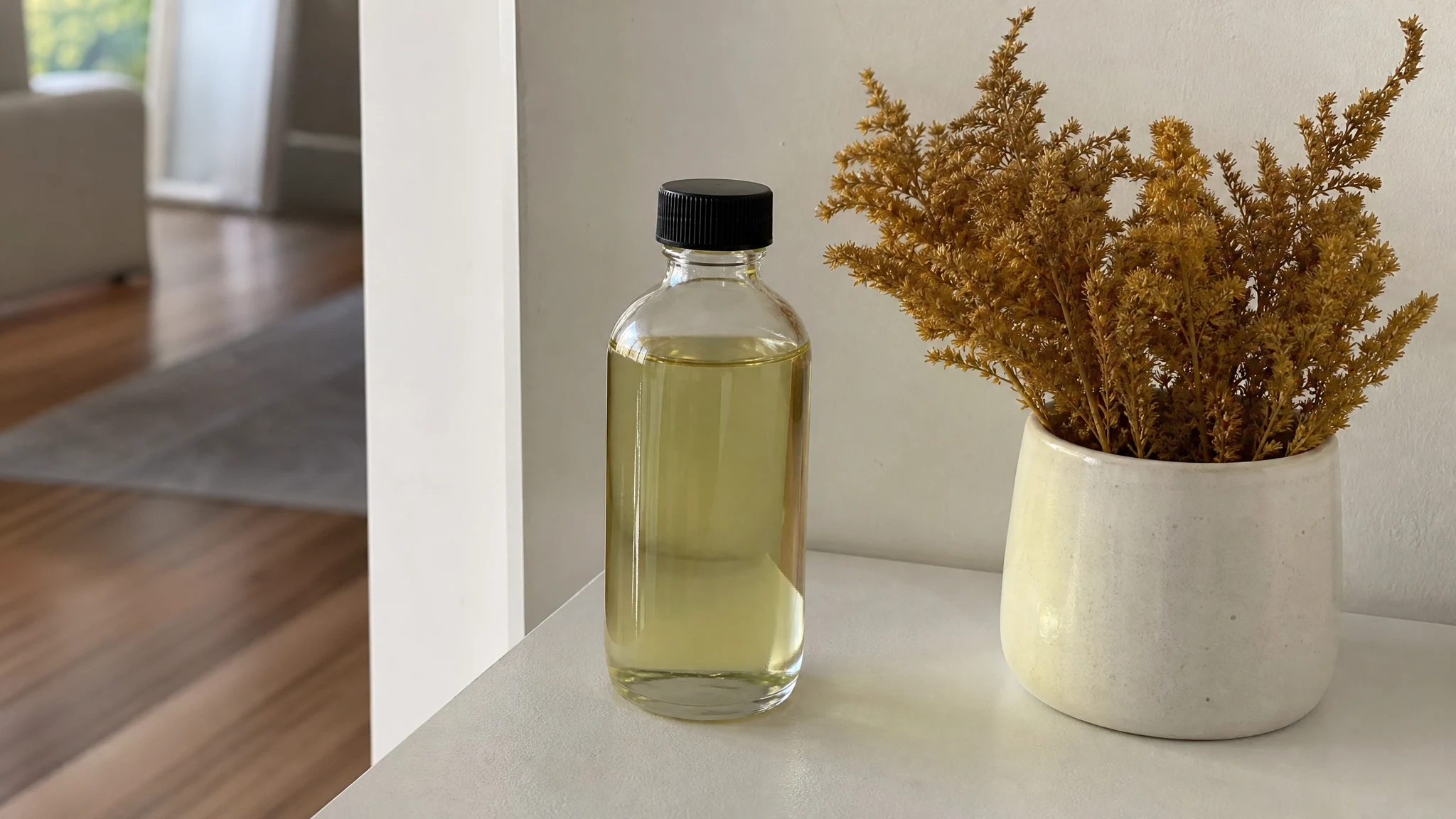
In a 2019 Slovak laboratory study, dried aerial parts gave 0.27% oil by dry weight. At the 0.880 density on the Certificate of Analysis we publish, a 0.5 fl oz bottle holds about 13 g of oil, which at that yield would take about 4.8 kg of dried plant. A Chinese study that distilled flowers separately reported 1.00%, more than three times higher, so treat 4.8 kg as an order of magnitude rather than a recipe. Either way, one small bottle stands for a lot of plumes, which is the best explanation for why the oil is a seasonal one. Our distillation explainer goes through how the numbers vary.
Sneezing season is not goldenrod season
The same weeks bring hay fever, and goldenrod gets the blame. The Almanac explains that goldenrod pollen is large, heavy and sticky and travels on insects, while ragweed pollen is small and buoyant and rides the wind, and ragweed blooms at the same time. An allergy practice in Atlanta makes the same point: goldenrod does not cause hay fever, though it can cause skin reactions in some people who touch it. Skin sensitivity belongs to the daisy family as a whole; DermNet names sesquiterpene lactones as the main allergens, and cross-reactions between family members are common. If sneezing is the issue, an allergist can test; if it is a skin reaction, a patch test comes first and a dermatologist is the person to see. Our allergy article separates the two cases.
Enjoying the season on foot
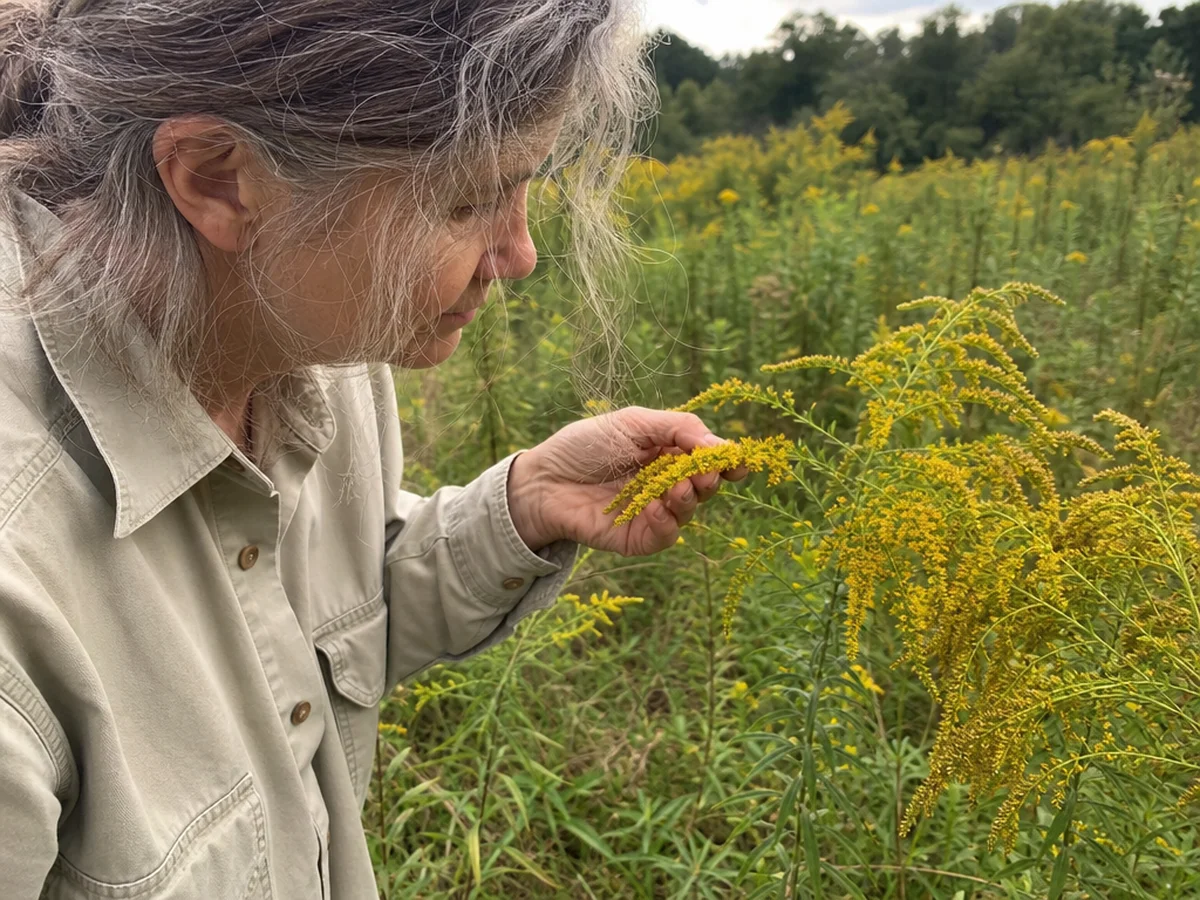
You do not need a bottle to enjoy goldenrod season. Take a slow walk along a field edge in the first weeks of September and you will see the plumes in every stage: tight green buds at the top, full gold bloom in the middle, and browning tips on the earliest plants. Look closely and every plume turns out to be a crowd of tiny flowers, with bees, wasps and hoverflies working along them. Stand in the sun on a warm afternoon and you may catch a faint, sweet, grassy smell, a little like warm hay.

Bring a notebook and write down the date the first fields turn gold where you live. Do it for a few years and you will have your own bloom calendar, which is more useful than any general rule, since the season shifts from place to place.
If you have a garden, goldenrod is a generous plant to keep an eye on. It arrives when much else has finished, and the plumes seem to glow in low autumn light. Even a small stand beside a fence draws insects in numbers, and watching them is a good way to spend ten quiet minutes at the end of a day.
Planning a purchase around a short season
Because supply follows the bloom, a little planning goes a long way.
- Size it to your use. Our guidance for skin use is 0.5% to 2% in a carrier oil. In a 30 ml batch, that is 0.15 to 0.59 ml, roughly 3 to 12 drops at the usual 20 drops per millilitre. A 0.5 fl oz bottle holds 14.79 ml, which covers about 25 batches at 2% and about 100 at 0.5%.
- Store it well. We say typically 2 to 3 years in a cool, dark place. The Tisserand Institute lists heat, light and moisture as the usual culprits and says refrigeration roughly doubles an oil's life. For larger sizes, decant working amounts into smaller airtight bottles.
- Ask about the lot. Distillation and bottling dates and a lot number are printed on the bottle, and you can reach us through our contact page with lot questions.
- Volume buyers should have a look at our bulk page and wholesale page, and ask about timing early, since a short season means stock moves with the calendar.
Home infusions of the flowers are a different thing from the oil, as our infused oil comparison explains, and anyone pregnant, nursing or buying for a household with children or pets should see our pregnancy article first.
If you make seasonal products, work backwards from the date you want them on the shelf and leave room for a small trial batch first. Ordering early is kinder to your schedule than waiting for the last week.
The plumes only last a few weeks, so September is a good month for planning the year ahead.
Goldenrod Essential Oil
Goldenrod Essential Oil from our own shop, in sizes from 0.5 oz to bulk.
From $17.99
Shop Now →Sources & Further Reading
- NC State Extension. Solidago canadensis (Canada goldenrod). plants.ces.ncsu.edu
- Sweetser, Old Farmer's Almanac. The good side of goldenrod: it's not ragweed. www.almanac.com
- Atlanta ENT. Atlanta allergies: is it ragweed or goldenrod? www.atlantaent.com
- DermNet. Compositae allergy. www.dermnetnz.org
- Elshafie et al., 2019. Chemical composition and antifungal activity of Solidago canadensis essential oil, Molecules. pmc.ncbi.nlm.nih.gov
- Tisserand Institute. Oxidised essential oils. tisserandinstitute.org
- Yang et al., 2025. Solidago canadensis flower, leaf and stem essential oils, Int J Mol Sci. pmc.ncbi.nlm.nih.gov