Goldenrod Oil for Autumn Scents: Hay, Honey, Meadow
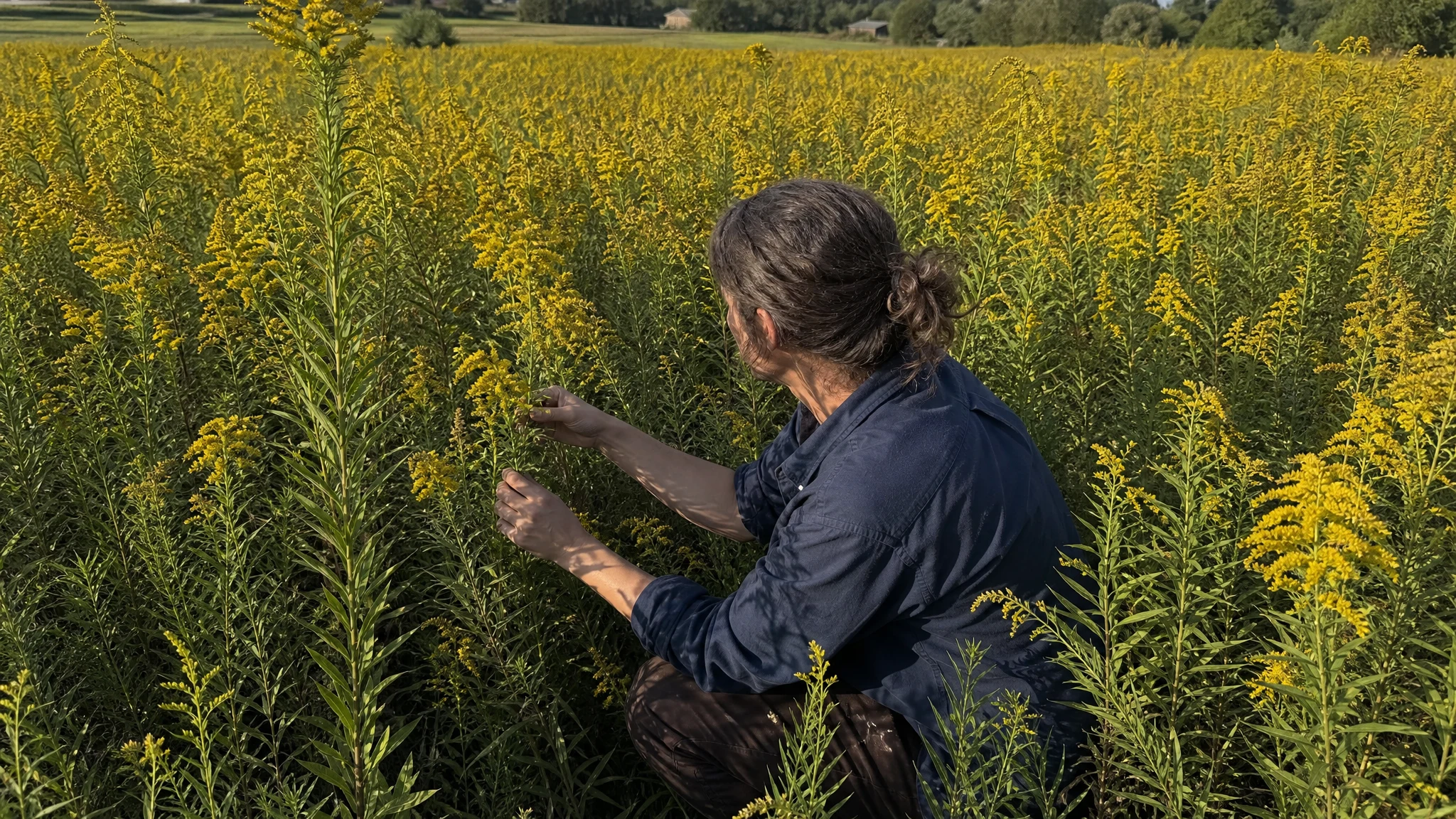
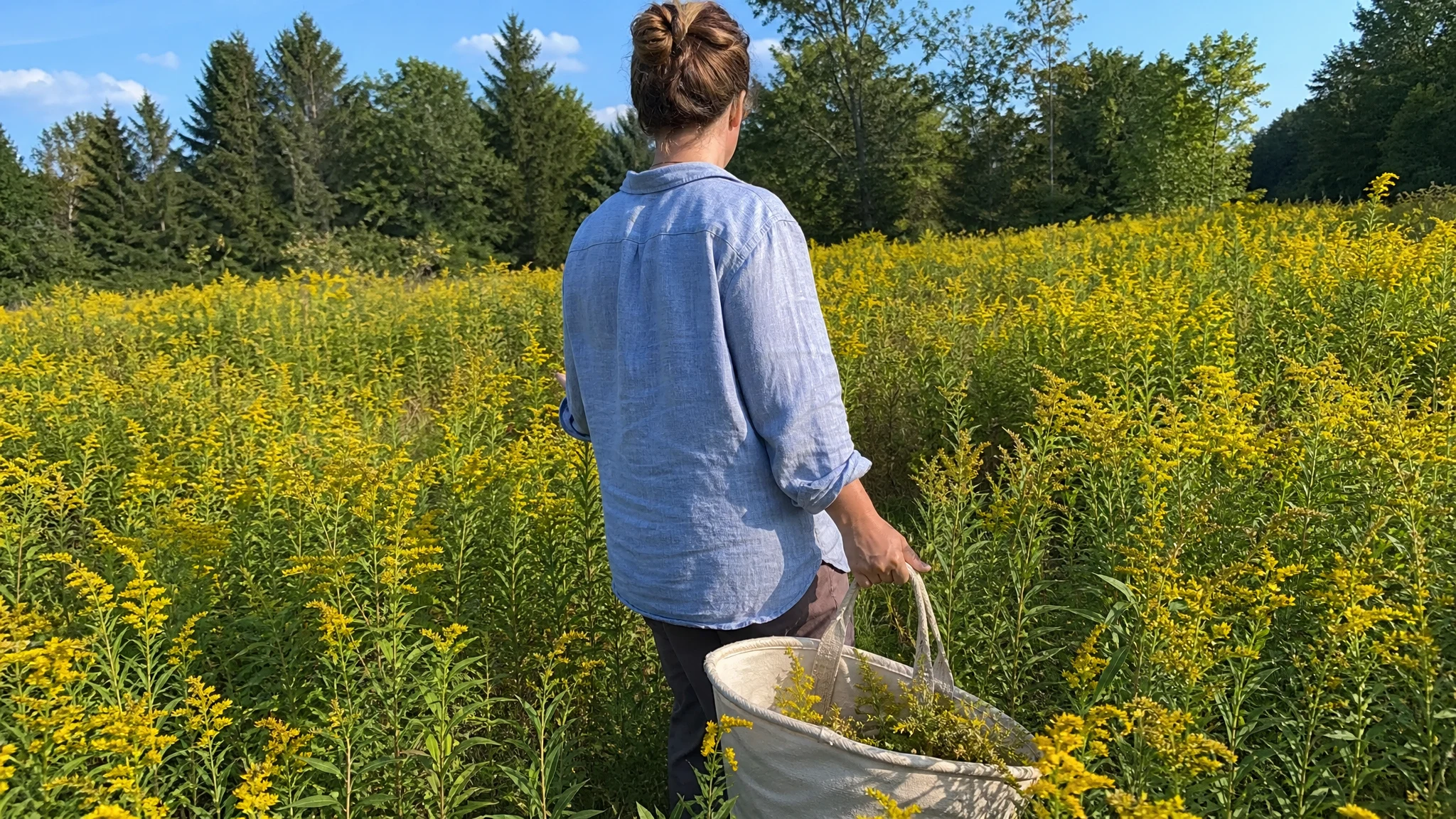
Autumn scents tend to reach for spice, amber and smoke. Goldenrod offers something quieter: the smell of a late-summer meadow, dry grass warmed by the sun, with a thread of honey running through it. We describe it as honeyed, grassy and floral, with a soft sweetness settling into a faintly balsamic, hay-like base. That is a different mood from clove or cinnamon, and for the right accord it is exactly what is missing.
Goldenrod Essential Oil
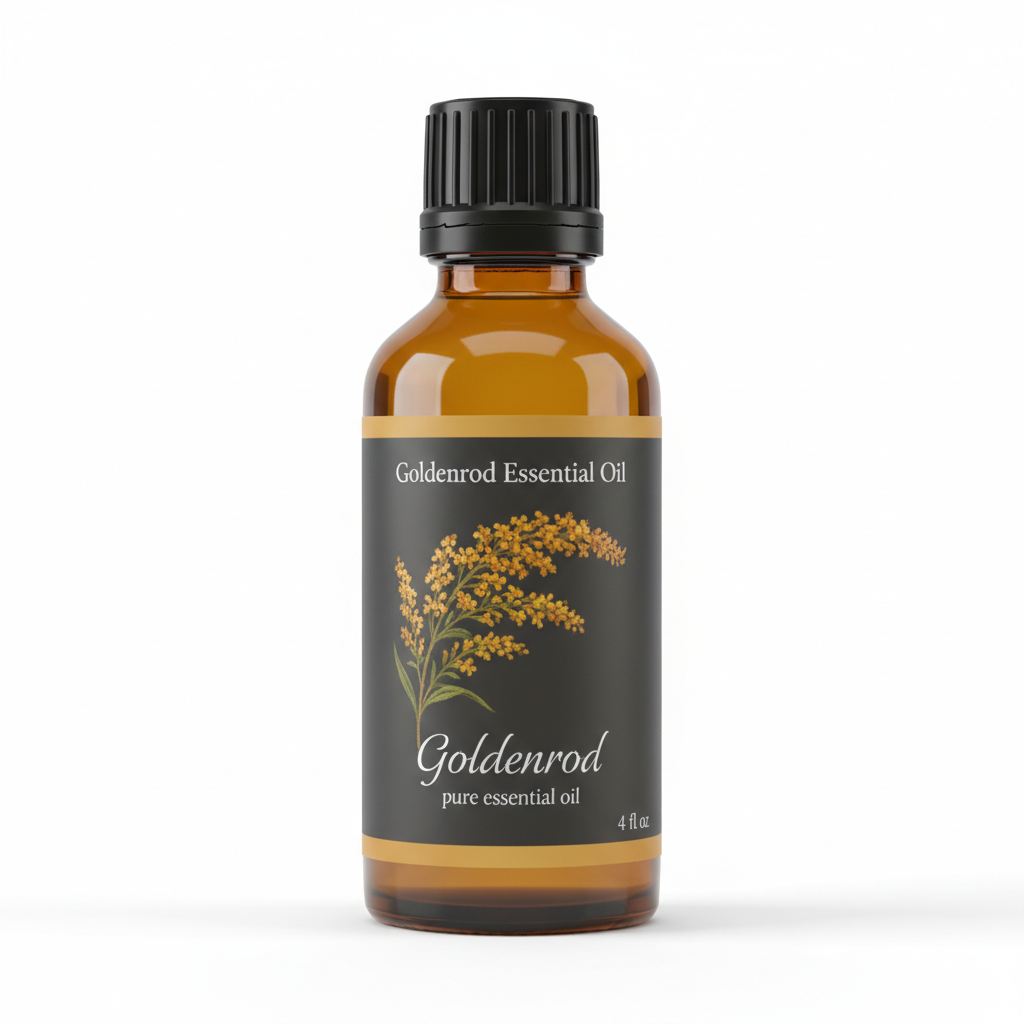
Our own Goldenrod Essential Oil, in sizes from 0.5 oz to bulk.
From $17.99
Shop Now →What goldenrod does well
We list goldenrod as a middle note, the body of a scent that comes into its own once the first sparkle has faded. The chemistry fits. In a Slovak analysis of wild Solidago canadensis, about a third of the oil was light monoterpenes and over half was heavier sesquiterpenes, so it spans the lighter and heavier ends of the scent timeline. By reasoning from that, you will smell the brighter, pinier part on a blotter first, and the softer, greener body afterwards.
It is best at hay, dried grass and gentle sweetness, so we think of it as a partner for accords that want a meadow rather than a bonfire. If you want clove, amber or gourmand warmth, goldenrod is not trying to be those, and it is happiest working alongside them.
Which bottle you get matters
Two studies show how far the oil can vary. A 2025 study found a flower oil led by alpha-pinene and a leaf oil led by germacrene D, and a Lithuanian study of 18 plants found alpha-pinene and germacrene D swinging widely from one plant to the next. Plant part, site and individual stand all move the profile. None of those papers tested scent, so we cannot say what that sounds like in a finished perfume. What we can say is practical: smell each new bottle against the last, and keep a note of which one you used.
The Certificate of Analysis we publish for one batch gives density, refractive index and optical rotation and has no constituent table. If an exact profile matters to your formula, ask us in writing through our contact page.
Setting the scene
Think of the autumn smells you already love: a hayloft, dry leaves, a warm kitchen. Goldenrod fits the first two best. Try a simple exercise. Put a drop of goldenrod on one paper strip and a drop of a spice or wood oil on another, hold them together, and move them closer and farther apart. You may notice how the sweetness of goldenrod rounds off a sharper note.
Keep the first accord simple. A two-oil blend teaches you more than a ten-oil one, and you can always add a third once you know what the first two are doing. On a cool evening, that kind of detail is what makes a scent feel like the season and not a list of ingredients.
Partners and strength
We suggest chamomile, lavender, clary sage, citrus, rose and geranium alongside goldenrod, none of which we sell, so those come from a perfumery supplier along with any fixative or base. A middle note will likely want a heavier base from elsewhere if you need it to last on skin. We go deeper in where goldenrod fits in a perfume formula and a cologne accord on paper, and we point to our fall oils shortlist if you are choosing among seasonal oils.
Because a perfume is worn on skin, we treat our dilution guidance of 0.5% to 2% in a carrier, with a patch test first, as the ceiling for goldenrod in the finished product. The Tisserand Institute gives 0.5% to 1.2% for face and underarm products and 1% to 3% for body products, for oils without specific restrictions, and lists no goldenrod figure. So go lower for the face and underarm, and ask a dermatologist if the wearer has reactive skin. Typical perfume strengths, from Delacourte's fragrance guide, run from about 2% to 6% aromatics for an eau de cologne up to 20% to 40% for an extrait, so goldenrod will usually be one component of the concentrate and not all of it.
A practical thought for the season: smell is easily tired by the long run of autumn scents, from baking to candles to woodsmoke. When goldenrod is working in a blend, give your nose a break now and then, step outdoors, and come back. The hay and honey will read more clearly after a breath of cold air.
Two things to keep an eye on
Goldenrod is a daisy-family plant, and DermNet NZ equates the Compositae with the Asteraceae, names sesquiterpene lactones as the main allergens and notes that cross-reactions are common. If chamomile, daisies or ragweed bother your skin, patch test first and see a dermatologist for proper patch testing.
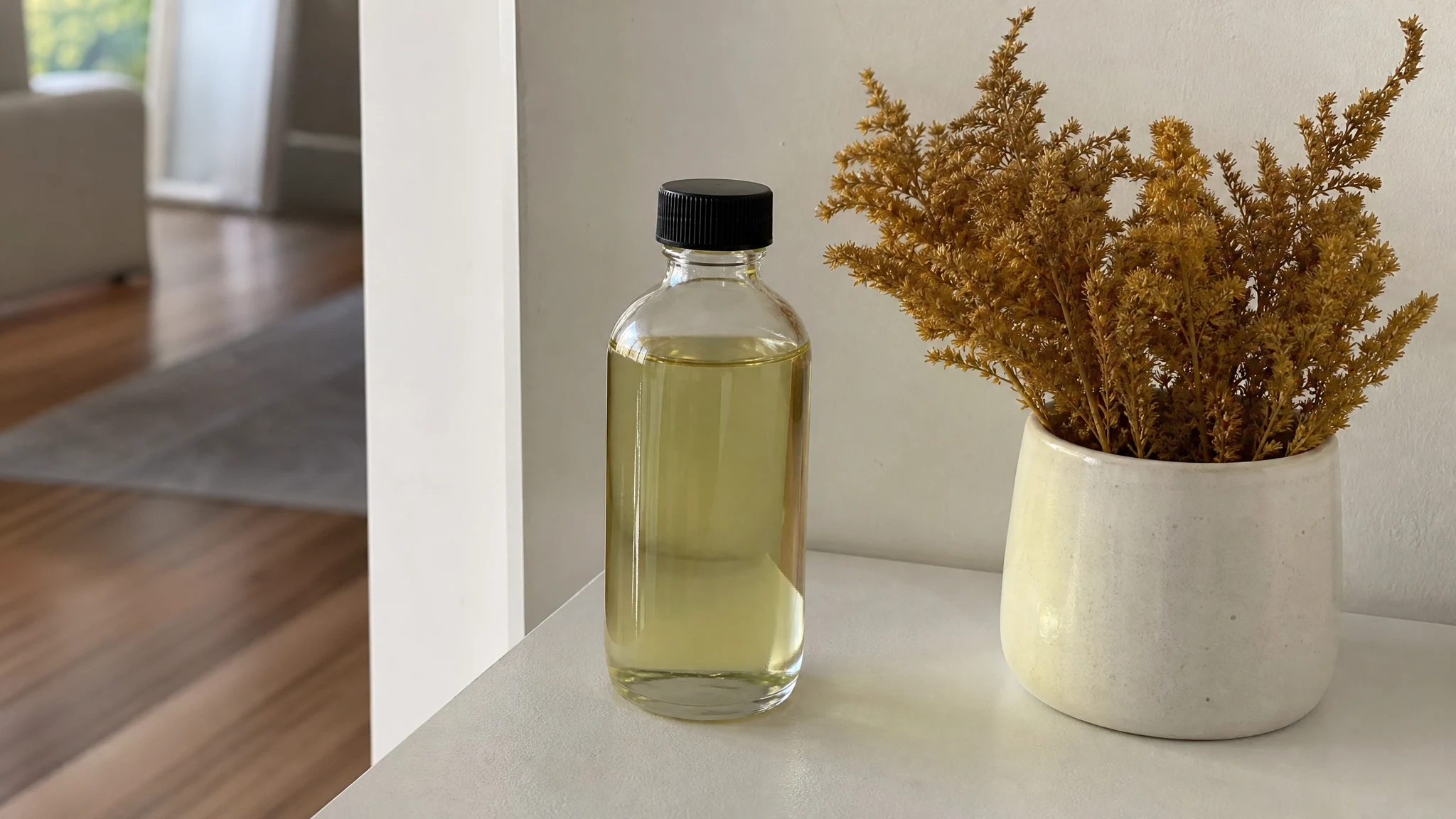
And because you may keep a bottle open for the whole season, the Tisserand Institute reminds us that heat, light and air speed oxidation and that oxidised oils raise the chance of skin reactions. Our oil typically keeps two to three years in a cool, dark place away from heat and sunlight, and decanting a working amount into a smaller airtight bottle keeps the rest sealed.
Planning a fall formula
Goldenrod is offered in limited seasonal batches, so if you are formulating for an autumn release, order early in the season. Our wholesale page covers samples and private label for businesses.
Goldenrod suits an autumn accord built on hay and honey, and the best test is the simplest: smell it on a strip, from your own bottle, against your own formula.
Goldenrod Essential Oil
Goldenrod Essential Oil from our own shop, in sizes from 0.5 oz to bulk.
From $17.99
Shop Now →Sources & Further Reading
- Elshafie HS et al., 2019. Antimicrobial Activity and Chemical Composition of Essential Oil Extracted from Solidago canadensis L. Growing Wild in Slovakia. Molecules. PMC6479883
- Yang JX et al., 2025. Multivariate Statistical Analysis of Solidago canadensis L. Essential Oil and Its Antifungal Mechanism Against Mulberry Sclerotinia Diseases. Int J Mol Sci. PMC12785313
- Radušienė J et al., 2022. Distribution Patterns of Essential Oil Terpenes in Native and Invasive Solidago Species and Their Comparative Assessment. Plants. PMC9099864
- Delacourte. Perfume and concentration. blog.delacourte.com
- Tisserand Institute. Essential oil dilution. tisserandinstitute.org/dilution-essential-oils
- Tisserand Institute. Oxidized essential oils. tisserandinstitute.org/learn-more/oxidized
- DermNet NZ. Compositae allergy. dermnetnz.org