Best Fall Essential Oils and How Much of Each to Use
Autumn has a smell, and most of us could describe it with our eyes closed: something warm and spiced, something bright like orange peel, something resinous like a pine forest after rain, and a honeyed hay note drifting over the top. Each of those corners belongs to a different oil, and each one asks for a different amount. Here is how we would put a fall shelf together.
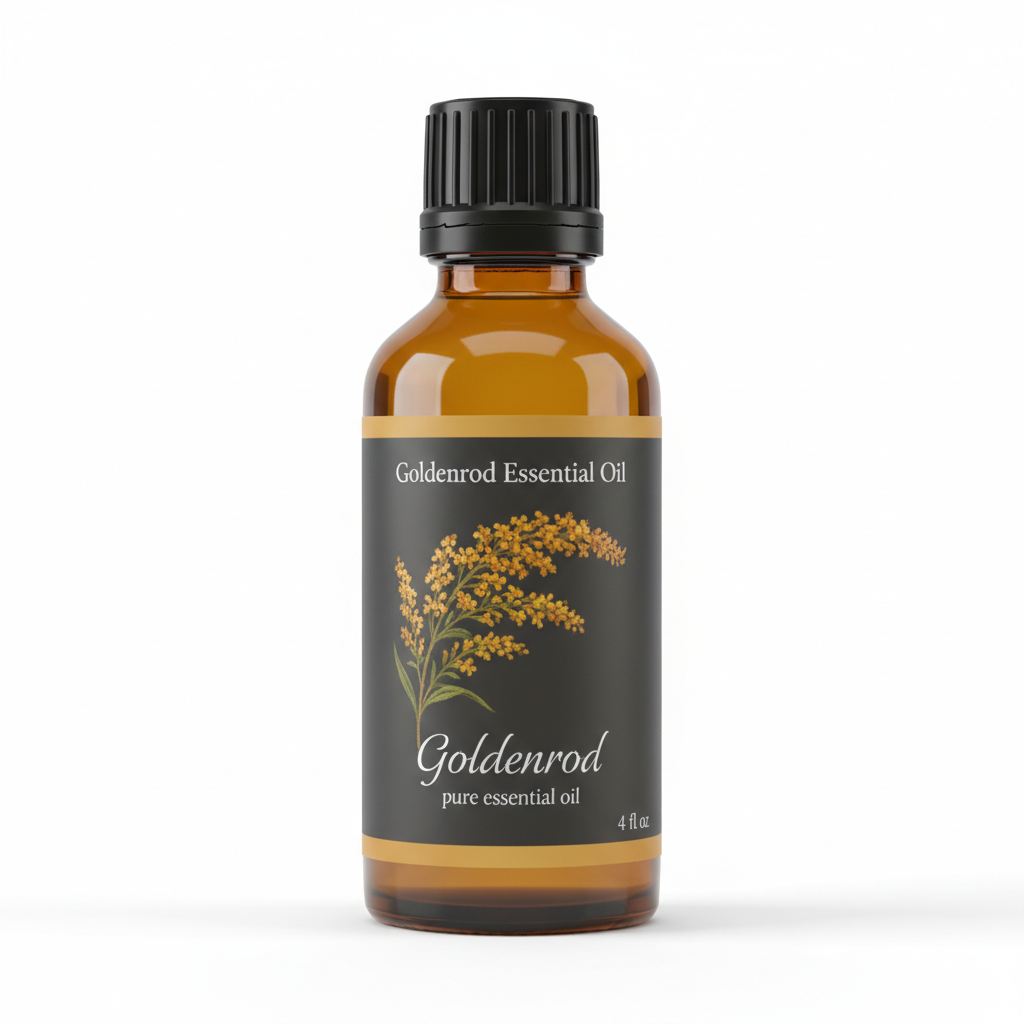
Goldenrod Essential Oil
Our own Goldenrod Essential Oil, in sizes from 0.5 oz to bulk.
From $17.99
Shop Now →Start with where the oil is going
The numbers below are skin numbers, meant for body oils, rollers and balms. A diffuser or a simmer pot is a different situation, and we found no source that sets a comparable figure for room air, so we keep room scenting short and well ventilated. Deciding between skin and room first makes every other choice easier.
The spice corner: wonderful, and strong
Cinnamon and clove are what most people mean by fall in a bottle, and they are potent. The Tisserand Institute's survey of cinnamon bark and cassia users describes both as high risk for skin reactions and advises most people to keep them to 1% or less. For clove bud, Robert Tisserand gives a topical maximum of 0.5%, and 0.6% for cinnamon leaf, because of the eugenol they carry. That is not a reason to skip them. It is a reason to measure.
In a 30 mL (1 oz) bottle of carrier oil, 0.5% is 0.15 mL, which is about three drops at the usual 20 drops per mL (droppers vary, so weigh if you can). In a 10 mL roller, a single drop of clove bud already reaches that 0.5%, so small rollers are better suited to gentler oils. The Tisserand Institute also points out that these maximums do not grow with the size of the area you cover.
The bright corner: choose your citrus carefully
Orange, grapefruit and lemon bring the sparkle that stops a fall blend from turning heavy. One thing to know before you put them on skin: most phototoxic essential oils are expressed (cold-pressed) citrus oils, and the Tisserand Institute notes that a distilled lemon oil in its example carries 22 times less bergapten than an expressed one. Bergamot is limited to 0.4% in leave-on products for sun-exposed skin. If you want citrus in a body oil, ask your supplier for the bergapten data or for a distilled version. In a diffuser, any of them is simply a pleasure.
The woods: fir needle
For the pine-forest part of fall, fir needle is a lovely choice. One commercial silver fir oil, distilled from needles and twigs, was analysed at roughly 30% bornyl acetate, a compound often described as woody and herbal, which is why fir has such a cool, balsamic freshness. Fir oils vary by species and origin, so go by your own supplier's analysis and skin guidance. We put fir and goldenrod side by side in goldenrod vs fir and pine oil.
Goldenrod: the honeyed hay note
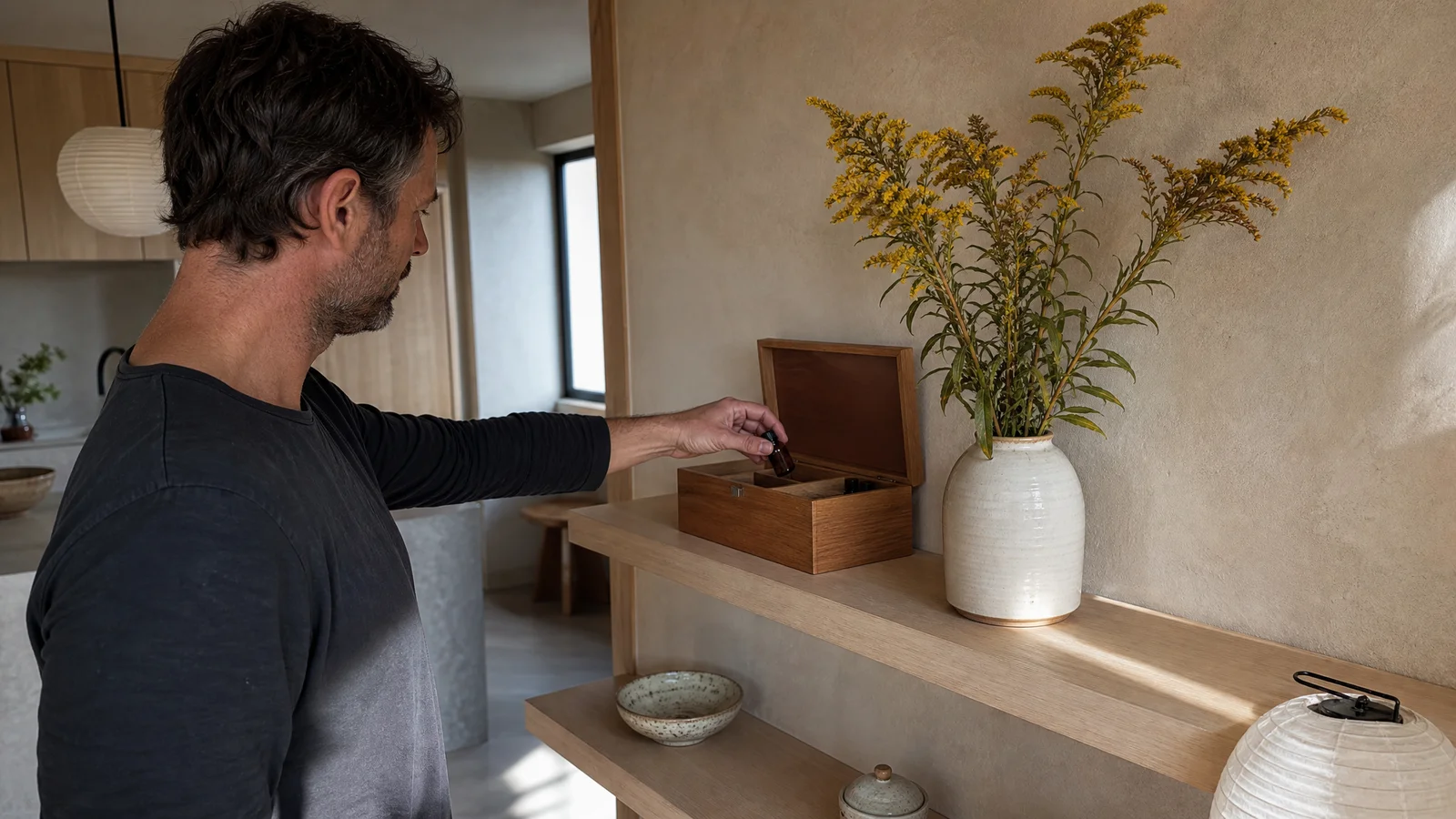
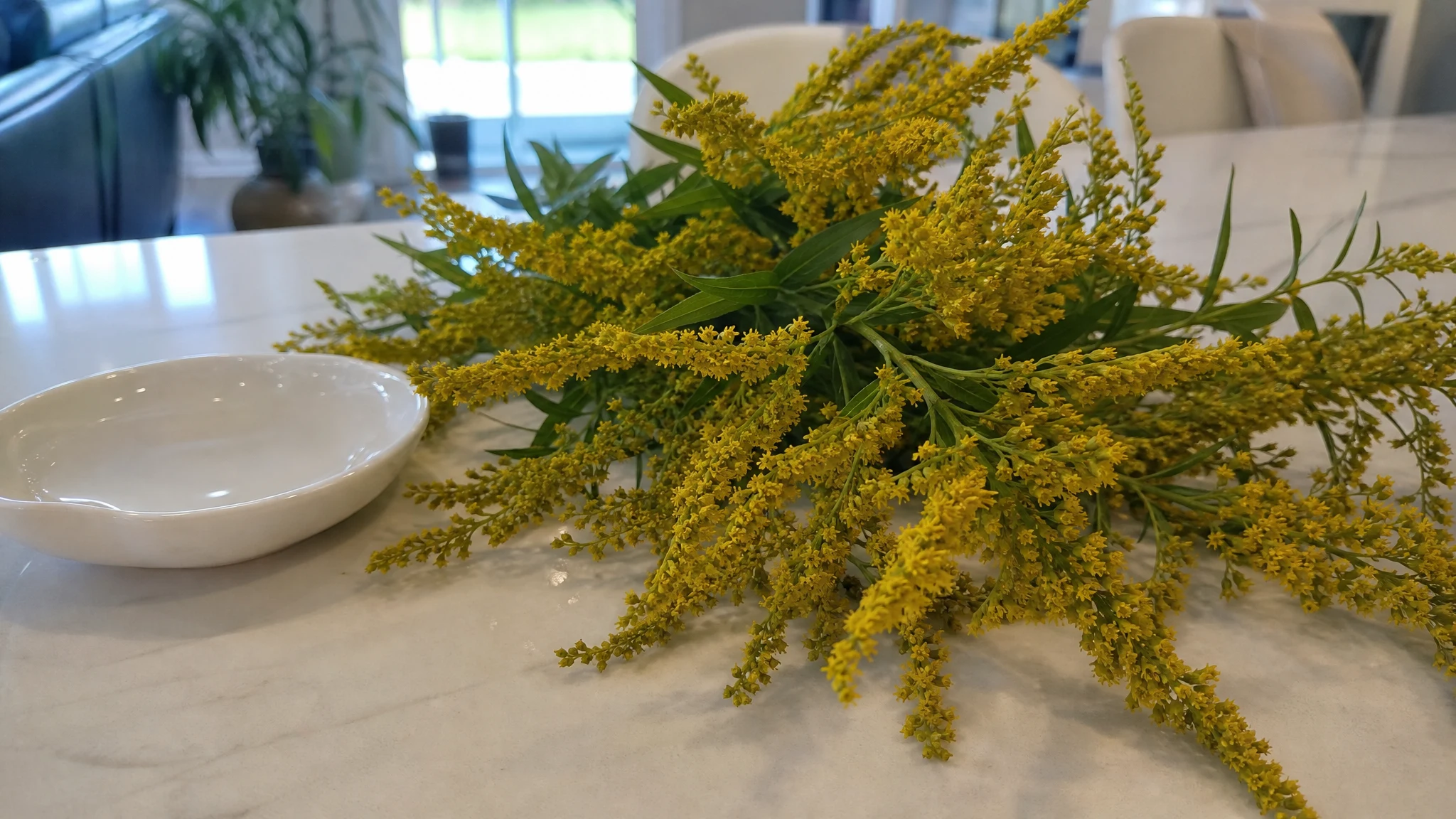
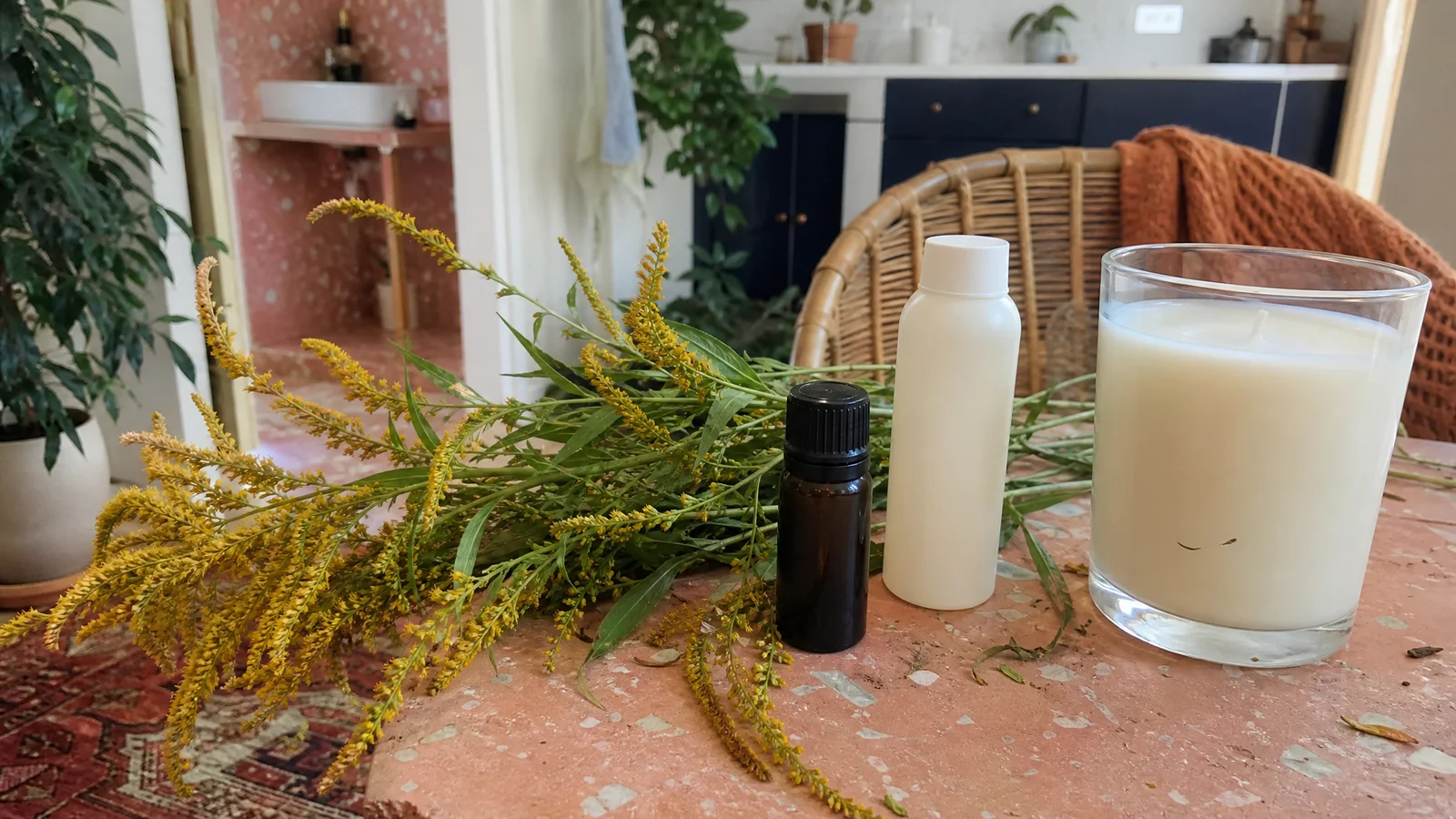
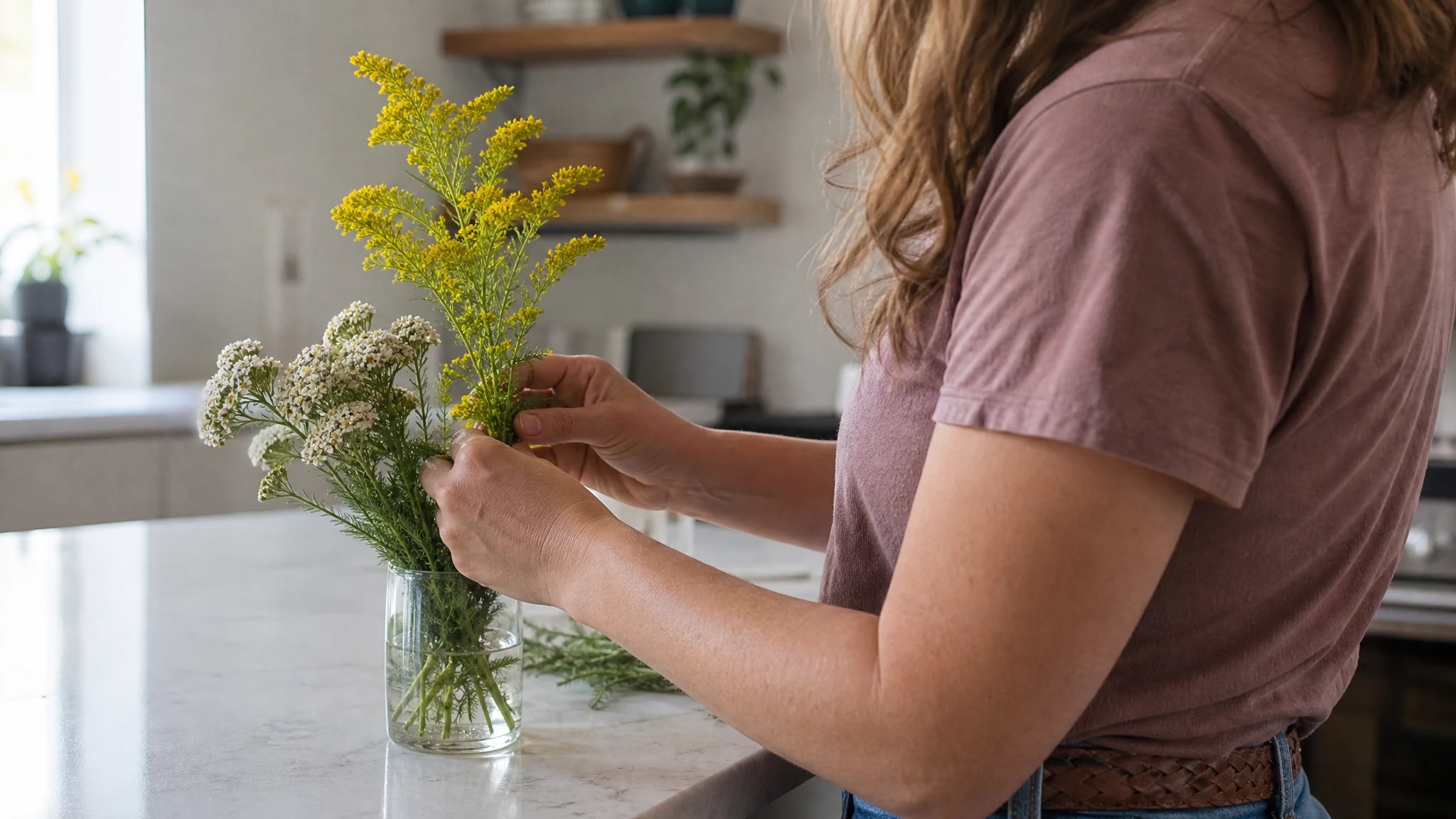
Goldenrod is the oil we sell, and it earns its place in autumn because the plant blooms from late summer into fall. We describe the aroma as honeyed, grassy and floral, settling into a faintly balsamic, hay-like base. It is a middle note, which makes it a good bridge between the bright oils and the woods, and it does not try to replace the spices. We recommend diluting to 0.5% to 2% in a carrier and patch testing first. Goldenrod belongs to the daisy family, so if you react to ragweed, daisies or chamomile, blend it into a carrier and try a small area first. Our pieces on goldenrod as the fall note and the diffuser blends show how it sits with the others, and skin basics covers the dilution arithmetic.
Set the mood before the recipe
Before you measure anything, picture the room or the occasion. A crisp morning walk, a kitchen full of baking and a cabin evening each pull toward a different corner of the shelf. We like to choose the main character first, hay and honey or orange and spice, and then let the others support it. Smell candidates two at a time on paper strips, and stop when the pair makes you picture the right afternoon.
Putting a small batch together
When oils each have their own ceiling, a tidy habit is to treat each one as a share of its own limit and keep the shares adding up to no more than one whole. That is our reasoning rather than a published rule, but it is easy to use. Goldenrod at 1% is half of the top of our range, and clove bud at 0.25% is half of its maximum, so the two fit together neatly. In 60 mL of carrier that is about 0.6 mL of goldenrod (around 12 drops) and 0.15 mL of clove bud (around 3 drops). Add a woody oil for body and a distilled citrus for lift, and you have the whole season in one small bottle.
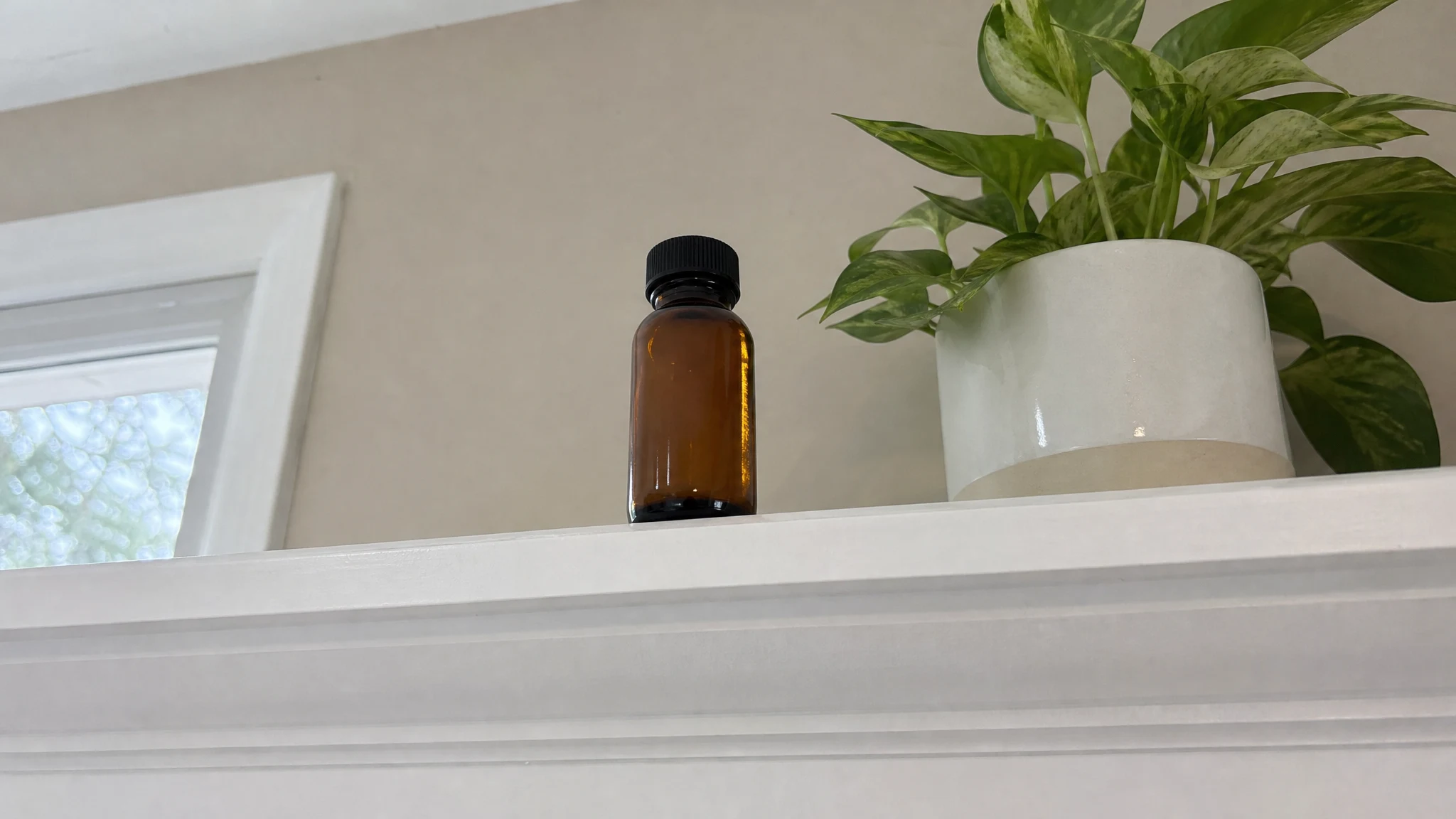
Smelling a blend on a paper strip before it goes anywhere near skin is a pleasant ritual in itself, and it lets you adjust the balance while everything is still reversible. Keep every bottle in the house, ours included, out of reach of children and pets and apart from anything taken by mouth. A poison-centre review in Australia found children the most affected group in essential oil exposures, which is a good reason for a high shelf. A pediatrician or veterinarian is the right person to ask about any particular oil around a child or an animal.
Goldenrod Essential Oil
Goldenrod Essential Oil from our own shop, in sizes from 0.5 oz to bulk.
From $17.99
Shop Now →Sources & Further Reading
- Tisserand Institute, 2015. Cinnamon survey special report
- Tisserand R. Eugenol: essential oil constituents in food, part 4. Tisserand Institute
- Tisserand Institute. Q&A: safety maximums for dermal application
- Tisserand Institute. Phototoxicity: essential oils, sun and safety
- Radical scavenging activity of the essential oil of silver fir (Abies alba), 2009. J Clin Biochem Nutr 44(3):253-259
- Medical Journal of Australia, 2019. Essential oil poisoning calls increase, children most affected