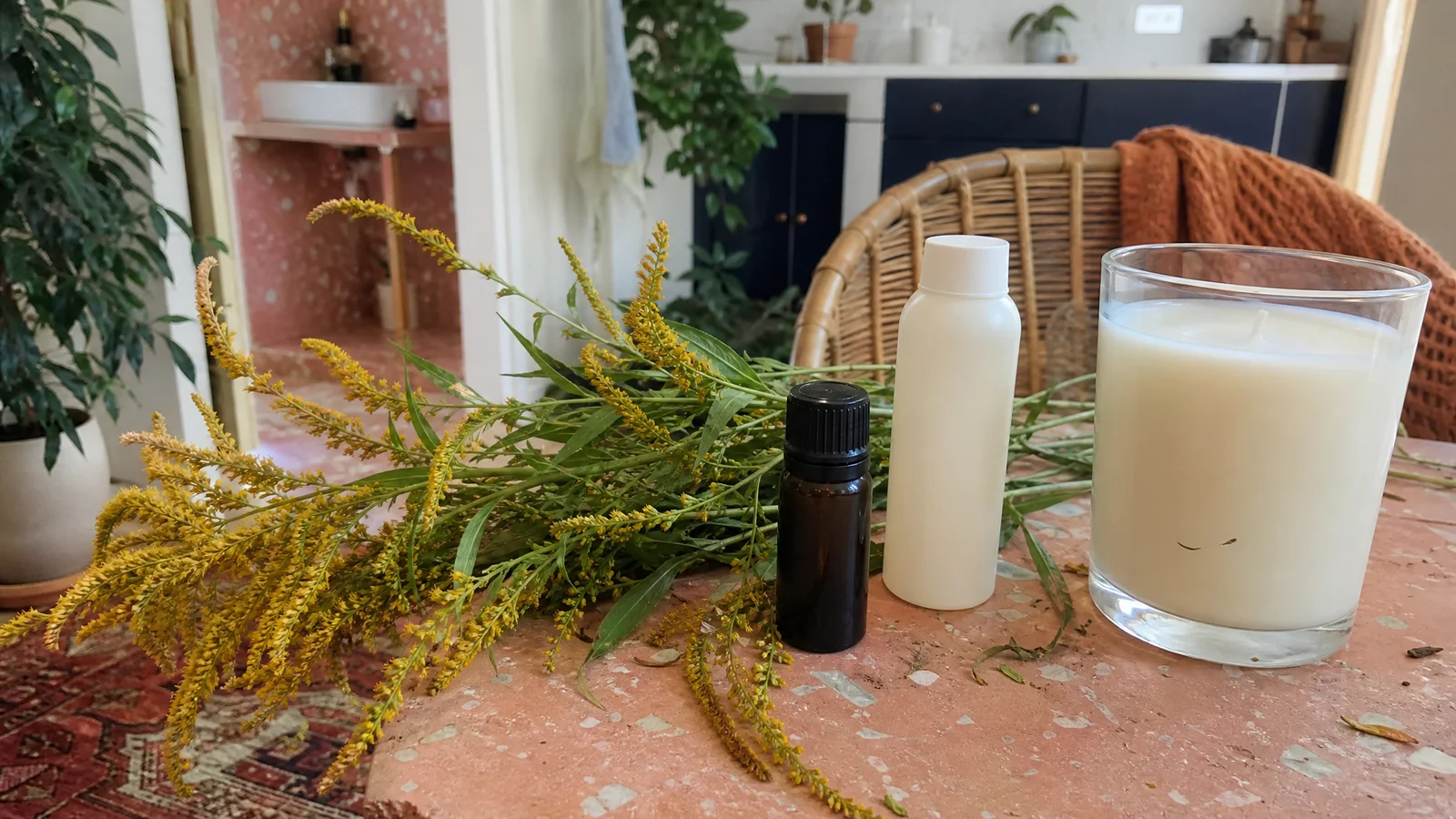
Goldenrod Essential Oil vs Fragrance Oil: Which to Use?
A bottle of goldenrod essential oil and a bottle of goldenrod fragrance oil share a name and surprisingly little else. One is distilled from a named plant. The other is a scent built to suggest it. We only sell the essential oil, so we have an obvious interest, and we will tell you where a fragrance oil is the better tool for the job.
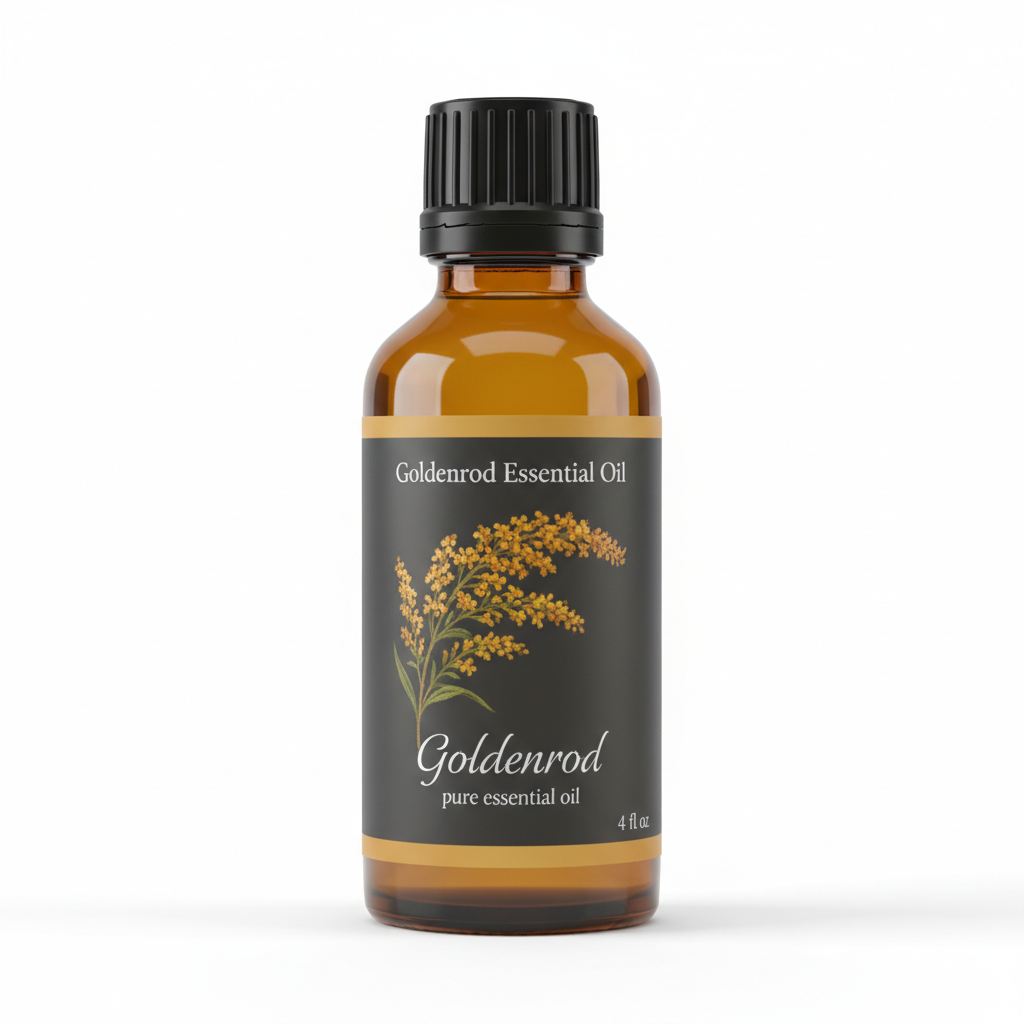
Goldenrod Essential Oil
Our own Goldenrod Essential Oil, in sizes from 0.5 oz to bulk.
From $17.99
Shop Now →Read the listing: a plant and a process, or neither
A genuine essential oil listing names a botanical and a method. Ours says Solidago canadensis, steam-distilled, sold undiluted, and the Certificate of Analysis we publish for one batch repeats the species and the method. A fragrance oil listing usually gives neither, because there is no single plant to name; it is a composition. That is not a flaw, just a different kind of product.
One caution cuts the other way. The US Food and Drug Administration notes that there is no regulatory definition for "essential oils," and that the law treats plant-derived ingredients like any other. So the words "essential oil" alone are not a guarantee. The things you can ask a seller to stand behind are the species, the method and a lot number, and our seller-vetting guide shows how.
Consistency versus character
Here is the real trade. A fragrance oil is made from a formula, so a maker can hold it steady from batch to batch, and you can stock up knowing every bottle smells the same. A distilled plant oil has more character and a little more variation, because it follows the plant. Elshafie and colleagues analyzed wild Solidago canadensis from Slovakia and found germacrene D at about 35%, and the same paper cites earlier studies from roughly 20% to 39%. That spread is what a plant product looks like: two honest lots can differ a little, and a lot of people love it for exactly that reason.
If you need the same scent in every batch of a product you sell, a fragrance oil may serve you better. If you want the actual aroma of the flower, honeyed and grassy over a soft balsamic hay-like base, our scent profile describes what to expect from the oil.
Ingredient lists and allergens
Under US labeling, a cosmetic can list a fragrance simply as "Fragrance," and the FDA describes fragrance formulas as complex mixtures that are likely to be treated as trade secrets. If your project needs a full ingredient list, for a regulated product or for someone with allergies, that is worth weighing. With an essential oil you can ask for a composition report, and the figures depend on the lot. If you need one for ours, ask in writing through the contact page before ordering.
In the EU, labeling is getting more detailed. Regulation (EU) 2023/1545 widens the list of fragrance allergens that must be named on cosmetic labels, with compliance dates of 31 July 2026 for new products and 31 July 2028 for products already on the market, according to a summary by Exponent. If you sell into the EU, read the annex itself for the list.
Goldenrod is a daisy-family plant, and DermNet lists it among the Compositae, naming sesquiterpene lactones as the most important allergens in the family. Anyone with a known daisy-family allergy should ask an allergist which product to try, since neither is a safe default. Our recommended skin dilution for goldenrod oil is 0.5% to 2% in a carrier with a patch test first, and a fragrance oil comes with its own limit from its maker, which is not interchangeable. Our allergy article covers pollen versus skin reactions.
What it is like to open each bottle
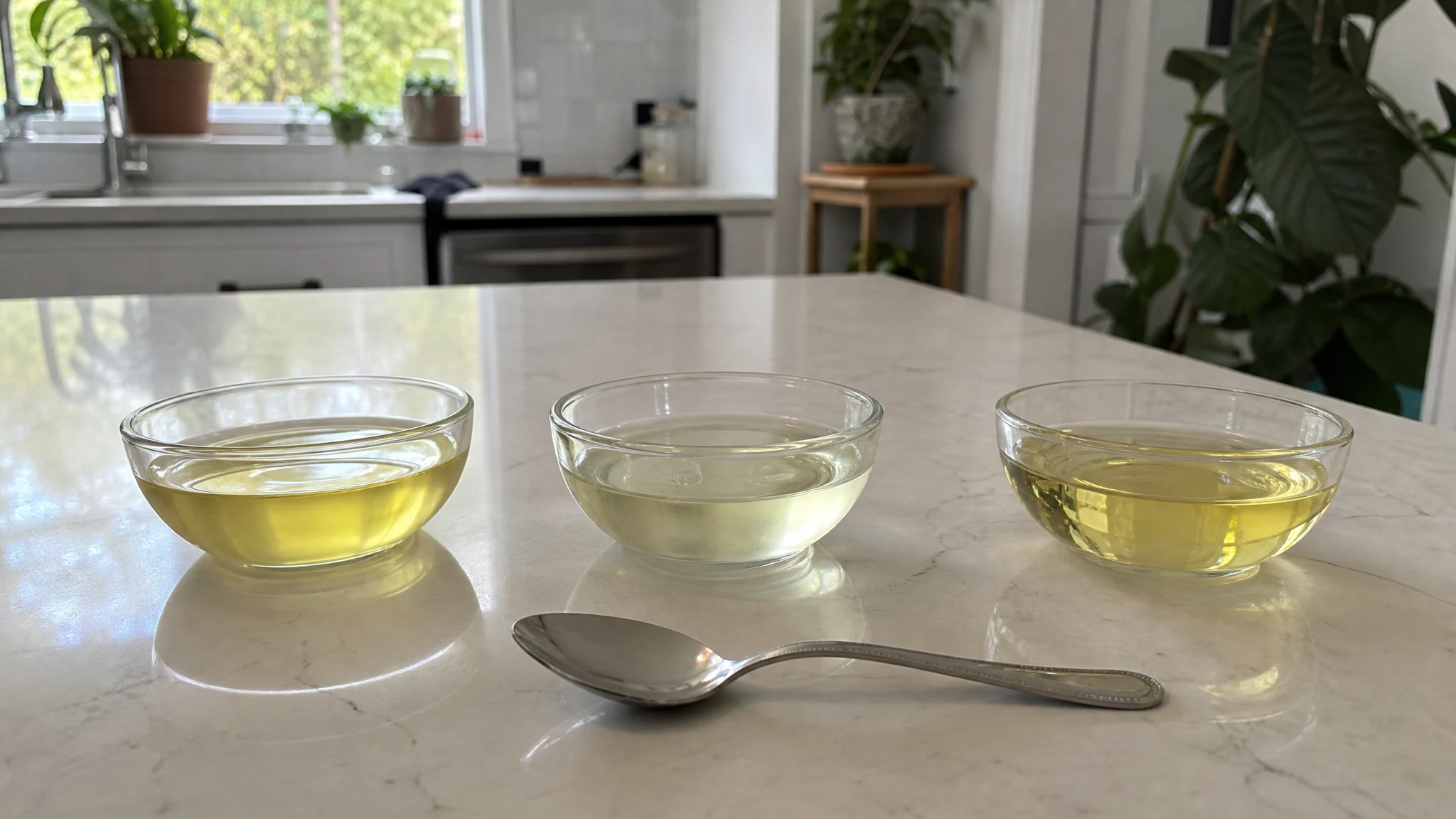
Put the two side by side on a table and the difference is easy to hear with your nose. A fragrance oil usually announces itself the moment the cap comes off, a clean, round, finished scent. A plant oil can feel a little more quiet and a little more complicated. With goldenrod you'll notice honey and cut grass first, then something drier and hay-like underneath, and the picture keeps shifting for a minute or two as you breathe it in.
Neither impression is the right one. Some people want the polished version and some want the plant, and we would rather you pick the one you love than the one we happen to sell.
A few questions to ask yourself
- Do I need every batch to smell identical, or am I happy with a little variation?
- Does my project need a plant name on the ingredient list?
- Will anyone who uses it need a full list of what is inside?
- Am I buying a scent, or am I buying a plant?
If your honest answers lean toward plant, goldenrod oil is what we make available. If they lean the other way, a fragrance oil from a supplier that states a use level for your product is a perfectly sensible choice.
Match the product to the project
| Project | Essential oil suits you when | Fragrance oil suits you when |
|---|---|---|
| Diffuser or room blend | You want the plant's own aroma and accept a little lot-to-lot difference | You want a goldenrod impression that is identical every time |
| Perfume sketching | You are building with real botanicals, as in our perfumer's guide | You need a scent that stays put across a production run |
| Skin products | You will dilute within your own guidelines and patch test | The supplier states a use level for your product type |
| Candles and soap | You are comfortable working with a natural material that varies | You want a scent that is the same in every batch |
There is no wrong answer here, only a right match. If what you love is a goldenrod scent that began as a flower, a little variation from lot to lot is part of the charm.
Goldenrod Essential Oil
Goldenrod Essential Oil from our own shop, in sizes from 0.5 oz to bulk.
From $17.99
Shop Now →Sources & Further Reading
- US Food and Drug Administration. Fragrances in Cosmetics. fda.gov/cosmetics/cosmetic-ingredients/fragrances-cosmetics
- Elshafie H.S. et al., 2019. Antimicrobial Activity and Chemical Composition of Essential Oil Extracted from Solidago canadensis L. Growing Wild in Slovakia. Molecules. pmc.ncbi.nlm.nih.gov/articles/PMC6479883
- DermNet. Compositae allergy. Sesquiterpene lactone contact allergy. dermnetnz.org/topics/compositae-allergy
- Exponent, 2023. EU cosmetic regulation adds 56 new fragrance allergens. exponent.com