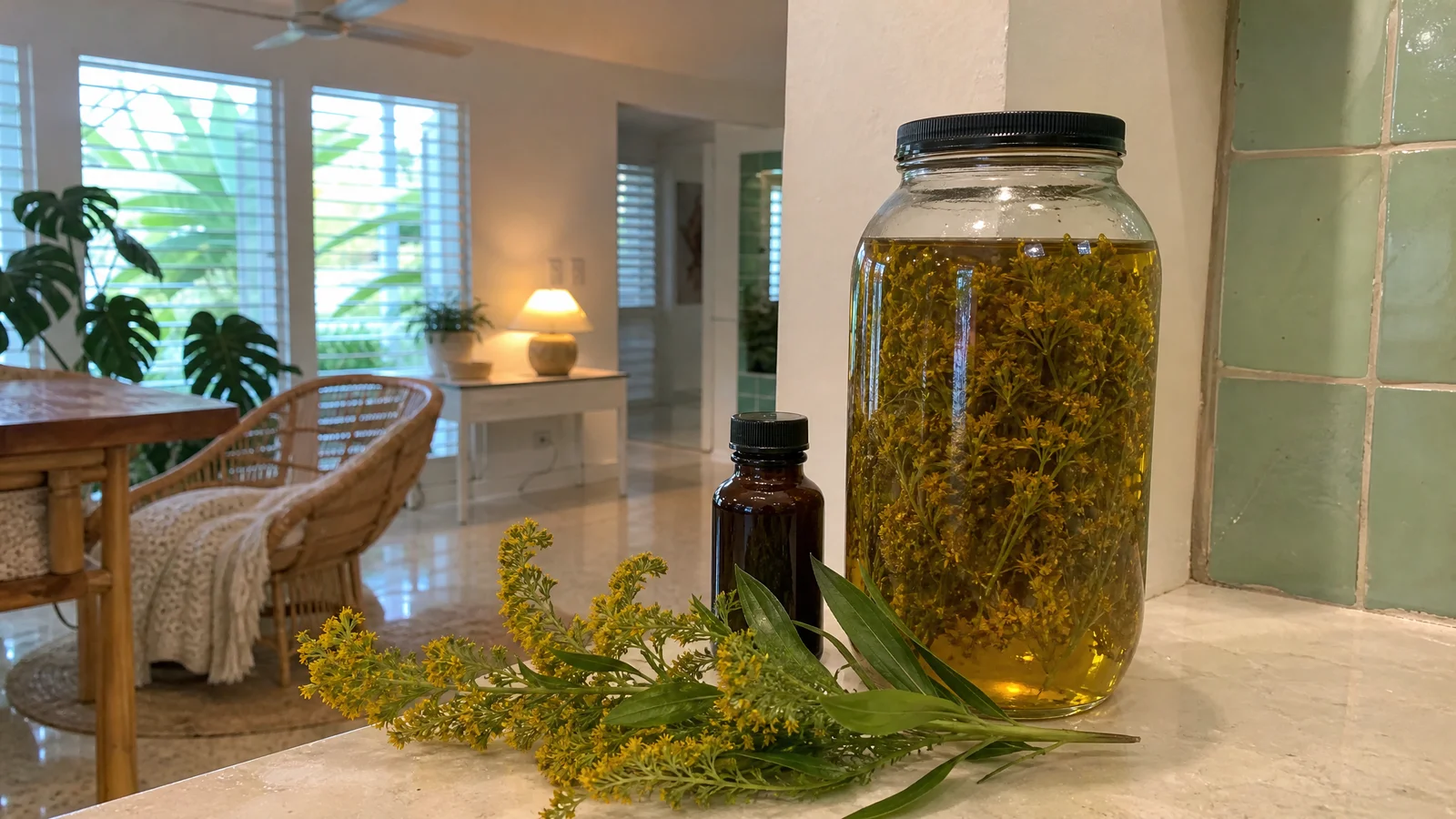
Goldenrod Infused Oil vs Essential Oil: Make or Buy?
Make the infused oil if you want a mild, golden carrier with a faint plant scent. Buy the essential oil if you want the concentrated aroma. You cannot get one from the other, and neither replaces the other in a recipe. The part most how-to pages skip is that the safer way to make an infused oil is also the less romantic one: use dried plant, not fresh blooms.
Goldenrod Essential Oil
Our own Goldenrod Essential Oil, in sizes from 0.5 oz to bulk.
From $17.99
Shop Now →Why a jar of flowers will not give you essential oil
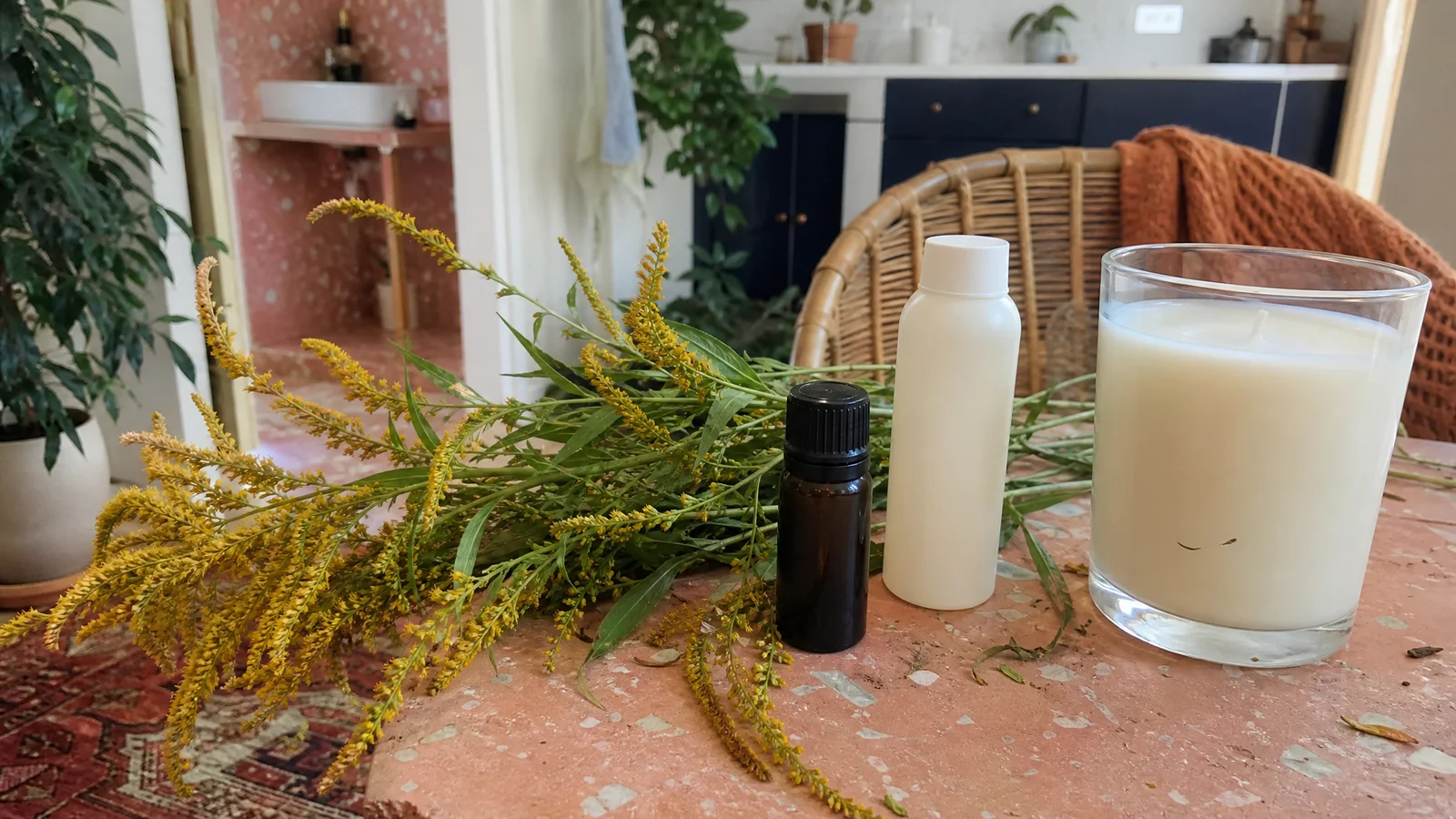
An essential oil is a distillate. Steam or boiling water carries the volatile aroma compounds out of the plant, and they are condensed and separated. In a laboratory study, Elshafie and colleagues distilled dried Solidago canadensis aerial parts and collected about 0.27% oil by dry weight, which works out to roughly 3 ml of oil from a kilogram of plant. Soaking flowers in a carrier is a different process. It draws out what dissolves in fat, and it cannot concentrate or isolate the volatile fraction. No published analysis of a goldenrod infused oil turned up, so what is in one is reasoning from method: expect a pale, gently scented oil whose character depends on the plant, the carrier and the steeping time.
If the aroma is what you are after, our scent profile describes the distilled oil, honeyed and grassy with a soft, hay-like base.
Dry the blooms first
The old advice to steep fresh flowers in oil comes with a food-safety wrinkle. The University of Maine Cooperative Extension's bulletin on homemade infused oils explains that fresh herbs are likely to carry Clostridium botulinum spores, and their moisture lets the bacteria grow in a low-oxygen, low-acid oil. Dried herbs are the safer choice because they hold very little moisture. The bulletin advises labeling the jar with its date and discarding homemade infused oil after three months, and it says oils made with fresh ingredients should be approved by a food-processing authority.
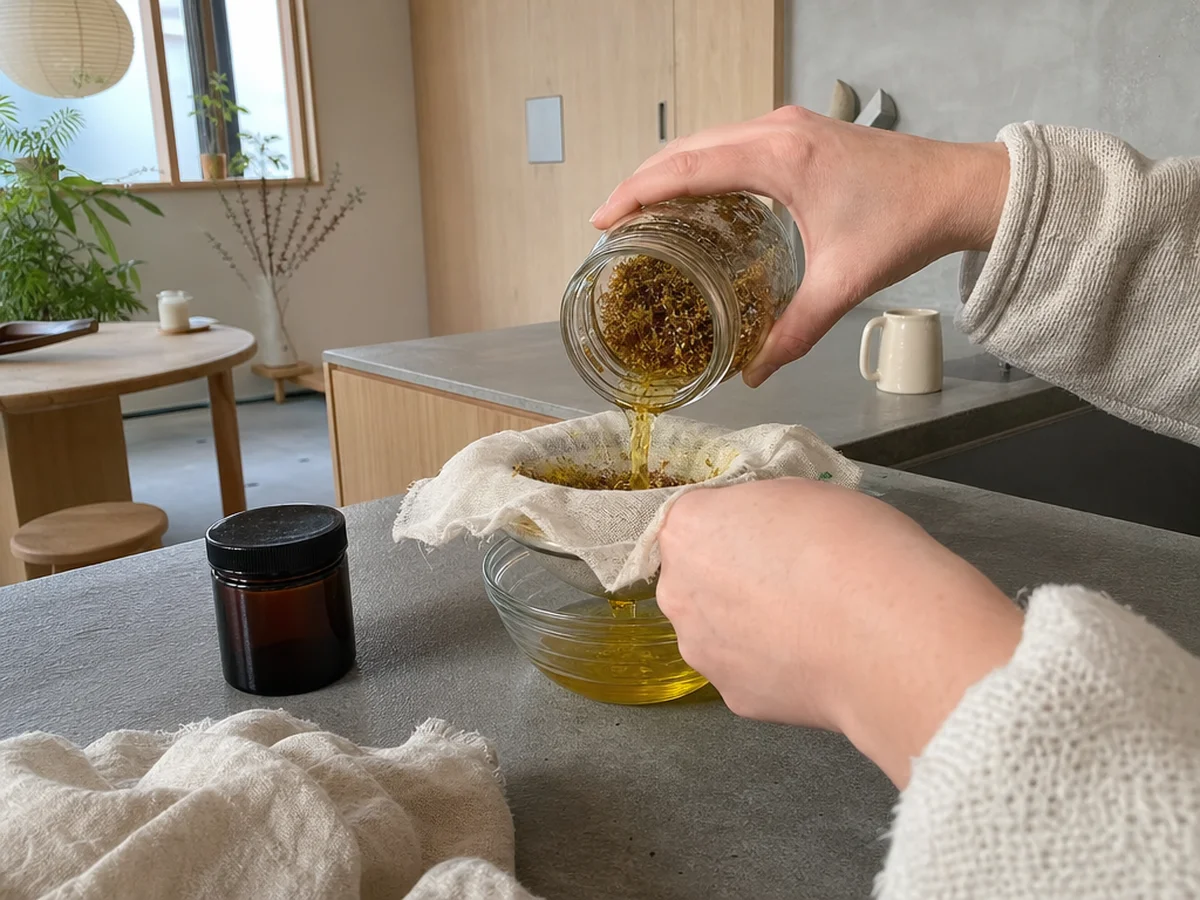
That guidance is written for oils that may be eaten, and it does not mention goldenrod. Reasoning from it, we would steep dried plant, keep the batch small, label it, and use it within the three months the bulletin gives. If you would like a longer shelf life, that is a conversation with a cosmetic chemist about preservation, not something a jar on a shelf can promise. Our step-by-step infused oil guide and salve article are best read with this section beside them.
What each one is like to live with
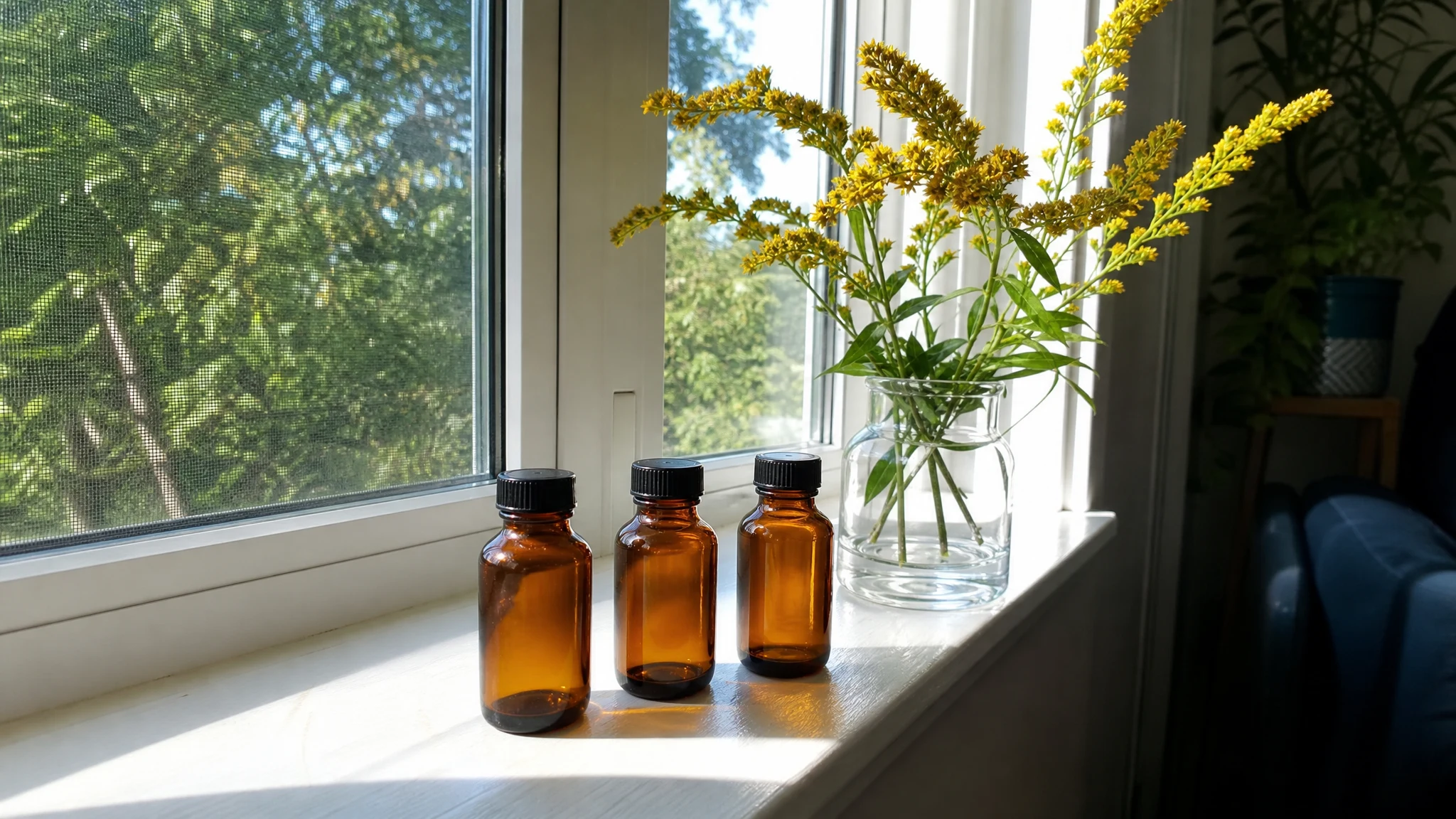
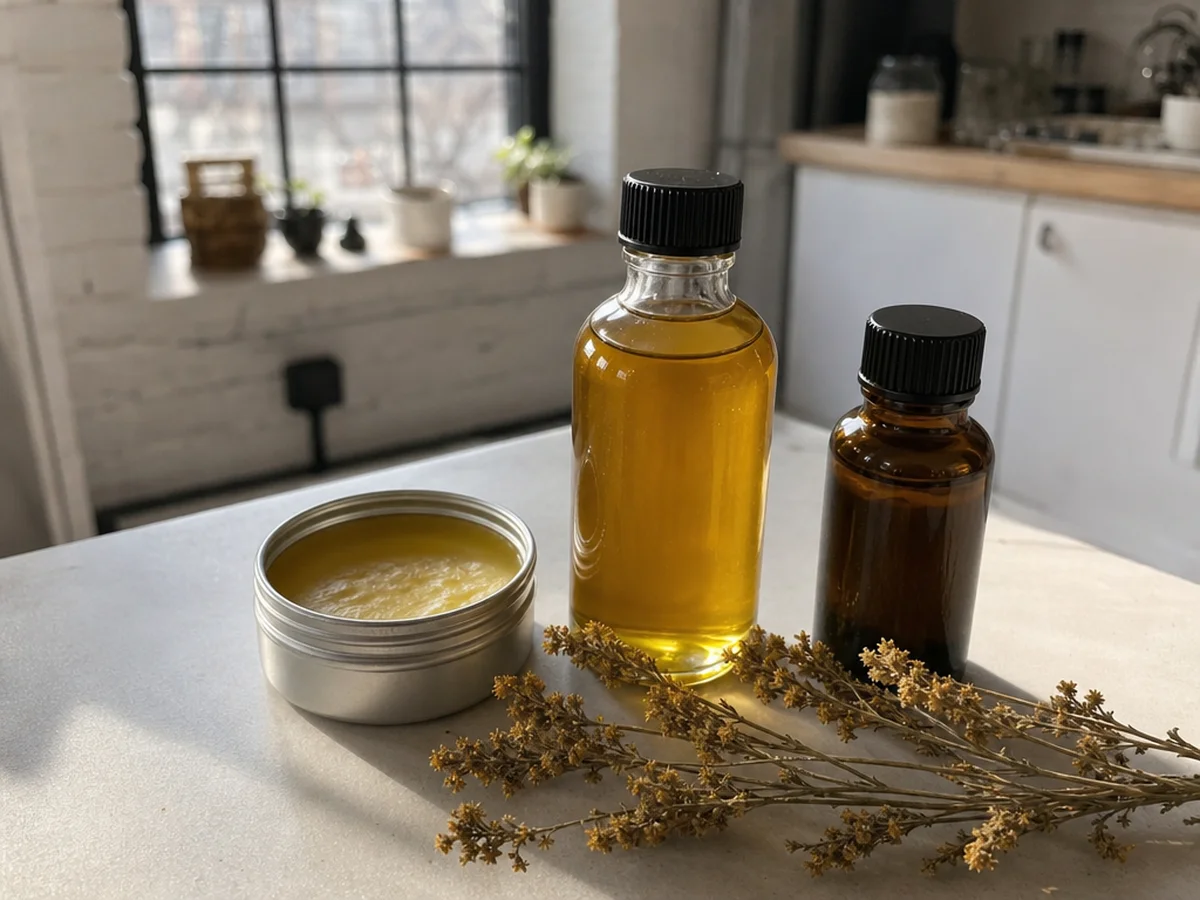
An infused oil is a kitchen-table project. You'll notice it takes patience: a jar on a sunny sill or a quiet shelf, a few weeks of waiting, then straining and bottling. The result is gentle and golden, and its scent is faint and plant-like. It is lovely as a soft base for something you plan to blend.
An essential oil is the opposite experience. Nothing to wait for, and a drop goes a long way. The scent is the point, and the bottle is small because a little is all you need. Neither way is better. It depends whether you want a project or an ingredient.
A note on allergies
Goldenrod is a daisy-family plant. DermNet lists it among the Compositae and calls sesquiterpene lactones the most important allergens in the family, found in the oleoresin of leaves, stems and flowers. A fat infusion draws plant material from the herb into the carrier, so reasoning from where those compounds sit, an infused oil is at least as likely to carry them as a distillate is. That is an inference, since no study that measured either product turned up. Anyone with a known daisy-family allergy should check with an allergist before using either one. Our allergy article separates pollen allergy from skin allergy.
Combining the two
You can add essential oil to an infused base. Measure the essential oil, since the infusion does not count toward the percentage. We recommend 0.5% to 2% goldenrod essential oil in a carrier with a patch test first. For comparison, the Tisserand Institute's guide gives 1% to 3% for body oils and 0.5% to 1.2% for facial products as general guidelines for oils without specific restrictions, and it does not list goldenrod. At about 20 drops to a milliliter, a rough convention, the amounts look like this.
| Finished amount | 0.5% | 1% | 2% |
|---|---|---|---|
| 30 ml infused oil | about 3 drops | about 6 drops | about 12 drops |
| 100 ml infused oil | about 10 drops | about 20 drops | about 40 drops |
Weighing is more accurate than counting drops. We sell only the essential oil, so a carrier or dried herb comes from a craft supplier or herb shop; our carrier guide compares two good bases.
One more difference: you choose the plant part
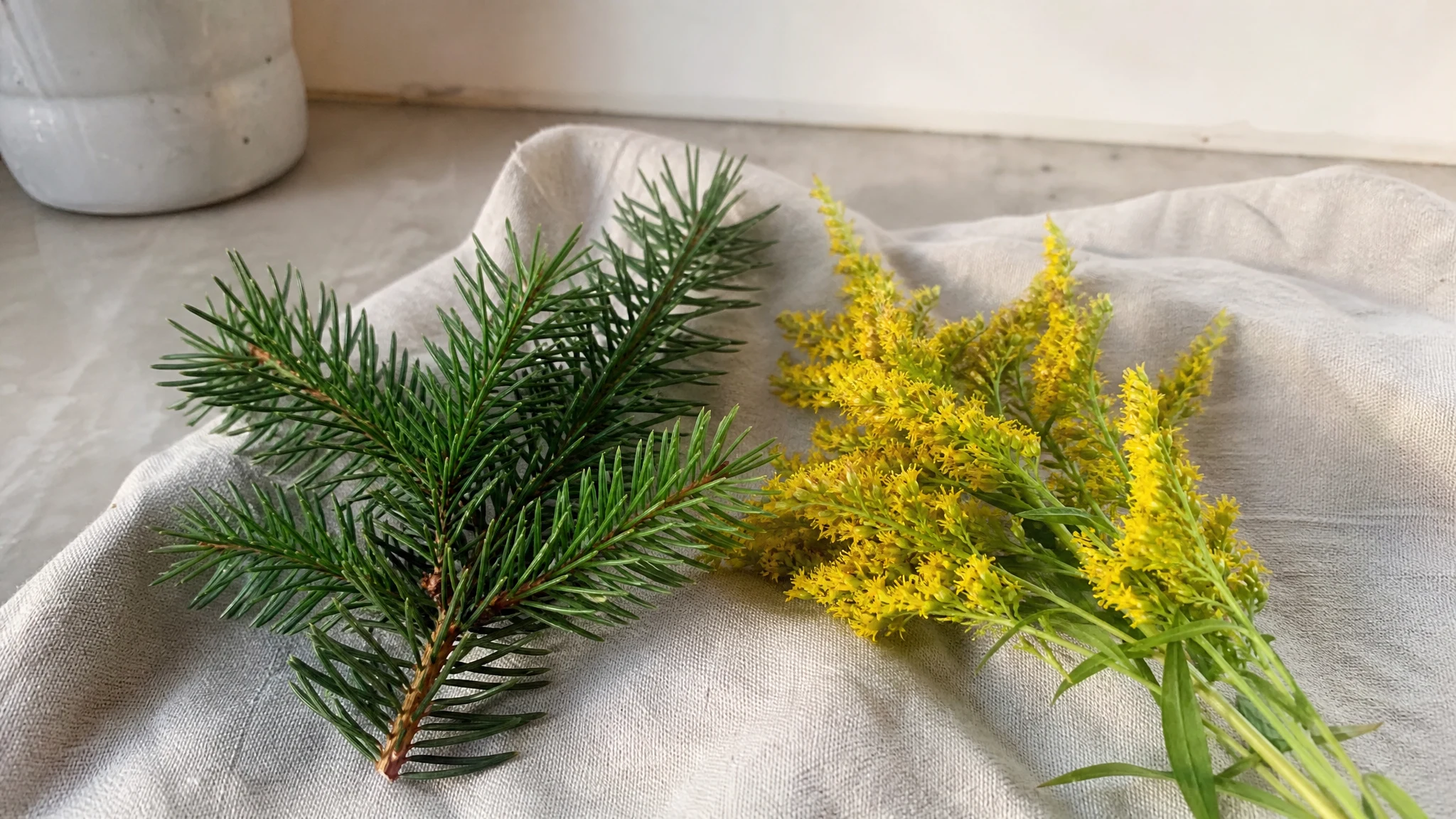
When you make an infusion, you decide which parts of the plant go in, a choice the buyer of a distilled oil rarely gets. The yields Elshafie's paper cites differ by several times between the flowering heads and other aerial parts, which tells us the parts are not equivalent raw material for distilling. Whether they differ for an infusion has not turned up in the literature, so it is a fair question to experiment with, carefully and with dried plant.
If you like, do both: infuse a small jar with dried plant for a soft carrier, then add a few drops of the essential oil at the strength you want. That gets you the gentle golden base and the full honeyed scent in one bottle.
In short, the infused oil is a gentle, homemade carrier and the essential oil is the concentrated scent, and plenty of people happily enjoy both in their own lanes.
Goldenrod Essential Oil
Goldenrod Essential Oil from our own shop, in sizes from 0.5 oz to bulk.
From $17.99
Shop Now →Sources & Further Reading
- Elshafie H.S. et al., 2019. Antimicrobial Activity and Chemical Composition of Essential Oil Extracted from Solidago canadensis L. Growing Wild in Slovakia. Molecules. pmc.ncbi.nlm.nih.gov/articles/PMC6479883
- University of Maine Cooperative Extension. Bulletin 4385, Safe Homemade Flavored and Infused Oils. extension.umaine.edu/publications/4385e
- Tisserand Institute. Essential oil dilution. tisserandinstitute.org/dilution-essential-oils
- DermNet. Compositae allergy. Sesquiterpene lactone contact allergy. dermnetnz.org/topics/compositae-allergy