Goldenrod vs Frankincense Oil: Resin or Wildflower?
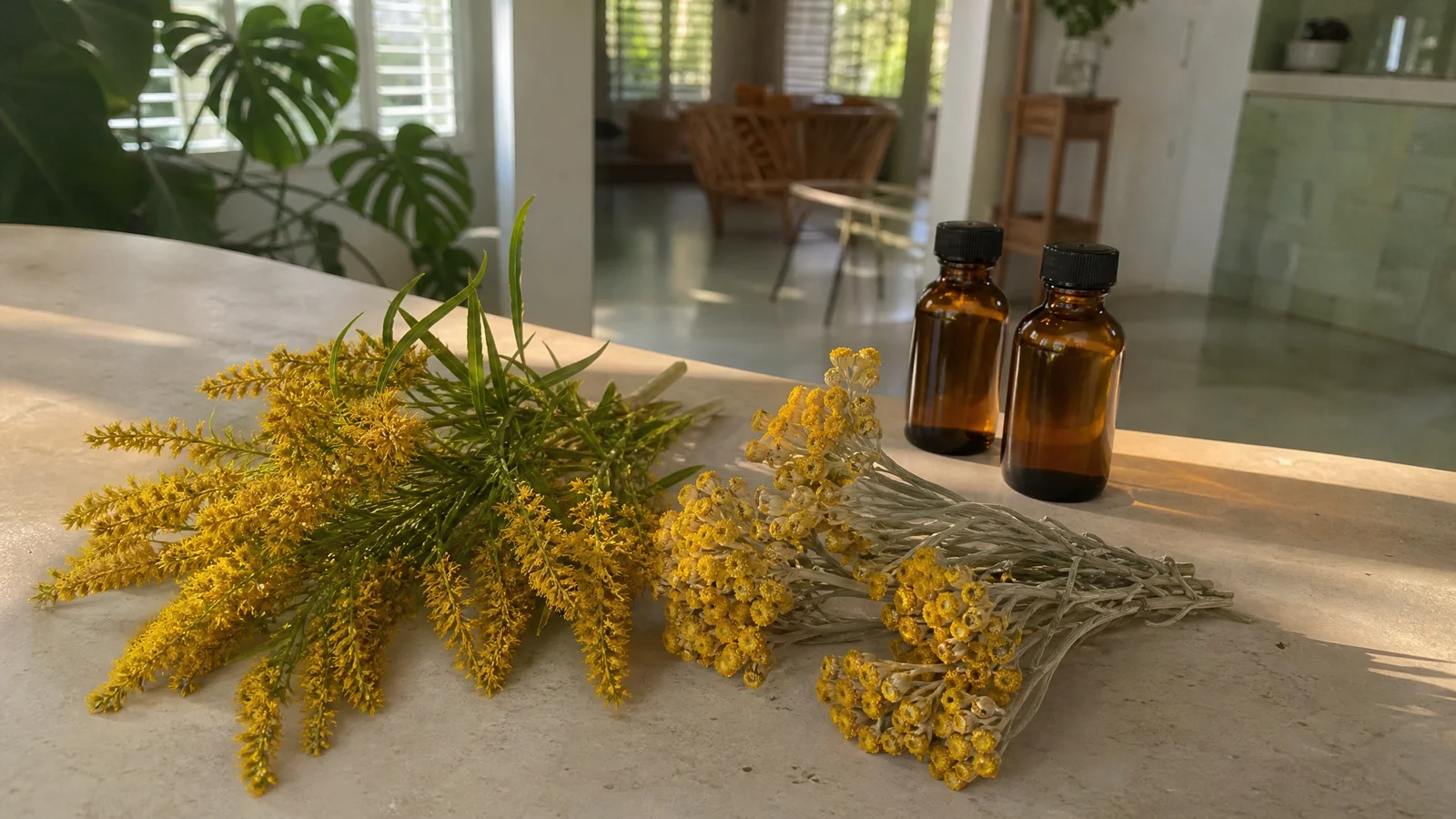
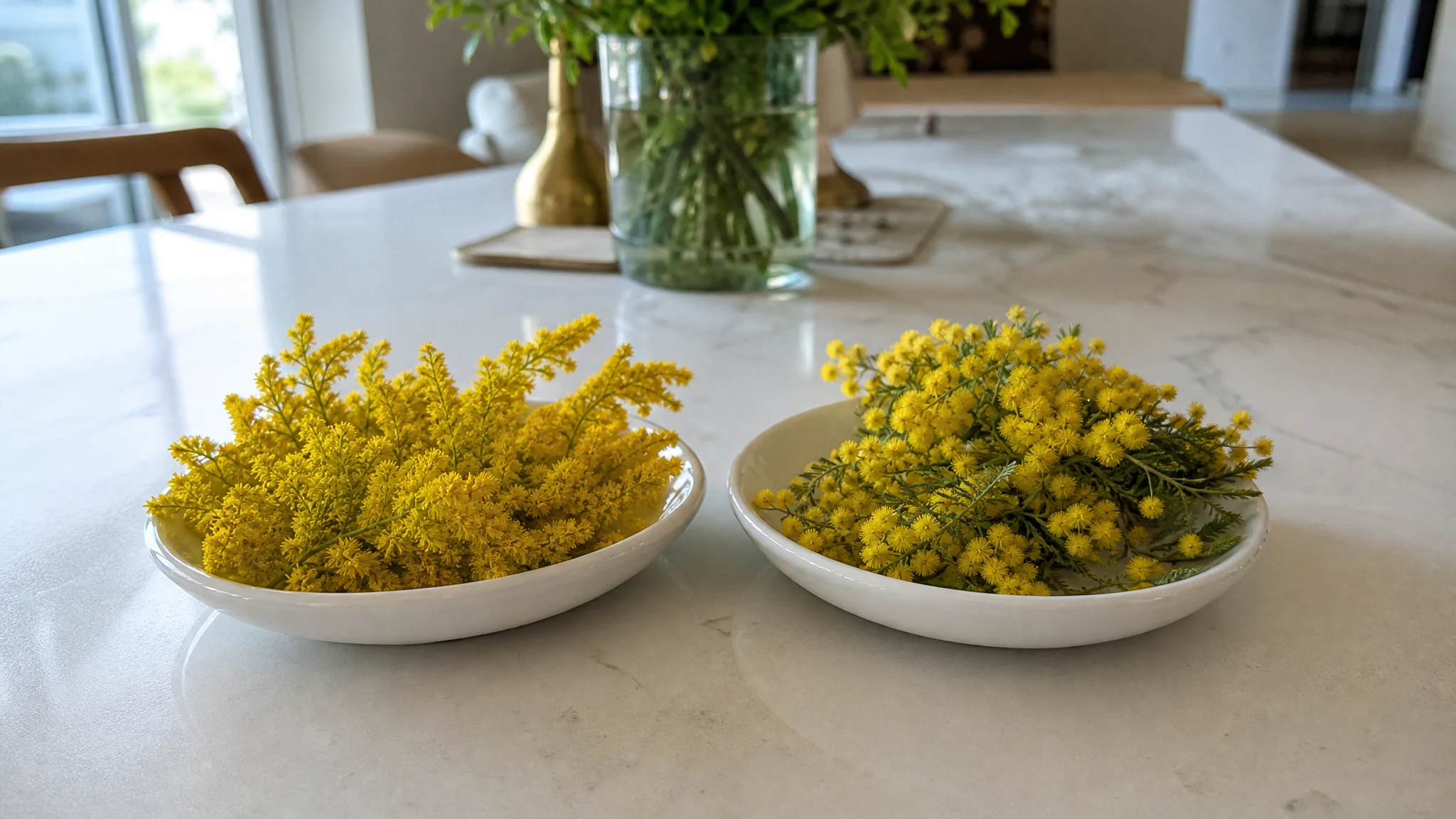
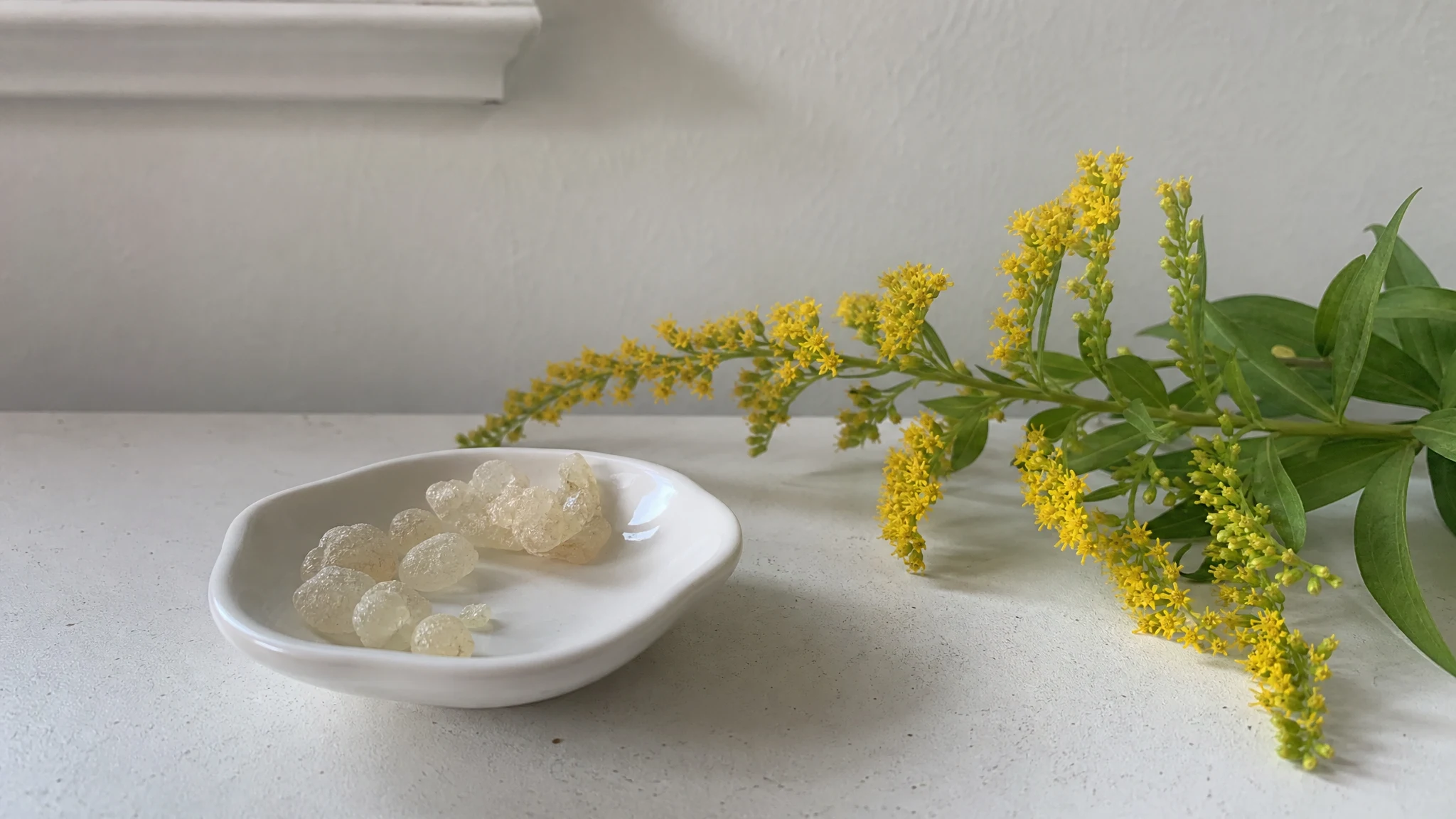
Frankincense starts out as hardened tree resin that is, by weight, only a few percent essential oil. Goldenrod starts out as a field of late-summer flowers that yields even less. Run those two raw materials through a still and the arithmetic tells you a lot about why the oils feel so different to buy.
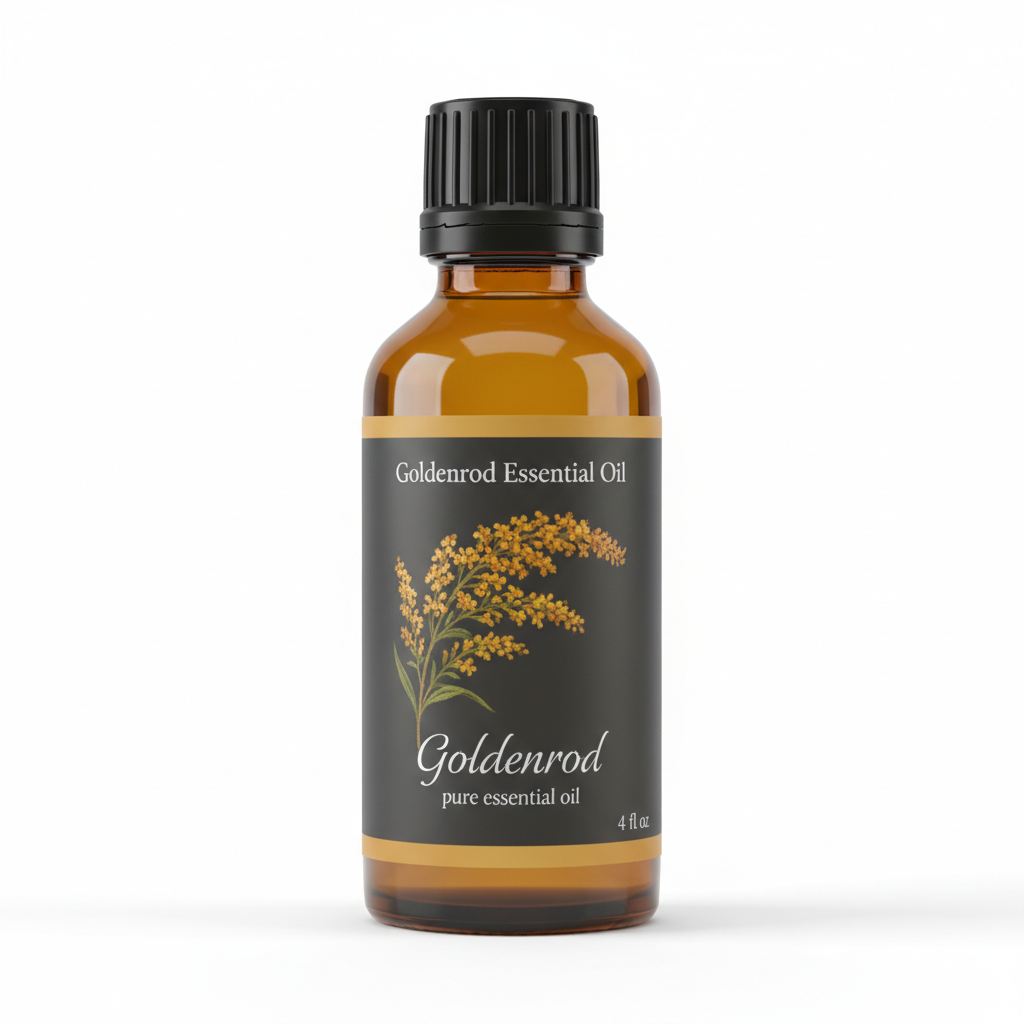
Goldenrod Essential Oil
Our own Goldenrod Essential Oil, in sizes from 0.5 oz to bulk.
From $17.99
Shop Now →How much plant it takes to make one ounce
A review of Boswellia sacra puts the essential oil at about 5% to 7% of the resin. For goldenrod, a laboratory distillation of wild Solidago canadensis aboveground parts gave a yield of 0.27% of dry mass. One fluid ounce of goldenrod oil weighs about 26 grams, using the relative density of 0.880 on the Certificate of Analysis we publish for one batch. Working backward:
- Frankincense at 5% to 7% would need roughly 0.4 to 0.5 kg of resin for that ounce.
- Goldenrod at 0.27% would need about 9.6 kg of dried herb at that laboratory yield.
That is a rough sum from two different studies, not a statement about anyone's production. Still, it explains something we say on our product page: goldenrod comes in limited seasonal batches because late-summer yields are modest. A plant that blooms for a few weeks and gives up its oil grudgingly will never behave like a resin that can be tapped and stored. If you want to understand what that does to price, our price guide goes through it.
Two raw materials, two kinds of waiting
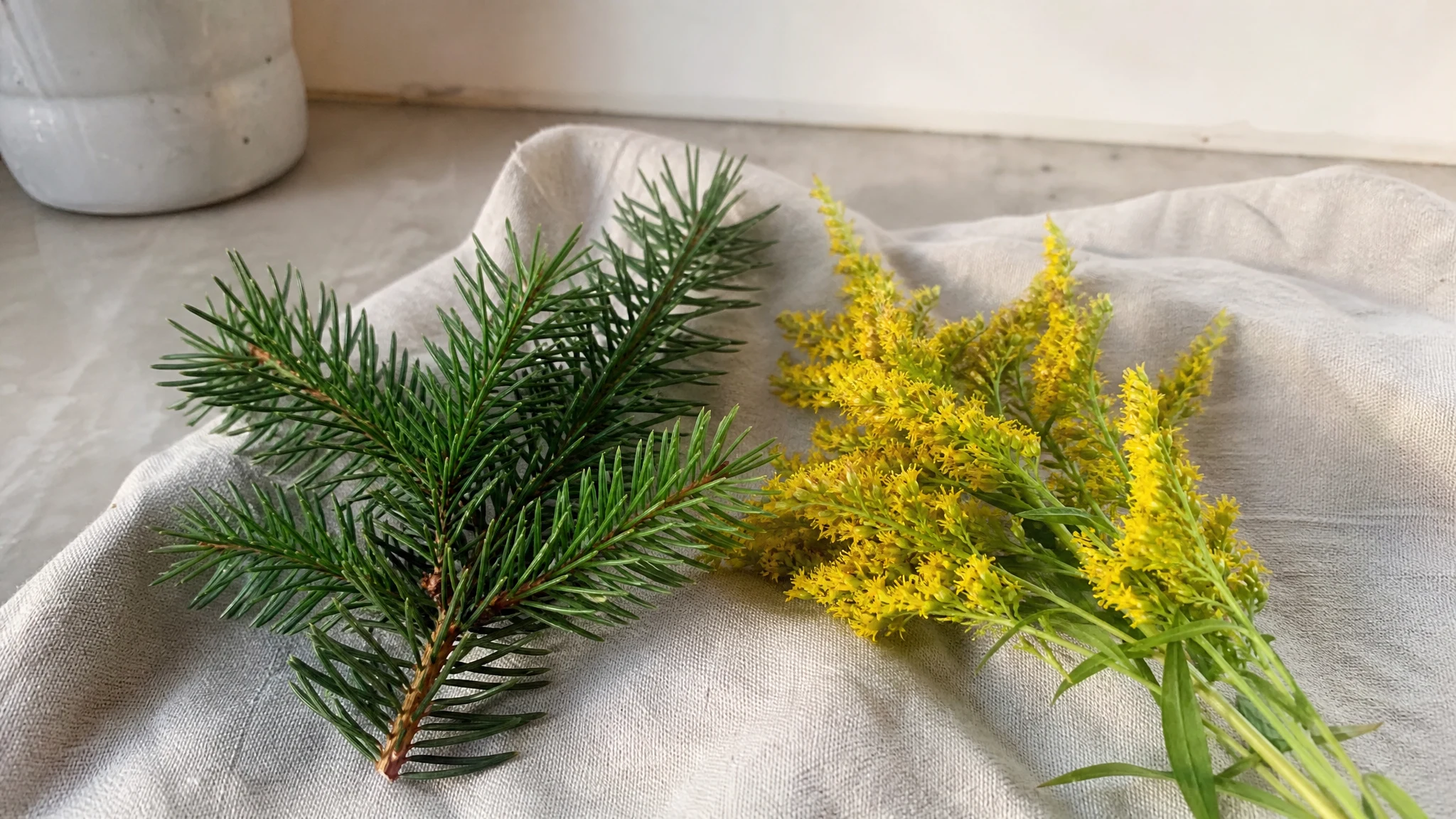
There is something we love about the difference in how these materials arrive. Resin is a hard, stored thing. It can sit in a sack for months and still be resin when you open it. A goldenrod plume is a short-lived thing that is gold for a few weeks and then turns to fluff. Making oil from it is a race against the season, and that is part of why a goldenrod bottle feels like a snapshot of one late summer.
"Frankincense" is a family of oils
This is where a lot of buyers get surprised. Frankincense is not one species, and the analyses do not agree on a single signature. A study of hydrodistilled Boswellia serrata gum oil found octyl acetate leading at 41%, with nerolidol next, while other Boswellia oils in the literature lead with alpha-pinene instead. The same word on a label can mean quite different chemistry, depending on the species, the country and the distillation.
Goldenrod has its own version of this story, with composition shifting by plant part, harvest stage and year. The takeaway is the same for both: the label should name the species, and the seller should be able to tell you about the lot. Our compounds article explains how to read those numbers without over-reading them.
Which one makes you slow down?
Here is a personal test we like to suggest. Put a drop of each on its own paper strip, sit somewhere quiet, and notice which one makes you slow down and take a second breath. There is no wrong answer. Some people lean toward the smoky, deep character of a resin, and others find the sweet, hay-like warmth of a field oil more inviting. Knowing your own preference saves you from buying what a list tells you to buy.
Different roles on the bench
Frankincense has been grown and gathered for its resin to burn as incense for a very long time, so it is natural to think of it as a base-note, smoky material. Goldenrod sits somewhere else. We describe ours as honeyed, grassy and floral, with a soft sweetness settling into a faintly balsamic, hay-like base, and we place it as a middle note. If you are building a perfume or a diffuser blend, those are different jobs. One anchors, the other fills out the heart of the scent.
We recommend goldenrod alongside chamomile, lavender, clary sage, citrus, rose and geranium. Frankincense is not on that list, and we do not sell it, so if you want to try the pairing, you will find frankincense oil from a supplier that names the Boswellia species and the lot. If you do mix them for skin use, keep the combined essential oil within a 0.5% to 2% dilution in a carrier, patch test the blend, and keep it away from eyes, children and pets.
A small blending thought
If you do decide to pair them, give each a clear job. Let the resin oil be the deep floor of the scent and goldenrod the warm, flowery middle. Add goldenrod in single drops on a paper strip before you commit to a bottle, and let the strip sit for a few minutes before judging, because first sniffs are rarely the whole story.
What our paperwork gives you
For goldenrod, the Certificate of Analysis we publish for one batch lists relative density (0.880 at 20 C), refractive index (1.487) and optical rotation (-8.16 degrees), with the standard range printed beside each. Its best-by date has passed, so read it as an example of what a goldenrod certificate contains. If you need a constituent profile for a particular lot, ask us in writing through our contact page before you order. Any frankincense supplier worth buying from should be able to show you the same kind of sheet for the same species.
If you came here looking for a substitute for a pricey resin oil, our substitutes guide and the comparison hub sort out which swaps hold up and which do not. Goldenrod is a different oil with its own character, and it is at its best when you let it be that.
Goldenrod Essential Oil
Goldenrod Essential Oil from our own shop, in sizes from 0.5 oz to bulk.
From $17.99
Shop Now →Sources & Further Reading
- Khan F, Rashan L. Phytochemical Analysis and Pharmaceutical Applications of Monoterpenoids Present in the Essential Oil of Boswellia sacra (Omani Luban). 2025. europepmc.org/article/MED/40040632
- Elshafie HS et al. Antimicrobial Activity and Chemical Composition of Essential Oil Extracted from Solidago canadensis L. Growing Wild in Slovakia. Molecules, 2019. pmc.ncbi.nlm.nih.gov/articles/PMC6479883
- El-Nashar HAS et al. Comparative metabolic profiling, enzyme inhibitory activities, and in-silico analysis of the hexane extract and the hydrodistilled oil of Boswellia serrata. PLoS One, 2026. europepmc.org/article/MED/42102034