Goldenrod vs Fir, Frankincense and Lavender Oil Families
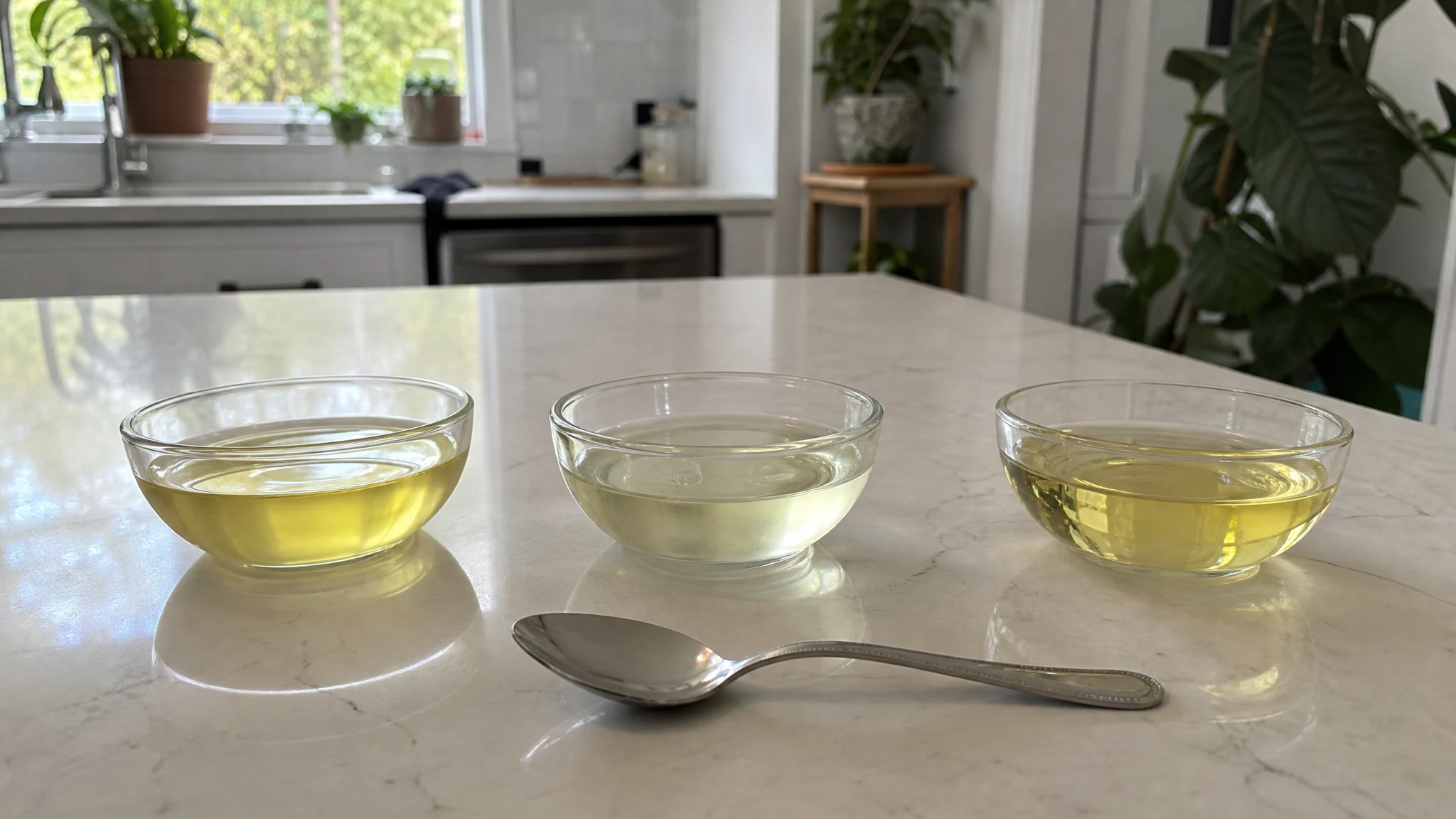
If you line up essential oils by what they are made of, the shelf rearranges itself. Fir, lavender, frankincense and goldenrod do not sit in one row of similar scents. Each leads with a different family of molecules, and that goes a long way toward explaining why they smell, blend and behave so differently. Here is a quick tour.
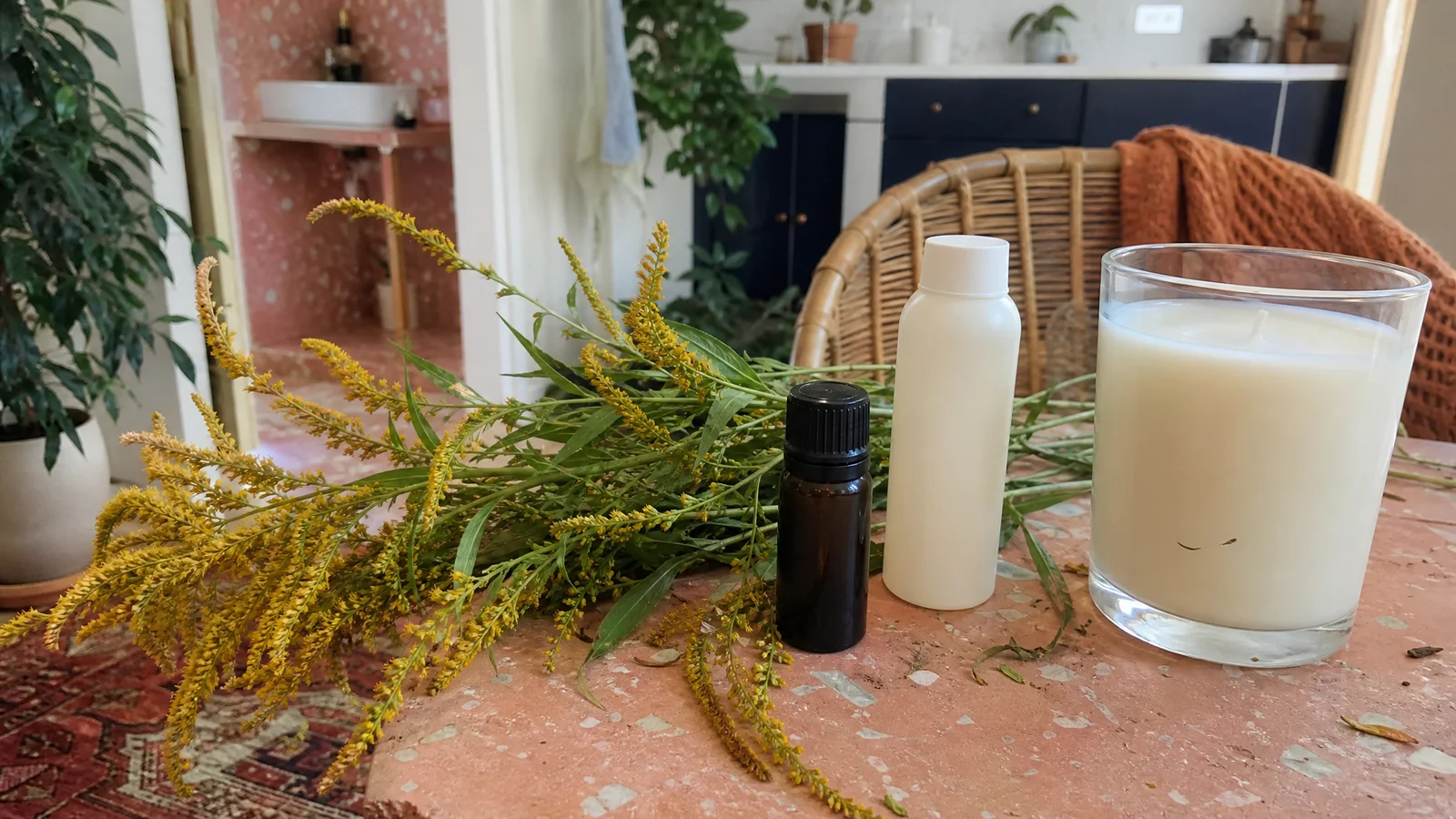
Goldenrod Essential Oil
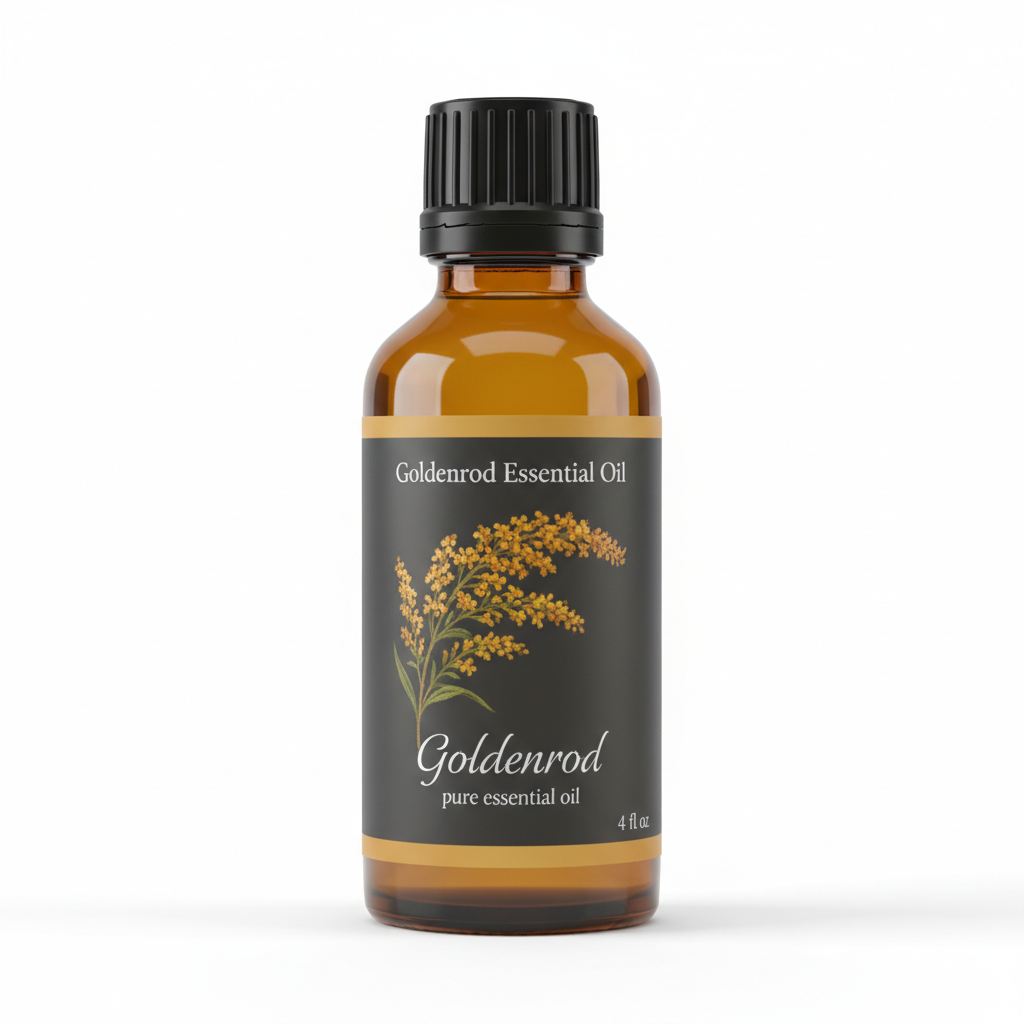
Our own Goldenrod Essential Oil, in sizes from 0.5 oz to bulk.
From $17.99
Shop Now →Try it at your own shelf
Here is a habit we like to recommend. Next time you have a few bottles in front of you, open them one at a time and hold each a few centimeters below your nose, not pressed against it. Jot down two words for each. Fir will probably read sharp and cool. Lavender tends to come across soft and floral. Frankincense smells dry and resinous. Goldenrod is warmer and sweeter, with that hay-like drift underneath.
Then give it a minute and go back to each one. You'll notice that the first impression and the one a minute later are often not quite the same, and that is the middle-note idea in practice. A bottle that seemed plain at first sniff can open up, and a loud one can settle down.
Goldenrod: a sesquiterpene lead
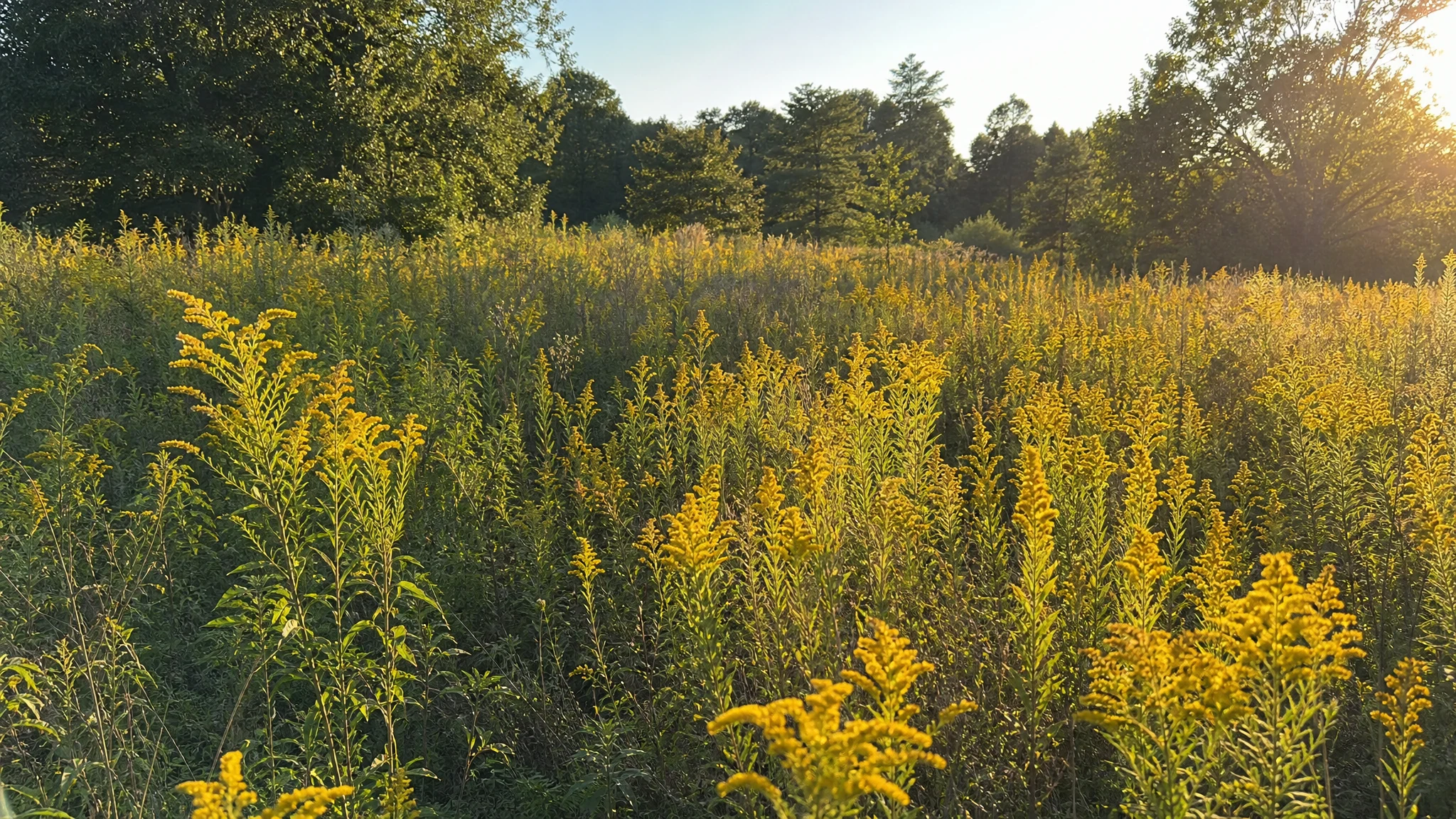
In the one detailed analysis of Solidago canadensis oil we have read, from wild plants in Slovakia, the biggest component was germacrene D at about 35%, followed by limonene and alpha-pinene at around 12% each. Germacrene D belongs to the sesquiterpenes, the larger, heavier, slower-evaporating molecules, which fits with goldenrod's character as a middle-note oil with a honeyed, grassy, floral aroma that settles into a soft, hay-like base. The same paper cites other studies that put germacrene D anywhere from about 20% to 39%, so a goldenrod oil's profile moves with the plant, the place and the harvest. Our scent profile goes further into the aroma.
Fir: almost all light monoterpenes
Balsam fir is nearly the opposite. A laboratory analysis found over 96% monoterpenes, led by beta-pinene, delta-3-carene and alpha-pinene. Those are small, quick molecules, which is why fir smells bright and resinous the moment you open the bottle. Goldenrod shares a little alpha-pinene with fir, which is why the two get compared, but one is mostly a light, pine-like family and the other leans heavier and sweeter. We take that comparison further in goldenrod versus fir and pine.
Frankincense: depends on the species
Frankincense is a good lesson in why "the name on the bottle" is not enough. One hydrodistilled Boswellia serrata oil was led by octyl acetate, an ester, at about 41%, followed by nerolidol at about 14%. That is one sample, and frankincense oils from other species or methods can read very differently. A resin and a flower give very different oils, and our frankincense comparison covers the practical side.
Lavender: linalool and its acetate
Lavender is built on linalool and linalyl acetate. In a 2026 study of four commercial lavender oils from the Egyptian market, two samples showed linalool at about 34% and 46% with linalyl acetate at about 25% and 33%. The researchers also flagged possible dilution or adulteration in some of the market oils, a good reminder that even a famous oil varies by bottle.
Why we like shopping by family
Names on bottles can feel like a wall of Latin. Grouping oils by family turns the wall into a handful of shelves. You do not need to memorize a single percentage to shop this way. You only need to ask whether the oil is bright and quick or warm and slow, and whether it sounds like the job you have in mind.
We sell only goldenrod, so for fir, frankincense and lavender you will go to another supplier. Hold them to the same simple questions you would put to us: which species, which plant part, how it was made, and which lot is in the bottle.
What this means when you compare
Find the family first. Two oils in different families are not stand-ins for each other on chemistry alone, whatever their color or reputation. Treat each percentage as one lot, since every figure above comes from a single sample or a small set of samples, goldenrod included. Think about the job too: a bright, quick top note and a warm, slow middle note do different work in a blend, and that is the best reason to keep both in your toolkit. There are more head-to-heads in goldenrod versus tea tree and goldenrod versus helichrysum.
Where our own oil fits
The Certificate of Analysis we publish for one batch of our goldenrod oil lists a relative density of 0.880, a refractive index of 1.487 and an optical rotation of -8.16 degrees, all inside the standard ranges printed beside them. It does not include a constituent table, so none of the percentages above, goldenrod included, is a description of our oil; its best-by date, 01/31/2026, has also passed. If you want a composition report for a lot you are considering, ask us in writing through the contact page before ordering.
A quick safety note that applies to the whole Asteraceae family, goldenrod included: if you react to ragweed or daisies, patch test on a small area and talk with an allergist before using an oil from that family. Our dilution guidance for goldenrod is 0.5% to 2% in a carrier, and our allergy article explains the pollen versus skin question.
Comparing oils by family is one of the nicest habits you can pick up, because it makes every new bottle easier to understand.
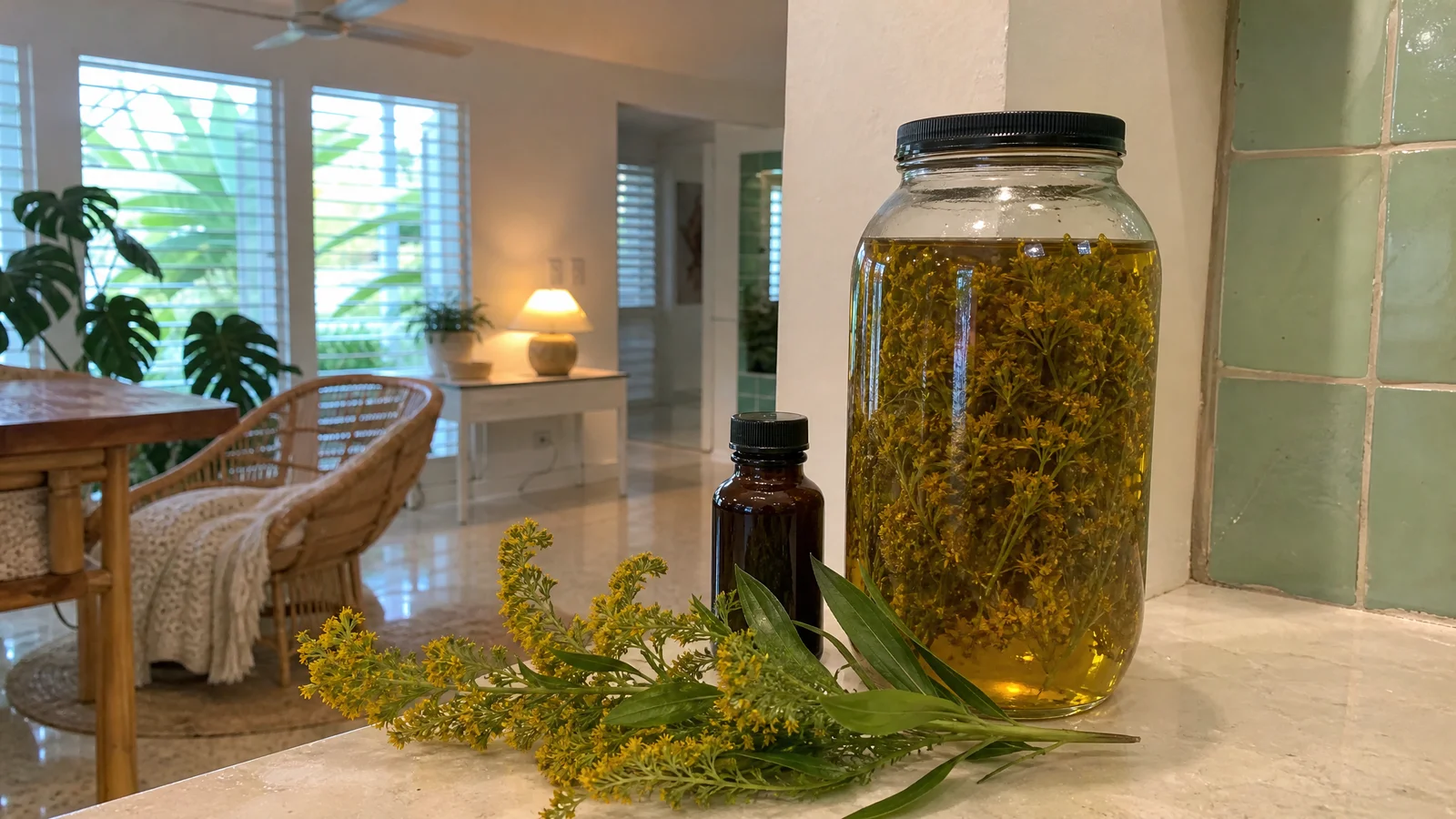
Goldenrod Essential Oil
Goldenrod Essential Oil from our own shop, in sizes from 0.5 oz to bulk.
From $17.99
Shop Now →Sources & Further Reading
- Elshafie H.S. et al., 2019. Antimicrobial Activity and Chemical Composition of Essential Oil Extracted from Solidago canadensis L. Growing Wild in Slovakia. Molecules. pmc.ncbi.nlm.nih.gov/articles/PMC6479883
- Pichette A., Larouche P.L., Lebrun M., Legault J., 2006. Composition and antibacterial activity of Abies balsamea essential oil. europepmc.org/article/MED/16619365
- El-Nashar H.A.S. et al., 2026. Comparative metabolic profiling, enzyme inhibitory activities, and in-silico analysis of the hexane extract and the hydrodistilled oil of Boswellia serrata. PLoS One 21(5):e0348178. europepmc.org/article/MED/42102034
- Abouelela M.B. et al., 2026. Uncovering adulteration and quality variations in commercial lavender essential oils from the Egyptian market using GC-MS and chemometrics. europepmc.org/article/MED/42000791