Wild vs Cultivated Goldenrod Oil: What Labels Tell You
"Wild-harvested" sounds romantic and "cultivated" sounds reliable, and neither word tells you what is in the bottle. For a seasonal oil like goldenrod, the details that do shape the oil are quieter ones: which plant, which part, which stage of bloom and which year. Here is how we would read those labels if we were buying.
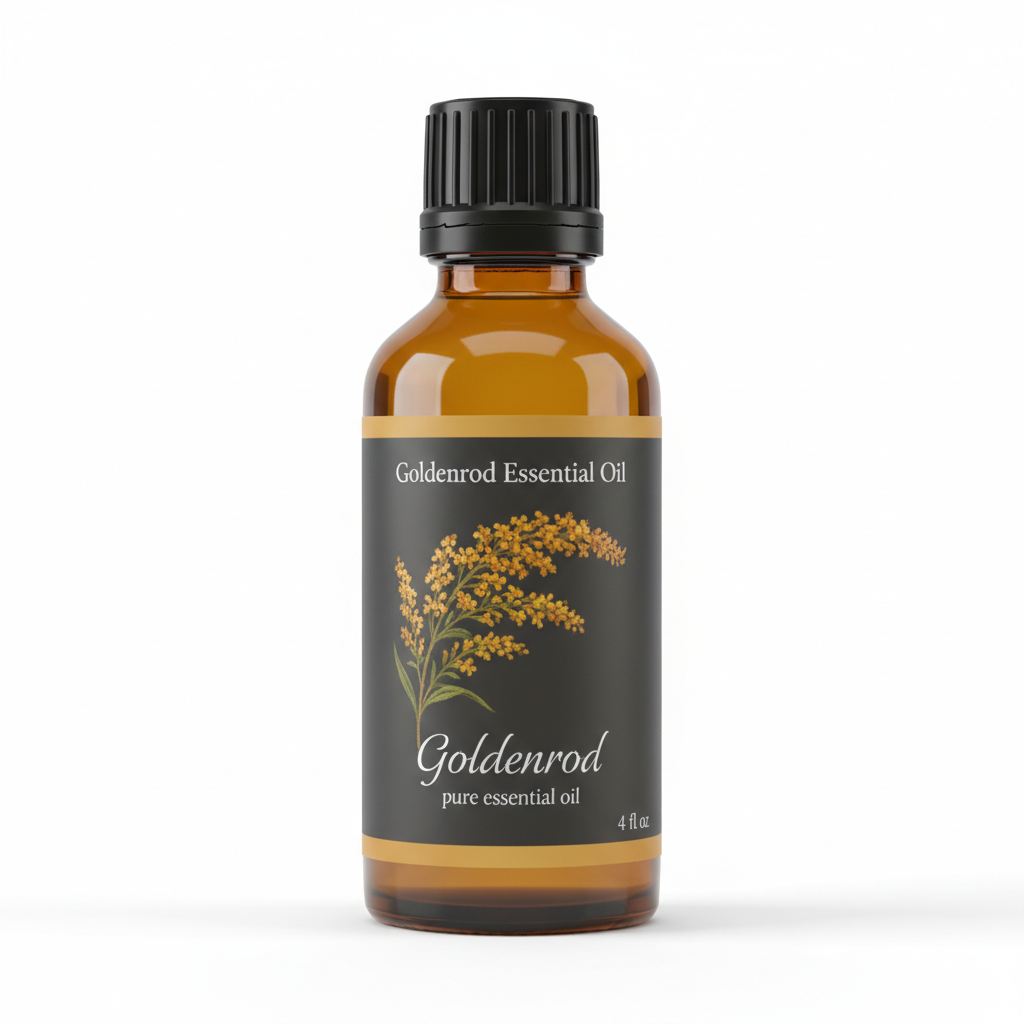
Goldenrod Essential Oil
Our own Goldenrod Essential Oil, in sizes from 0.5 oz to bulk.
From $17.99
Shop Now →What actually shapes the oil
The fullest analysis of Solidago canadensis oil we have read was done on one wild population in Slovakia, collected at full bloom in August 2016. Germacrene D led at 34.9%, followed by limonene and alpha-pinene. The authors say plainly that composition depends on climate, the plant's stage of development and how the oil is harvested and isolated. Other studies they cite put germacrene D anywhere from about 20% to 39%.
Plant part matters too. A 2025 study that distilled flowers, leaves and stems separately got oil yields of 1.00%, 0.76% and 0.05% respectively. Those are three very different raw materials from the same plant, and a cut of mostly flowers is not a cut of mostly stems. Wild or farmed, the label tells you none of this unless the seller also says it.
Why we like plain words
Marketing loves a pretty word, and "wild" is one of the prettiest. We prefer plain language: which plant, which part, which season. Those three answers will tell you more about an oil than any adjective. When you read a listing, try covering the adjectives with your hand and see what is left. If it is still informative, you are looking at a seller who respects your time.
What "wild" can mean
There is one formal yardstick for wild collection, called FairWild. Its standard covers ecological sustainability as well as fair treatment of collectors, and it was designed for wild-collected plants, not for farmed crops. That makes a FairWild certificate real evidence about how plants were gathered and who gathered them. A bare "wildcrafted" with no certificate and no collection record is a description, and it is up to you how much weight to give it. Neither says anything direct about scent or composition.
A quick mental checklist
When we read a listing, we run through a tiny checklist in our heads. Does it name the plant in Latin? Does it say which part was used? Does it give any date or lot information? Is it sold undiluted? Four yeses make a listing worth a second look. Anything fewer is a reason to ask a question before you decide.
That checklist takes about thirty seconds, and it works for any specialty oil, not only goldenrod.
What "cultivated" can mean
For goldenrod, it helps to remember that this is a native North American plant that has also spread widely in Europe. Researchers who surveyed ten European populations found five diploid and five hexaploid, meaning the species name covers plants with different chromosome counts. So "scarce wild plant" is not an automatic picture for goldenrod, and "Solidago canadensis" on a label does not by itself pin down a single type of plant. A farm name, a variety and a harvest date are the cultivated equivalents of a collection record.
What we say about ours
We sell one oil, Solidago canadensis, undiluted, in sizes from 0.5 oz to 400 lb, as limited seasonal batches. The Certificate of Analysis we publish for one batch gives relative density, refractive index and optical rotation, and its best-by date has passed, so we treat it as an example of what the paperwork contains. If you have a question about a specific lot, write to us through our contact page before you order.
Looking at the plant itself
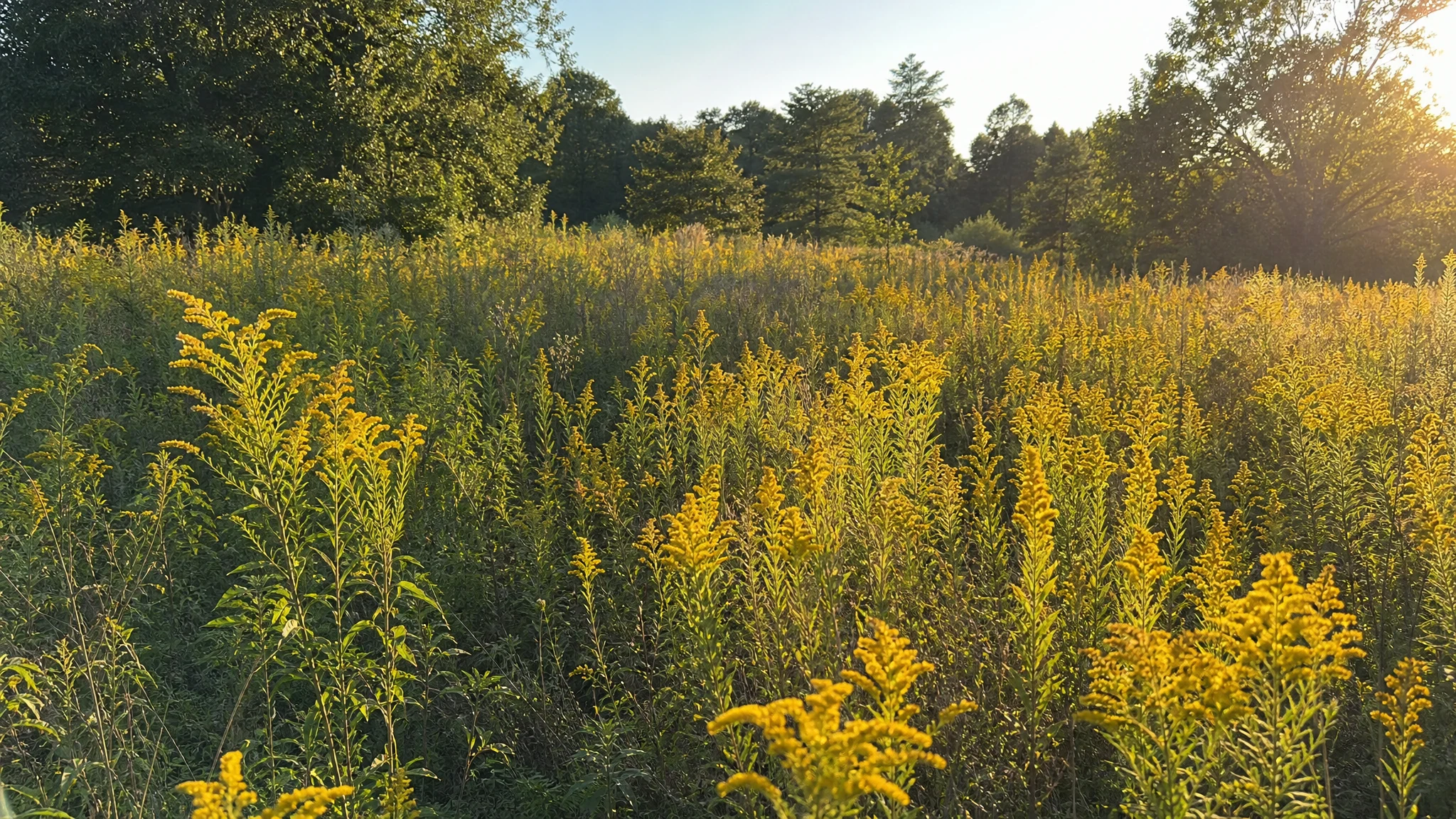
If you live near goldenrod, go and spend ten minutes with it in late summer. Notice the bees and small insects working the plumes, the way the stems sway, the color that shifts from green-gold to deep yellow. It is a good reminder that an oil is only a small echo of a living plant, and that the plant is worth knowing on its own terms.
Buy for the use, not the story
A last bit of friendly advice. Decide what you are going to do with the oil, whether that is a candle, a diffuser blend or a diluted body oil, and choose on that basis. A romantic label will not make a poor fit work, and a plain label on the right oil will do the job nicely.
Four questions worth asking any seller
- Which species and which plant part? Goldenrod is a big genus, and flowers and whole herb are different cuts.
- Which lot and which year? A seasonal oil is a record of one harvest.
- Is there a constituent report for this lot? It is the one document that shows what a given batch holds.
- If the label says wild or cultivated, can you see the record behind it? A region and a certificate for wild, a farm and a harvest date for cultivated.
Our seller-vetting guide goes deeper on this, and reading a goldenrod oil label covers what a label should carry. To understand why supply is tight to begin with, see why goldenrod oil is hard to find, and our species guide introduces the plant.
Documents first, adjectives second is a good rule for any specialty oil, and goldenrod rewards it more than most.
Goldenrod Essential Oil
Goldenrod Essential Oil from our own shop, in sizes from 0.5 oz to bulk.
From $17.99
Shop Now →Sources & Further Reading
- Elshafie HS et al. Antimicrobial Activity and Chemical Composition of Essential Oil Extracted from Solidago canadensis L. Growing Wild in Slovakia. Molecules, 2019. pmc.ncbi.nlm.nih.gov/articles/PMC6479883
- Yang JX et al. Multivariate Statistical Analysis of Solidago canadensis L. Essential Oil and Its Antifungal Mechanism Against Mulberry Sclerotinia Diseases. 2025. europepmc.org/article/MED/41515927
- Tian Z et al. Cytogeography of Naturalized Solidago canadensis Populations in Europe. 2023. europepmc.org/article/MED/36903973
- FairWild Foundation. FAQs. fairwild.org/faqs