How to Vet a Goldenrod Oil Seller: 5 Documents
The standard advice for judging an essential oil seller is "ask for the GC/MS report." It is good advice that stops one step short, because each document a seller can hand you answers a different question, and none of them answers all of them. A goldenrod oil is a good case study, since goldenrod is a large genus and published reference data for the oil are thin.
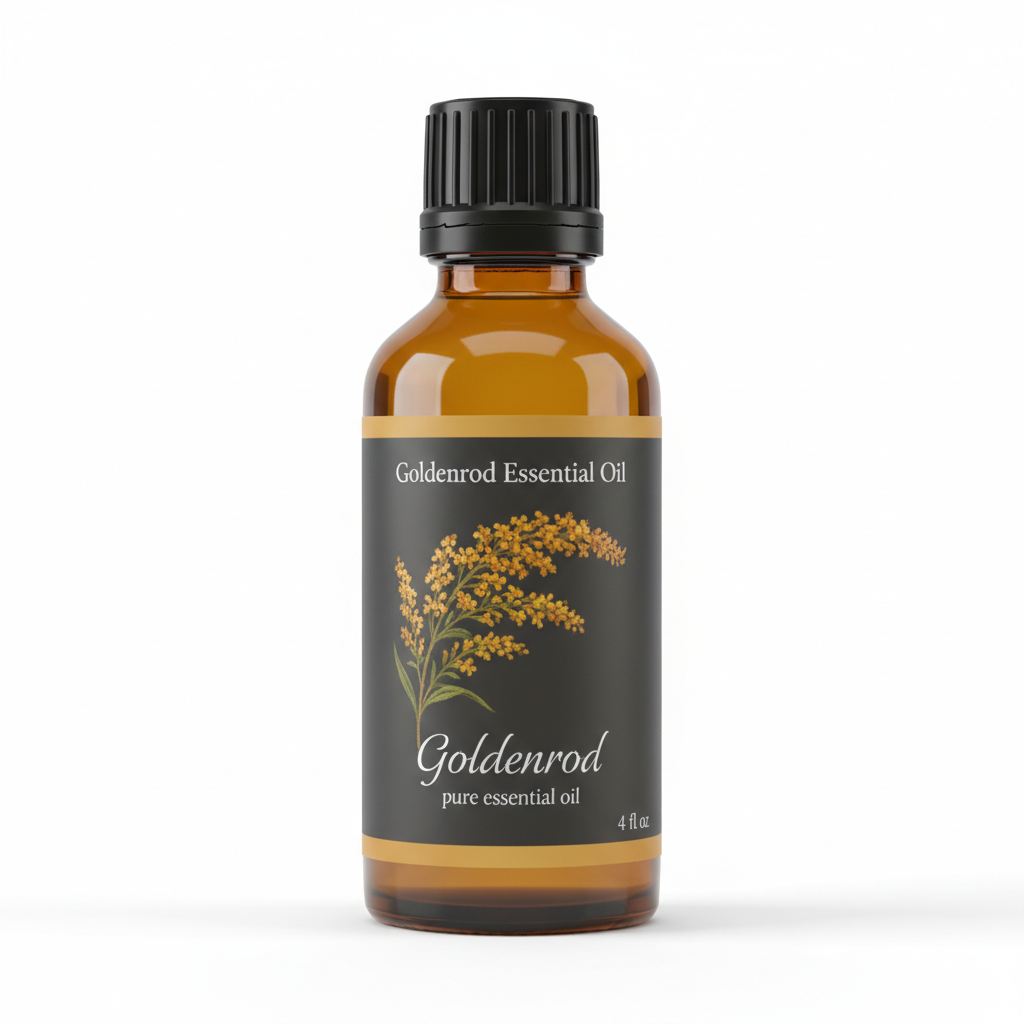
Goldenrod Essential Oil
Our own Goldenrod Essential Oil, in sizes from 0.5 oz to bulk.
From $17.99
Shop Now →Five documents, five different jobs
Think of these as rungs on a ladder. Each one tells you something real, and each one leaves something open.
- A botanical name on the label. This tells you which plant the seller says it is. It does not say how that was confirmed, or which part of the plant went into the still.
- A lot number and dates. This ties a bottle to a batch. It says nothing about quality on its own, but it is what makes every other document checkable.
- Physical constants (relative density, refractive index, optical rotation). These show that a batch falls inside a published window for that oil. They are a good screen for the wrong oil, though a reading alone cannot rule out a vegetable-oil dilution that keeps the window intact.
- A GC/MS report for the lot. This gives the volatile profile of that lot as percentages. Vegetable oil is not volatile, so dilution does not appear in it.
- Chiral analysis. This can reveal synthetic additions to some oils by comparing mirror-image ratios, but only against a trustworthy reference.
Why a long report is not proof
The last three rungs come from one careful study. Capetti and colleagues built reference profiles from 20 genuine batches each of lavender, tea tree and a citrus oil. When they added synthetic linalool to a bergamot oil, the share of one mirror-image form jumped from 0.4% to 24%, and only the chiral method caught it. Diluting with vegetable oil left the normalized percentages essentially unchanged. The authors say plainly that adulteration can be confirmed only against a reliable profile of the genuine oil.
That matters for goldenrod because the reference is loose. One Slovak sample put germacrene D at 34.9%, and the same paper cites earlier work from 19.8% to 39.2%. So a report with germacrene D anywhere in that span tells you the oil looks like a goldenrod oil. It is a good sign, and it is where the conversation with a seller should begin.
What our own paperwork shows
We would not ask you to hold other sellers to a standard we skip, so here is ours. The Certificate of Analysis we publish is for one batch, GLRQGUSCCAC002A. It names the product, the botanical name Solidago canadensis, steam distillation, and three physical constants: a relative density of 0.880 at 20 C, a refractive index of 1.487 and an optical rotation of -8.16 degrees. All three sit inside the standard ranges printed beside them. The best-by date on that certificate, 01/31/2026, has passed, so read it as a worked example of the constants rung, not a current lot report.
If you need a constituent profile or species confirmation for your own lot, ask us in writing through the contact page before you order, and judge us by what comes back. Our label is also worth reading line by line; this guide shows what each statement is required to say.
How we would go about it
If we were shopping for a goldenrod oil, we would start with a simple page of notes. We would write down the Latin name, the plant part, the lot number and the date on each bottle we were considering, side by side. Then we would send each seller a short, friendly email asking what documents they can share. The way a seller replies is information in itself: a quick, specific answer is a good sign, and a vague or defensive one tells you to keep looking.
The label and the reviews
Two more places to look, both quick. Under 21 CFR 701.3, ingredients go in descending order of predominance, so a single oil should read as the oil and nothing else. If a carrier or second oil is listed, that is useful information and it may be a perfectly good product, just a different one from an undiluted oil. We describe ours as sold undiluted with no additives or fillers, a statement you can hold us to.
On reviews, the FTC's rule in force since October 2024 bans fake reviews, incentives tied to the sentiment of a review, undisclosed insider reviews and company-run sites posing as independent. That raises the cost of faking praise, which is good. It still cannot turn a star rating into a lab result, so read reviews for specifics such as lot, date and what the reviewer did with the oil.
Be kind to small sellers
One last thought from our side of the counter. Small businesses are often working with limited paperwork and a handful of people. A seller who says "we do not have that yet" is being honest, and honesty counts for a lot. Ask for what you need, give them a reasonable time to answer, and decide on what comes back.
Questions that sort sellers quickly
Which species, and which plant part? Is the oil sold undiluted? Is there a lot number on the bottle that matches the document? What does the document actually report, constants or constituents? How was the species confirmed? Who is the seller of record? A seller who answers these plainly, even with "we do not have that," is giving you something to work with. You will find related reading in our buying checklist and the species guide.
A good seller relationship is mostly good questions asked early, and we are happy to be asked.
Goldenrod Essential Oil
Goldenrod Essential Oil from our own shop, in sizes from 0.5 oz to bulk.
From $17.99
Shop Now →Sources & Further Reading
- Capetti F. et al., 2021. Adulteration of Essential Oils: A Multitask Issue for Quality Control. Three Case Studies: Lavandula angustifolia Mill., Citrus limon (L.) Osbeck and Melaleuca alternifolia (Maiden & Betche) Cheel. Molecules 26(18):5610. pmc.ncbi.nlm.nih.gov/articles/PMC8471154
- Elshafie H.S. et al., 2019. Antimicrobial Activity and Chemical Composition of Essential Oil Extracted from Solidago canadensis L. Growing Wild in Slovakia. Molecules. pmc.ncbi.nlm.nih.gov/articles/PMC6479883
- Code of Federal Regulations. 21 CFR 701.3, Designation of ingredients. law.cornell.edu/cfr/text/21/701.3
- Federal Trade Commission. Consumer Reviews and Testimonials Rule: questions and answers. ftc.gov