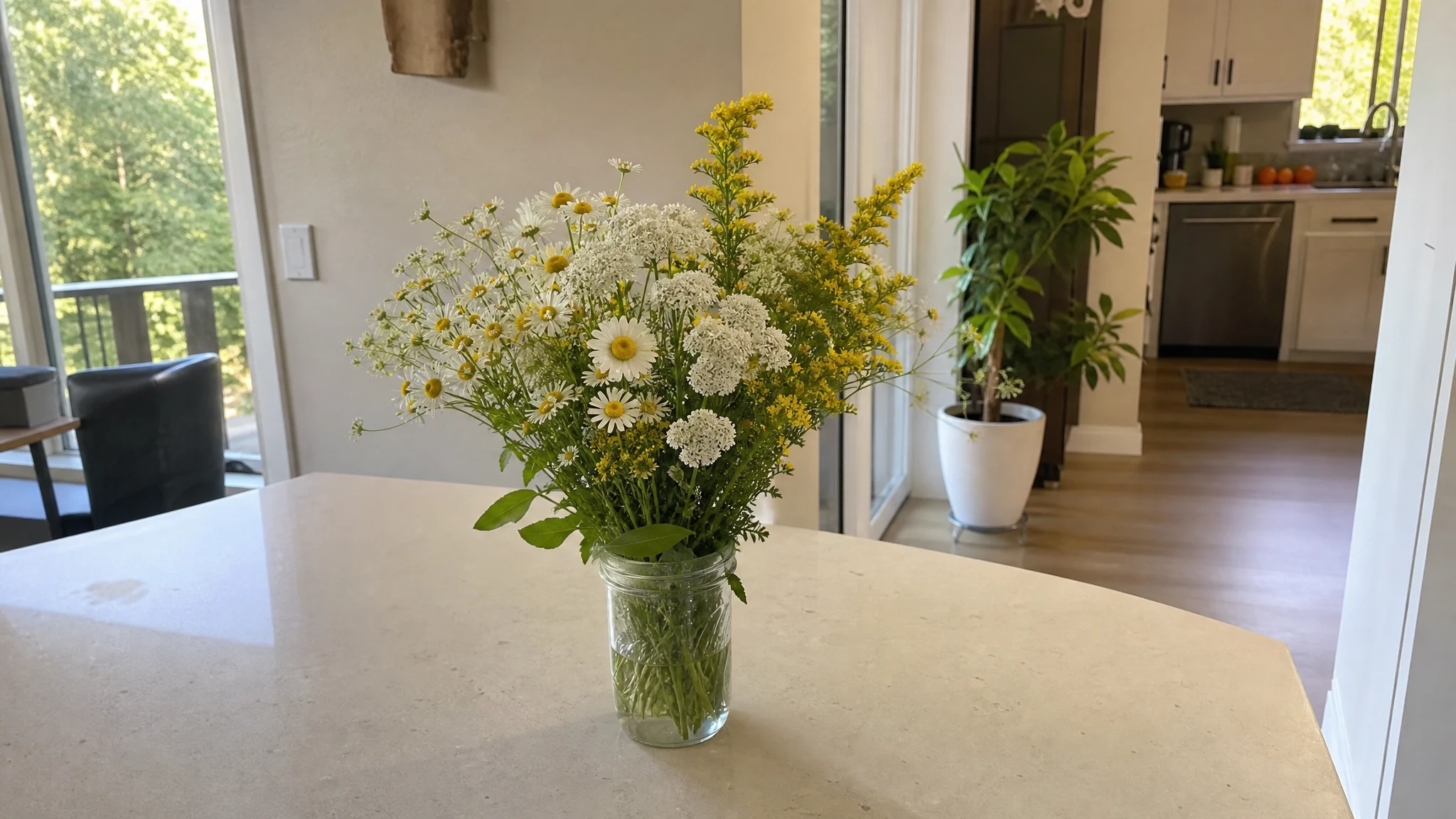
Daisy Family Essential Oils: Where Goldenrod Fits In
Goldenrod, chamomile, yarrow, helichrysum and sunflower look like very different plants, yet they all belong to Asteraceae, the daisy family (also called Compositae). It is one of the largest families of flowering plants, and its oils range from the sweet, honeyed and grassy to the sharp and camphor-like. Knowing a plant's family tells you a little about its chemistry and a useful thing about skin care, but not nearly as much as the individual species does.
Goldenrod Essential Oil
Our own Goldenrod Essential Oil, in sizes from 0.5 oz to bulk.
From $17.99
Shop Now →One family, very different oils
The composition papers we could read show how much variety sits inside the family. One Slovak lot of Solidago canadensis was led by germacrene D at 34.9%, with limonene at 12.5%, alpha-pinene at 11.6% and bornyl acetate at 6.3% (Elshafie and colleagues). Giant goldenrod, S. gigantea, is a different story: three Hungarian sites gave oils with cyclocolorenone at 10.46% to 29.69% and alpha-pinene as a runner-up (Filep and colleagues). Same genus, quite different oils.
Step across to helichrysum and the picture shifts again. Croatian-origin plants grown in Slovenia gave alpha-pinene between 9.04% and 19.16% with no detectable neryl acetate (Kunc and colleagues). An Italian study, by contrast, found a flowering sample led by oxygenated sesquiterpenoids (Mancini and colleagues). Two important lessons follow. A single percentage rarely describes "the" oil of a plant, and family membership is a poor shortcut for predicting what an oil smells like. For the scent profile of ours, see what goldenrod smells like.
Meeting the family by nose
If you like to learn by smelling, the daisy family is a generous classroom. Lay out a few bottles from a perfumery-supplies seller or a local shop and sniff them one after another on paper strips: one may be sweet and hay-like, another sharp and herbal, another camphor-like and brisk. Write two or three plain words for each. Goldenrod, as we describe it, is honeyed, grassy and floral over a faintly balsamic, hay-like base, and next to its cousins that soft sweetness is usually what stands out.
Give your nose a rest between oils. Three or four is plenty before everything starts to smell the same, and a breath of fresh air resets things better than you would expect.
A small tip: label the paper strips in pencil before you dip them, not after. Once three strips look identical and smell different, it is easy to lose track of which was which, and the whole point of the exercise is the comparison. A dry, clean strip for each oil, and a fresh one if you want to try it again later, keeps the impressions honest. Keep the bottles capped between sniffs so the room does not fill with a muddle of everything at once.
What the family label means for your skin
This is where family membership earns its place. DermNet explains that the main allergens in Compositae plants are sesquiterpene lactones, found in the oleoresin of the leaf, stem and flower and possibly in the pollen. People who react to one plant in the family often react to others, and more than a third also have an allergy to fragrances, balsam of Peru or rosin. Diagnosis is by patch test with a dermatologist, and DermNet notes that even screening mixes can miss people, so individual plant extracts are sometimes needed to confirm it.
For perspective on how common this is, a Melbourne clinic patch tested 3,679 people to Compositae over ten years. Forty-four (1.2%) reacted, and 19 of those reactions were judged relevant to the person's daily life. Most of those 19 came from direct plant contact, mainly in gardeners, and a smaller group came from personal products. Because these were patients already referred to a specialist, the figure describes people suspected of having a problem and not the general public.
What none of these sources settle is how much of those allergens, if any, a steam-distilled oil carries. They describe the plant, its extracts and its products. So the honest summary is that the family label is a reason to take a careful first step, and that is all.
A walk along the garden border
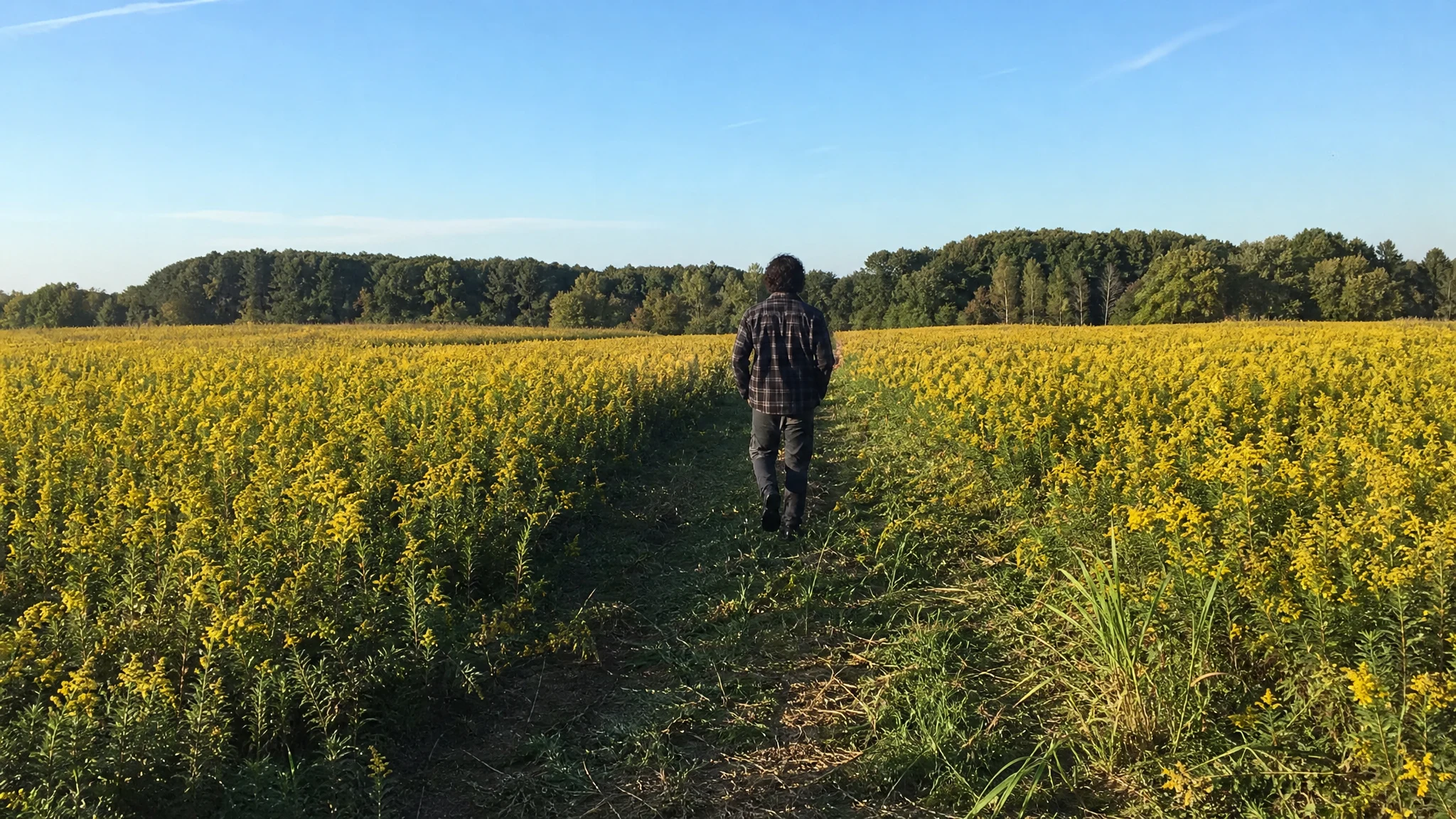
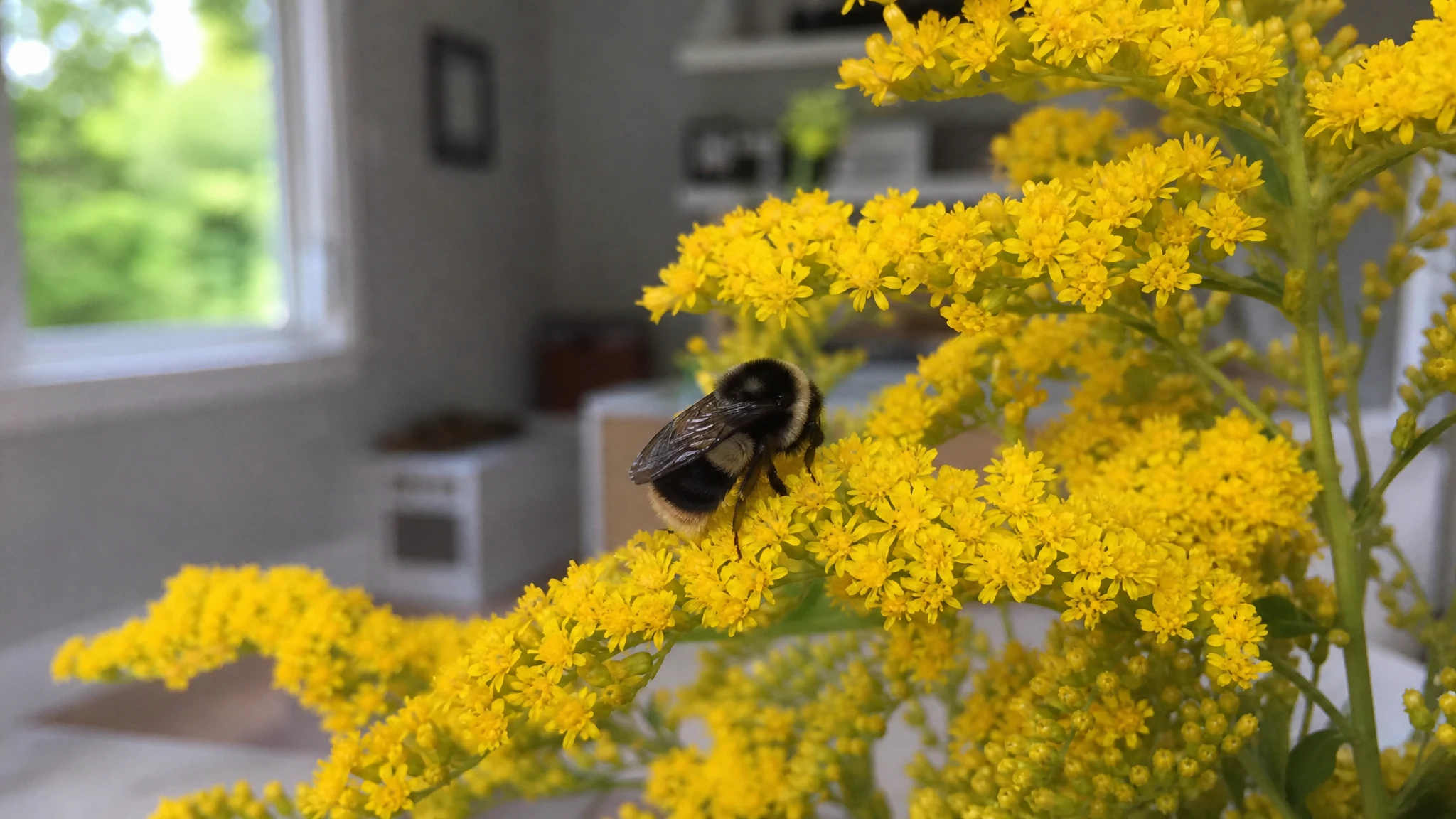
Many of these plants are happy neighbours outside, too. Goldenrod, yarrow, sunflowers and chamomile all turn up in sunny borders and meadows, and late in summer you can stand in one spot and see several family members at once, each with its own flower shape: plumes, flat plates, big dark-centred discs, little white daisies. Learning to spot the shared pattern, many small flowers packed into one head, is a quiet pleasure, and it is a good reminder of why the family gets discussed as a group.
If you plan to handle a lot of these plants, wear gloves and wash up afterwards. That is simply sensible garden habit, and it keeps the plant side of the family separate from the bottle side.
How we suggest starting
We sell Solidago canadensis undiluted, and we recommend diluting it to 0.5% to 2% in a carrier oil before it goes anywhere near skin, starting at the lower end, and patch testing first. Keep it away from eyes, children and pets, and do not take it internally. If you react to ragweed, daisies or chamomile, approach goldenrod carefully: blend it into a carrier and try a small area. If you already know you have a Compositae allergy, a dermatologist or allergist is the right person to ask before you use any daisy-family oil, ours included.
Our skin basics guide has the dilution arithmetic and a step-by-step patch test, the allergy article separates pollen from skin reactions, and if you are wondering whether another oil can take goldenrod's place, our substitutes piece covers what really overlaps. A family tree is a good place to start looking, and a patch test is the way to finish.
Goldenrod Essential Oil
Goldenrod Essential Oil from our own shop, in sizes from 0.5 oz to bulk.
From $17.99
Shop Now →Sources & Further Reading
- Compositae allergy. Sesquiterpene lactone contact allergy, DermNet
- Punchihewa et al., 2022. Allergic contact dermatitis to Compositae: An Australian case series. Contact Dermatitis
- Elshafie et al., 2019. Antimicrobial Activity and Chemical Composition of Essential Oil Extracted from Solidago canadensis L. Growing Wild in Slovakia. Molecules
- Filep et al., 2026. Geographical variation in the chemical profile and antimicrobial activity of Solidago gigantea essential oils. Front Microbiol
- Kunc et al., 2022. Essential Oil and Hydrosol Composition of Immortelle (Helichrysum italicum). Plants
- Mancini et al., 2011. Chemical composition and possible in vitro phytotoxic activity of Helichrsyum italicum (Roth) Don ssp. italicum. Molecules