Why Goldenrod Matters to Bees and Monarch Butterflies
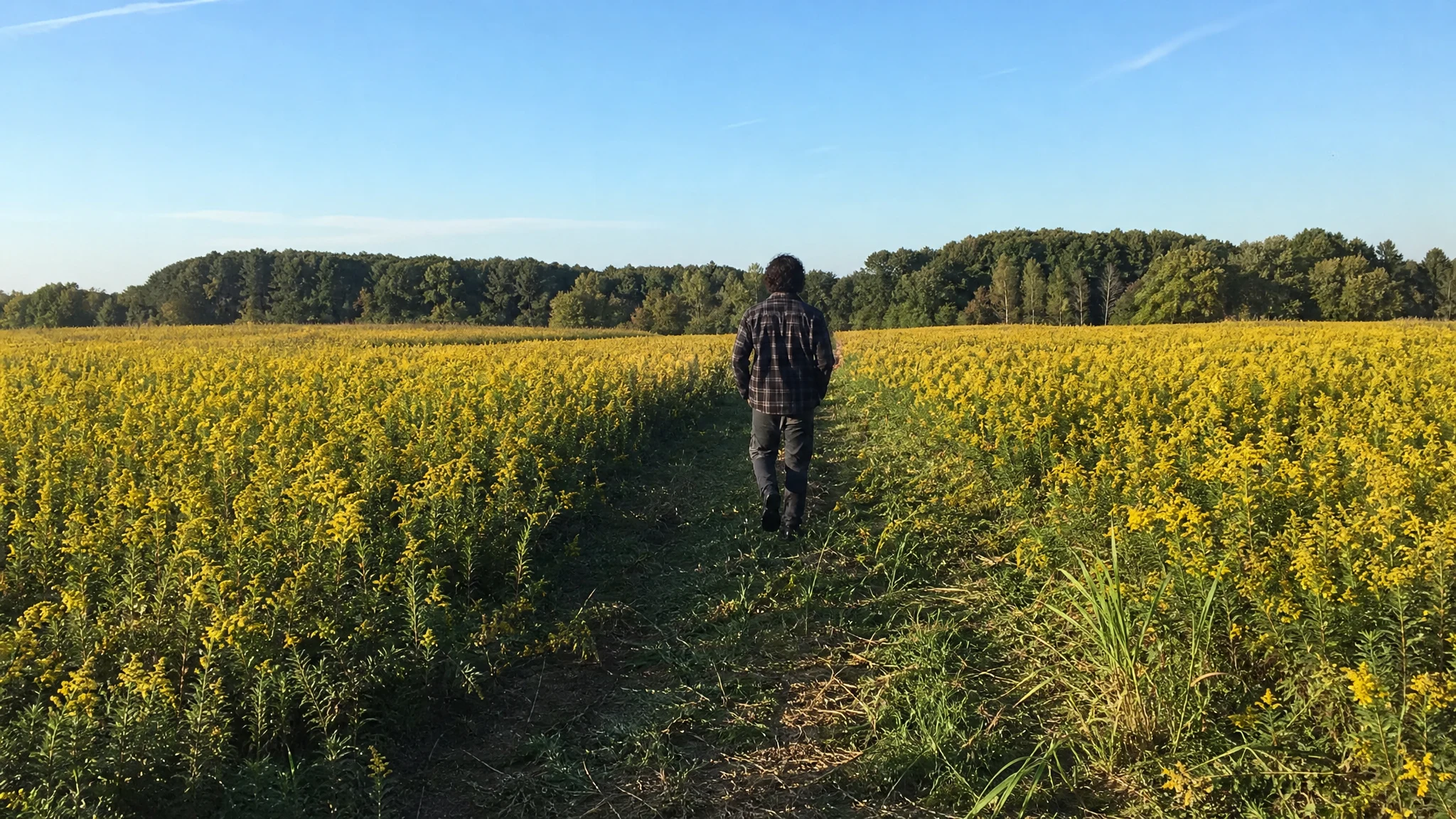
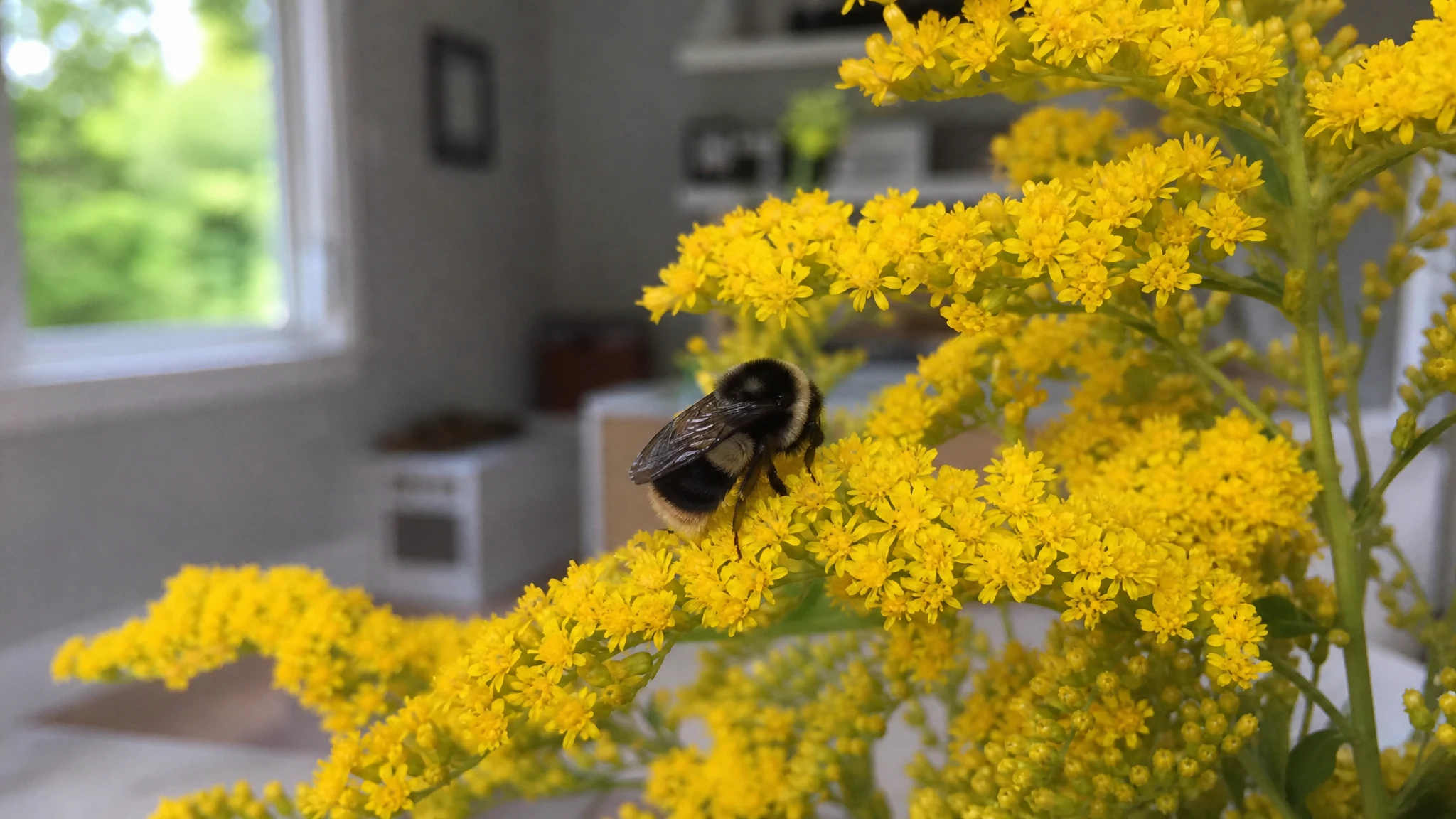
Walk past a stand of goldenrod on a warm September afternoon and listen. The plumes hum. Goldenrod gets blamed for the sneezing, but the insects have never held it against the plant, and there is real evidence behind why they love it.
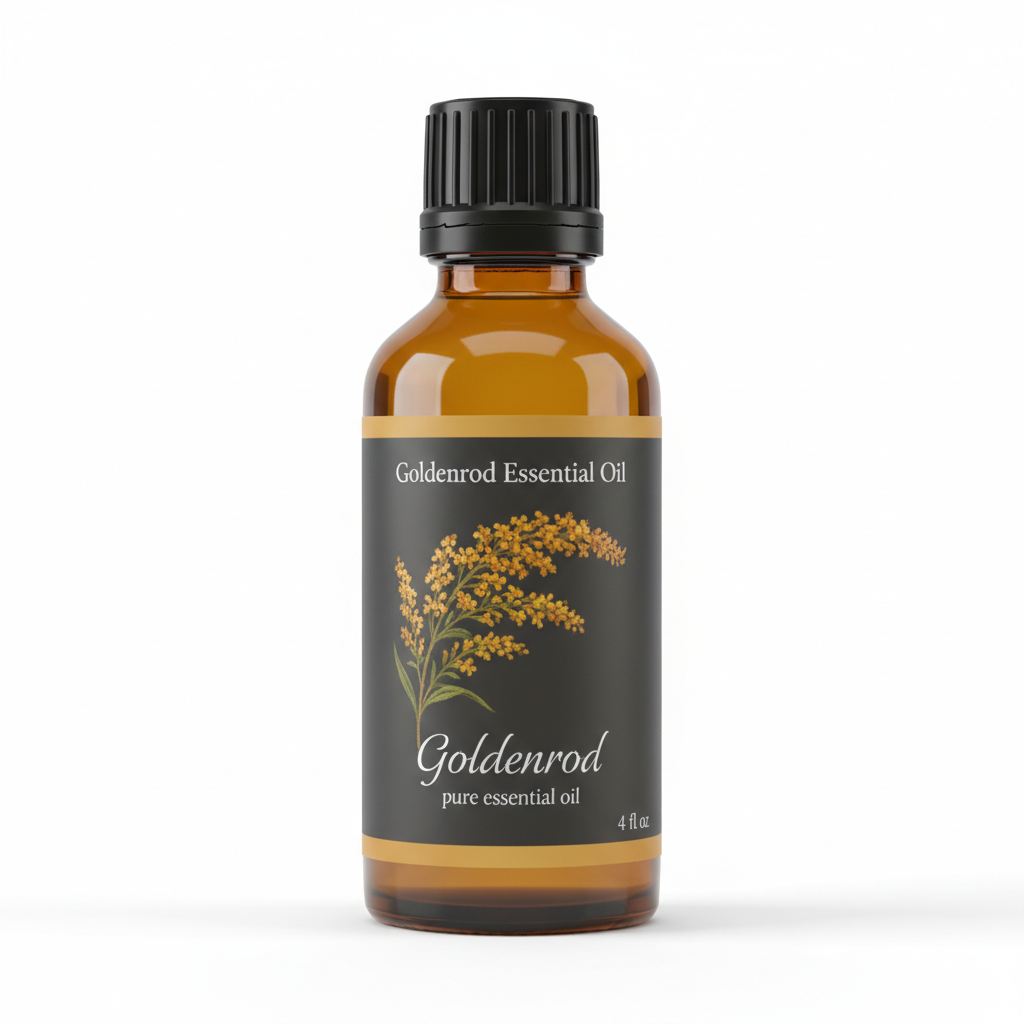
Goldenrod Essential Oil
Our own Goldenrod Essential Oil, in sizes from 0.5 oz to bulk.
From $17.99
Shop Now →Forty bees that need this plant
Jarrod Fowler and Sam Droege compiled a list of pollen specialist bees of the eastern United States, covering 20 states from Alabama to Vermont. Specialists are bees that collect pollen from one plant family or a few related genera, and the list puts them at roughly a quarter of the region's native bee species. Among host plants, the genus Solidago comes out on top with 40 associated bee species, ahead of sunflowers (36), asters (33) and coneflowers (28). The authors are upfront that the compilation is incomplete and in progress, so read the numbers as a strong signal rather than a final count. What they show is that goldenrod is not interchangeable with just any late flower: for some bees, it is the one the whole life cycle is built around.
We love how loud this plant is. A stand in full bloom looks like a bright yellow wave at the field's edge, and on a still afternoon you can hear it before you see what is on it. You may see hoverflies, small bees, wasps and butterflies sharing the same plume, each working its own corner.
A flower that arrives on time
NC State Extension gives Canada goldenrod a bloom of roughly August through October, when most summer flowers have faded, with each plume carrying anywhere from 100 to more than 1,300 small flower heads. That timing is the heart of the story. The Monarch Joint Venture explains that monarchs emerging from about mid-August are in reproductive diapause, feeding to fuel the long flight south, and it calls nectar for fall migrants "extremely important."
Neither of those pages is about goldenrod specifically, so the match is ours to draw: a nectar-rich flower opening at the exact moment migrating adults need fuel. Field observers add color. A 2022 Monarch Watch post describes monarchs refuelling in goldenrod stands along the migration route, and it is easy to see why a plant with that many flowers per plume would be a good place to stop.
The stems matter too
Goldenrod keeps giving after the bloom. The Maryland Department of Natural Resources lists it among native plants with pithy stems that stem-nesting bees use, and recommends leaving dead stalks standing through fall and winter, then cutting them back in spring to between 8 and 24 inches so nesting bees have somewhere to go. If you grow goldenrod yourself, leaving the stems standing is one of the easiest favors you can do for them.
How to watch a goldenrod stand
You do not need any equipment to enjoy this. Pick a warm, sunny day in early autumn, find a stand along a path, and stand a little back. Watch one plume for five minutes. You will likely notice that the visitors differ from plume to plume, and that the busiest hours are often midday. Bring a notebook if you like, and write down what lands. It is a quiet, free way to see how much life one plant supports.
What a bottle represents
We think about this when we talk about the oil, because the arithmetic gives a sense of scale. In a laboratory distillation of Slovak Solidago canadensis, dried plant gave 0.27% of its weight as oil. At the density on the Certificate of Analysis we publish (0.880), our smallest bottle holds about 13 g of oil, which would take roughly 4.8 kg of dried plant at that laboratory yield. That is an illustration from a flask, not a description of any production run, but it makes a fair point: goldenrod oil is concentrated bloom, and bloom is exactly what the insects are after.
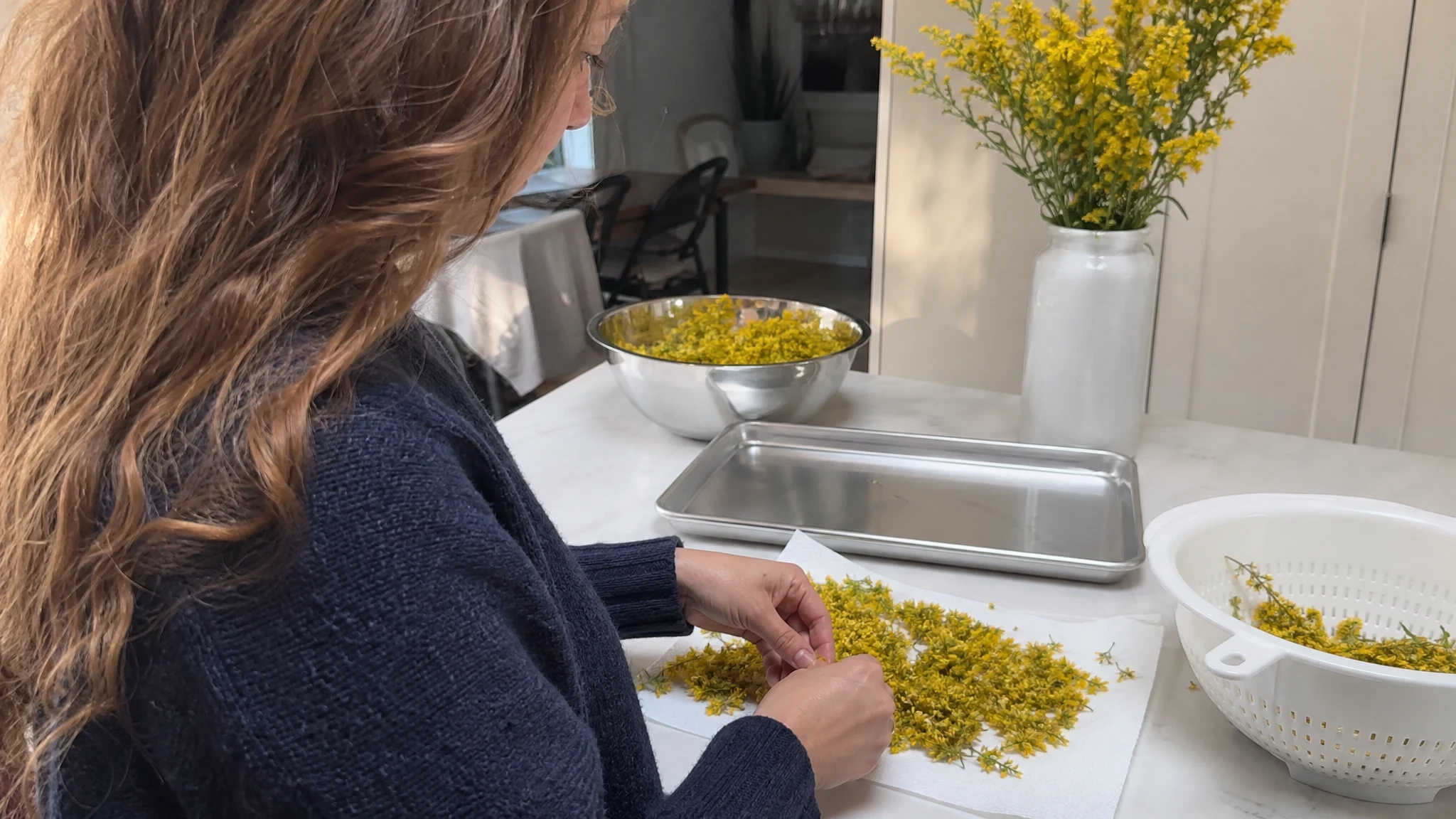
It is also why we would encourage anyone who gathers wild goldenrod for any purpose to take a small share from many stands and leave plenty. Our foraging guide covers identification and permission, and our look at wild-harvested and cultivated goldenrod oil explains why the source of a stand matters when you are choosing an oil.
Growing it at home
Gardeners should know that Canada goldenrod spreads by seed and rhizomes, which is why NC State calls it weedy for some gardens, and it is also a host plant for the wavy-lined emerald moth. If space is tight, a pot or one of the clump-forming species is an option; our species guide helps with sorting them out. And if sneezing is what keeps goldenrod out of your garden, our allergy article explains what the evidence says about ragweed.
Seeing goldenrod differently
It changes how you look at a roadside once you know what is going on in it. The same plant that gets dismissed as a weed in August is a crowded meeting place by September. We think that is a lovely thing to carry around, and it is part of why we love the scent: it smells like a place that is full of life.
A small thing you can do
If you have a corner of a yard, a verge you can leave alone, or a pot on a balcony, goldenrod is one of the easiest ways to give late-season insects somewhere to feed. Plant a native species suited to your region, let the stems stand through winter, and enjoy the gold in September.
Next time you pass a roadside stand in bloom, stop for a minute and count the visitors. It is a surprisingly good show.
Goldenrod Essential Oil
Goldenrod Essential Oil from our own shop, in sizes from 0.5 oz to bulk.
From $17.99
Shop Now →Sources & Further Reading
- Fowler J. and Droege S., 2020. Pollen specialist bees of the eastern United States. jarrodfowler.com
- NC State Extension. Solidago canadensis plant toolbox page. plants.ces.ncsu.edu
- Monarch Joint Venture. Nectar plants (FAQ). monarchjointventure.org
- Gibbs D., 2022. Monarch Watch blog post on fall migration observations. monarchwatch.org
- Maryland Department of Natural Resources, 2020. Creating habitat for stem-nesting bees. news.maryland.gov
- Elshafie H.S. et al., 2019. Molecules 24(7):1206. pmc.ncbi.nlm.nih.gov