Goldenrod Oil Research: A Plain-English Tour of the Studies
Goldenrod essential oil is a favourite of chemists in one sense: it is rich, variable and not yet heavily studied. Nearly everything published was done in a flask or on a petri dish, on plants from one field in one season. That is exactly why it is fun to read. Here is a plain-English tour of what the main papers did and found, and what to keep in mind when you see them quoted.
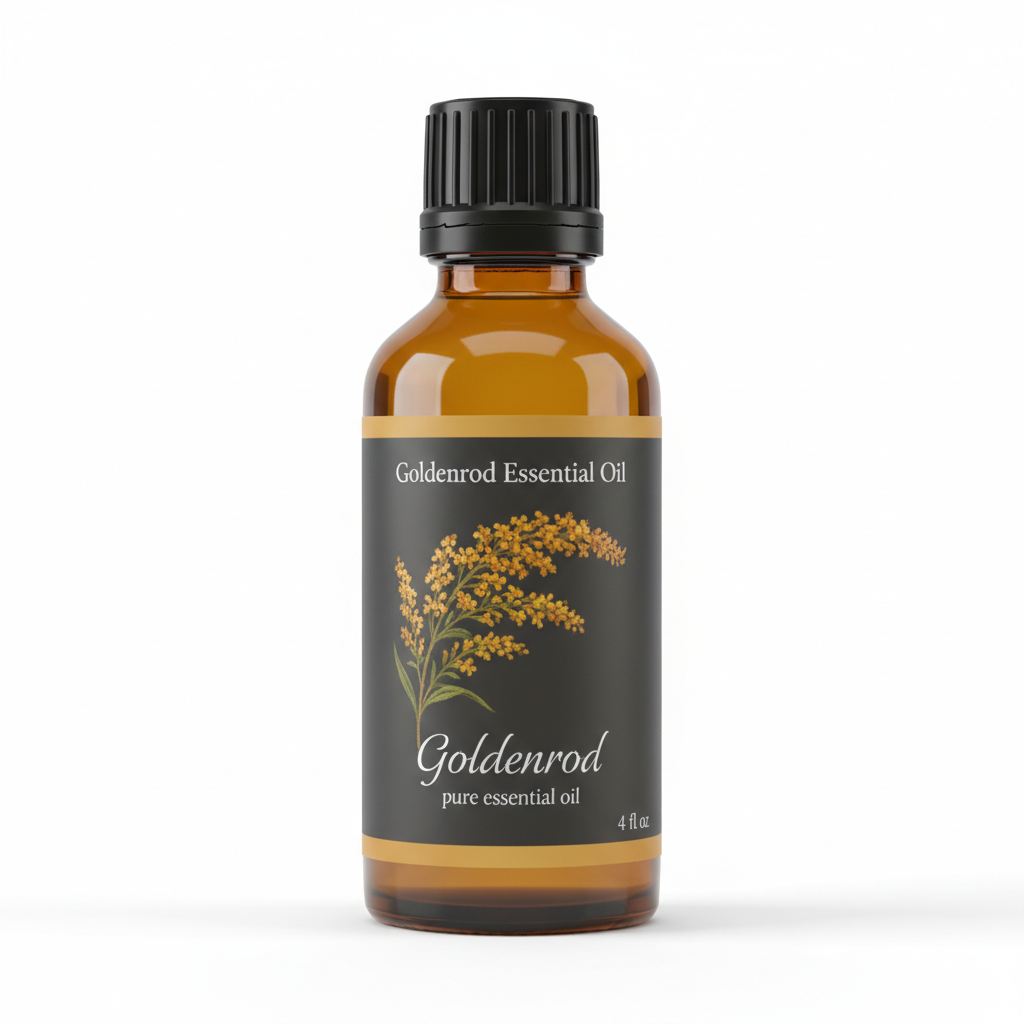
Goldenrod Essential Oil
Our own Goldenrod Essential Oil, in sizes from 0.5 oz to bulk.
From $17.99
Shop Now →The detailed portrait of Solidago canadensis oil
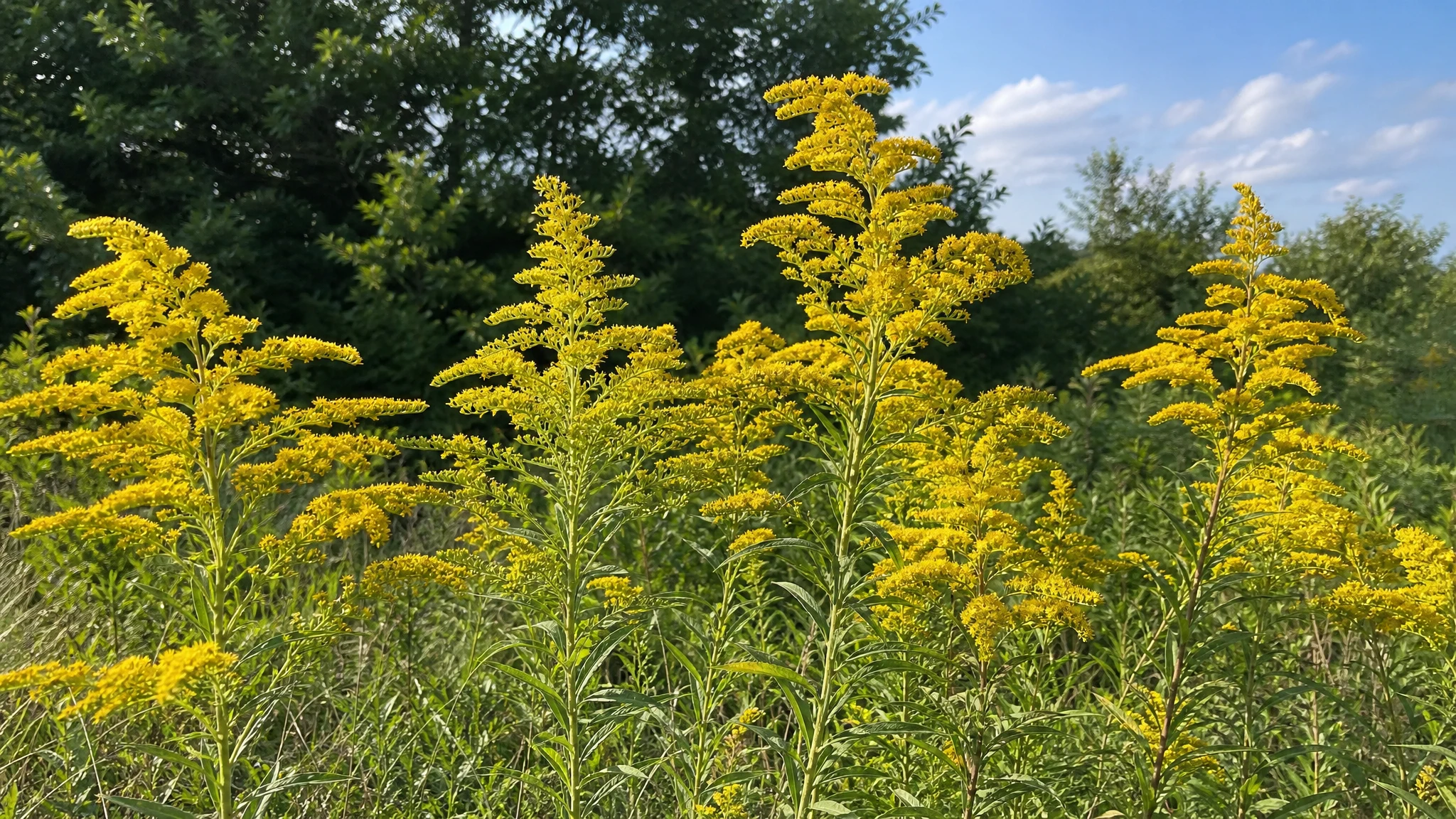
The most thorough paper we could read in full is by Elshafie and colleagues in Slovakia. They gathered wild plants at full bloom in August 2016 from a single locality, air-dried the aerial parts for about two weeks and hydrodistilled 20 g for two hours. The oil yield was 0.27% of dry weight, and 32 components made up 97.7% of it. Germacrene D led at 34.9%, followed by limonene at 12.5%, alpha-pinene at 11.6%, beta-elemene at 7.1% and bornyl acetate at 6.3%. It is a good description of a lot, and the authors are careful to say composition shifts with environment and maturity.
The same team then turned to plant pathogens, not human ones. On agar plates the oil slowed the growth of several crop fungi at 500 and 1000 micrograms per milliliter, with results that varied by fungus, and in disc tests it acted against three of five plant-pathogenic bacteria. Conductivity measurements led the authors to suggest the oil damages fungal membranes. The authors frame the findings as a possible agricultural tool, which is the setting the experiments were built for. A later Chinese study (Yang and colleagues, 2025) likewise paired a detailed analysis of flower, leaf and stem oils with antifungal work against mulberry diseases.
Why we enjoy reading these papers
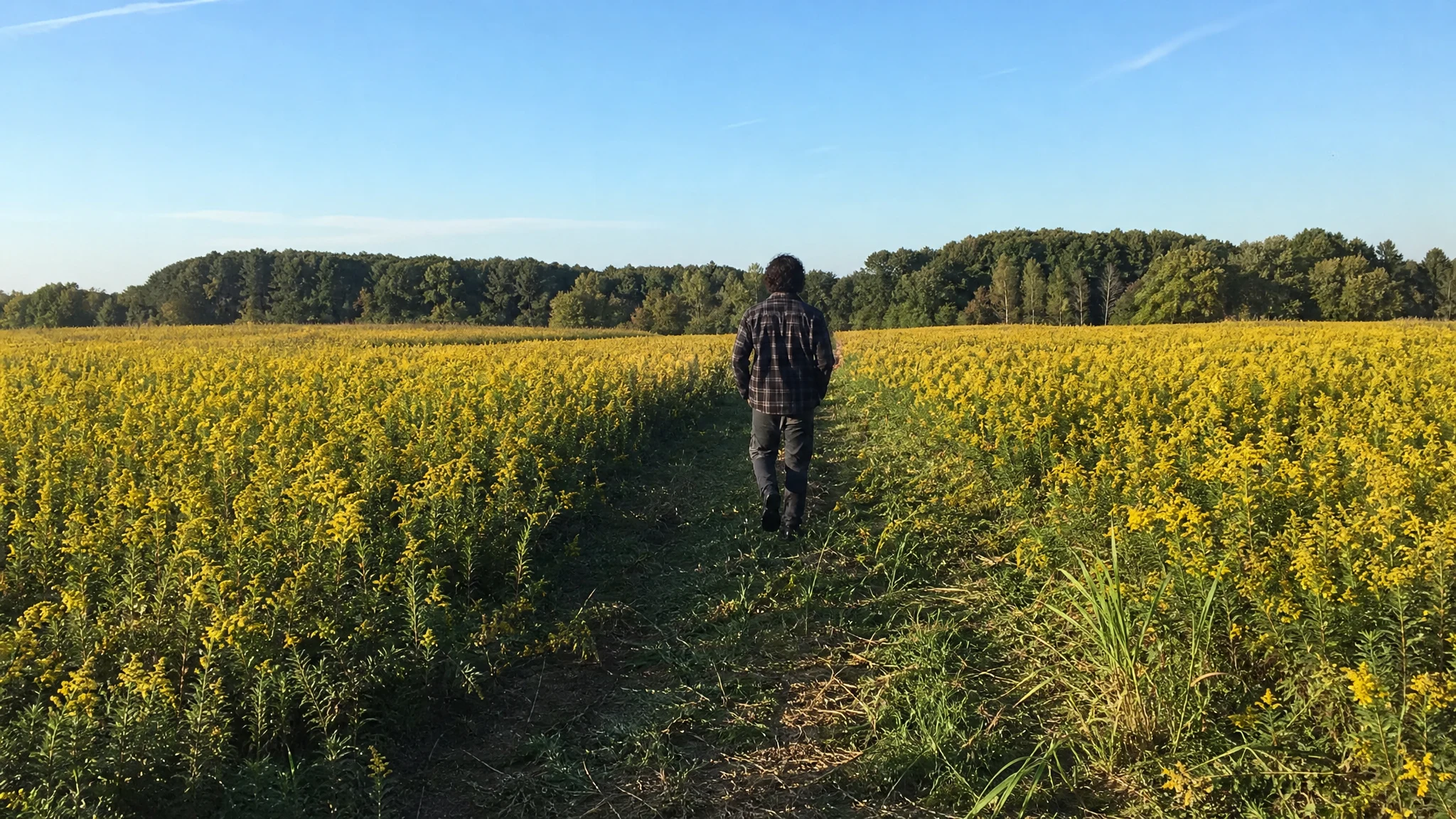
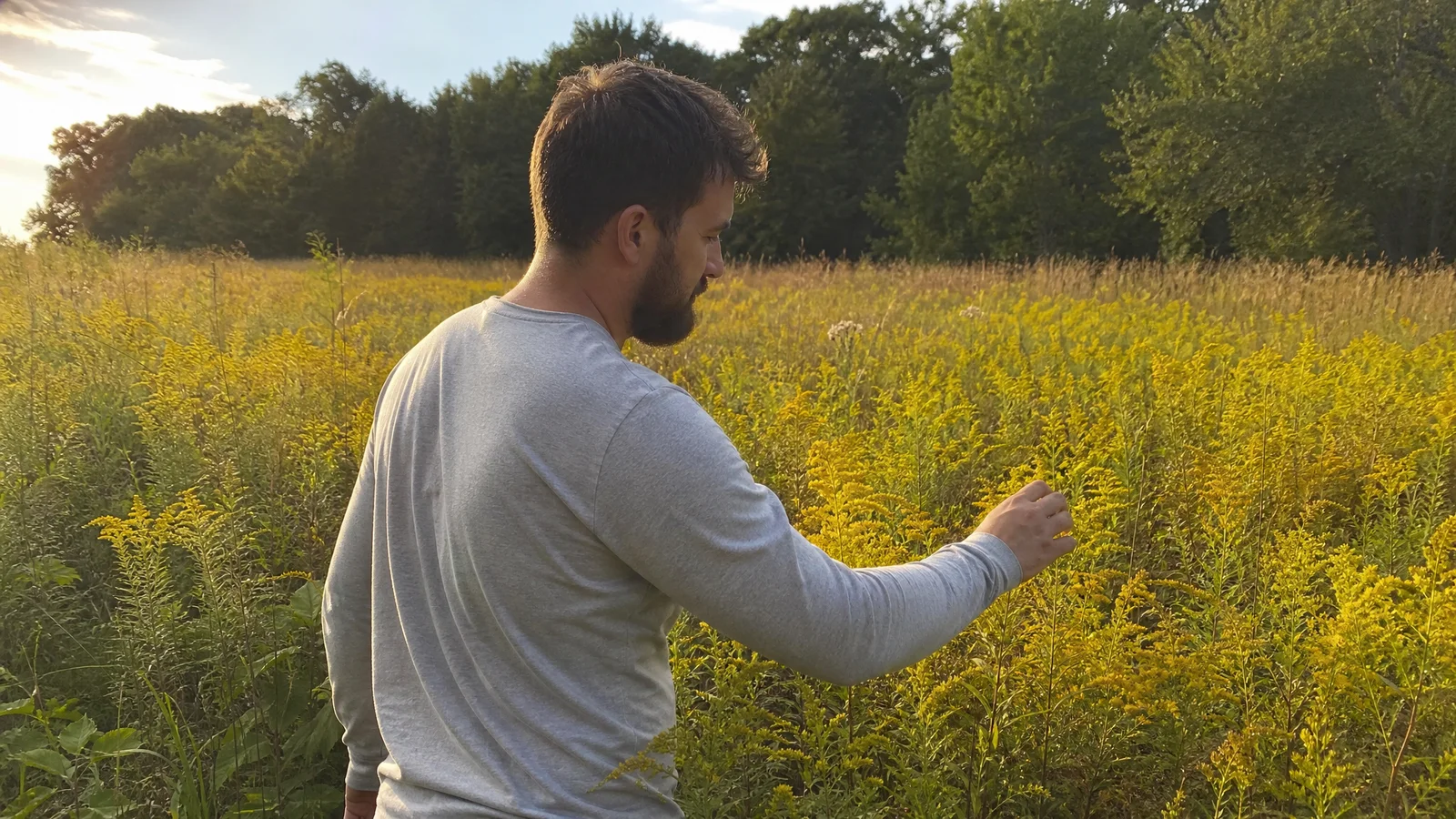
We will admit that reading a good chemistry paper about a plant you love is a small pleasure. You get a picture of someone walking a field in August, drying armfuls of flowering plants on racks, and then sitting down with a flask and a patient pile of numbers. It gives goldenrod a depth that a label never could, and it is a reminder that behind a bottle there is always a plant, a season and a lot of careful work.
A plate is not a person
It is tempting to read "antifungal" and think of skin or health. A concentration of 1000 micrograms per milliliter is 0.1% by weight, and an agar plate keeps an organism in steady contact with the oil for days. Skin is a barrier with its own chemistry, and nobody in these papers measured what reaches living tissue. The straightforward reading is that this oil, at these concentrations, slowed these organisms in these dishes. That is a lovely piece of plant chemistry, and no more than that.
Oil is not the same as herb
When people say goldenrod has been "studied", they usually mean the herb. Fursenco and colleagues reviewed the European goldenrod, Solidago virgaurea, in 2020 and treat the essential oil as a distinct group from the water and alcohol extracts that make up most of the pharmacology. Most of the activity they discuss was reported for extracts, fractions or isolated compounds. The only antibacterial result they cite for the oil showed up with undiluted oil and a half dilution, and they describe the antibacterial, antifungal and cytotoxic effects overall as modest. The human work they found was small, uncontrolled and about oral herbal extracts, and they note that no randomized, controlled, double-blind study had been published. We cover that distinction in herb versus oil.
Same plant, different oils
The review also records how much oil composition varies. Polish samples had more than 60 compounds, with alpha-pinene at 27.4% to 34.1% leading the way, while Lithuanian flowers gave 106 compounds and leaves 95. Set that beside the Slovak result, where germacrene D topped the list, and you can see the point: different origins and plant parts lead with different compounds. That variety is part of goldenrod's appeal, and part of why we say a constituent report belongs to a lot and not to the plant. If you enjoy chemistry, our compounds article is the next stop.
Where our oil fits
The Certificate of Analysis we publish for one earlier batch lists appearance, smell, a relative density of 0.880 at 20 C, a refractive index of 1.487 and an optical rotation of -8.16 degrees, each against a stated range, and it carries a best-by date of 01/31/2026. It has no constituent table, so we do not attach any paper's germacrene D figure to our oil. If you want a profile for a particular lot, ask us in writing through the contact page.
We sell our goldenrod oil as an aroma. For skin, we recommend 0.5% to 2% in a carrier oil with a patch test, and it is not for taking internally (see why we say so and our skin basics). If you have a health question, a physician or pharmacist is the right person to ask.
How to read a headline about any oil
A quick habit helps when a study shows up in a post or an advertisement. First look for the species, since goldenrod is a big genus. Then look for the plant part and whether it is oil or an extract. Finally look at the setting: dish, flask or living thing. If the headline skips any of those, go to the paper itself or leave the claim alone. It is a gentle way to enjoy the science without being carried off by it.
The next time a study is quoted, ask which material it used, which species and part, which system (plate, cells, animals or people) and whose batch. Those four questions turn most headlines back into the careful findings they started as.
Goldenrod Essential Oil
Goldenrod Essential Oil from our own shop, in sizes from 0.5 oz to bulk.
From $17.99
Shop Now →Sources & Further Reading
- Elshafie et al., 2019. Antimicrobial Activity and Chemical Composition of Essential Oil Extracted from Solidago canadensis L. Growing Wild in Slovakia. Molecules
- Yang et al., 2025. Multivariate Statistical Analysis of Solidago canadensis L. Essential Oil and Its Antifungal Mechanism Against Mulberry Sclerotinia Diseases. Int J Mol Sci
- Fursenco et al., 2020. Solidago virgaurea L.: A Review of Its Ethnomedicinal Uses, Phytochemistry, and Pharmacological Activities. Biomolecules