How to Dilute Goldenrod Oil for Skin, With a Patch Test
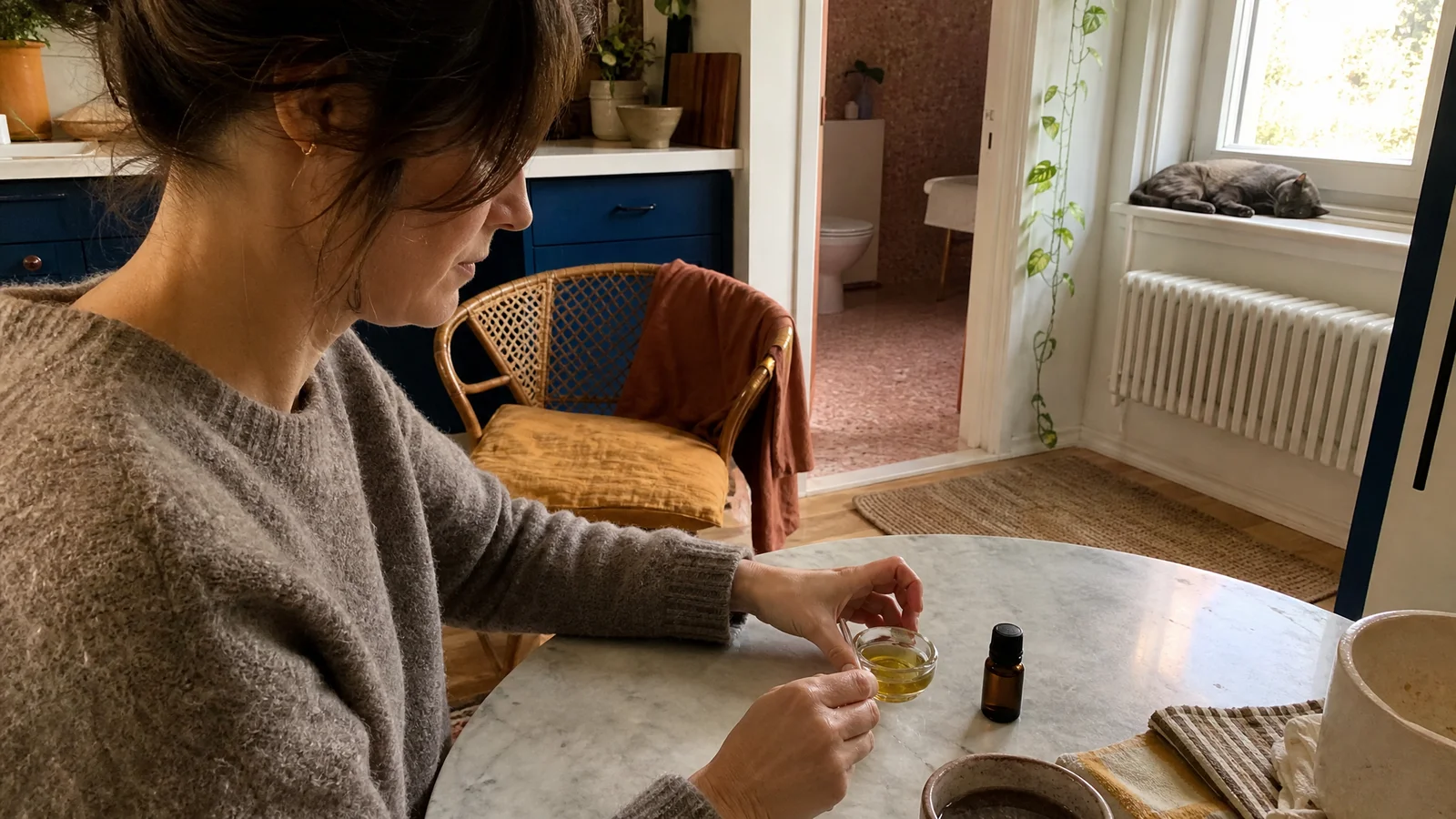
Our goldenrod oil is sold undiluted, which means the first thing to settle is how much goes into your carrier. Our guidance is 0.5% to 2% in a carrier oil, with a patch test first. That one line is easy to say and surprisingly easy to get wrong with a dropper, so here it is turned into numbers you can measure.
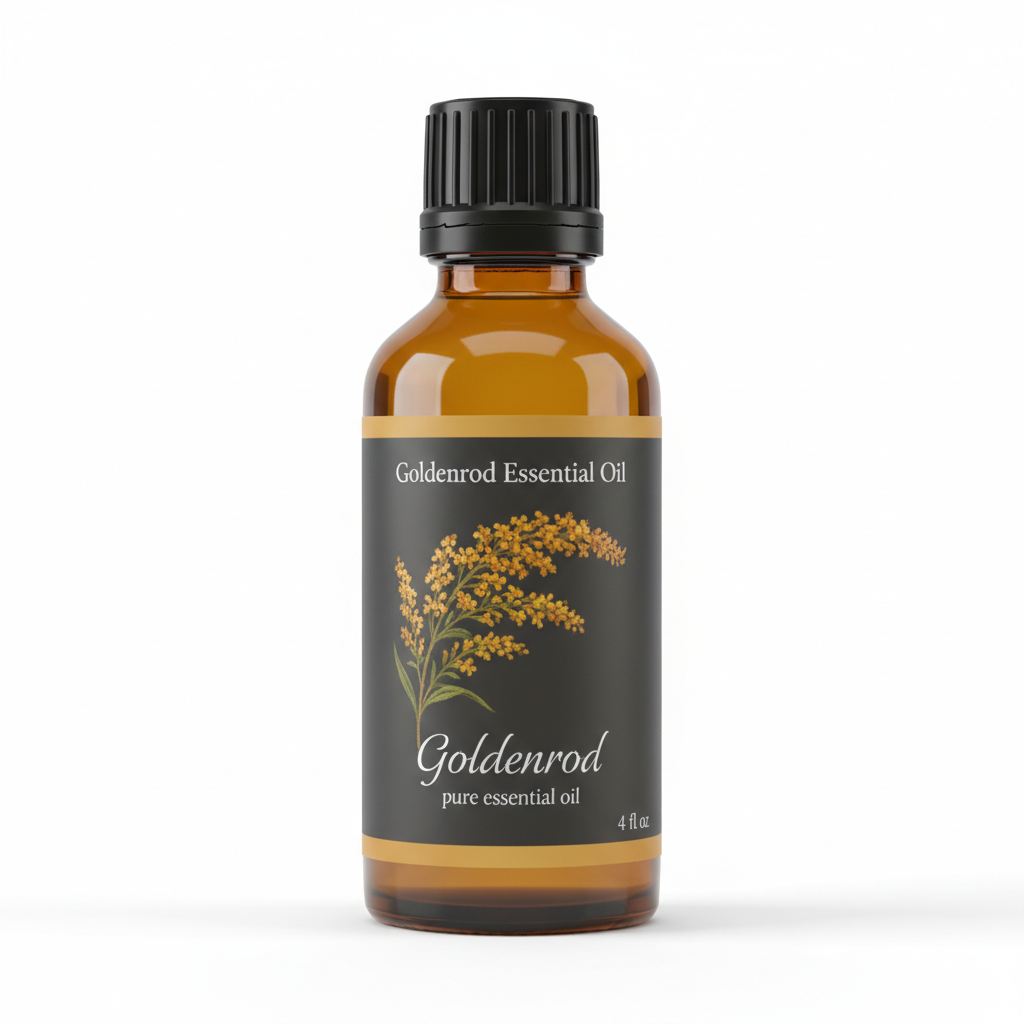
Goldenrod Essential Oil
Our own Goldenrod Essential Oil, in sizes from 0.5 oz to bulk.
From $17.99
Shop Now →Pick the spot, then the percentage
Skin is not all the same, and the Tisserand Institute (whose ranges apply to essential oils generally, not goldenrod specifically) suggests different strengths for different jobs: 0.2% to 1% for sensitive or impaired skin, 0.5% to 1.2% for face and underarms, 1% to 3% for body oils and lotions, and 2% to 4% for baths and wash-off products. Laid over our 0.5% to 2%, a sensible reading is to start at 0.5% anywhere near the face, 1% for a body oil, and treat 2% as a body-only ceiling rather than a default. No source we found gives a goldenrod-specific maximum, which is one more reason to begin low.
Why we say start low
When someone writes to ask what percentage to use, our answer is nearly always the same: begin smaller than you think you need. Goldenrod oil is strongly scented, and a 0.5% blend smells far more present on the skin than most people expect. You will notice the honeyed, grassy top first, and within a few minutes the hay-like base. Going up later costs you nothing, while going too high on day one makes the patch test pointless.
From percent to drops
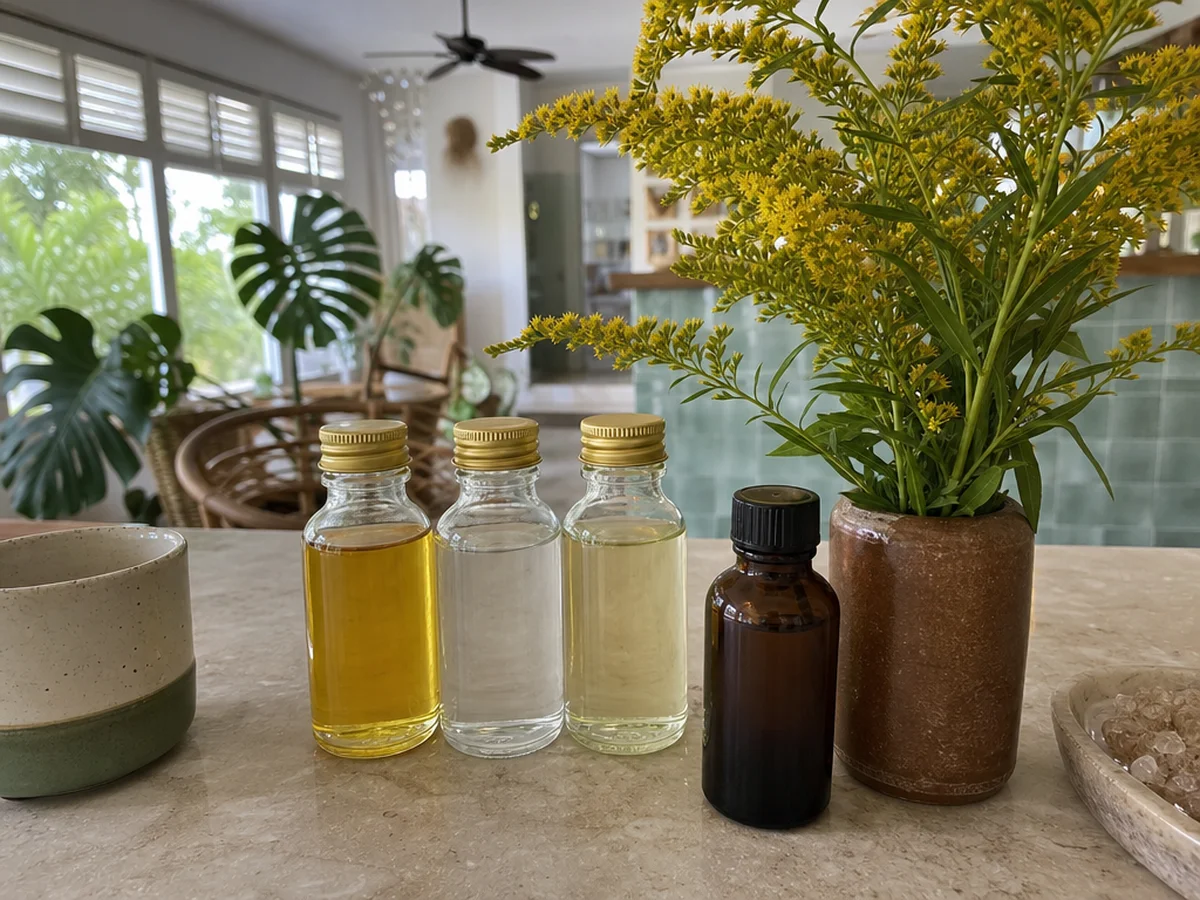
The Tisserand page is honest that drop conversions are approximate, because no two drops of essential oil are the same. With that in mind, here is the math for a fluid ounce (29.57 ml) of carrier, using the common rule of thumb of 20 drops to the milliliter.
| Strength | Oil in 1 fl oz carrier | Approx. drops |
|---|---|---|
| 0.5% | 0.15 ml | 3 |
| 1% | 0.30 ml | 6 |
| 1.5% | 0.44 ml | 9 |
| 2% | 0.59 ml | 12 |
At these volumes a single stray drop shifts the result noticeably: four drops where you meant three makes a 0.7% blend instead of 0.5%. A gram scale removes the guesswork, and a small batch keeps everything fresh. Our massage oil recipe works the same arithmetic for 30 and 100 ml bottles, and the carrier oil article helps with the base.
A patch test with patience
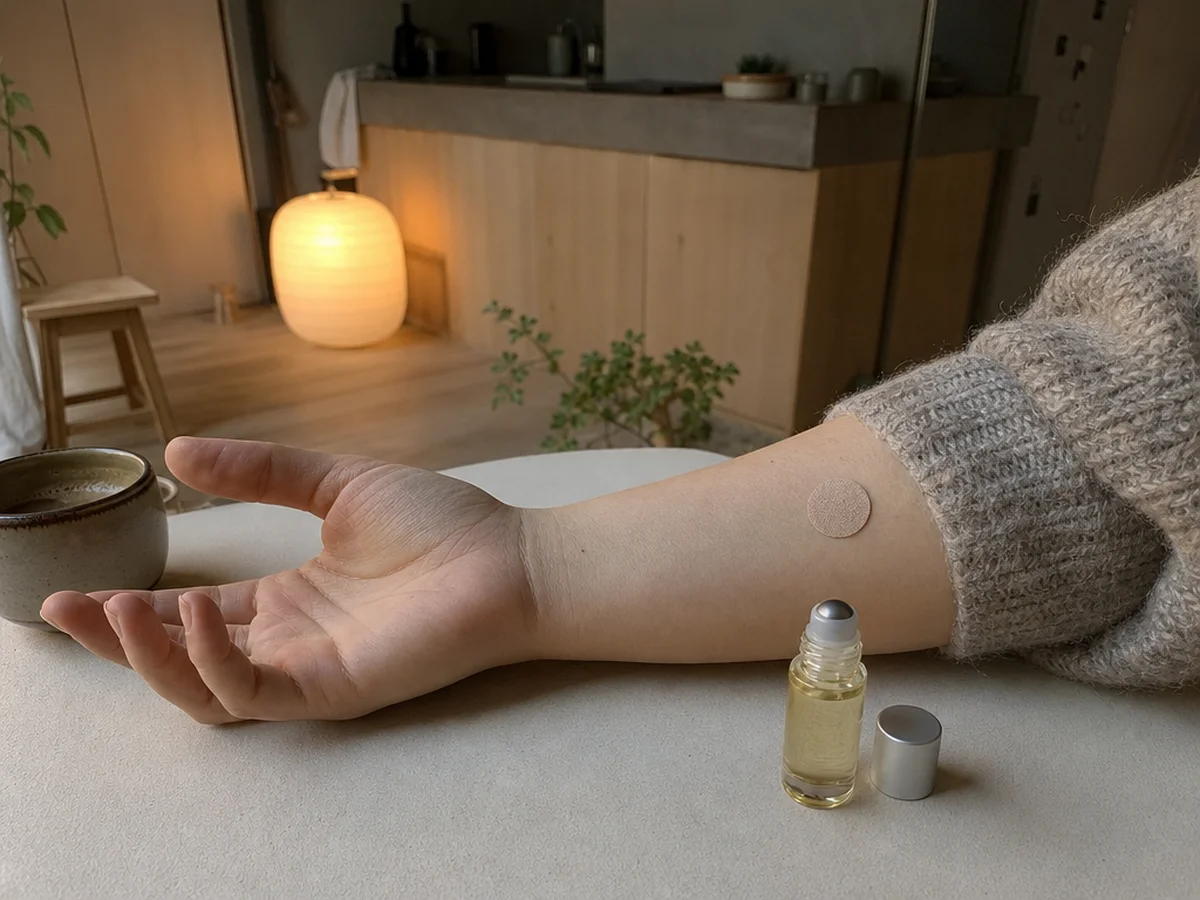
The American Academy of Dermatology describes a clinic patch test as patches kept on for 48 hours, with a return visit four to seven days later. Their reason is that it can take time for your skin to develop an allergic reaction. That is why a quick dab on the forearm is only a first look. If you would like to do a home check, here is a routine that follows from those timings (our reading, not a medical protocol):
- Mix the exact blend you plan to use, so you are testing the mixture and not just the oil.
- Put a coin-sized spot on your inner forearm and leave it alone for 48 hours if you can.
- Look at it at 48 hours and again through day seven.
- Wash it off with mild soap and water if it stings, itches or reddens, and do not use that blend again.
Skip the home version if ragweed, daisies, chamomile or fragrance already bother your skin. Goldenrod belongs to the same plant family, and DermNet NZ points to a dermatologist's patch test for diagnosis. Our allergy article goes deeper.
Setting up a small, tidy batch
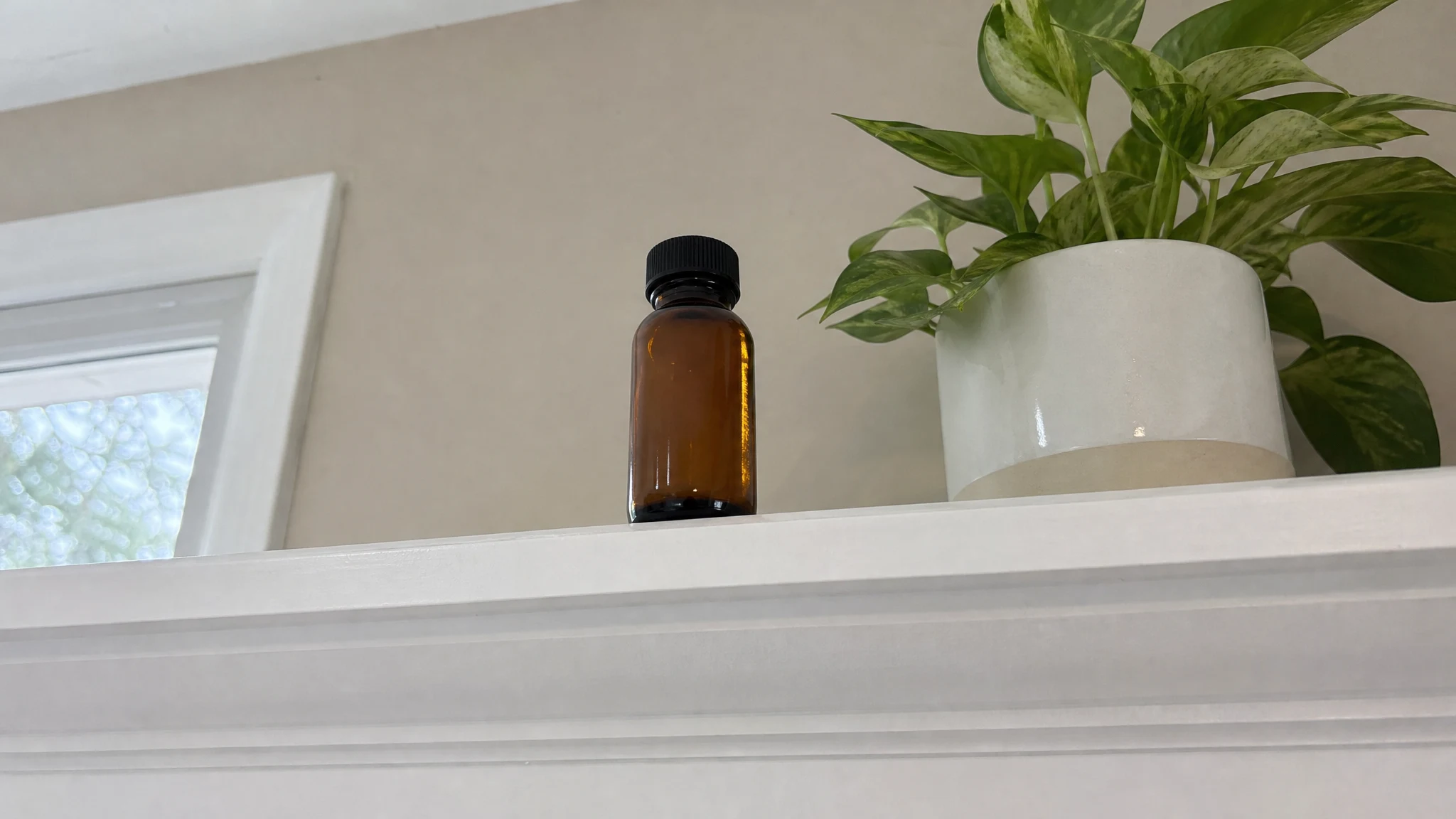
A little kit makes all of this easier, and none of it is fancy. Use a clean glass bottle that you can label, a dropper or small syringe from a craft or pharmacy shop, and a fresh carrier oil that smells like nothing off. Write the date and the percentage on the bottle in pen before you add anything, because a week from now you will not remember which one it was. Make the amount you will use in a few weeks and no more. A small batch is the easiest way to keep every blend consistent, and it means you are never stuck with a big bottle of something you have stopped trusting.
Fresh oil, steady strength
An old, warm or half-empty bottle is the one most likely to cause trouble, since oxidized terpenes are documented skin irritants and allergens in general. The Tisserand Institute says oxidation is mostly a non-issue within six to 12 months, so keep skin blends for fresh oil, and see our storage guide for how to keep it that way. Keep the strength steady too: no reaction at 0.5% tells you nothing about 2%, and a delayed reaction does not show up while you are applying.
Homes with pets
The National Capital Poison Center advises locking essential oil bottles away from children and pets, and we say the same. Animals lick and rub against people, so a freshly oiled arm can be an exposure route, though we found no goldenrod-specific pet data to quantify it. If an animal swallows or is covered in any essential oil, call your veterinarian or an animal poison control service. Our pets article has more.
If you are pregnant or nursing, caring for a child, have eczema, or are treating a rash or broken skin, a midwife, pediatrician, dermatologist or pharmacist should weigh in first. For everyone else, 0.5% in a carrier, tested patiently, is a good place to begin.
Goldenrod Essential Oil
Goldenrod Essential Oil from our own shop, in sizes from 0.5 oz to bulk.
From $17.99
Shop Now →Sources & Further Reading
- Tisserand Institute. Dilution of essential oils
- Tisserand Institute. Oxidized essential oils
- American Academy of Dermatology. Patch testing
- DermNet NZ. Compositae allergy
- National Capital Poison Center. Essential oils