Goldenrod Oil Uses: Air, Skin, Perfume and Soap
Open a bottle of goldenrod oil and hold a paper strip to it before you do anything else. The scent is honeyed and grassy, a little floral, with a soft, hay-like sweetness underneath, and what you do with it follows from that. Goldenrod is a scent oil, and every use we point to is about fragrance, so we make no health claims for it. Here is how it fits into the things people most often want to make.
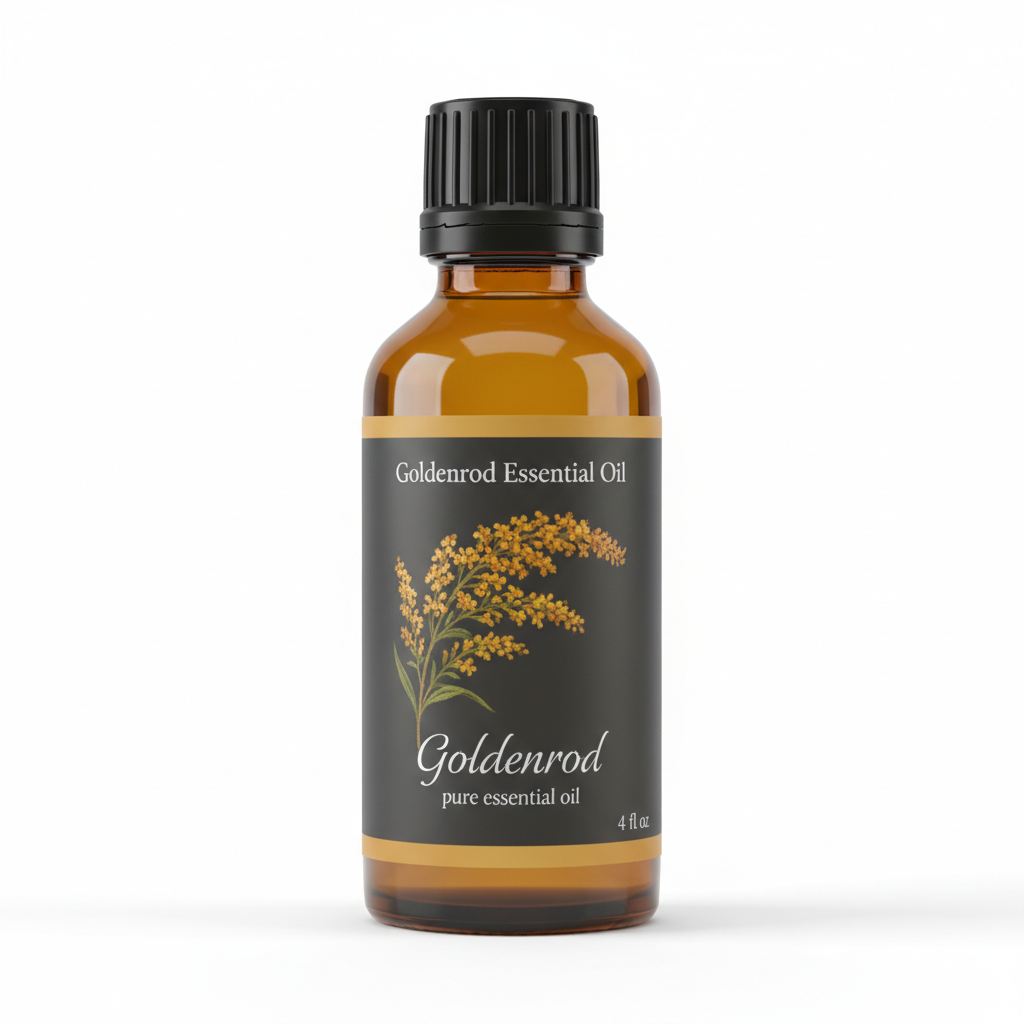
Goldenrod Essential Oil
Our own Goldenrod Essential Oil, in sizes from 0.5 oz to bulk.
From $17.99
Shop Now →In the air
A diffuser is the easiest place to begin, and goldenrod suits late summer and fall rooms especially well, when the real plants are in bloom outside. Keep sessions short and intermittent and keep a window cracked: the Tisserand Institute suggests diffusing for 30 to 60 minutes on and off rather than running one all day, and notes that people with asthma may find some oils trigger symptoms. Ratios and partner oils are in our diffuser blends piece. A room spray is the other airborne option, though oil and water do not mix on their own, so it needs a solubilizer from a craft supplier; the room spray recipe walks through why.
On the skin, always diluted
For a massage oil, a roller or a balm, we recommend diluting to 0.5% to 2% in a carrier oil and patch testing first. For reference, the Tisserand Institute lists 1% to 3% for body oils and lotions and 0.5% to 1.2% for facial products, and gives no goldenrod-specific figure. Our range sits comfortably inside the body figure, and for anything near the face, the lower end is the better choice. Drops are an imprecise unit, and in small bottles a pipette or a scale makes life easier. The massage oil recipe has the arithmetic worked out.
Late summer is when this oil makes the most sense to us. When the windows are open and the real plants are blooming on the roadside, a bit of goldenrod in the room feels like a continuation of the air outside. In winter it plays a different role, a memory of that season on a cold afternoon.
In perfume
Goldenrod is a middle note, which means it appears after the bright opening settles and carries the heart of a fragrance. In perfumery it works best as one voice among several, and how much you use depends on the strength of the finished perfume. Our perfume formula article shows where it fits.
In the bath, soap and candles
Oil floats on bath water rather than mixing in, so it needs dispersing in a suitable base from a craft supplier instead of sitting on your skin neat; the bath soak recipe covers that. For soap, the Tisserand range for wash-off and bath products is 2% to 4%, and how an oil behaves in lye is a soap maker's question, so our cold-process soap piece is a good starting point. Candle makers should go by the fragrance load and flash point guidance from their wax supplier, since it differs from wax to wax.
Starting with a paper strip
If you are not sure what to make, begin with the smell and let it tell you. A strip on the desk for the first day is a good way to learn the honeyed, grassy top and the hay-like base. Some people find it wants a citrus partner. Some find it wants lavender or clary sage. Some like it alone. Give yourself a few days of casual sniffing and the plan usually writes itself.
Making a small gift
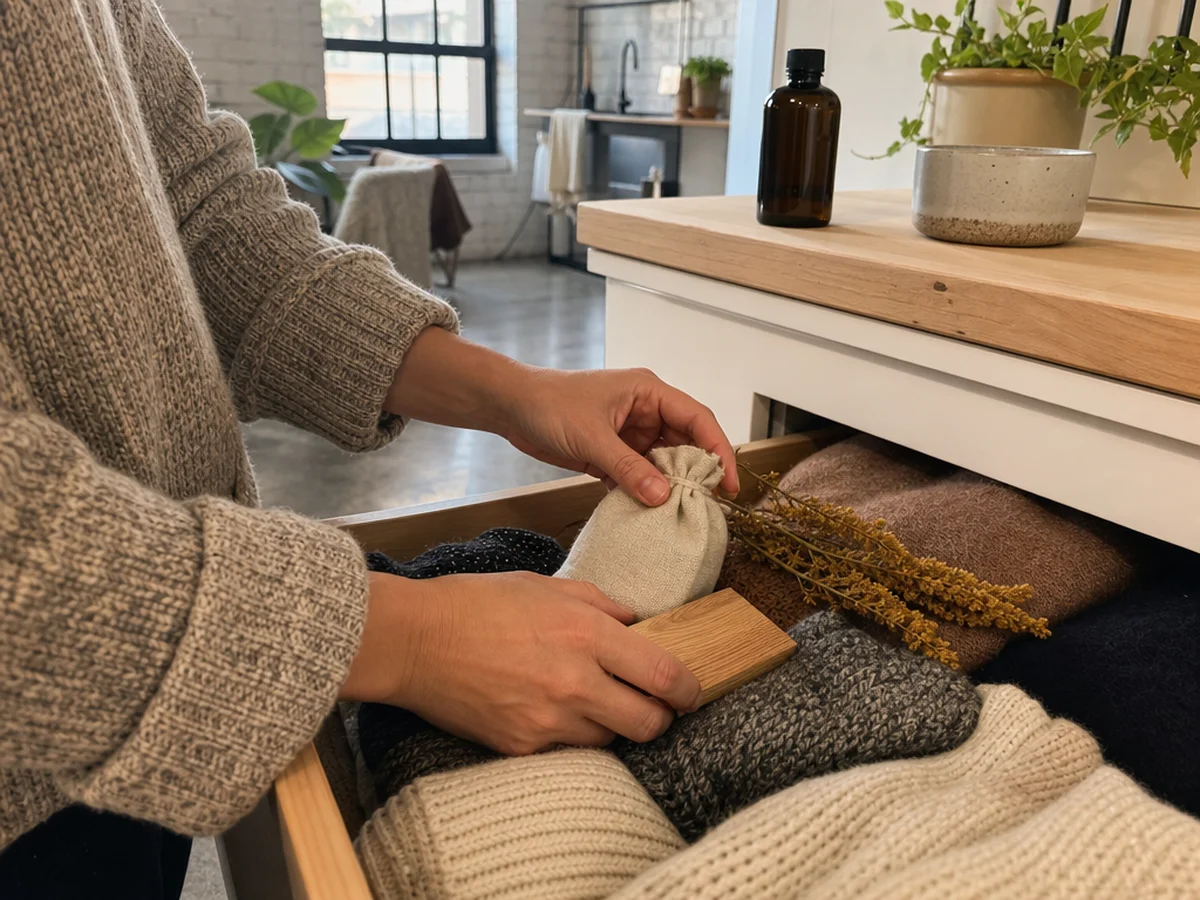
Since we sell only the oil, a good first project is a small one. A little scented card or a dab on a paper tag tucked in a drawer is a gentle way to share it. If you decide to make something for someone else, keep the batch small, label it with the ingredients and the date, and tell them it contains a daisy-family plant in case they react to ragweed or chamomile.
Who should check first
Goldenrod belongs to the daisy family. DermNet NZ lists it among the Compositae plants and names sesquiterpene lactones as the main allergens in that family, adding that people who react to one often react to others. If you react to ragweed, daisies or chamomile, approach it carefully and try a small area first; our allergy article goes into more detail. We do not advise swallowing the oil, and if someone has swallowed any essential oil, call Poison Control at 1-800-222-1222. A physician, midwife, pediatrician or veterinarian is the right person to ask about pregnancy, children, asthma or pets. Keep the bottle somewhere locked or out of reach.
A sensible first week with a new bottle
Go in order of how gently the oil meets you. Start with the paper strip. Move to a short diffuser session with a window open. If you want it on skin, patch test in a carrier first; the American Academy of Dermatology describes leaving a patch on for 48 hours and checking again at 4 to 7 days, because skin allergy can take time to show.
If you are making something to sell, the FDA's page on fragrances notes that there is no regulatory definition for "essential oils" and that fragrance ingredients may be listed simply as "Fragrance", so the safety work stays with the maker. Ask us in writing through our contact page if you need lot documents before you begin.
Goldenrod Essential Oil
Goldenrod Essential Oil from our own shop, in sizes from 0.5 oz to bulk.
From $17.99
Shop Now →