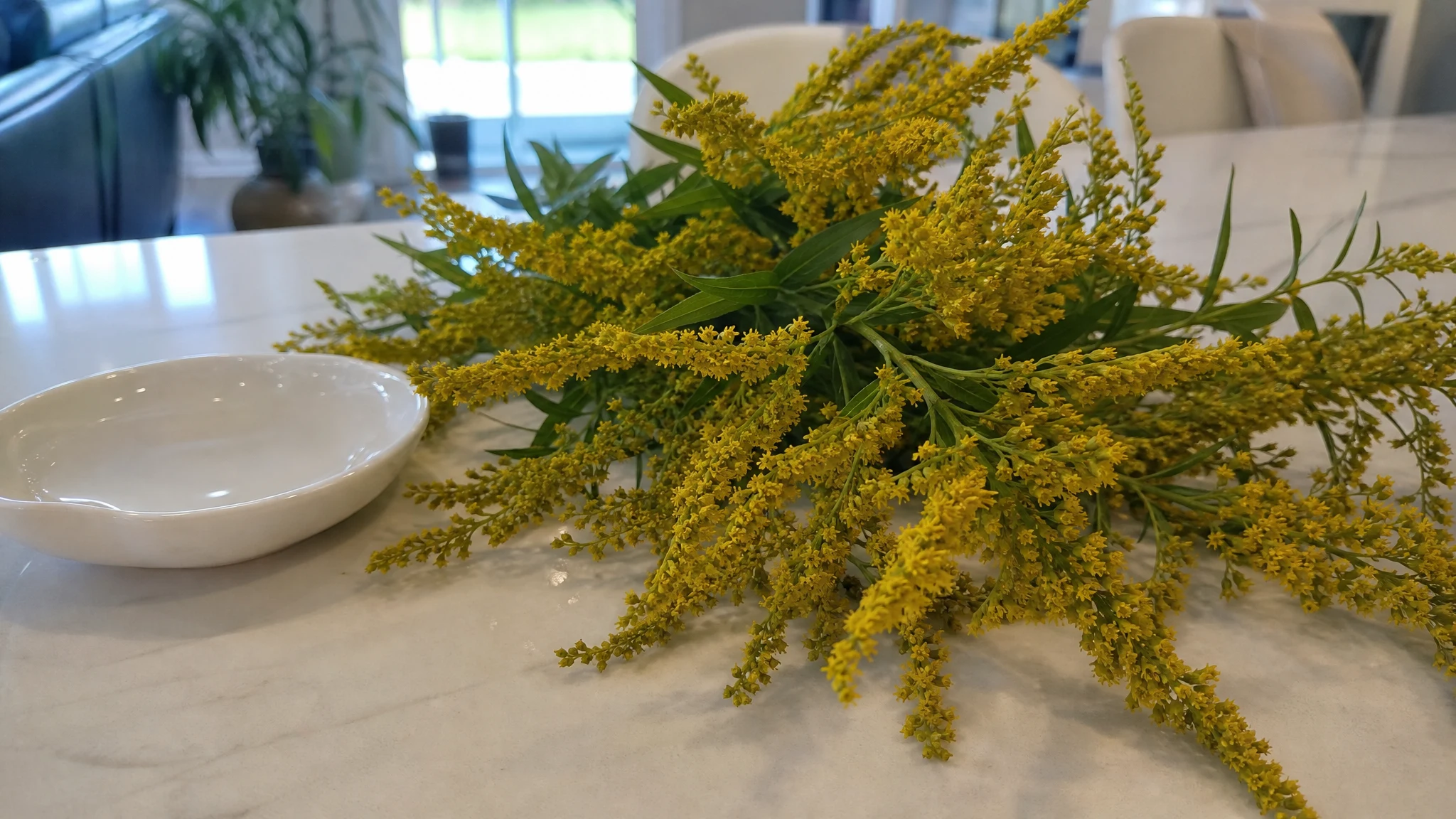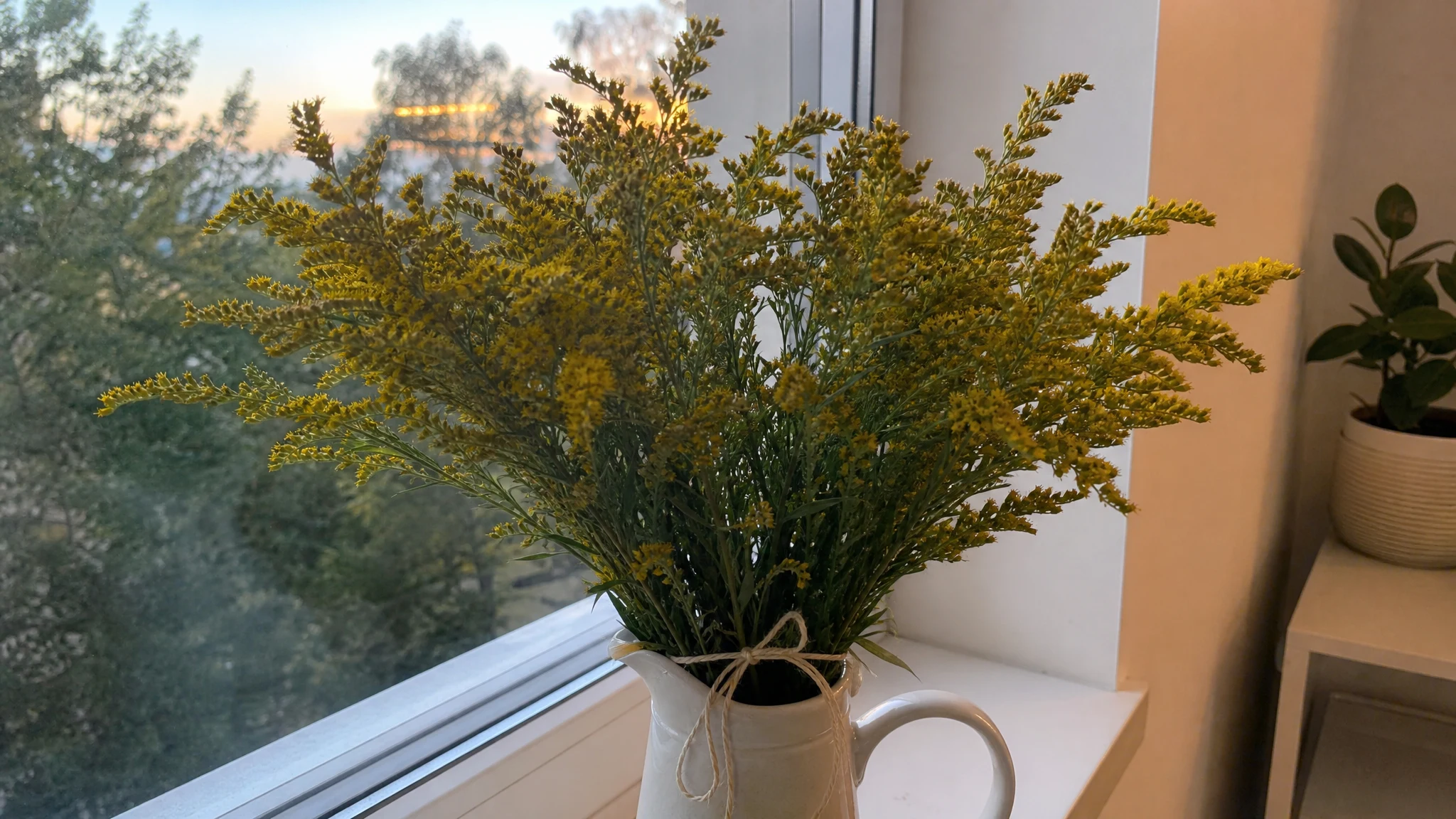
What Blends With Goldenrod Oil? Bridge or Contrast
"Blends well with lavender, citrus and rose" turns up on nearly every essential oil page, ours included. We list chamomile, lavender, clary sage, citrus, rose and geranium as goldenrod partners, and they are good places to start. But a list of names does not tell you what kind of blend you will get, so here is a simple way to think about it: do you want a bridge, or a contrast?
Goldenrod Essential Oil
Our own Goldenrod Essential Oil, in sizes from 0.5 oz to bulk.
From $17.99
Shop Now →Bridge or contrast
A bridge is a shared aroma compound. When two oils carry the same molecule, the blend reads as one continuous material. A contrast is the opposite: the oils share little, so you hear each separately, like two voices in a duet. Neither is better. A bridge is easier to get right, and a contrast is more interesting to listen to, so the choice depends on what you want the finished scent to do.
Published analyses of goldenrod oil give a picture of the bridges available. In one study of wild Solidago canadensis cut in Slovakia, the oil was led by germacrene D, with limonene, alpha-pinene, beta-elemene and bornyl acetate close behind. Another, comparing 18 plant accessions in Lithuania, found that the proportions swing widely from plant to plant and with whether flowers or leaves dominate the cut. Both studies describe wild plants in one place and season, so treat them as a map of possibilities rather than a description of any one bottle. If you need the constituent profile of a lot before building a blend around a specific compound, ask us in writing through our contact page.
The bridges
Fir needle is the clearest one. Silver fir oil carries a lot of bornyl acetate, which goldenrod also contains, and descriptions of that compound read woody, herbal and cedar-like. Reasoning from those published descriptions, a little fir under goldenrod would make the hay-like base feel taller and cooler, and it is the pairing a perfumer would call a bridge. Fir has its own skin guidance to check with your supplier, and we compare the two oils in goldenrod vs fir and pine oil.
Sweet orange and mandarin share limonene, which makes up around three quarters or more of a typical citrus peel oil in one Croatian analysis. That is a bridge so strong that citrus tends to take over, so we would start with the smaller share and let goldenrod keep the heart of the blend.
The contrasts
Lavender and clary sage are built mostly on linalool and linalyl acetate, which goldenrod does not feature. The likely result, again by reasoning from composition, is two voices: floral-herbal and honeyed-grassy side by side. Lavender samples vary a lot, though. One Egyptian market study found linalool anywhere from about 34% to 46%, so a ratio that sings with one bottle is a starting point rather than a rule.
Geranium brings citronellol and geraniol, a rosy-green character that stands apart from goldenrod's compounds, and rose, which we also list, gives a softer floral partner. For the rest of the blending toolkit, our blending method article covers how to build in small steps, and the diffuser article has drop counts.
Start with the nose, not the chart
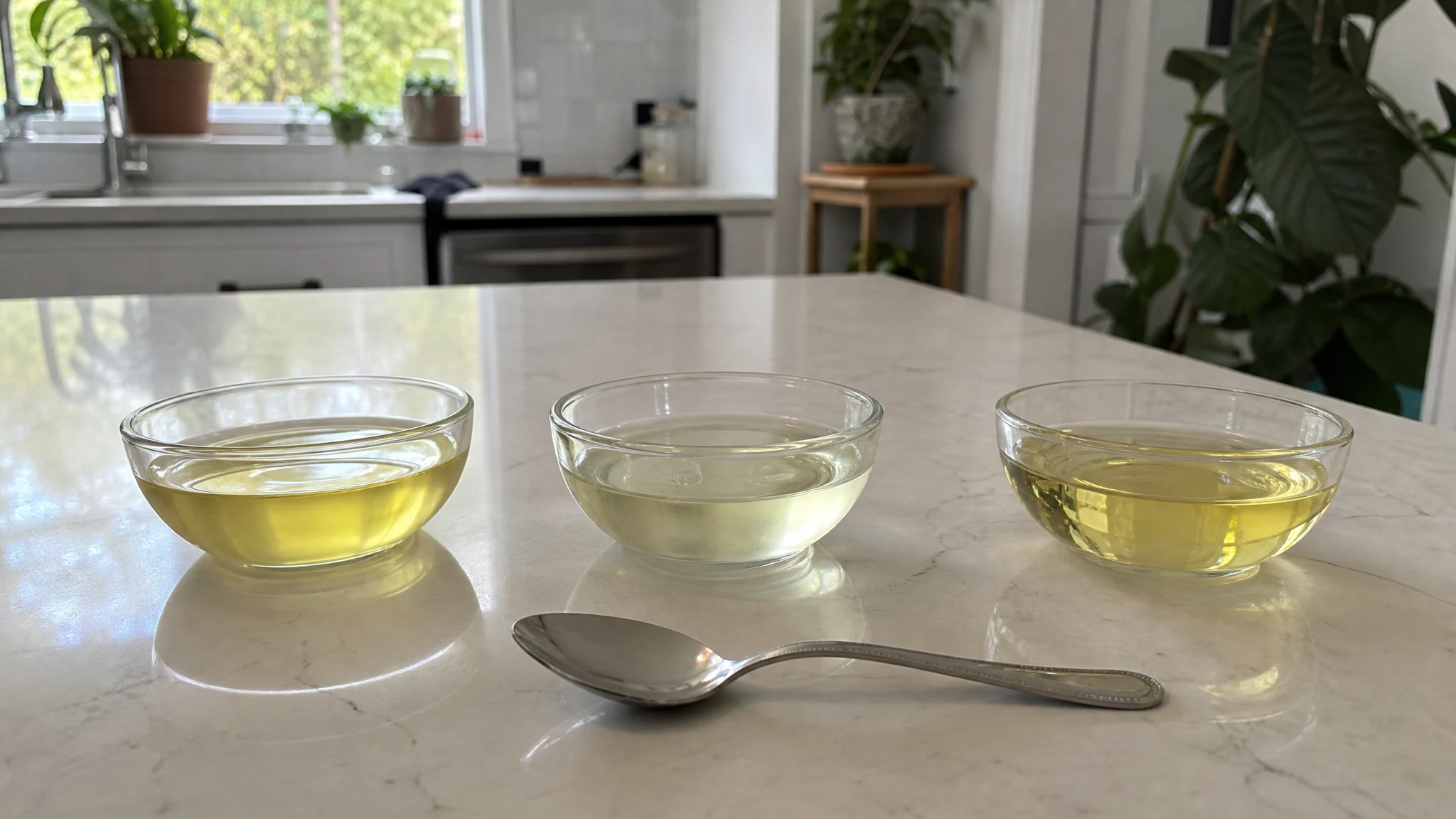
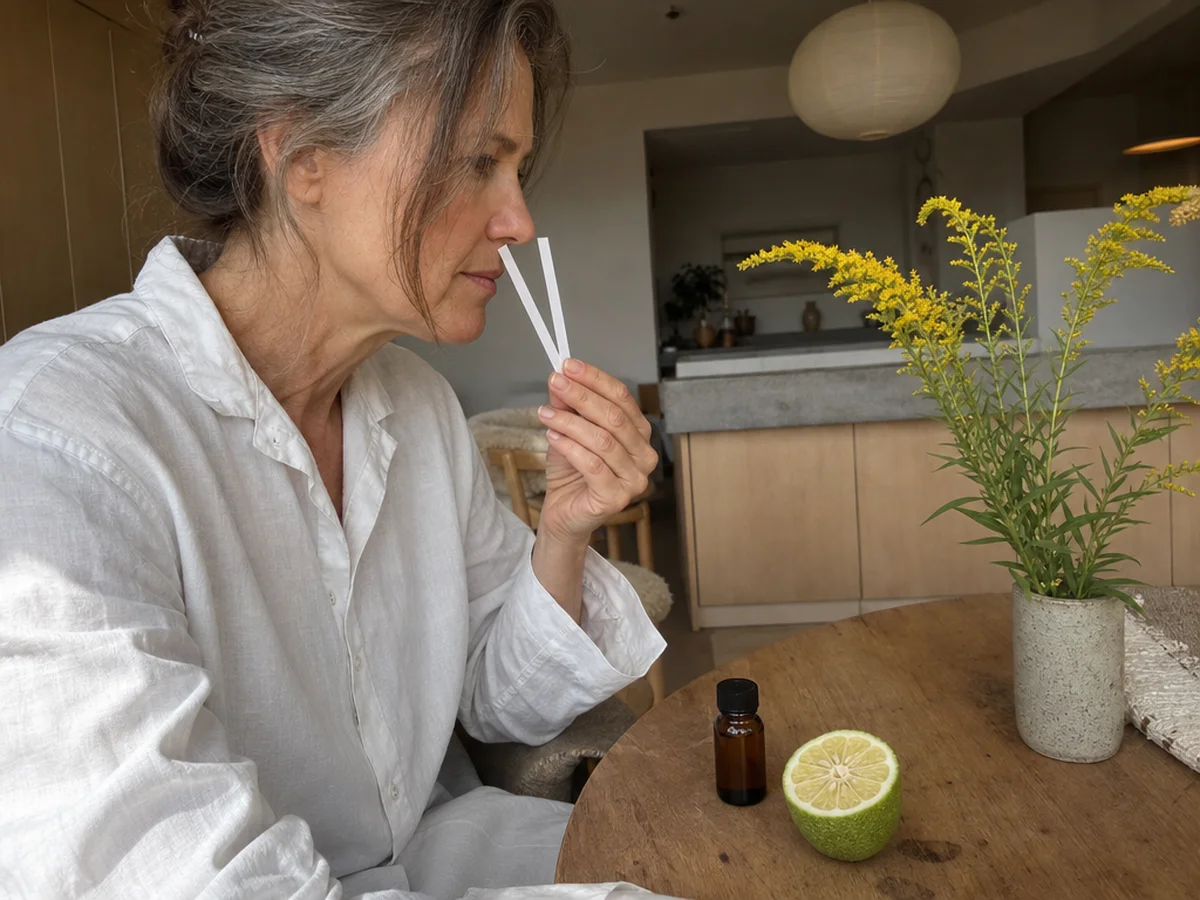
All the reasoning above is a map, and the map is no substitute for walking the ground. The best way to learn a pairing is to put one drop of each oil on separate paper blotters, hold them together, and notice what happens. Some pairs seem to fall into step right away. Others hold apart. Both are useful to know before you commit a drop of anything to a bottle.
Keep the ratio lopsided at first. A blend that is mostly goldenrod with a hint of a partner shows you what the partner adds. Reverse it, and you see what goldenrod adds. Taking both tests takes five minutes and teaches you more than any list.
A note on chamomile
Chamomile is on our partner list, and it is lovely with goldenrod's honeyed side, but both plants belong to the daisy family. DermNet NZ names sesquiterpene lactones as the main allergens in that family and notes that people who react to one plant often react to others. If you react to ragweed, daisies or chamomile, approach goldenrod carefully and try a small area first; our allergy article explains more.
Write it down as you go
Blending is much more fun when you can repeat your wins. Keep a note of each drop count, the date and what you thought. When one blend turns out beautifully, you will be glad you can make it again, and when one does not, the note tells you exactly what to change. Goldenrod is in our shop, and if you repeat blends often, larger sizes are on our bulk page and in our guide to buying goldenrod essential oil in bulk.
Keeping skin blends tidy
A nice way to finish a blending session is to leave the blotters out overnight and sniff them again in the morning. What is left is the heart of each oil, and it often tells you which pairing you'll actually reach for again.
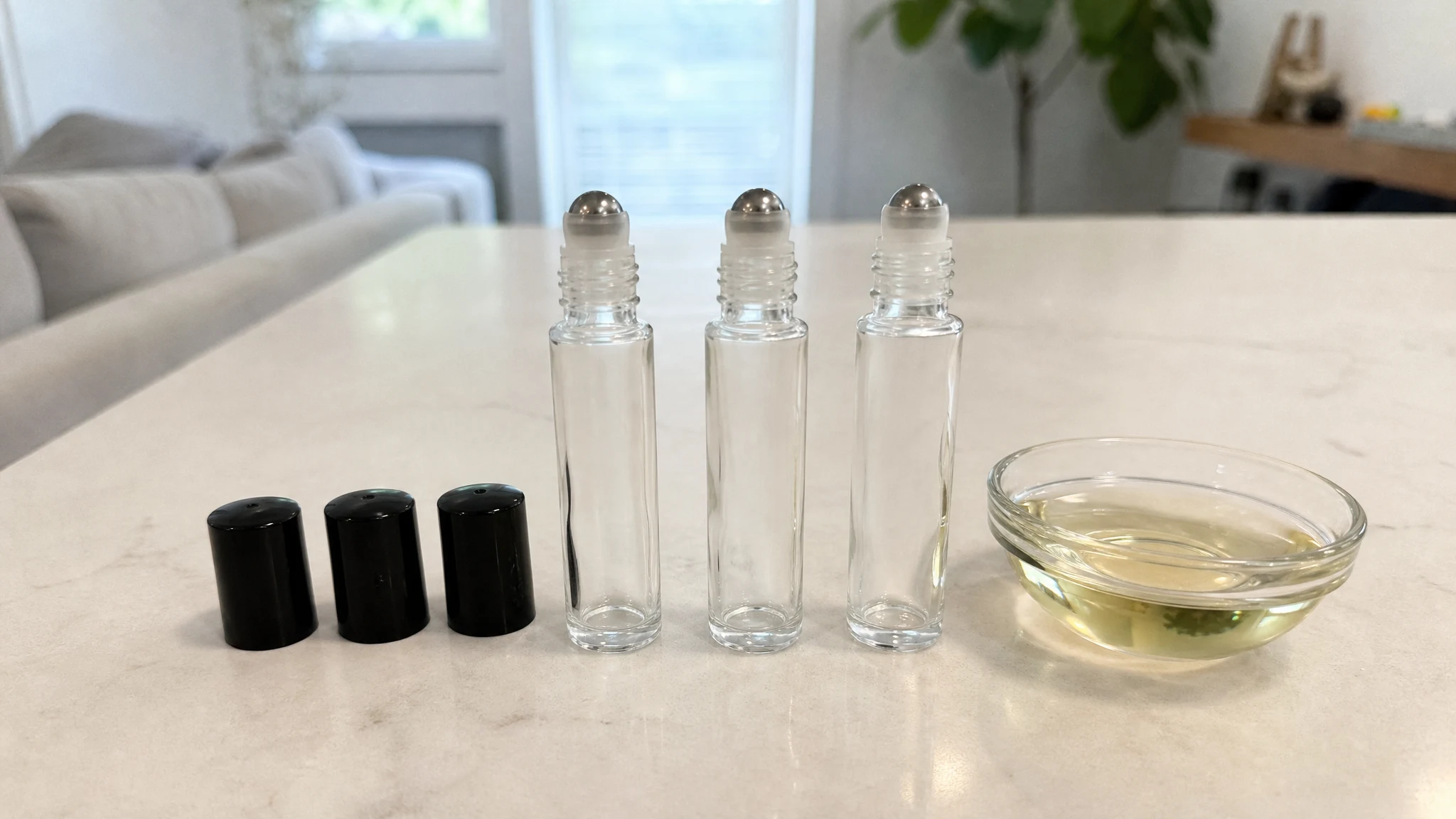
On skin, the total amount of essential oil in the finished product is what matters, not each oil on its own. We recommend 0.5% to 2% for goldenrod in a carrier with a patch test first, and the Tisserand Institute gives 0.5% to 1.2% for facial products and 1% to 3% for body oils. Where those differ, take the lower number, and change one thing at a time as you build so you always know what moved the scent.
Goldenrod Essential Oil
Goldenrod Essential Oil from our own shop, in sizes from 0.5 oz to bulk.
From $17.99
Shop Now →Sources & Further Reading
- Elshafie HS et al., 2019. Antimicrobial activity and chemical composition of essential oil extracted from Solidago canadensis L. growing wild in Slovakia. Molecules
- Radusiene J et al., 2022. Plants. Essential oil composition of Solidago canadensis accessions (18 accessions, six sites, Vilnius, August 2018)
- Silver fir (Abies alba) essential oil analysis, 2009. J Clin Biochem Nutr 44(3):253-259
- Wikipedia. Bornyl acetate
- Penic M et al., 2026. Effects of enzymatic pretreatment on yield and volatile composition of citrus peel essential oils. Molecules 31(4):657
- Abouelela MB et al., 2026. Uncovering adulteration and quality variations in commercial lavender essential oils from the Egyptian market. Sci Rep 16:12735
- DermNet NZ. Compositae allergy
- Tisserand Institute. Essential oil dilution