How to Store Goldenrod Oil: Keep It Fresh Longer
A bottle of goldenrod oil is something to enjoy, not to hoard, and the way you store it decides how pleasant it stays. The principle is easy to remember: keep it cool, dark and closed. Everything else is detail, and the detail is mostly about air.
Goldenrod Essential Oil
Our own Goldenrod Essential Oil, in sizes from 0.5 oz to bulk.
From $17.99
Shop Now →What ages an oil
The Tisserand Institute names three accelerants: heat, light and moisture. More air in the bottle speeds things up, and leaving the cap off for long stretches is a risk. The same page notes that shelf life depends on an oil's chemistry rather than on its brand, so a scarce oil is not automatically a delicate one. Stability genuinely does differ from oil to oil. In a 2025 study, sage and summer savory oils were stored for up to three months at three temperatures: the savory oil's carvacrol fell at all of them, while the sage oil's main compounds stayed generally steady.
Why does it matter beyond aroma? Oxidized terpenes are documented skin irritants and allergens. In a study of 1,511 dermatitis patients at six European centres, about 1.3% reacted to oxidized linalool and about 0.5% to oxidized caryophyllene. Those were referred patients and goldenrod oil was not tested, so it is a reason for good habits, not a forecast.
How long will a bottle last?
We describe a typical shelf life of two to three years kept in a cool, dark place away from heat and sunlight. The Tisserand Institute is more conservative for essential oils in general: most keep well for at least one to two years, and within six to 12 months oxidation is mostly a non-issue. It also says refrigeration roughly doubles life. We suggest planning around the shorter figure and treating two to three years as what careful storage can reach.
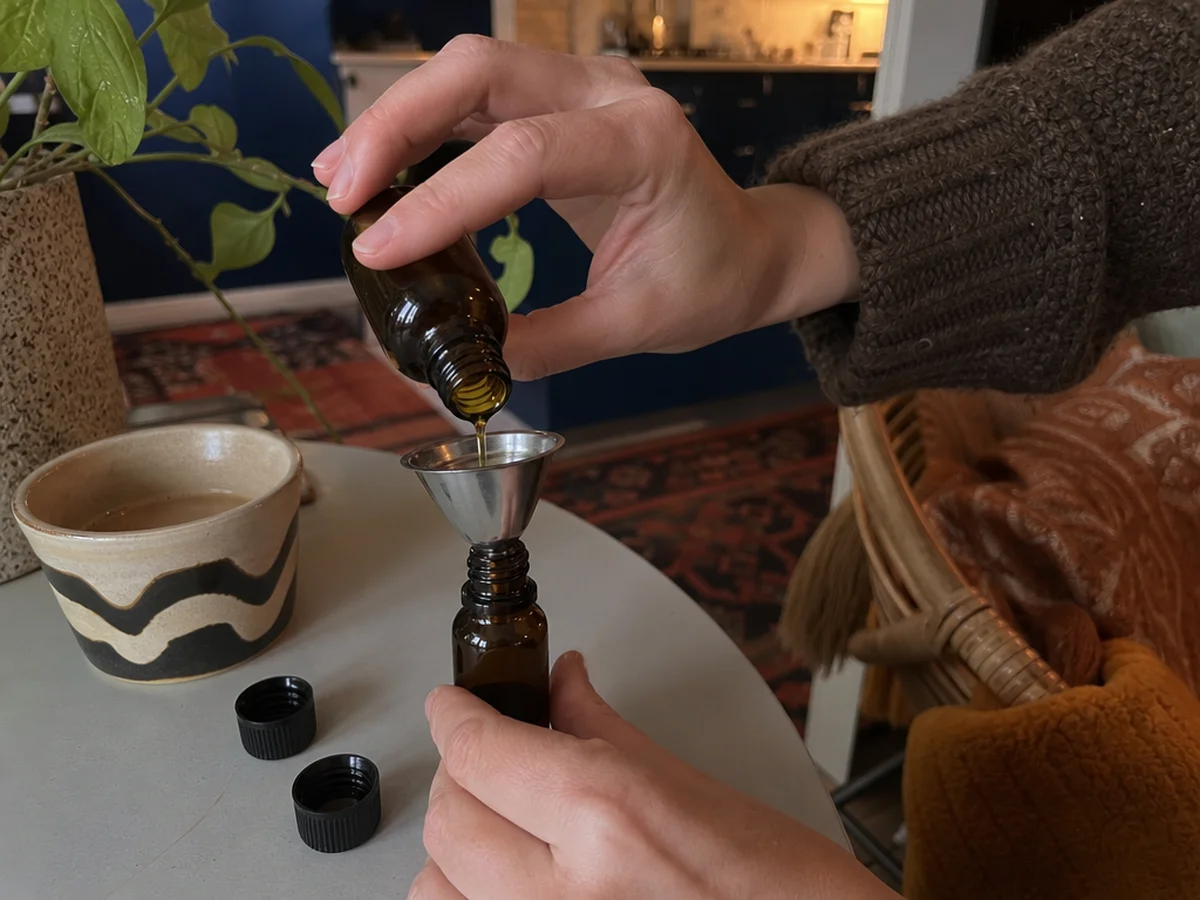
That makes bottle size part of storage. A fluid ounce holds 29.57 ml, and a one-ounce batch of body oil at 2% uses about 0.59 ml, so that bottle covers roughly 50 batches. If you mix one batch a month, even a half-ounce bottle will take about two years. Smaller sizes suit most home use, and our first bottle article helps you choose.
A shelf routine that is easy to keep
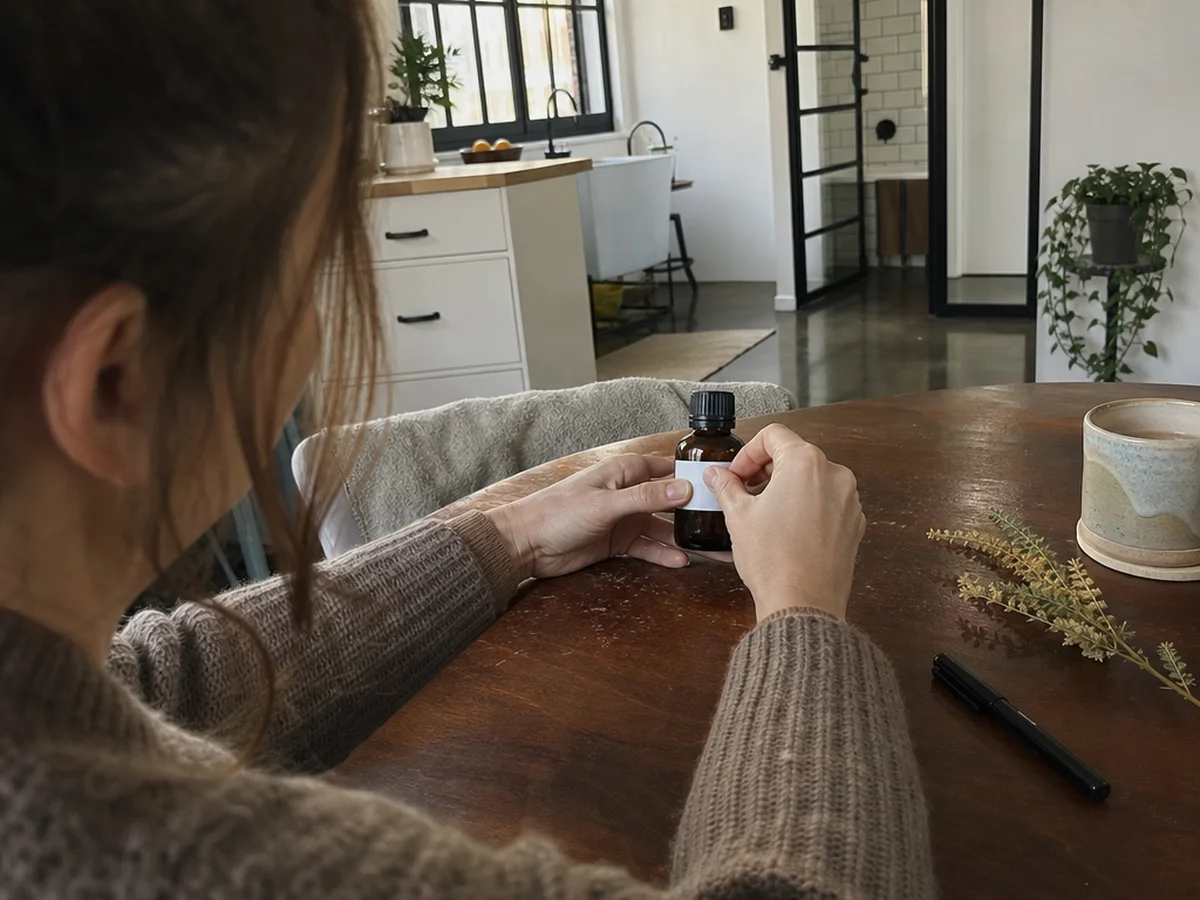
- Write the date. Note the day it arrived or was opened. Your own date says when air began to matter, and the Tisserand Institute recommends it.
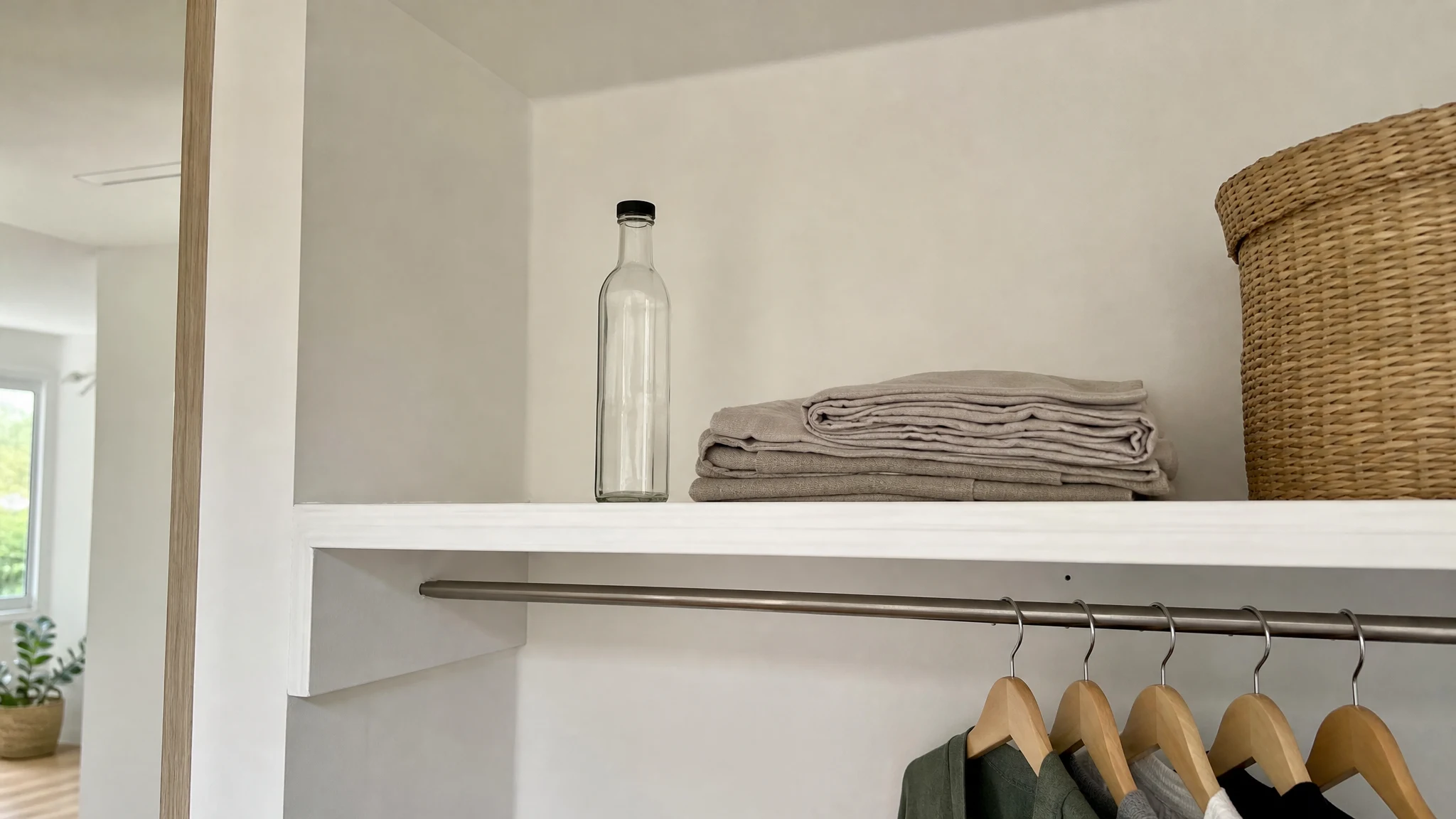
- Choose a steady spot. A dark cupboard beats a windowsill, a shelf over a radiator or a car glovebox. A diffuser shelf stays warm for hours, so keep the bottle away from it.
- Close the cap every time. A few seconds of air is fine. An afternoon beside an open bottle is not.
- Decant a working bottle. If you hold a larger size, pour working amounts into smaller airtight bottles and leave the sealed stock closed. A 16 fl oz bottle (473 ml) three-quarters used holds about 355 ml of air over 118 ml of oil, while the same oil split among small, nearly full bottles has almost none.
- Consider the fridge for long keeping. It suits stock you will hold past a year. Let a closed bottle come to room temperature before opening it, which keeps moisture out (our reasoning, since moisture is on the list of accelerants).
Making a little home for your oils
One of the most satisfying small projects is giving your oils a proper home. A shallow box or a small wooden drawer with a lid is plenty. Put in a pencil, a few labels and a small notebook. Each time you open a bottle, jot the date and what you did with it. Over a year that notebook becomes a quiet record of which scents you reach for and which ones sit unused.
It also keeps your oils away from sunny shelves, steamy bathrooms and the kitchen, all the places they tend to end up if you do not give them a better one.
Checking an older bottle
The Tisserand Institute lists a few signs: the scent loses some of its brightness, which you often notice only against a fresh bottle; the oil can turn cloudy if moisture has crept in; and very old oils may thicken, though that takes years. Because scent changes are subtle, the date you wrote down is a better guide than your nose. A bottle past the six to 12 month mark, left open, or smelling off is best kept away from skin. The safety guide and skin basics explain the use side, and our seller-vetting guide covers what dates to look for when you buy.
Travel tips
If you carry a small bottle in a bag, wrap it upright in a zip bag with a bit of tissue so any leak is caught. Keep it out of the glovebox and the sunny back window of a car, and bring it indoors as soon as you arrive. A hot afternoon can do more to an oil than a month on a cool shelf.
One more reason for a latch
The National Capital Poison Center says essential oils should be locked up, out of sight and reach of children and pets. A cool, dark cupboard with a latch does both jobs. If a child or animal swallows any essential oil, use the Poison Control online tool or call 1-800-222-1222, or call a veterinarian for an animal.
Good storage buys time but does not stop the clock, so the best plan is simply to enjoy the bottle while it is at its freshest.
Goldenrod Essential Oil
Goldenrod Essential Oil from our own shop, in sizes from 0.5 oz to bulk.
From $17.99
Shop Now →Sources & Further Reading
- Tisserand Institute. Oxidized essential oils
- Matura et al., 2005. Selected oxidized fragrance terpenes are common contact allergens (Contact Dermatitis 52(6):320-328)
- Najafian et al., 2025. Storage of sage and summer savory essential oils (Iran Agric Res 44(1):119-130)
- National Capital Poison Center. Essential oils