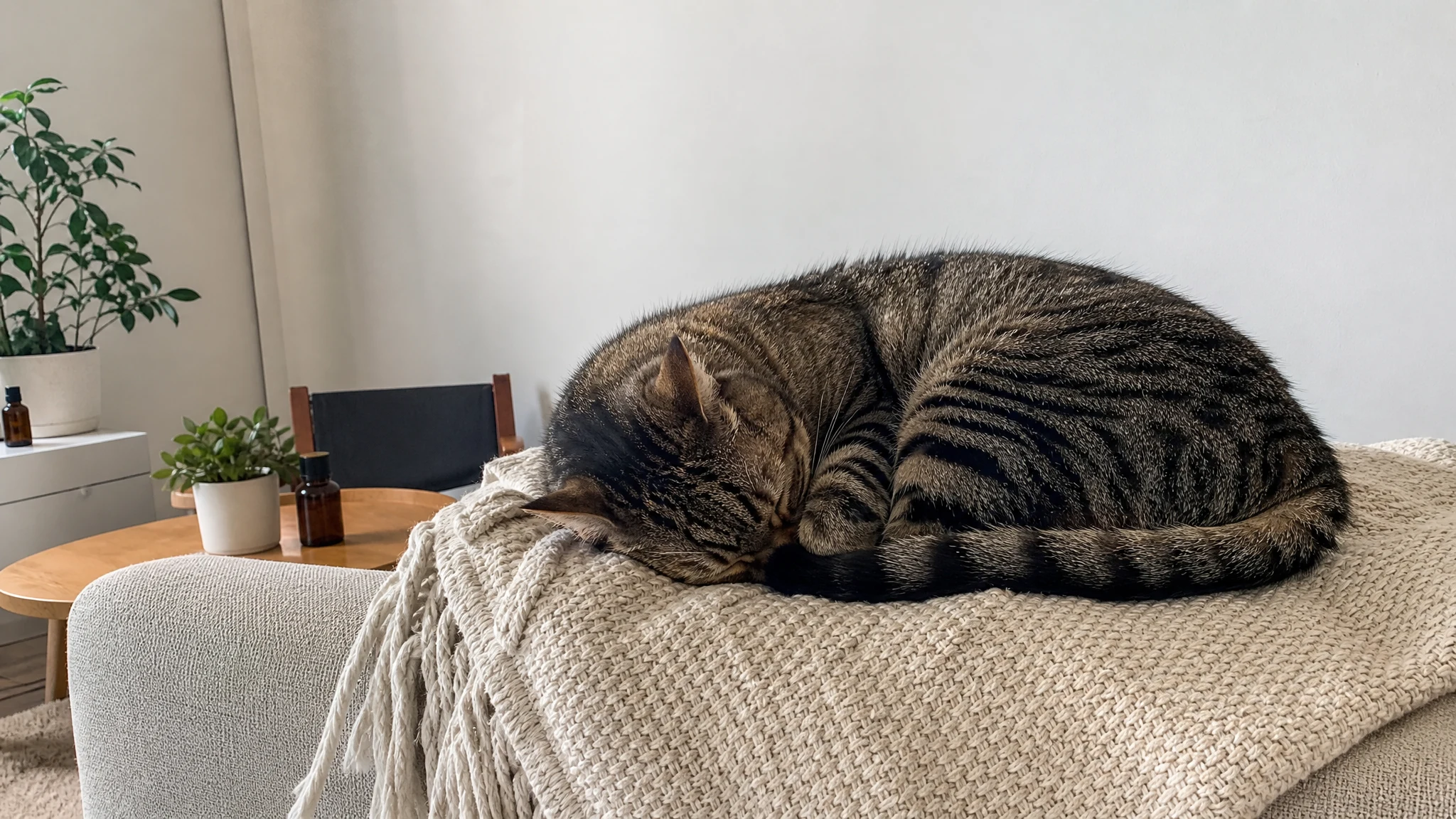
Is Goldenrod Oil Safe Around Cats and Dogs?
If you share your home with a cat, a dog or a bird, our advice is short: keep goldenrod oil off the animal and out of the room it breathes in. Nobody has published a toxicity study of goldenrod oil in pets, so what follows comes from the veterinary literature on essential oils as a class.
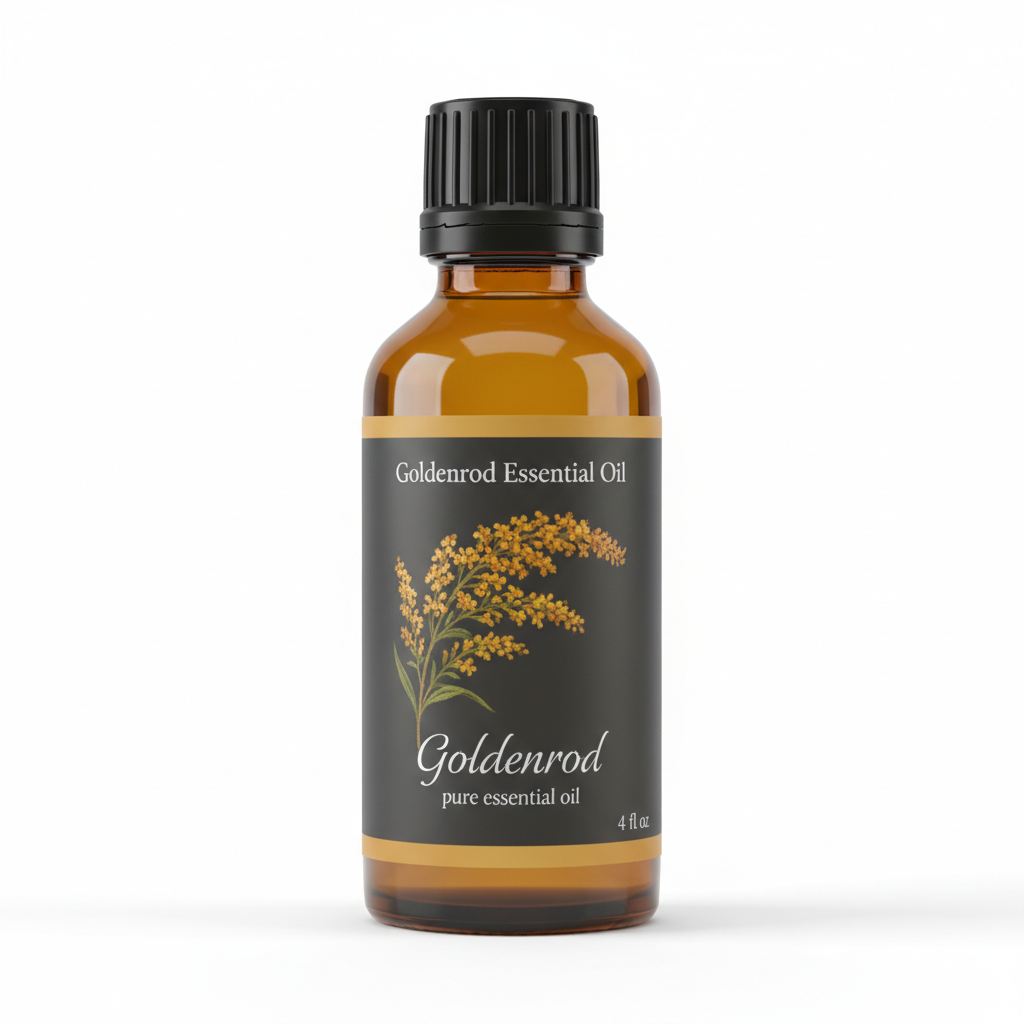
Goldenrod Essential Oil
Our own Goldenrod Essential Oil, in sizes from 0.5 oz to bulk.
From $17.99
Shop Now →What the veterinary reference says
The Merck Veterinary Manual's chapter on essential oil toxicosis (written by veterinarian Kia Benson, 2025) says never to apply concentrated essential oils directly to pets, since oils are absorbed quickly through the gut, skin and lungs. Several points in it matter to anyone planning a diffuser:
- Cats lack an enzyme called glucuronyl transferase, which makes them especially sensitive to phenols, and their constant grooming adds skin and mouth exposure.
- Birds have a respiratory tract that is highly sensitive to airborne particles, and animals with feline asthma are at greater risk from inhaling oils.
- Signs after swallowing or skin contact include vomiting, lethargy, drooling and wobbliness, with tremors, seizures or organ damage in more severe reports. Inhaled oils can bring watery eyes, coughing, wheezing and labored breathing.
- Passive diffusers such as reeds mostly irritate airways. Active nebulizing or ultrasonic types release microdroplets that can settle on fur or feathers, where they may be absorbed or swallowed during grooming. The chapter suggests keeping pets out of the room while diffusing, ventilating afterward and keeping run times under 30 minutes.
The chapter names tea tree oil as the most commonly reported oil in pets. Goldenrod is not named, which is not a statement of safety either way. It means only that no one has written it up.
Why we are so cautious here
We love this oil, and we would still never put it ahead of a pet. Animals live at nose height, they walk through a room and then clean their paws, and they cannot tell us when something smells too strong. A person can open a window or walk away from a diffuser. A cat shut in a small room cannot. That difference in choice is really the whole reason for our advice.
What real cases look like
A review of ASPCA Animal Poison Control records from 2006 to 2008 looked at 39 cats and 9 dogs exposed to plant-based flea products containing essential oil mixtures. Forty-four of the 48 animals, 92%, had one or more adverse effects, most within 24 hours. The detail that stays with us is that 77% of the products had been used as the label directed. Following directions did not prevent harm in most of these cases, which is a good reason not to assume a careful, diluted home application is automatically fine. These were commercial mixed-oil flea products, not goldenrod, and they are cases that reached a poison center, so they say nothing about a rate across all pets.
The diffuser droplet question
A common argument is that a diffuser puts hardly any oil in the air. Perhaps, but the veterinary concern is not the number of drops, it is where droplets land and what a cat does next. A small animal, a small room and a cat that licks its coat is the combination to avoid. That is reasoning from the chapter, not a measurement for goldenrod.
What we recommend
- No oil on the animal, and none dabbed on collars, bedding or paws.
- If you diffuse, do it behind a closed door where pets cannot enter, and ventilate before they return.
- Keep bottles and diluted blends where an animal cannot knock them over or chew them.
- With birds, cats or any animal with airway disease in the home, ask your veterinarian before diffusing at all.
- A pet with a skin problem needs a veterinarian, not an oil. We make no claim that goldenrod oil helps animals with anything.
If an animal is exposed
Call a veterinarian or a poison line before doing anything else. Pet Poison Helpline publishes (855) 764-7661, available around the clock, and 800-213-6680 for North America. For skin exposure it suggests bathing the animal with liquid dishwashing detergent, and for inhalation moving the animal to fresh air. It says not to induce vomiting because of the risk of aspiration, and the Merck chapter agrees. Have the bottle ready and name the oil: goldenrod, Solidago canadensis, undiluted. For anything about a specific animal, a veterinarian is the person to ask.
Small habits that keep a bottle out of trouble
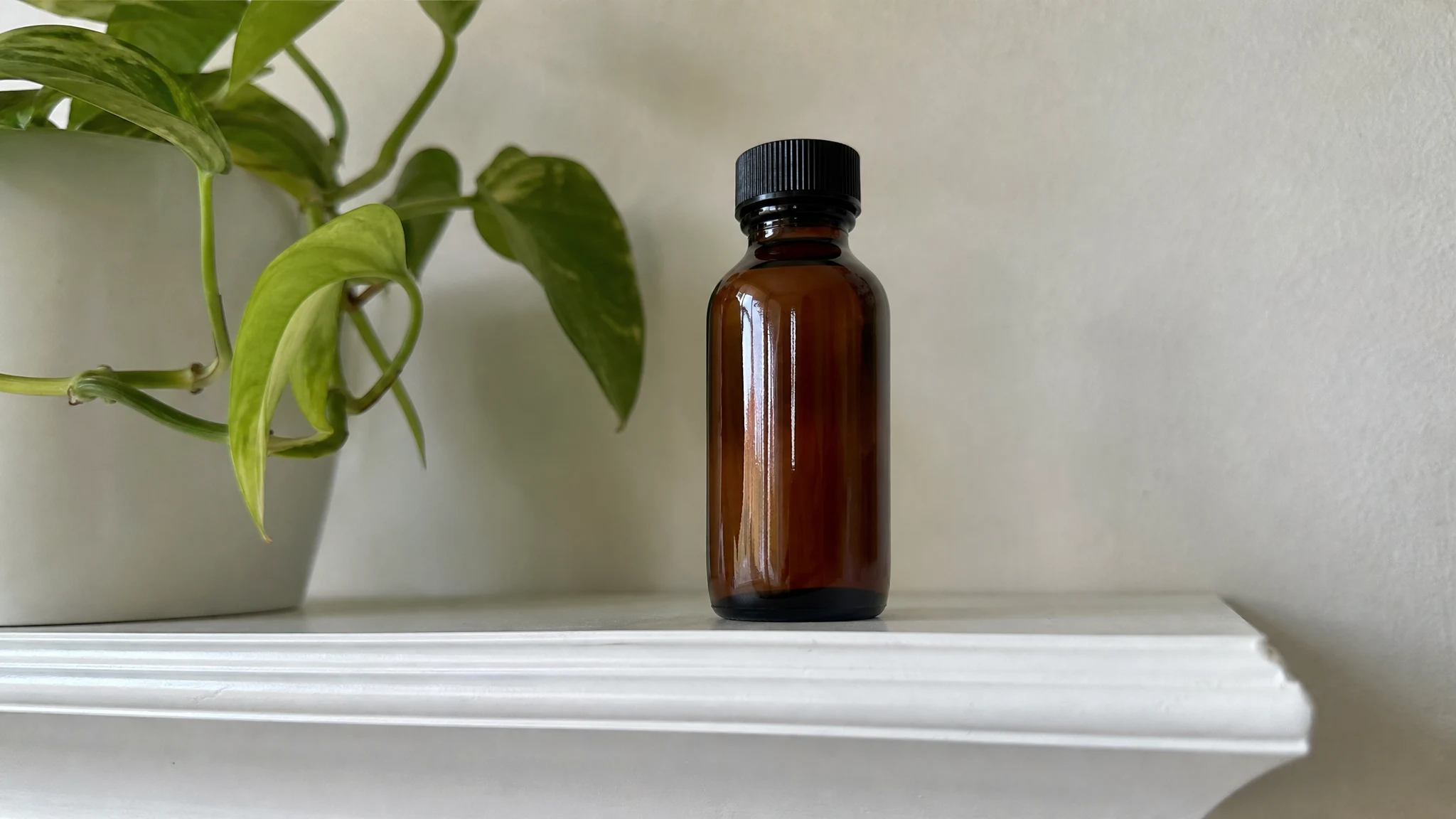
Most pet accidents with a bottle are boring ones: a cap left loose, a bottle left on the edge of a desk, a tail that sweeps it onto the floor. A few quiet habits take care of that. Put the cap back on straight away and give it an extra turn. Keep your bottle in a closed cupboard or box with your other aroma supplies, not on an open shelf. Wipe up any drip at once, since a small spill on a floor or table is exactly where a curious nose will go next. And if you sample the scent on a paper strip, throw the strip into a bin the animal cannot reach.
Where this fits
The short pets note in our skin basics article gives the household rule, and this is the reasoning behind it. For people, see our safety guide, and for a child in the home, our children article.
Goldenrod oil is a perfumer's material, and it will wait. If the choice is a scented room or a cat that can reach it, choose the cat.
Goldenrod Essential Oil
Goldenrod Essential Oil from our own shop, in sizes from 0.5 oz to bulk.
From $17.99
Shop Now →Sources & Further Reading
- Benson K., 2025. Toxicoses From Essential Oils in Animals. Merck Veterinary Manual. merckvetmanual.com
- Genovese A.G., McLean M.K., Khan S.A., 2012. Adverse reactions from essential oil-containing natural flea products exempted from EPA regulations in dogs and cats. Journal of Veterinary Emergency and Critical Care 22(4):470-475. pubmed.ncbi.nlm.nih.gov/22805458
- Pet Poison Helpline. Essential Oils. petpoisonhelpline.com/blog/essential-oils