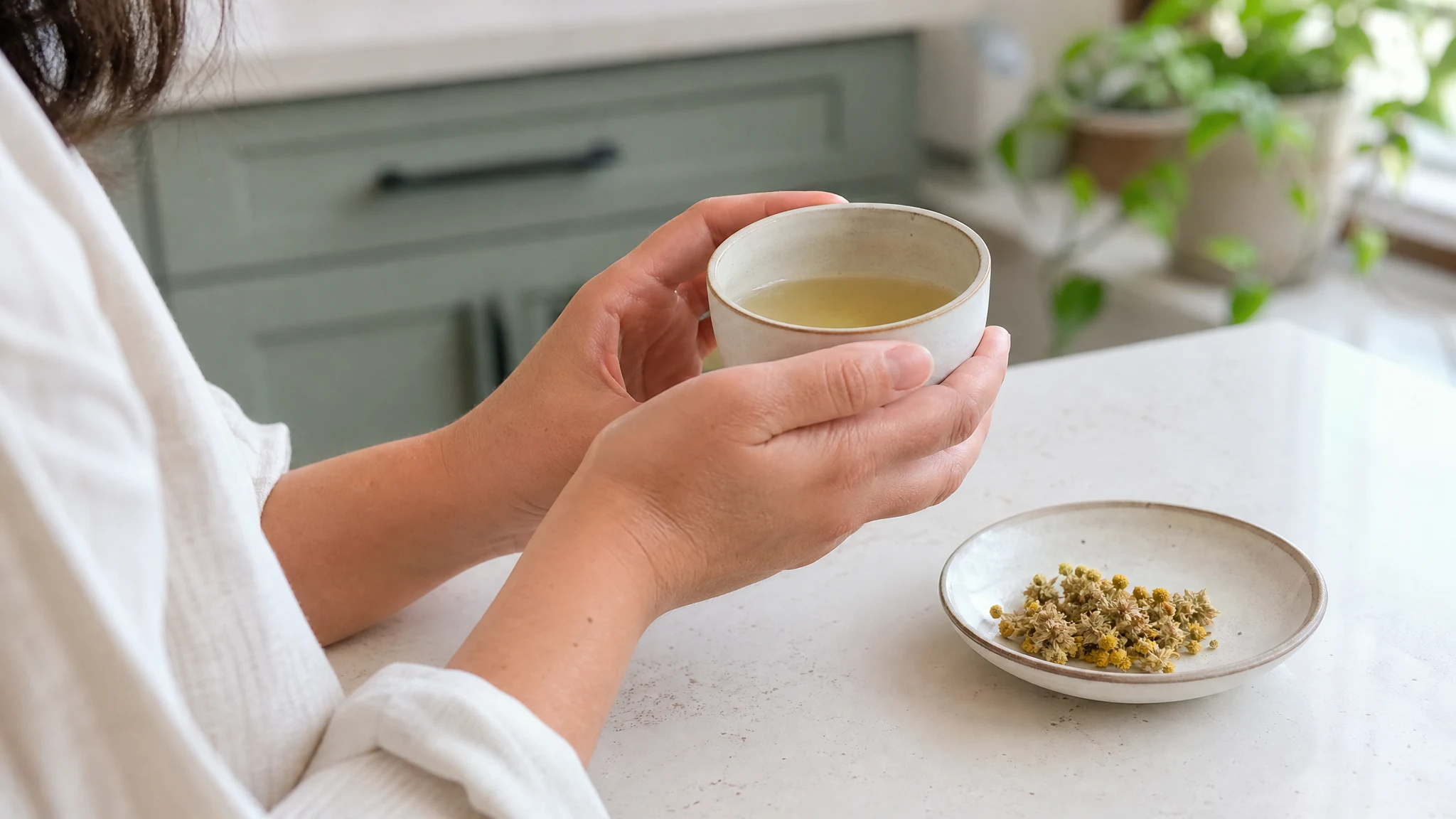
Goldenrod Tea: What European Rules Say About Drinking It
Goldenrod tea has a longer paper trail than most herbal teas, because European regulators sat down in 2008 and wrote its rules. The twist is that those rules were written for a European plant, Solidago virgaurea, and not for the Canadian goldenrod behind our oil. It is still the best guide there is to how a careful regulator treats goldenrod as a drink, so it is worth a look.
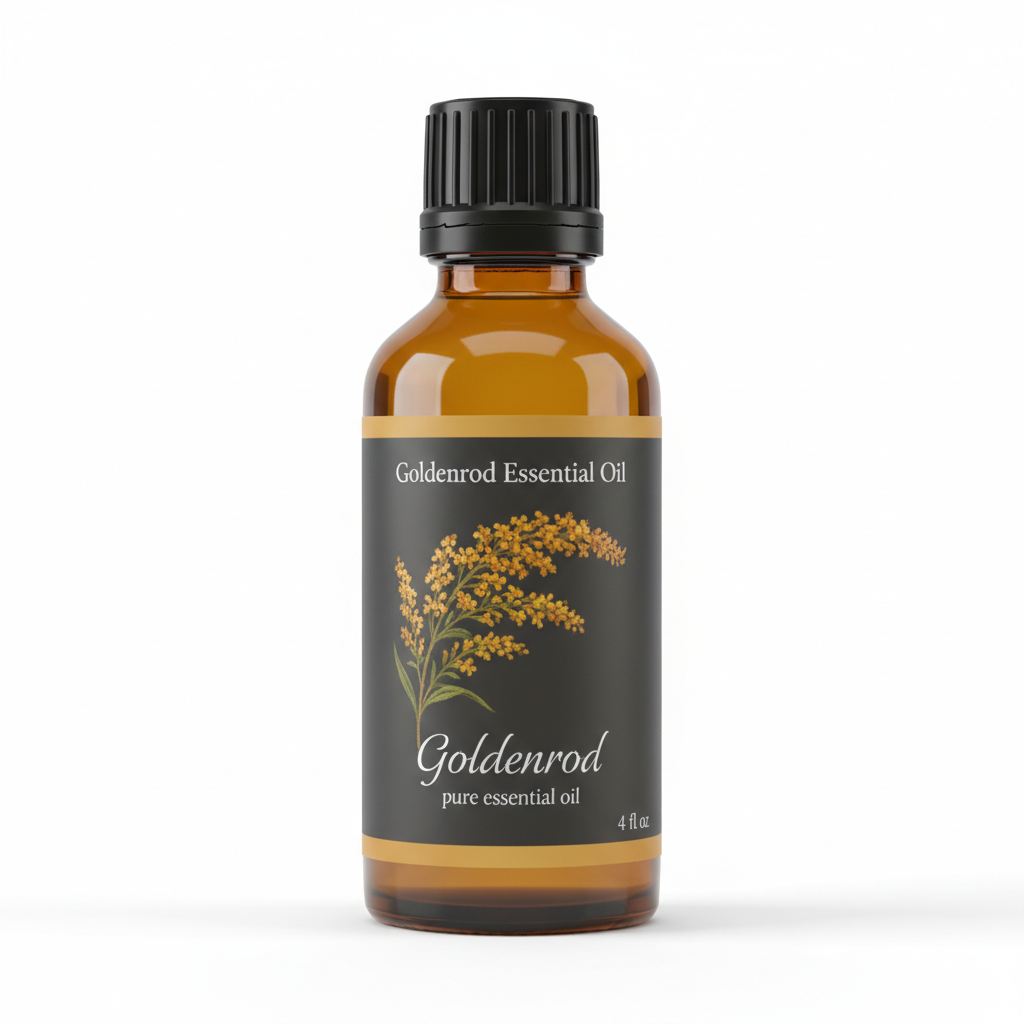
Goldenrod Essential Oil
Our own Goldenrod Essential Oil, in sizes from 0.5 oz to bulk.
From $17.99
Shop Now →What the monograph covers
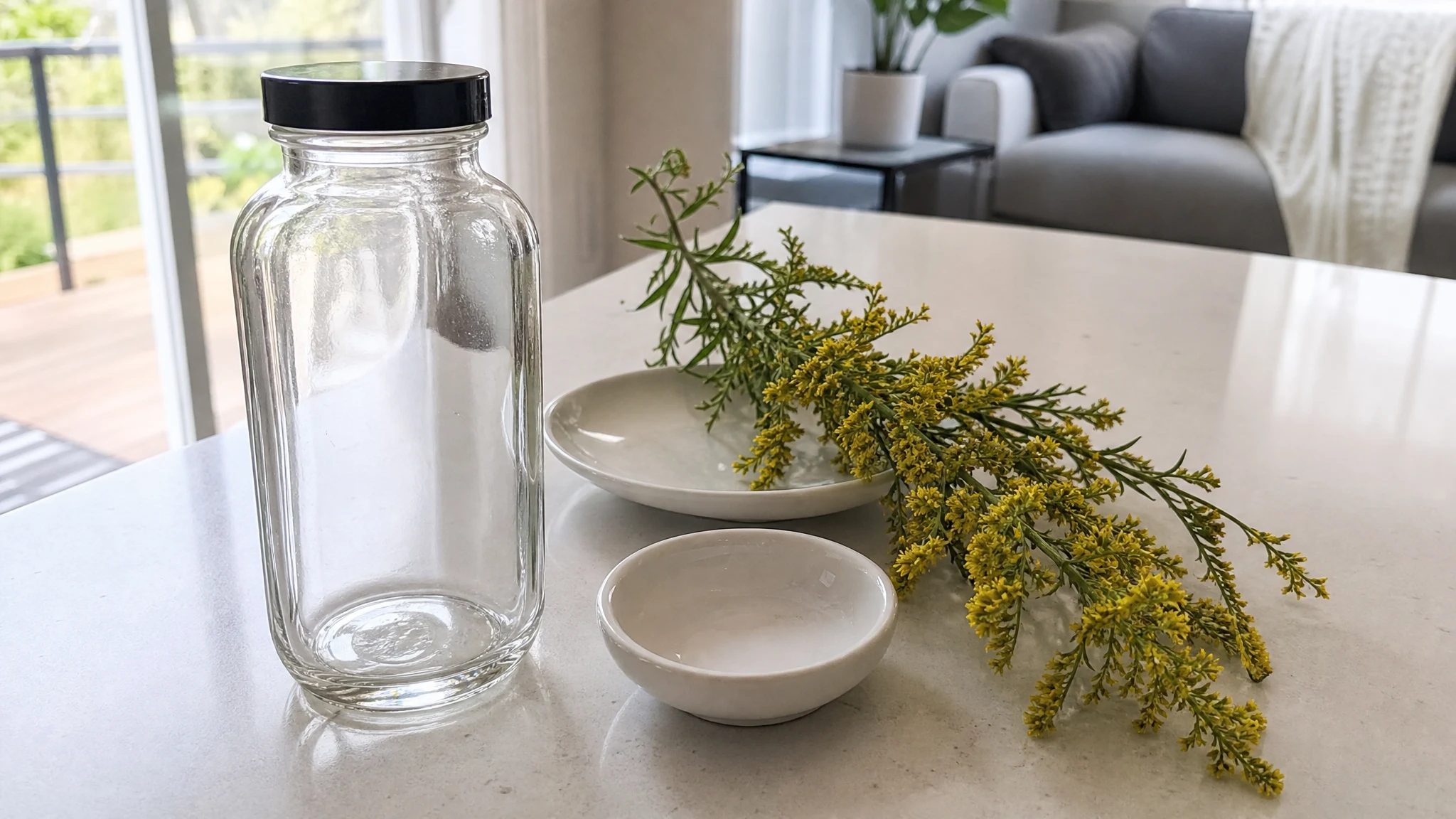
The European Medicines Agency's herbal committee adopted its monograph on 4 September 2008. It describes goldenrod herb as a traditional herbal medicinal product, used to increase the amount of urine as an adjuvant in minor urinary complaints, and it rests "exclusively" on long-standing use. For adults and adolescents the infusion dose is 3 to 5 g of comminuted herb, two to four times a day, traditionally for two to four weeks, with a doctor or qualified practitioner consulted if symptoms persist.
Multiply that out and it is 6 g to 20 g of dried herb a day. Hold that figure in mind, because "a handful" is not a measurement and a kitchen scale is the only honest way to read a dose like this.
Why we find the monograph worth reading
We are a small business that loves a plant, and we like it when a plant has been looked at carefully by people with no product to sell. Reading a regulator's monograph is a good habit for anyone curious about any herb. It is written in plain, cautious language, and it tells you who should stay away as clearly as who might use it. If you ever read a blog post about an herb that skips the cautions, go and find the official version.
Who is told to skip it
The list is specific, and worth reading as written rather than as boilerplate:
- Anyone sensitive to goldenrod or to the wider daisy family (Asteraceae, also called Compositae), which includes ragweed, chamomile and daisies.
- People advised to limit fluid intake, such as those with severe heart or kidney disease.
- Children under 12, because of the lack of experience.
- Anyone pregnant or nursing, since there are not enough data.
- Anyone taking synthetic diuretics, where combining is not recommended.
It also says to see a doctor if fever, painful urination, spasms or blood in the urine appear. Reactions listed are hypersensitivity and stomach upsets, with the frequency not known.
How firm is the evidence?
The short answer is "traditional" rather than "proven". The committee's assessment report reviewed five open trials of goldenrod products, with between 22 and 1,487 participants, and concluded that the quality of those studies cannot be evaluated: no comparison groups, no sample calculations, and little detail on who took part. Its overall view was that conclusions can be limited only to traditional use. That is a perfectly respectable place for an old herbal custom to sit, and it is also the reason we leave dosing and claims to your pharmacist or physician.
Why oil is not a shortcut to tea
We do not sell tea or dried herb, and our goldenrod oil is an undiluted aroma product that should never be swallowed. The numbers show how different the two are. In one laboratory distillation of Canadian goldenrod, 0.27% of the dried plant's weight came out as oil. At the density on our Certificate of Analysis (0.880 g/ml) and a rough 20 drops to the milliliter, one drop weighs about 0.044 g, which corresponds to the volatile oil of roughly 16 g of dried herb. That is reasoning from one Slovak lab yield and a drop-size convention, not a measurement of our oil, but its message is sound: a drop is not a small cup of tea. It is the concentrated aroma fraction of an armful of plant.
What a cup of herbal tea is, and is not
If you have ever made a pot of chamomile or mint tea, you know the ritual: dried leaves in a strainer, hot water, a few minutes of waiting, and a warm, plant-scented cup. That ordinary kitchen experience is a world away from a small amber bottle of essential oil. Tea is a drink made from a measured amount of dried herb. Our oil is an aroma material, and the two should never be swapped, however similar the plant name on the label looks.
So if the idea of a late-summer cup appeals, treat it as a project for a dried herb supplier and your pharmacist, and enjoy the aroma of the oil in the air instead, in the diffuser ratios and gentle skin dilutions we describe elsewhere on the site.
A word on foraged goldenrod
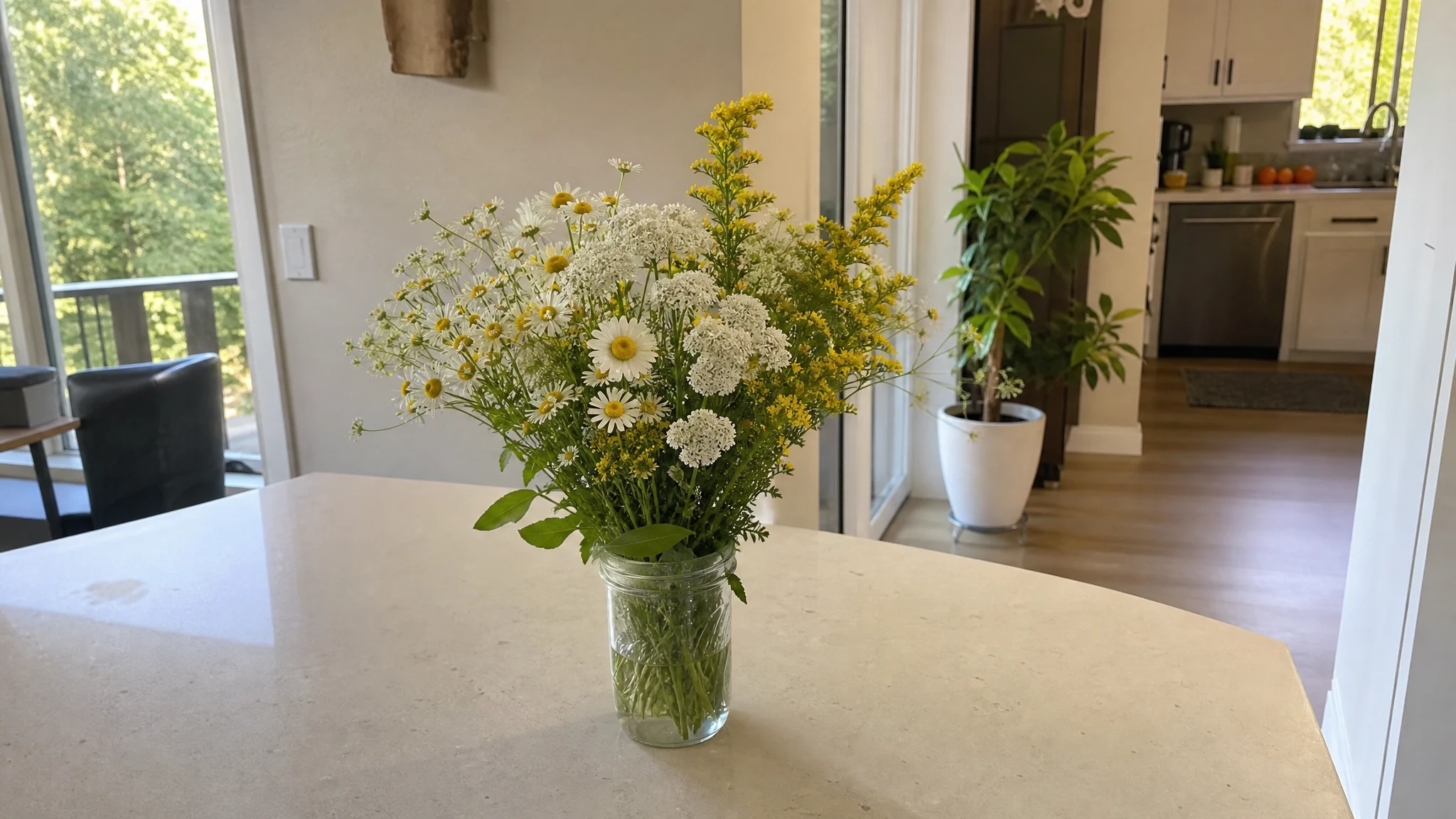
Pharmacy-grade herb meets a quality standard. A roadside bunch does not have a label, an identity check or a soil record, and late-summer yellow flowers include look-alikes that are not goldenrod. Our foraging guide walks through permission, identification and soil, and the species guide explains why "goldenrod" is a crowd of plants rather than one. If you react to ragweed or chamomile, our allergy article is the place to start before any goldenrod preparation.
If you want to try goldenrod as a drink, a dried herb supplier who names species, plant part and origin, and a pharmacist who knows your medicines, are the right pair of conversations. We will stay in the aroma lane.
Goldenrod Essential Oil
Goldenrod Essential Oil from our own shop, in sizes from 0.5 oz to bulk.
From $17.99
Shop Now →Sources & Further Reading
- European Medicines Agency, HMPC, 2008. Community herbal monograph on Solidago virgaurea L., herba (EMEA/HMPC/285758/2007)
- European Medicines Agency, HMPC, 2008. Assessment report on Solidago virgaurea L., herba
- Elshafie et al., 2019. Antimicrobial activity and chemical composition of essential oil extracted from Solidago canadensis L. growing wild in Slovakia (Molecules)