Goldenrod Oil and Children: Storage and Safety Basics
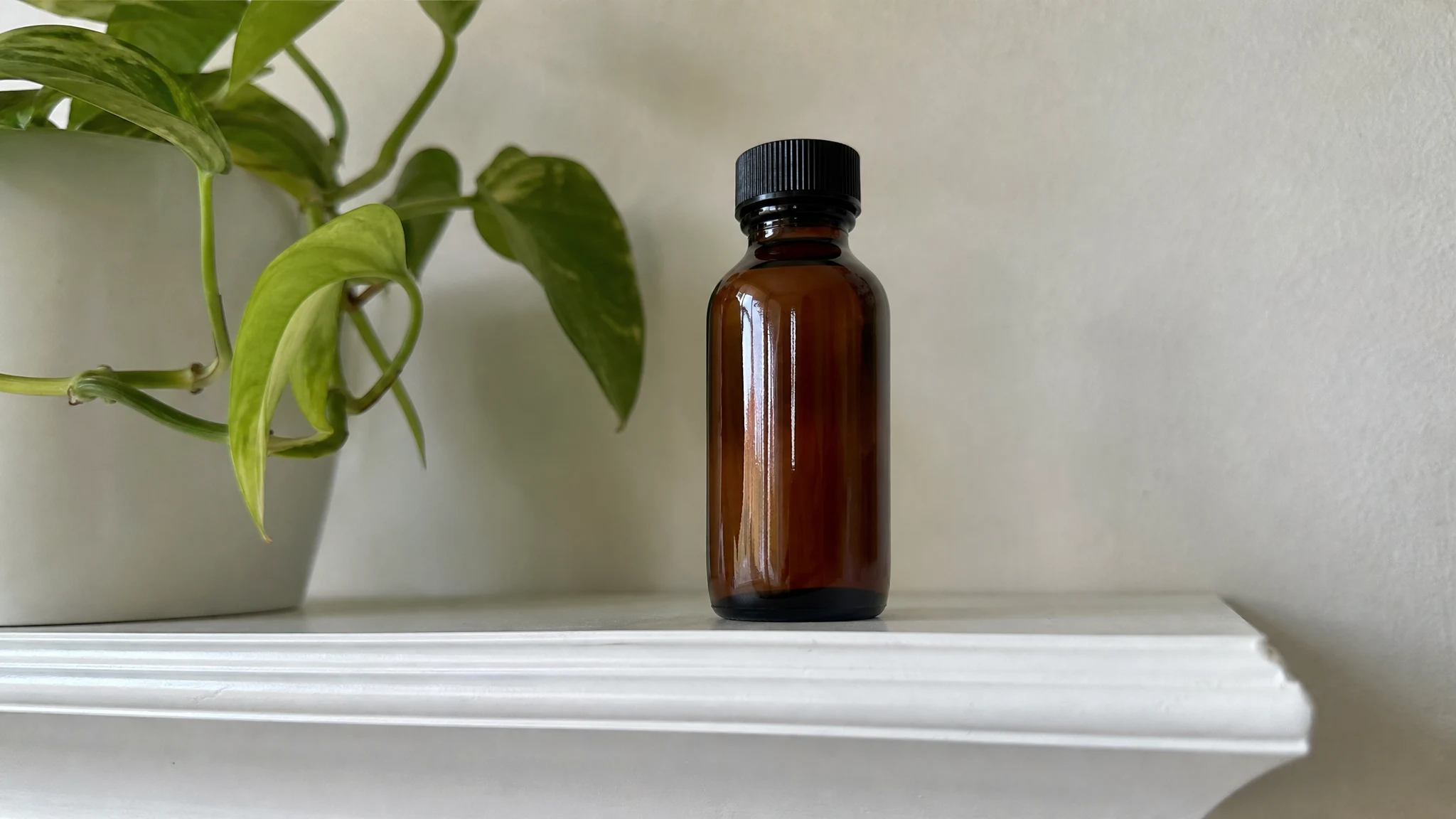
The best thing to know about essential oils and children is also the simplest: the bottle belongs up high, in a closed cupboard, out of sight. Nobody has published guidance that sets an age at which goldenrod oil becomes fine for children, so our approach is to keep it away from them and make storage easy to get right.
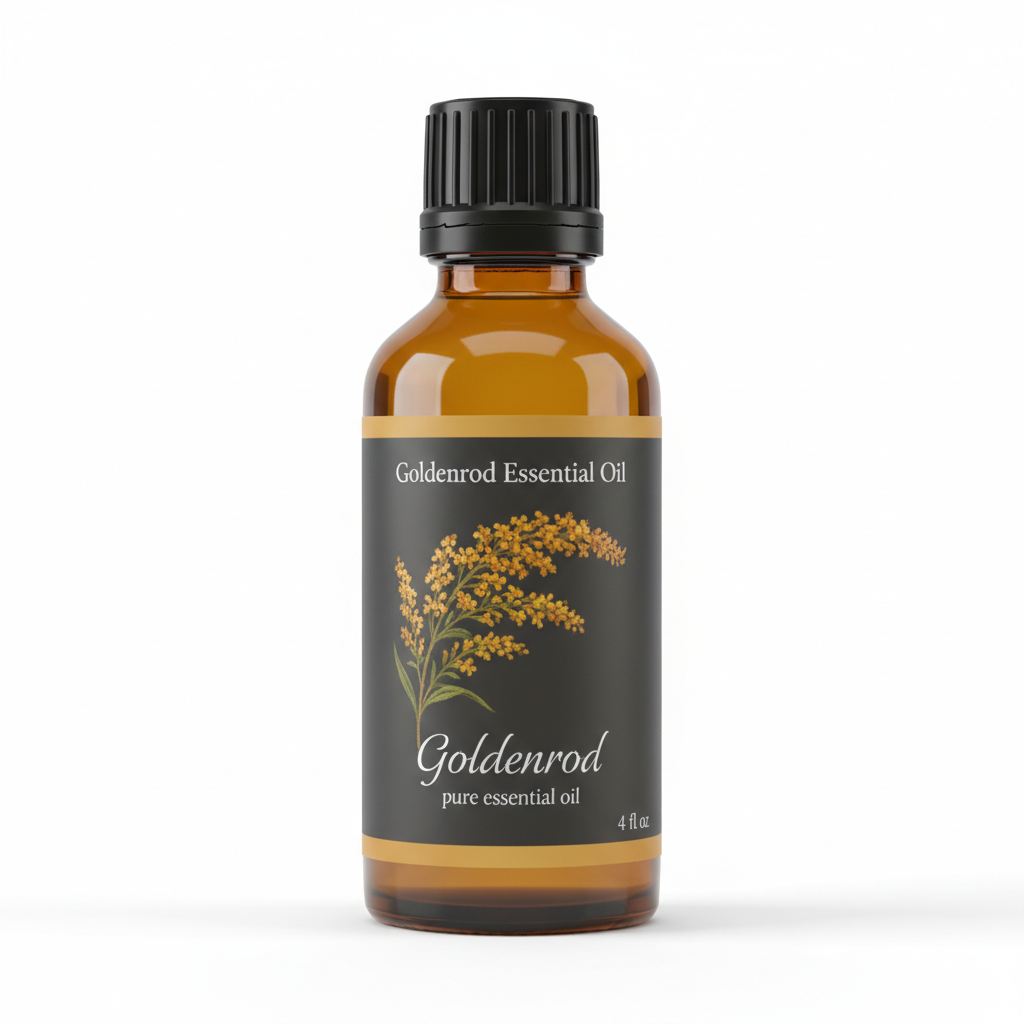
Goldenrod Essential Oil
Our own Goldenrod Essential Oil, in sizes from 0.5 oz to bulk.
From $17.99
Shop Now →What poison centers say
Poison Control's essential oil page notes that children have thin skin and immature livers, which may make them more susceptible to toxic effects than adults. It adds that breathing in an oil while swallowing it can cause pneumonia, that oils should not go on damaged skin, and that anyone with young children may consider discarding them. Otherwise, it says, oils "must be locked up, out of the sight and reach of children and pets." That is a household rule, not a dose chart, and it is the rule we follow.
Australian data show why. Out of 4,412 essential oil exposures reported to one poison center over four years, 63% involved children under 15, about half were toddlers aged 1 to 4, and roughly 80% were accidental. The leading oils were eucalyptus, tea tree and lavender. That is a call tally rather than a risk rate, but it paints a clear picture: small children, open bottles, an ordinary shelf.
Why we offer no children's dilution
Our 0.5% to 2% skin guidance is written for adults, and our copy says to keep the oil away from children. We have found no source that sets a lower range for a child, so we will not make one up by halving a number. Droppers vary, too: a drop is only roughly 0.05 ml, so one drop in 10 ml of carrier is only roughly 0.5%, and at tiny volumes that rounding becomes a bigger share of the answer. Whether any dilution suits your child is a conversation for your pediatrician.
Children also put hands in mouths and eyes, so oil on skin does not always stay put. That is our own reasoning, and one more reason the poison center advice centers on storage.
A storage plan that does not rely on the cap
- Choose a closed cupboard or box that is high and locked, not merely a high shelf.
- Put the bottle away after every use; the risky minutes are the ones when it sits on the counter.
- Treat diluted blends the same way. A roller bottle of 1% oil is still an essential oil to a toddler.
- Cool and dark storage suits the oil, too; our storage guide explains why.
- If young children live with you and you will not use a bottle, Poison Control suggests discarding it.
Do not assume a bottle arrives with a child-resistant cap; check what comes and store it accordingly.
Make the right thing the easy thing
Most safety advice fails because it asks too much. The version that works is the one that fits into an ordinary day. Pick one spot for your oils, make it high and closed, and always put the bottle back before you do anything else, even before you answer the phone. A habit like that takes a week to set and then costs you nothing.
Visitors are worth a thought as well. Grandparents, babysitters and friends may set a bag down within a child's reach, so if oils travel with you, give the bag the same care as the cupboard.
Scale, so you know what is in the house
A 0.5 oz bottle holds about 14.8 ml, which is roughly 296 drops at 20 drops per ml, and about 13 g of oil at the density on the certificate we publish. That describes how much undiluted material sits in a small bottle, not a toxic dose. It is a reason to buy the smallest size that does the job.
Talking to kids about it
Children do better with a simple reason than with a flat no. Something like "this is a strong smell that is only for grown-ups, and it lives up high" is easy to remember. Older children can learn to tell you at once if they find an open bottle, and that is worth far more than hiding it and hoping.
If a child gets into it
- Call Poison Control at 1-800-222-1222 for swallowing, eye or skin exposure, or use your local emergency number if there is trouble breathing.
- Do not wait for symptoms, and have the bottle ready to read the label: goldenrod, Solidago canadensis, undiluted.
- Do not try to make the child vomit; aspiration is one of the hazards the center describes.
For anything about a particular child, a pediatrician, pharmacist or poison center is the right call.
Diffusing around children
We have found no study of children exposed to diffused goldenrod oil, so we keep it simple: if you diffuse, do it in a room a child is not in, and ask your pediatrician about a child with asthma or other breathing conditions. The skin reasoning is in our safety guide, and the animal side of diffusing is in our pets article.
A quiet word to other grown-ups in the house helps too. When everyone knows where the oils live and why, the rule keeps itself.
If you are wondering whether goldenrod oil is something to use with a child, our answer is no, and the next step is a pediatrician.
Goldenrod Essential Oil
Goldenrod Essential Oil from our own shop, in sizes from 0.5 oz to bulk.
From $17.99
Shop Now →Sources & Further Reading
- Poison Control (National Capital Poison Center). Essential oils: Poisonous when misused. poison.org/articles/essential-oils
- Lee K.A.Y.R., Harnett J.E., Cairns R., 2020. Essential oil exposures in Australia: analysis of cases reported to the NSW Poisons Information Centre. Medical Journal of Australia. mja.com.au