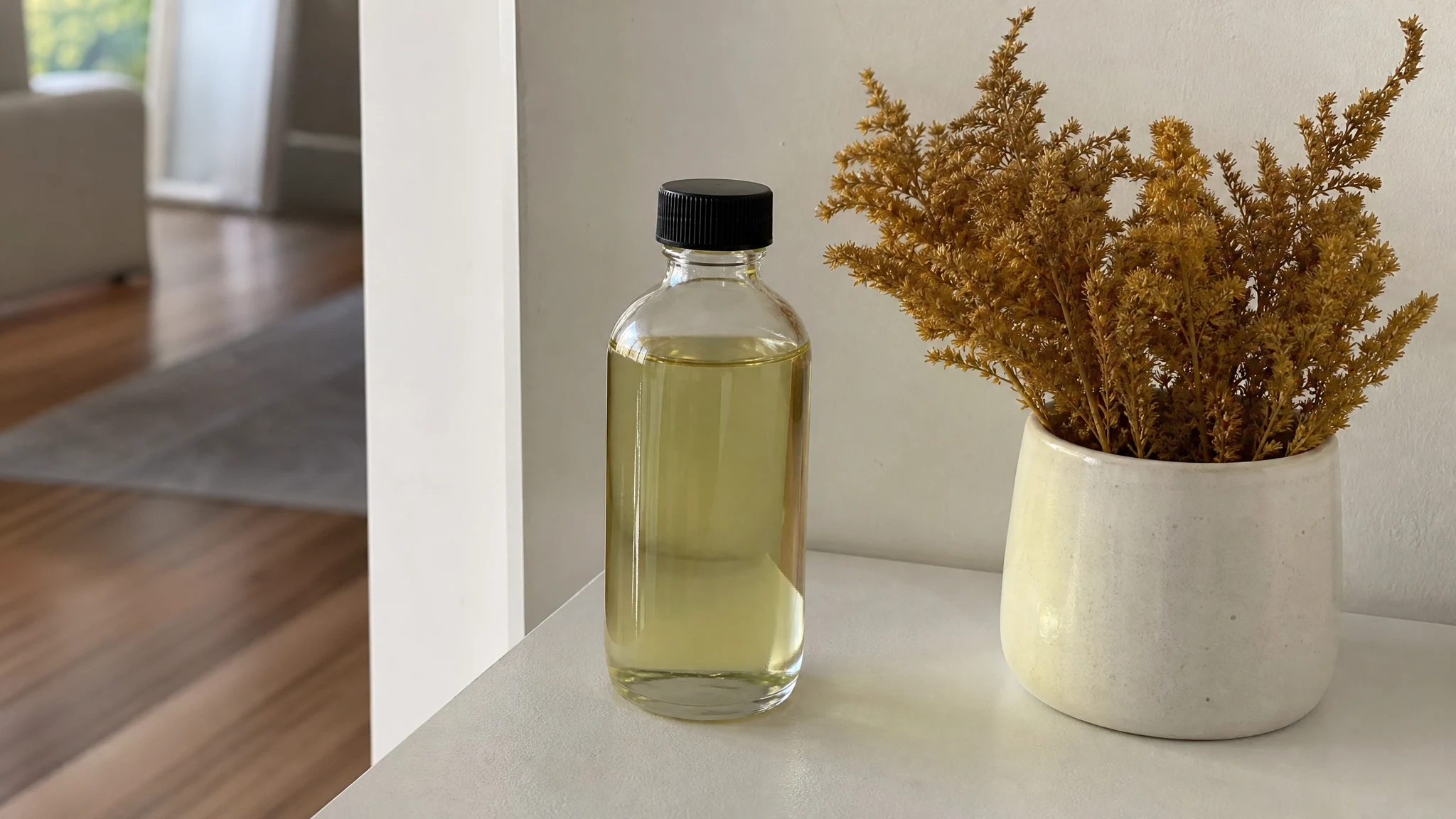
Goldenrod Oil Lot to Lot: How to Compare Two Bottles
Anyone who has loved a seasonal oil knows the moment: you reorder, open the new bottle and wonder whether it is the same thing. The first bottle teaches you what the oil is. The second tells you what the oil can do from one harvest to the next, and a little method makes that moment far more enjoyable.
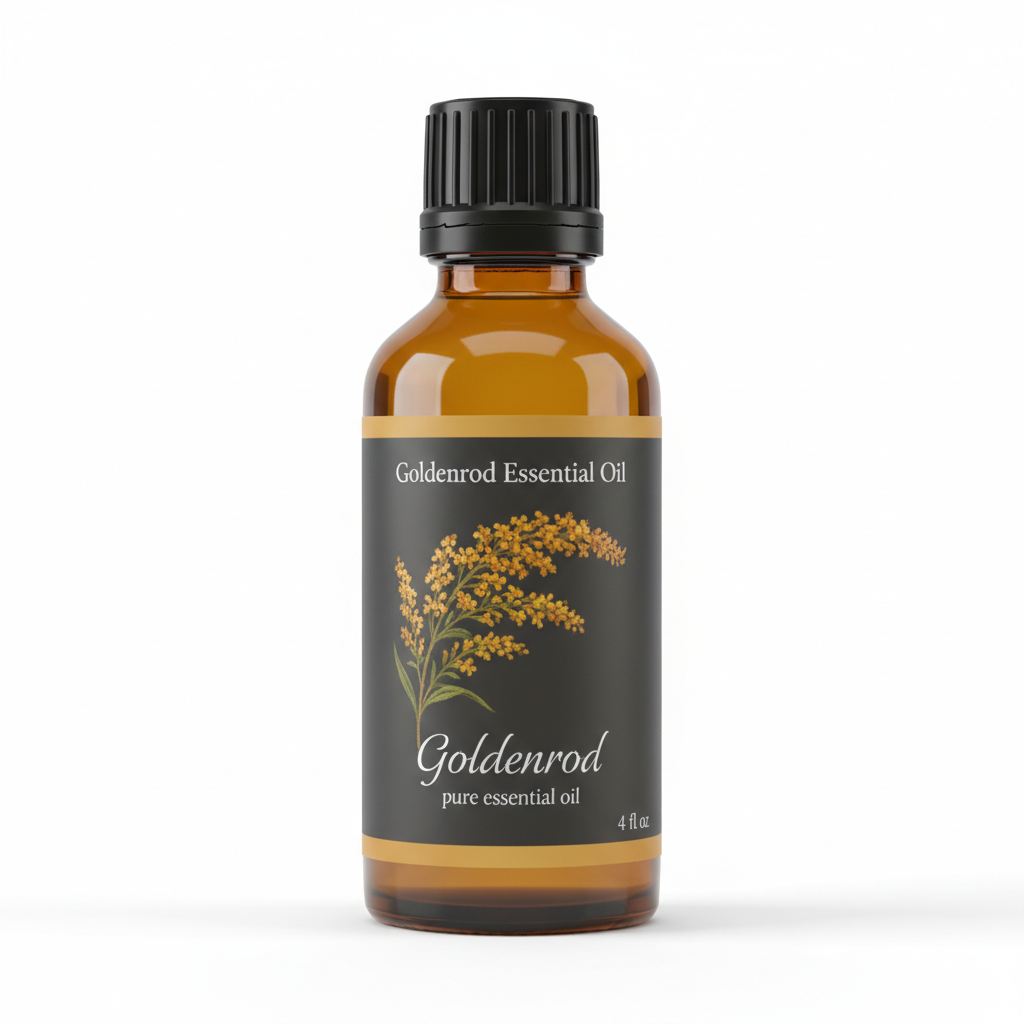
Goldenrod Essential Oil
Our own Goldenrod Essential Oil, in sizes from 0.5 oz to bulk.
From $17.99
Shop Now →Why two lots can differ and both be right
A plant oil is not a fixed formula. The most complete analysis of Solidago canadensis oil we have read looked at a single wild population, harvested at full bloom in one August, and found germacrene D at 34.9%, limonene at 12.5% and alpha-pinene at 11.6%. Its authors note that composition follows climate, plant stage and harvesting and distillation methods, and they cite other studies with germacrene D between roughly 20% and 39%.
So two well-made lots can differ in their top compounds without either being wrong. We have not seen a study that measures how much consecutive years from one source differ, which is why we would be wary of any seller who promises an exact match.
Keep a small record of lot one
Five minutes at the start makes every later comparison possible. Write down:
- The lot number, the distillation and bottling dates and the botanical name as printed. Our bottles carry a lot number and both dates.
- The plant part, as stated on your lot paperwork. If it is not stated, ask. The studies below show leaves, flowers and stems give quite different oils.
- The paperwork you were given. For the batch on our certificate (GLRQGUSCCAC002A), that is a relative density of 0.880, a refractive index of 1.487 and an optical rotation of -8.16 degrees. Its best-by date has passed, so it works best as an example of what such a sheet shows.
- Your own smell notes, made the same way each time.
Reading the second lot's numbers
If the next lot arrives with a certificate like ours, compare it with the same ranges. Those ranges are wide. The optical rotation window runs 20 degrees, so lots at -6 and -24 both fall within it. These are bulk physical properties that confirm a batch is in the expected range, not that it holds a given compound.
A constituent report is the only document that can show a real compositional difference, and even then a few points of difference in germacrene D sits inside what the literature shows for the species. A change in the lead compound is the point where a question to the seller makes sense. We publish no constituent table for our oil, so if you need a profile for a lot, write to us through the contact page before relying on one.
Smell them side by side, not from memory
Memory is the weakest instrument you have, so we suggest a simple routine:
- Use the same carrier, the same dilution and the same type of strip for both lots. For smelling alone, a lower dilution is gentler on the nose. For skin, we recommend 0.5% to 2% in a carrier with a patch test.
- Smell fresh, again after an hour and again the next day. Write words, not scores.
- Use the same room and avoid coffee, perfume or cooking beforehand.
- Smell the pair in both orders, since the first sample sets expectations for the second.
Using the words we use for ours (honeyed, grassy, floral, with a soft sweetness settling into a faintly balsamic, hay-like base) gives you a shared vocabulary. If you are making a blend, keep a little of lot one until you have remade the blend with lot two. The partners guide and roller blend recipes offer measurable starting points.
Make the comparison a small ritual
Choose a quiet afternoon, put the kettle on if you like, and lay out two paper strips labelled in pencil. There is something pleasant about slowing down for a ten-minute comparison, and it gets you noticing details you would miss in a hurry: whether one lot opens sweeter, whether the other sits drier and more grassy, whether the hay-like base shows up sooner.
Do not expect a dramatic gap. Most differences are subtle, and that is part of what makes a plant oil interesting. Take a quick photo of both labels as well, so the lot numbers travel with your notes.
If you have a friend who also likes scent, ask them to smell the strips without telling them which is which. A second nose is a wonderful check on your own expectations, and you may find you describe the same oil in surprisingly different words. Compare notes afterwards and keep the words you agree on.
Reading the differences kindly
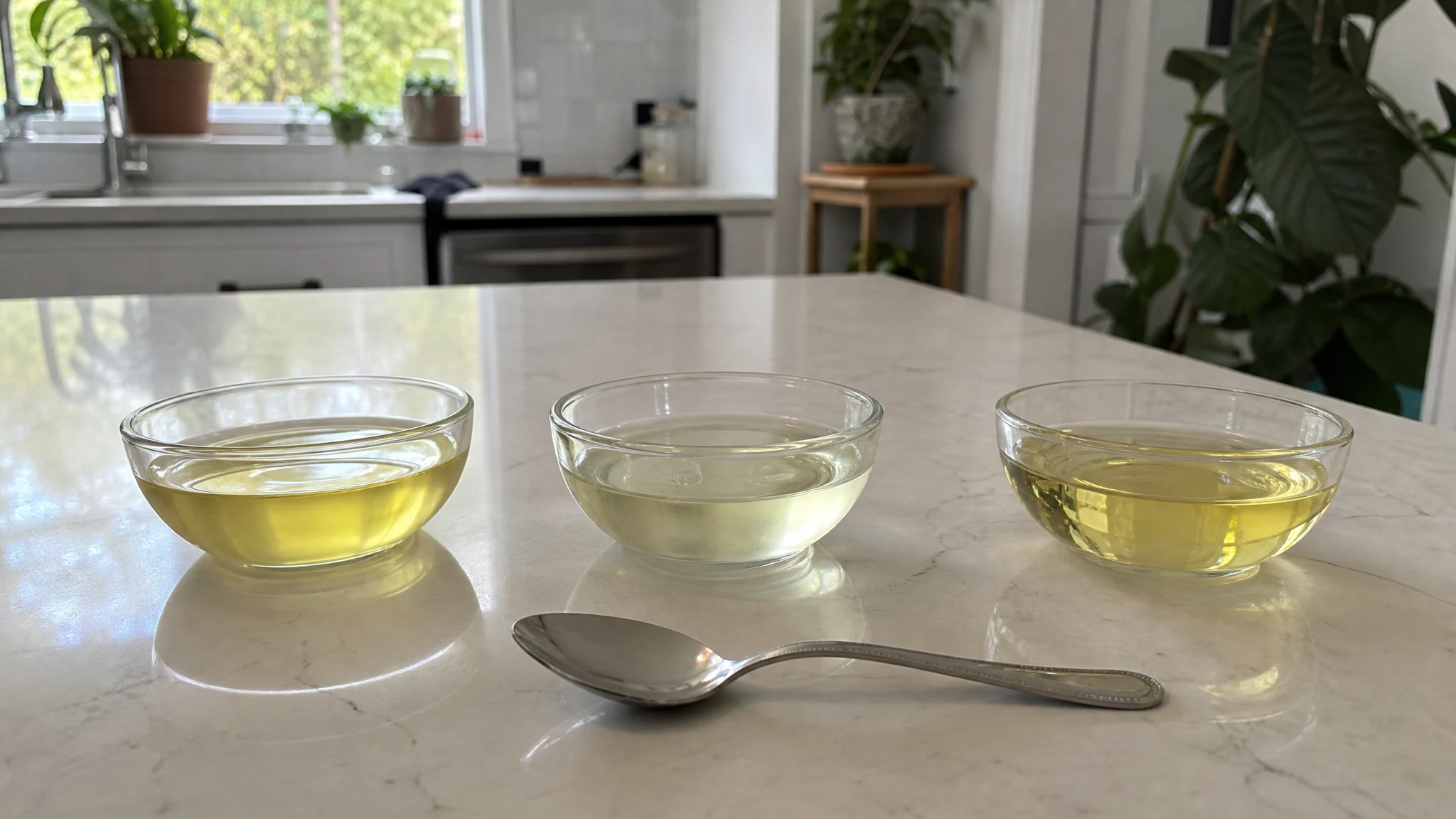
A different color is not a verdict, and neither is a quieter smell, since noses tire quickly and a lot with a different lead compound can simply read softer. Age is not an automatic mark against a bottle either. We say goldenrod typically keeps 2 to 3 years in a cool, dark place, and our storage guide shows how to keep a lot in good shape while you decide.
Seasonal oils sell out, so if a particular character matters to a product, buy enough of one lot to cover a production run. For larger quantities, our bulk page lists the bigger sizes, and the vetting guide covers how to judge a seller.
A lot is a record of one harvest. Your job as the buyer is simply to keep that record, and the second bottle becomes the interesting part rather than the worrying one.
Goldenrod Essential Oil
Goldenrod Essential Oil from our own shop, in sizes from 0.5 oz to bulk.
From $17.99
Shop Now →Sources & Further Reading
- Elshafie HS et al. Antimicrobial Activity and Chemical Composition of Essential Oil Extracted from Solidago canadensis L. Growing Wild in Slovakia. Molecules, 2019. pmc.ncbi.nlm.nih.gov/articles/PMC6479883