What Is Goldenrod Essential Oil? Know What You're Buying
Type "goldenrod oil" into a search box and you will get a surprisingly mixed bag: a distilled essential oil, a fragrance oil that may never have met a goldenrod, a jar of flowers steeped in olive oil, a tea, and even a workshop oil can. We sell exactly one of those, a goldenrod essential oil steam-distilled from Solidago canadensis and sold undiluted. Sorting out the rest makes every other question easier.
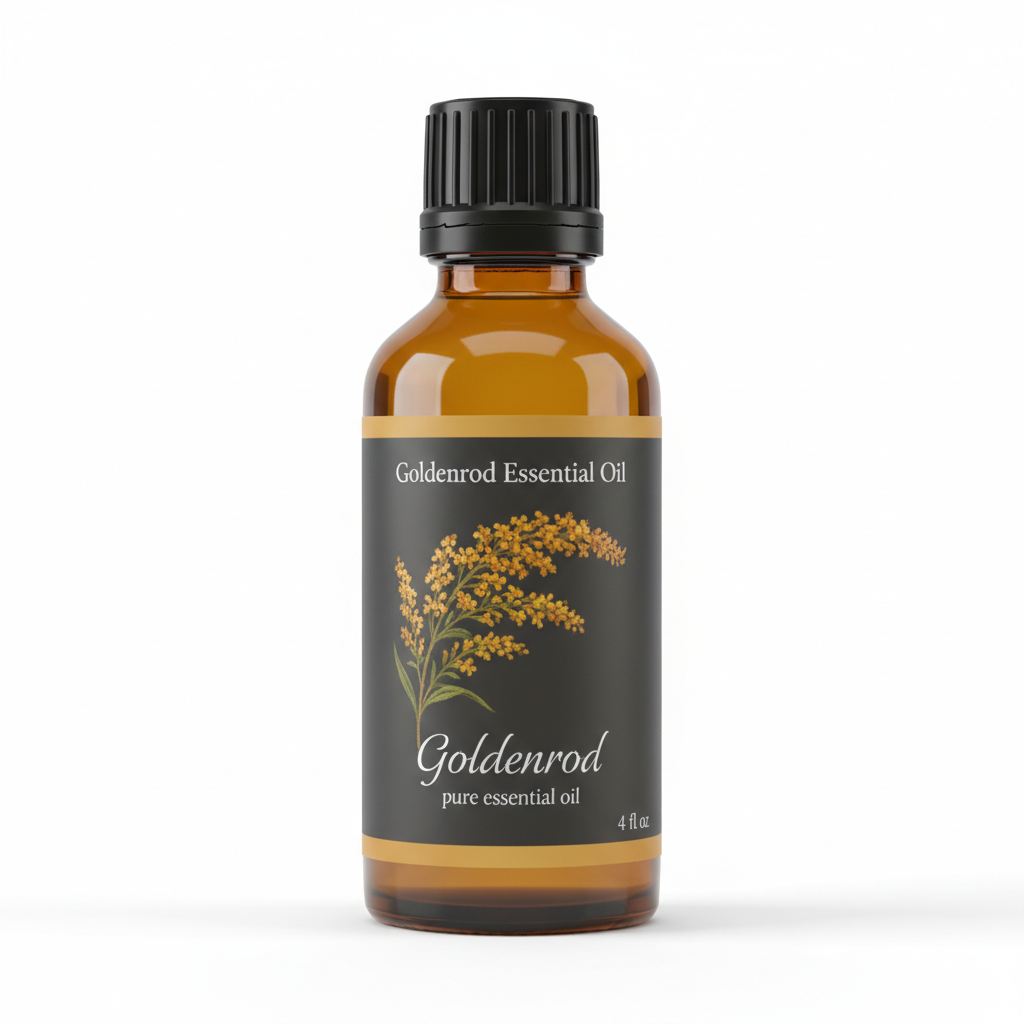
Goldenrod Essential Oil
Our own Goldenrod Essential Oil, in sizes from 0.5 oz to bulk.
From $17.99
Shop Now →Six things people mean by "goldenrod oil"
| What it is | What is in it | Read more |
|---|---|---|
| Essential oil | The aromatic part of the plant, carried over in steam. This is what we sell. | Below |
| Fragrance oil | A composed scent that may contain no goldenrod at all | Essential oil vs fragrance oil |
| Infused oil | Flowers steeped in a carrier oil, which is a gentler and different product | Infused oil vs essential oil |
| Tea or herb | Plant material, treated as an herb | Goldenrod tea |
| Pump oiler | A lubricating can sold under the Goldenrod brand name | The oil can mix-up |
| Goldenseal | An unrelated root herb that sounds similar | Nothing to read, just a different plant |
What we sell, and how it smells
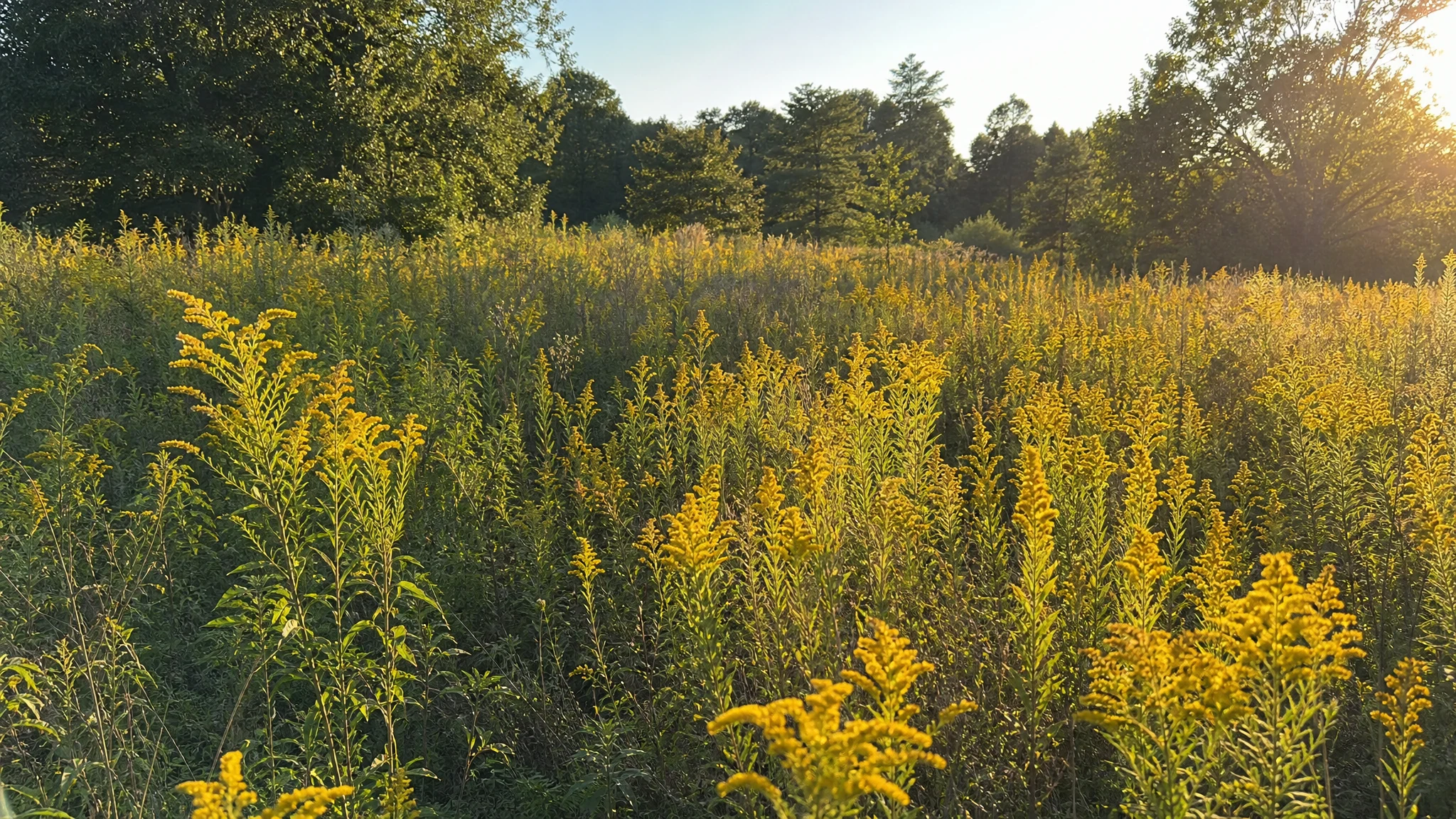
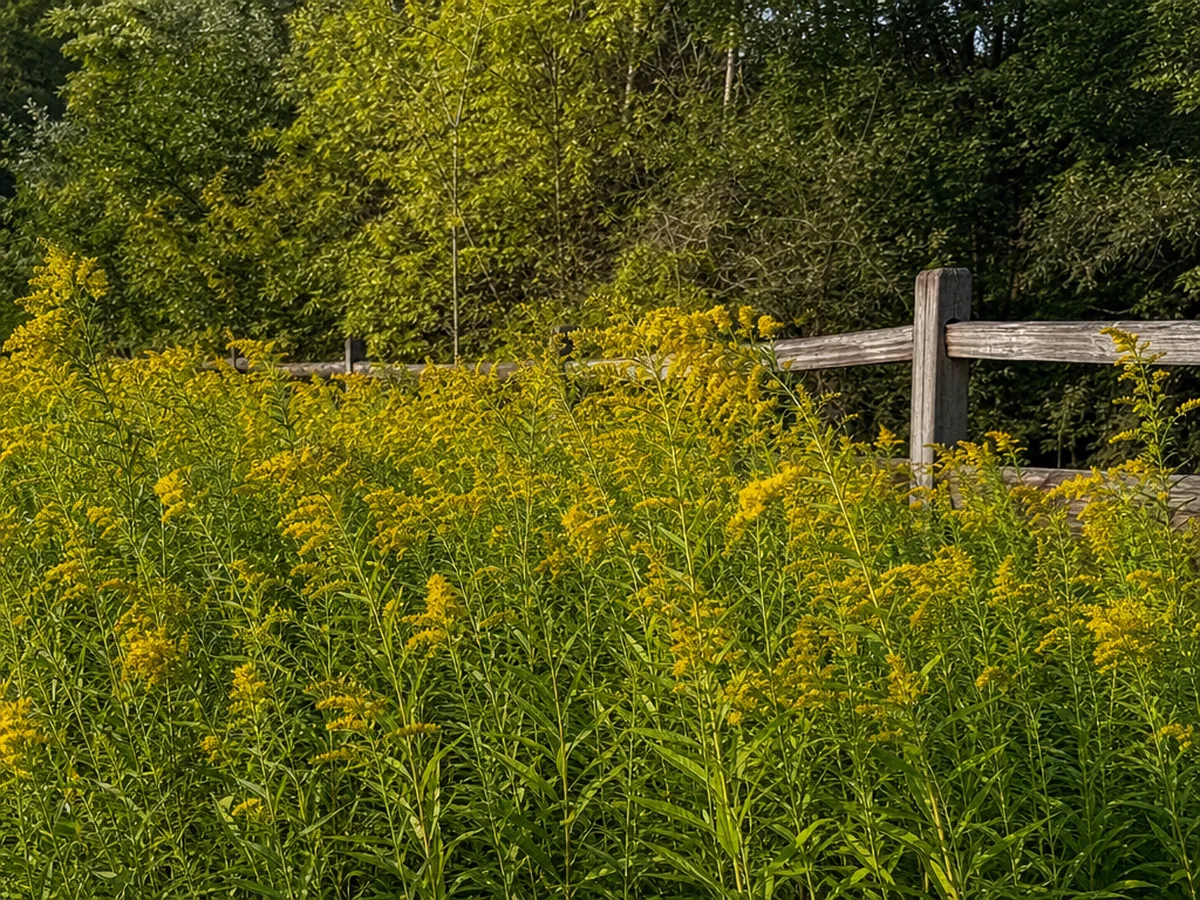
Our oil is a middle note, and we describe the aroma as honeyed, grassy and floral, with a soft sweetness settling into a faintly balsamic, hay-like base. It is the smell of a late-summer meadow, which is exactly when the plant flowers. That timing is also why availability comes in limited seasonal batches: yields from the late-summer bloom are modest. Our oil has no additives or fillers, and it is sold neat, so it always needs diluting before it goes near skin. We recommend 0.5% to 2% in a carrier oil with a patch test first. Our scent profile goes deeper on how to smell it.
A few words on first impressions
Goldenrod does not smell the way many people expect. The name suggests something bold and yellow, but the aroma is soft and meadow-like. Put a drop on a paper strip, wave it gently, and notice the grassy, sweet notes arriving first and the hay-like warmth settling in behind them. It is a quiet oil, and it rewards slow smelling.
That is part of why we enjoy it. It does not demand attention, and in a blend it fills out the middle of the scent rather than taking over.
"Essential oil" is a trade word, not a grade
People are often surprised that there is no official grade here. The US FDA says plainly on its fragrances in cosmetics page that there is no regulatory definition for "essential oils". So the label alone tells you the seller's intent. The things you can actually check are narrower and more useful: the botanical name, the plant part, the method, and whether the seller will show paperwork for the lot you are buying.
The Certificate of Analysis we publish is for one batch, GLRQGUSCCAC002A. It lists a relative density of 0.880, a refractive index of 1.487 and an optical rotation of -8.16 degrees, each within the stated standard, and it names the species as Solidago canadensis. Its best-by date has passed, so read it as an example of our paperwork. If you need a constituent profile for your own lot, ask us in writing through the contact page before you order.
Why no two goldenrod oils read alike
The most useful published analysis we know of is Elshafie et al., Molecules, 2019. The team dried wild plants collected in full bloom at one Slovak site and distilled them in a lab flask. Germacrene D was the largest component, with limonene and alpha-pinene next. The authors are clear that composition shifts with climate, growth stage, harvest handling and distillation method. That is a good way to think about any plant oil: the species sets the outline, and the season and the still fill in the details.
The species name is also less tidy than it looks. The University of Waterloo's goldenrod pages use S. canadensis in a narrow sense, with some northern plants now assigned to another species. If that interests you, our species guide follows the thread.
The hay fever mix-up
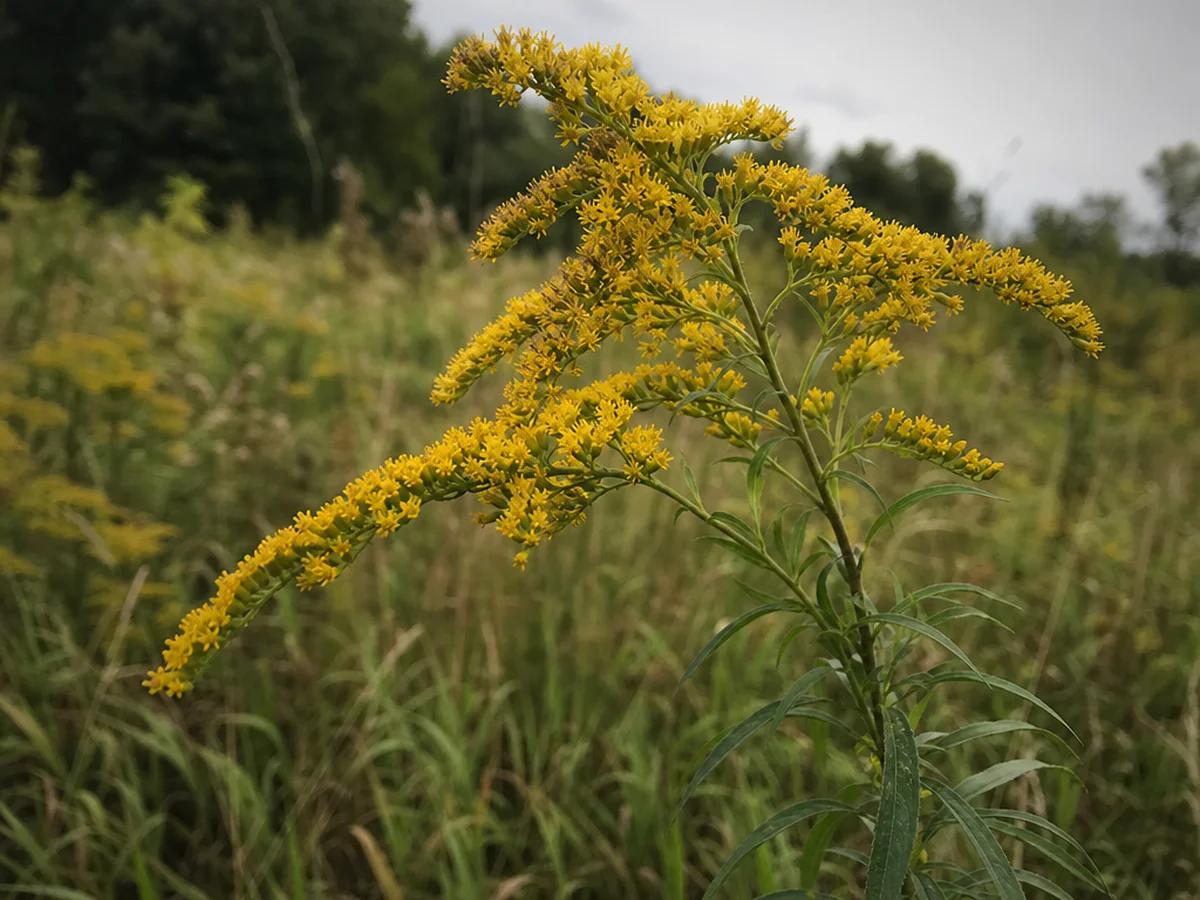
Goldenrod gets blamed for autumn sneezing. The Almanac explains that its pollen is large, heavy and sticky, built to ride on insects, while ragweed, blooming at the same time, throws light pollen into the wind. An allergy practice, Atlanta ENT, makes the same point and notes that goldenrod can cause skin reactions in some people. Airborne pollen and skin contact with a concentrated oil are separate questions.
Starting small
If you are new to the oil, begin with a small bottle and a clear plan. Decide whether you want it for the air or for a diluted skin oil, work out the numbers on paper first, and keep the first batch small. You can always make more, but you cannot take a strong blend back out of a bottle.
Using it sensibly
Goldenrod belongs to the daisy family (Asteraceae, also called Compositae), and DermNet notes that people sensitised to one member often react to others. If ragweed, daisies or chamomile bother you, go gently: dilute, patch test a small area, and talk to a dermatologist or allergist. Keep the bottle away from eyes, children and pets, and do not take it by mouth. It is an external cosmetic oil, and the poison-control service poison.org gives the same basic advice: dilute, keep it off damaged skin, lock it away. Our allergy article separates pollen from skin allergy in more detail.
If you are curious about the studies behind this plant, our benefits article walks through what has and has not been looked at. For a seasonal bottle with a story behind it, the late-summer meadow is hard to beat.
Goldenrod Essential Oil
Goldenrod Essential Oil from our own shop, in sizes from 0.5 oz to bulk.
From $17.99
Shop Now →