Goldenrod Oil vs Goldenrod Oiler: Which One Do You Mean?
Type "goldenrod oil" into a search box and you may get a flower oil, a workshop tool, or both on the same page. We sell the first. The second is a family of metal pump oilers sold under the Goldenrod brand, and the two have nothing in common except a word.
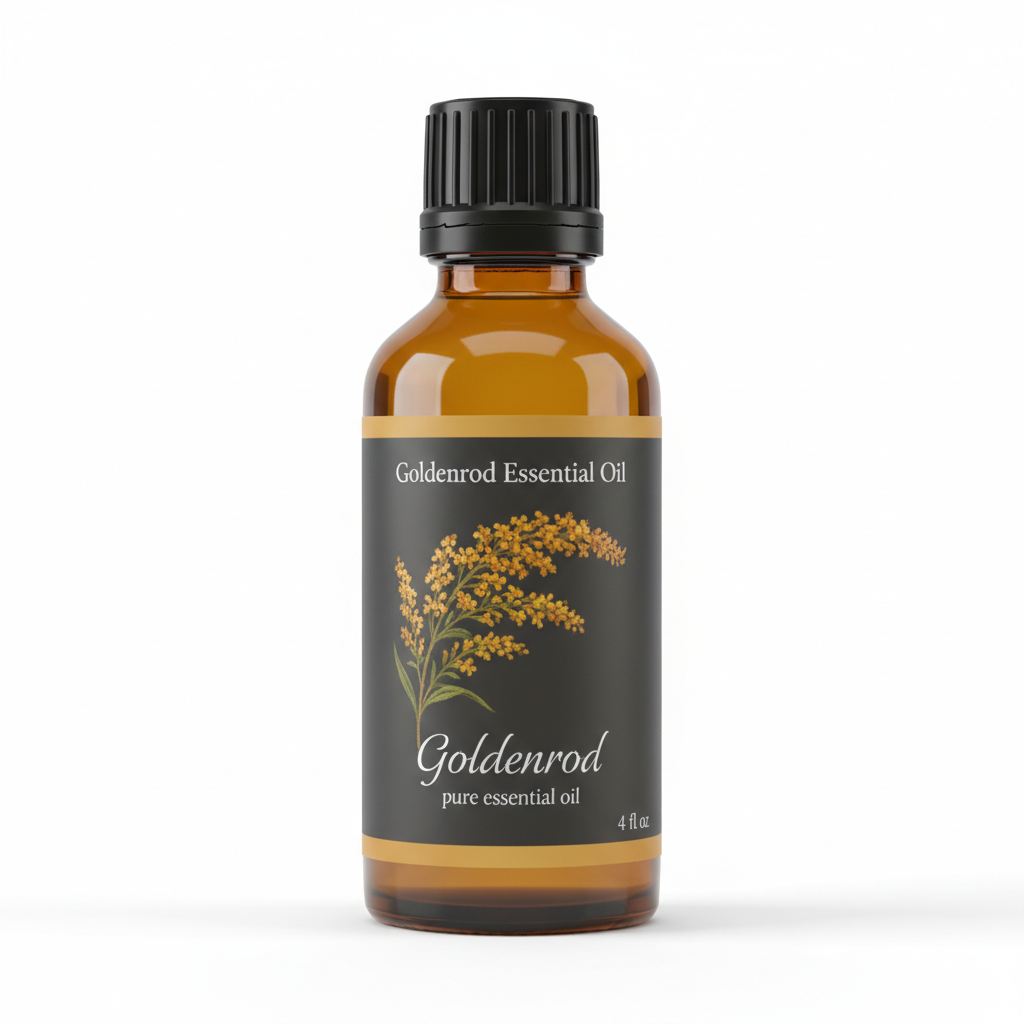
Goldenrod Essential Oil
Our own Goldenrod Essential Oil, in sizes from 0.5 oz to bulk.
From $17.99
Shop Now →Meet the oiler
Goldenrod is one of the brands of Dutton-Lainson Company, a manufacturer in Hastings, Nebraska, whose home page carries the tagline "A Dependable Company Since 1886." Its heavy duty pump oiler listings show six Goldenrod models: three quart-size (32 oz) with 11 or 15 inch spouts and three pint-size (16 oz) with 7.5 or 10 inch spouts. They are described as having a zinc die-cast high-pressure pump, a screw-cap filler opening and a powder-coated copper bronze finish, delivering "a drop or stream of oil."
It is a refillable can for putting lubricant on machinery. It is sold empty, and nothing in it comes from a plant.
About that golden yellow story
You may see it said that the oiler got its name from a golden-yellow finish. We cannot back that up. The maker's current pages show a copper bronze finish and do not explain the name, and we found no dated history of the line, so we leave the origin of the name alone. What we can say is simply that Goldenrod is a brand on the maker's list.
Side by side
| Our goldenrod essential oil | Goldenrod pump oiler | |
|---|---|---|
| What it is | Steam-distilled from Solidago canadensis | A refillable metal can with a pump and spout |
| What goes in the bottle | Plant oil, sold undiluted, diluted before skin use | Whatever lubricant the owner adds |
| Purpose | Aroma and fragrance work | Lubricating machinery |
| Where to find it | Our shop | The maker or its stockists |
If you came for the plant, our guide to what goldenrod oil is and is not covers species, one published analysis and the certificate for our batch. That analysis, by Elshafie and colleagues, reports a laboratory yield of 0.27% oil from dry plant, which is a good reminder that the plant oil is a small amount drawn from a lot of flowers. A can you refill has no such limit.
We get why the confusion happens. Search engines match words, not meanings, and "goldenrod" plus "oil" will turn up anything with both words in it. The upside is that sorting it out is quick, and it usually takes a single glance at the picture.
The one mix-up that matters
For a buyer, the name is not the concern; the contents are. The National Capital Poison Center lists household lubricating oil, motor oil, mineral oil, baby oil and lamp oil among slippery liquids that can be breathed into the lungs when someone swallows them, which can lead to pneumonia. It lists coughing, choking and fever as common signs, says symptoms can start within a couple of hours, and gives 1-800-222-1222. The same center says essential oils can also be poisonous if swallowed and belong locked up away from children and pets. Different chemistry, same rule: neither goes in the mouth, and neither belongs within a child's reach.
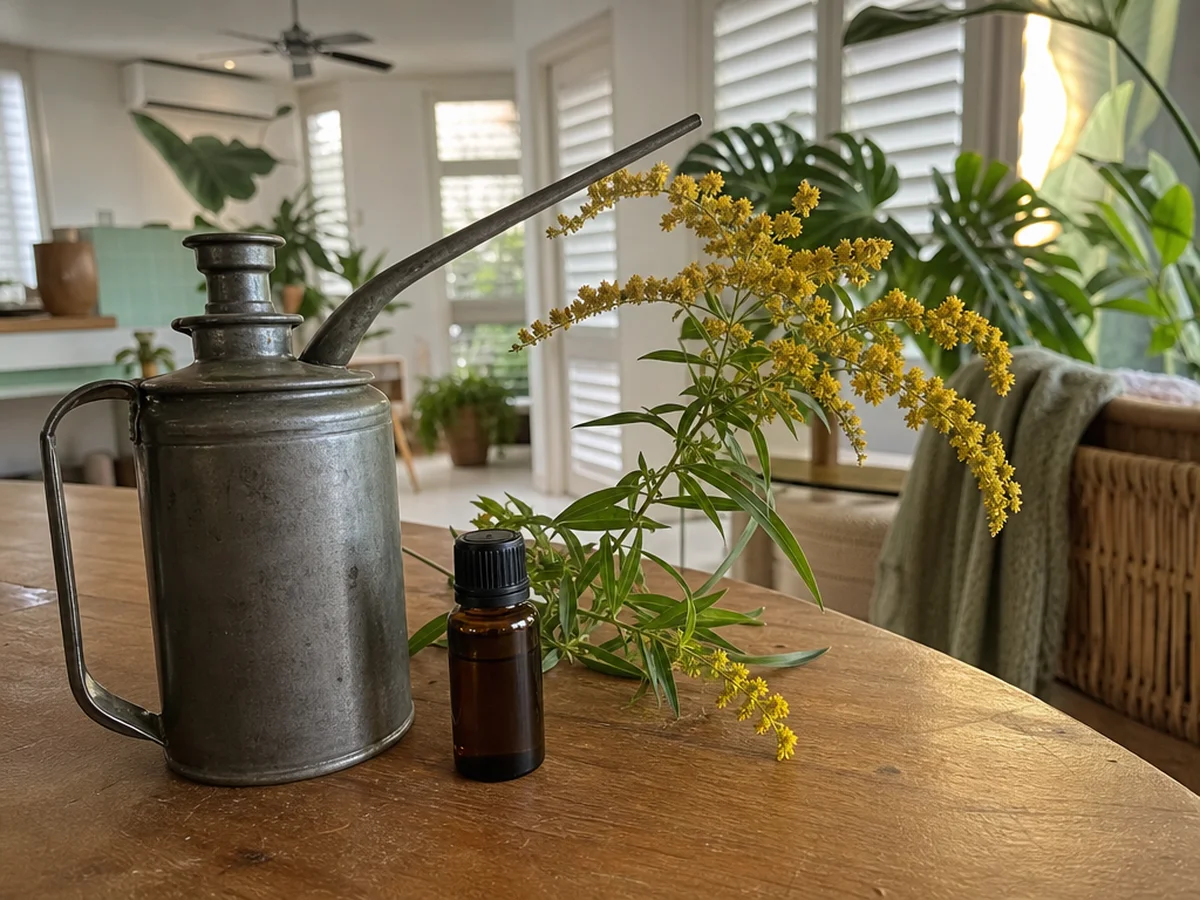
A few habits follow from that, and they are our own reasoning rather than a manufacturer's instructions:
- Store lubricant in the workshop and essential oil with your aroma supplies.
- Never decant one into the other's container, and label everything.
- Keep lubricant off skin and out of diffusers.
- Fill an oiler only with what its maker recommends.
Quick ways to tell which one a listing means
- Look for a Latin name. A plant oil will give Solidago and a species, while a tool will talk about spouts, pumps and capacity.
- Check the size. Quarts and pints point to the can, while fractions of an ounce or small amber bottles point to the plant oil.
- Read the first line of the description. If it mentions a scent, it is the flower. If it mentions a finish or a pump, it is not.
What the flower oil is like
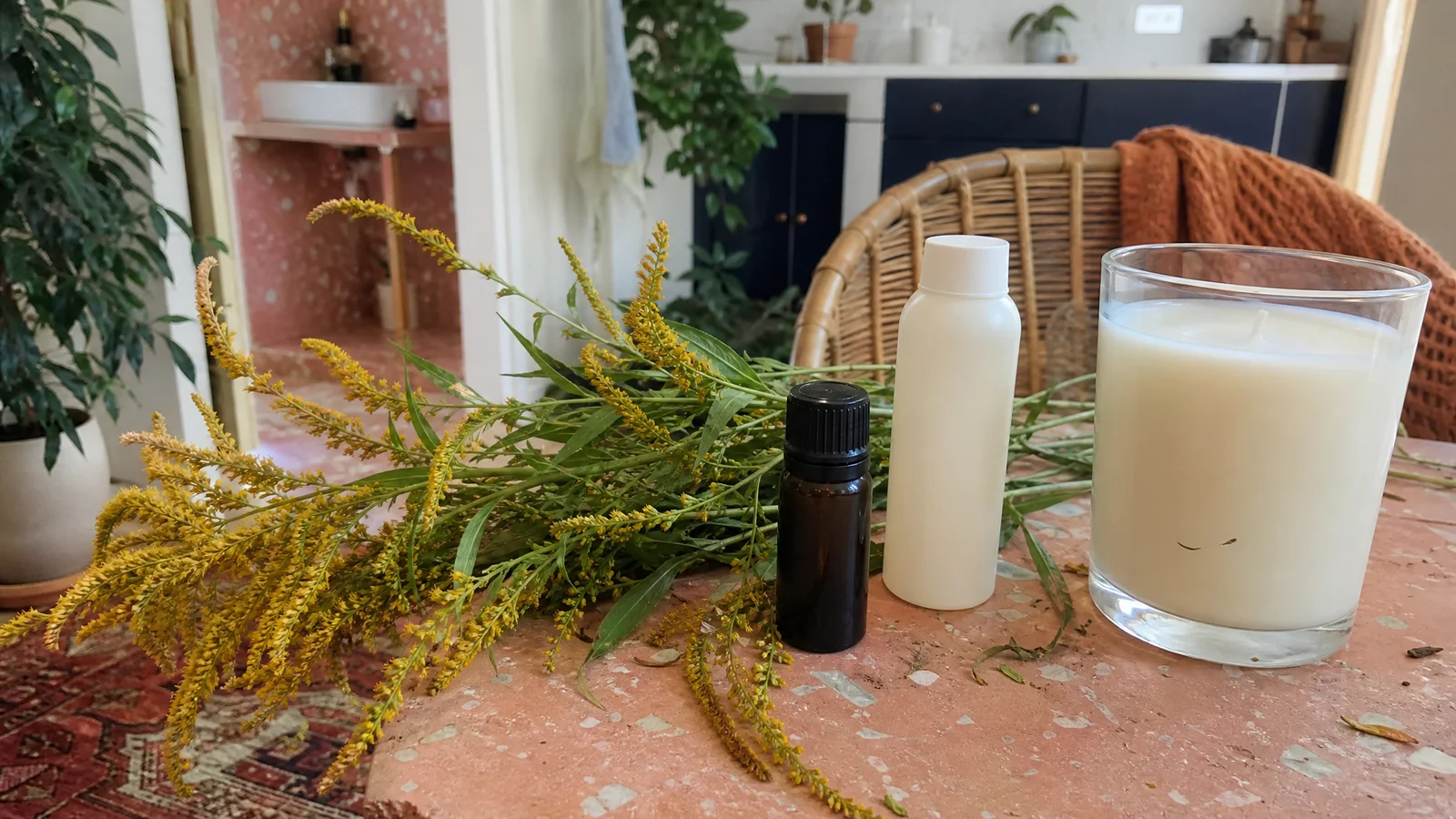
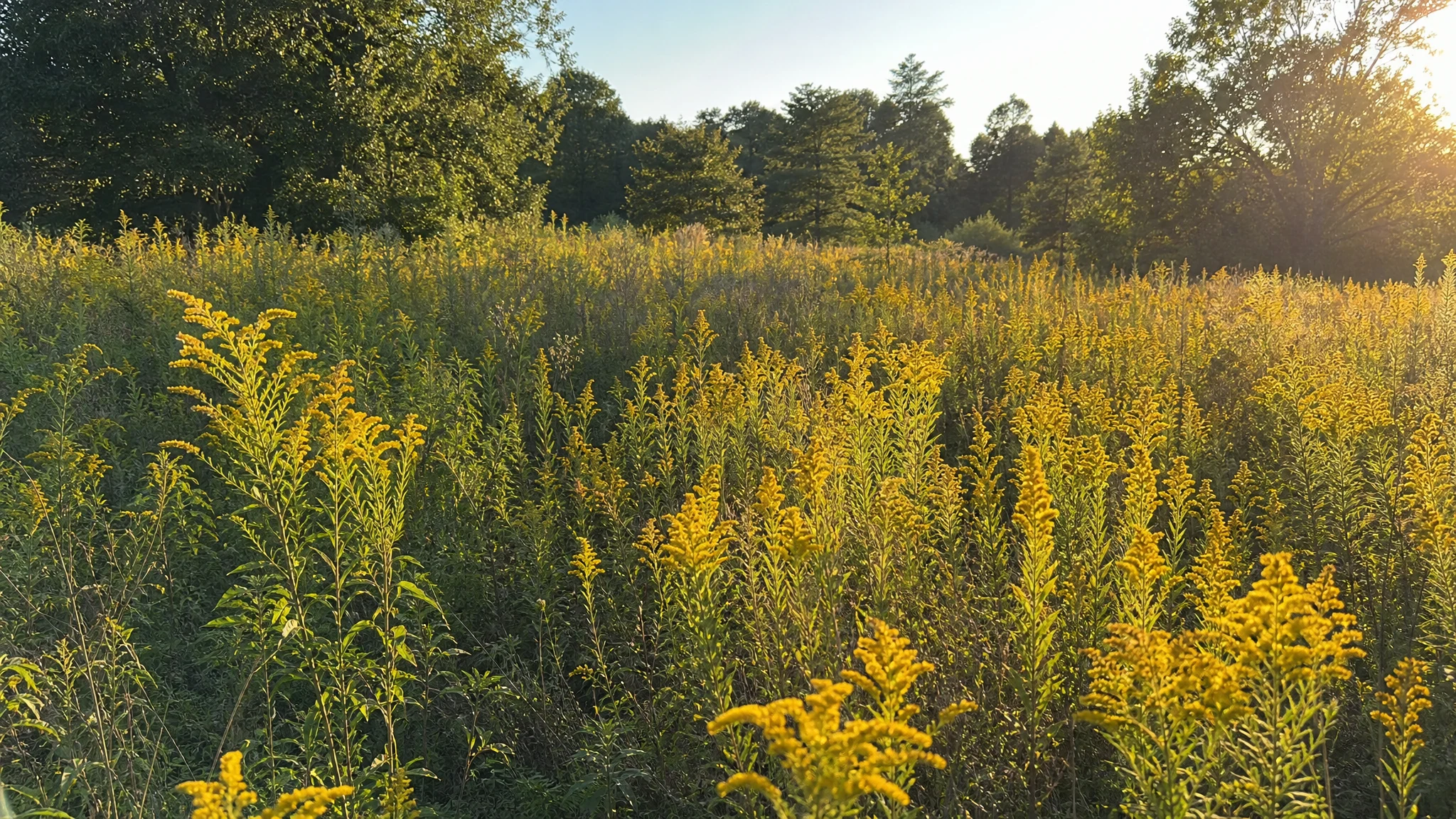
Since you have come this far, it seems fair to tell you what you would be getting. Our goldenrod oil is honeyed, grassy and floral, with a soft sweetness that settles into a faintly balsamic, hay-like base. Open a bottle and you will notice it smells like the plant at the edge of a field in September, and nothing at all like a workshop.
Other things called goldenrod
The word turns up elsewhere too. Our oil is unrelated to goldenseal, a root herb. Goldenrod the plant is also blamed for autumn hay fever, though the Almanac explains that its pollen is heavy, sticky and carried by insects, while wind-blown ragweed pollen is the main cause. A skin reaction to a concentrated oil is a separate matter, since goldenrod is in the daisy family; our allergy article separates the two.
If you meant the plant oil
Look for a Latin name first, because "goldenrod" alone names a whole genus; our species guide explains why. Ours is undiluted, and our skin guidance is 0.5% to 2% in a carrier oil after a patch test. The certificate we publish covers one batch, GLRQGUSCCAC002A, and lists density, refractive index and optical rotation. If you need a constituent profile for your lot, ask us in writing through our contact page before you order.
If the oiler is what you wanted, the maker's own site is the best place to start. If you came for the flower, you are in the right place.
Goldenrod Essential Oil
Goldenrod Essential Oil from our own shop, in sizes from 0.5 oz to bulk.
From $17.99
Shop Now →Sources & Further Reading
- Dutton-Lainson Company. Home page. dutton-lainson.com
- Dutton-Lainson Company. Heavy Duty Pump Oilers (Goldenrod models). dutton-lainson.com/products.php?cat=50
- Poison Control (National Capital Poison Center). Dangerous household hydrocarbons. poison.org/articles/dangerous-household-hydrocarbons
- Poison Control (National Capital Poison Center). Essential oils: Poisonous when misused. poison.org/articles/essential-oils
- Elshafie H.S. et al., 2019. Antimicrobial Activity and Chemical Composition of Essential Oil Extracted from Solidago canadensis L. Growing Wild in Slovakia. Molecules 24(7):1206. PMC6479883
- Almanac.com. Goldenrod: The Fall Flower That's Not Causing Your Allergies. almanac.com