Goldenrod Oil Myths: Six Claims Checked
Goldenrod gets blamed for a lot: autumn sneezes, kidney cleanses, germ fighting and a few phrases that sound official but are not. Regulators and allergy societies have said something specific about most of these, so here are six common claims, and what the documents actually say.
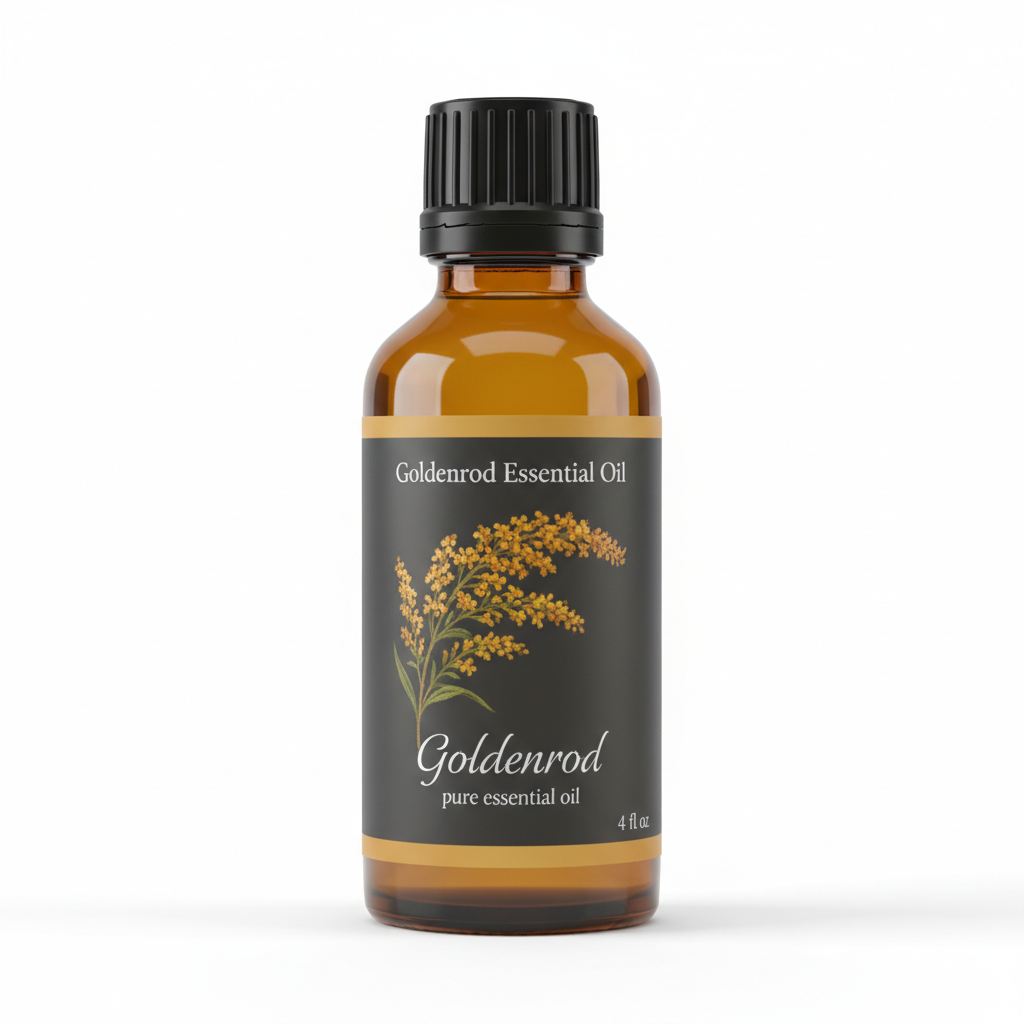
Goldenrod Essential Oil
Our own Goldenrod Essential Oil, in sizes from 0.5 oz to bulk.
From $17.99
Shop Now →Myth one: goldenrod causes hay fever
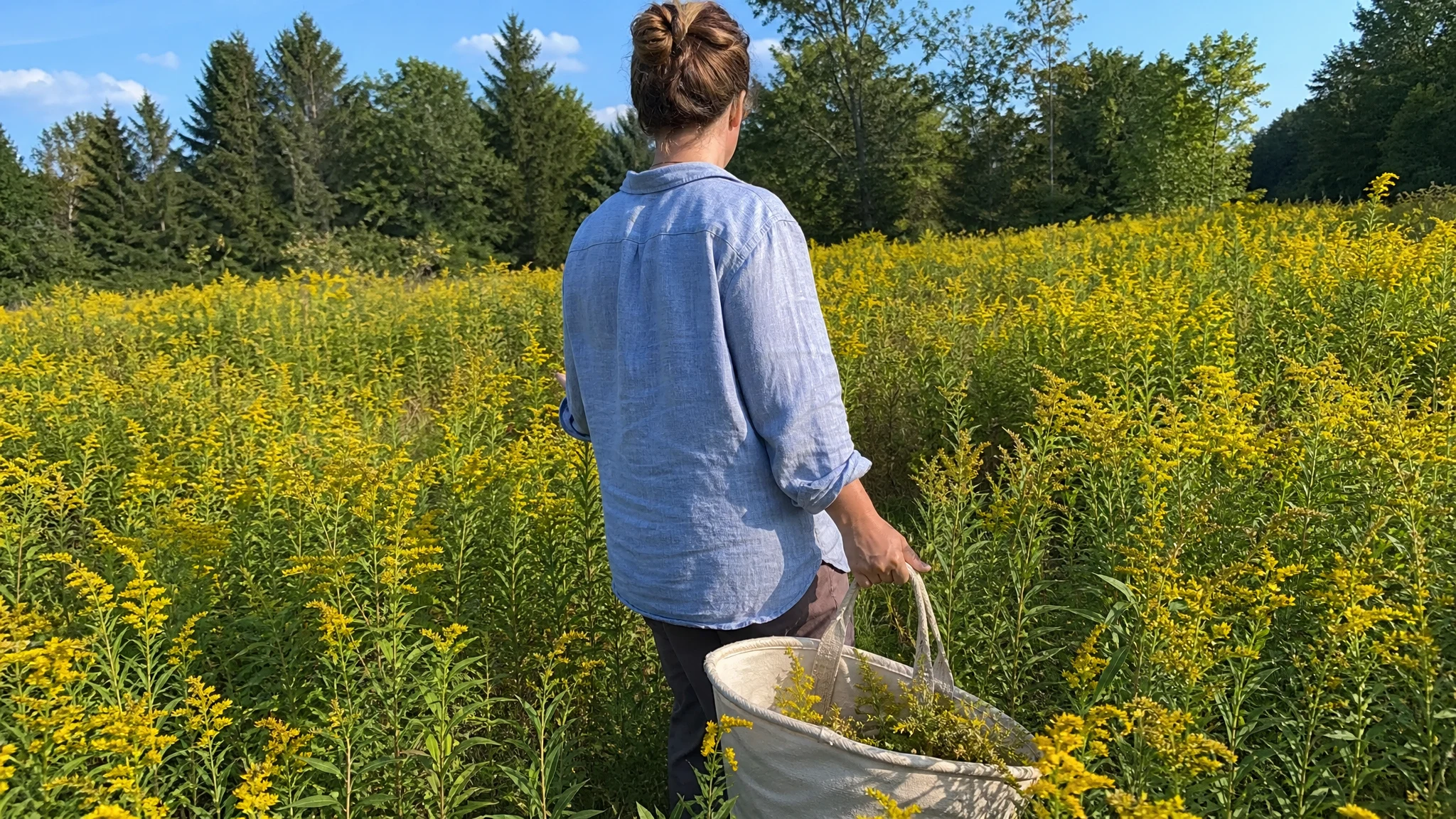
This one has a simple explanation. Goldenrod is tall, bright yellow and in flower in late summer, right when ragweed season peaks. The American Academy of Allergy, Asthma and Immunology notes that tall goldenrod is often blamed for most of the pollen, while tooth-leaved ragweed, living low in the grass, is a primary cause of symptoms. One ragweed plant can release up to a billion pollen grains. Goldenrod pollen is heavy and sticky and carried by insects, which is why it rarely drifts into noses. Both plants belong to the daisy family, so anyone who reacts to ragweed, daisies or chamomile should dilute any goldenrod oil and patch test a small area before wider use. Our allergy article separates pollen from skin reactions in more detail.
Myth two: the oil is an allergy remedy
This is about wording more than chemistry. FDA's aromatherapy page explains that how a product is regulated depends mainly on how it is intended to be used, judged from its labeling, website and advertising. Claims to relieve pain, ease colic, relax muscles or help sleep are drug claims in FDA's reading, even for soaps, lotions and massage oils, and a plant origin does not exempt a product. That is why we describe our goldenrod oil by its aroma and nothing else, and why you will not find allergy, breathing or mood statements on our pages.
Myth three: goldenrod is a kidney cleanse
This belongs to a different plant and a different material. The European Medicines Agency maintains a monograph on goldenrod herb, Solidago virgaurea, first published in 2008. Documents of that kind assess herbal medicinal products, so they are medicine questions and belong with a doctor or pharmacist. They are about the herb, not about distilled aroma oil. Nothing there turns a bottle of essential oil into a kidney product, and we make no such claim. If you want to see how the herb and the oil differ, read herb versus oil.
A note before the next one: we are not here to scold anyone for believing these. Most of them sound perfectly reasonable the first time you hear them, and a few come from a real kernel of something. Goldenrod is a plant people feel strongly about, because it blooms loudly in the one season when everybody is sneezing.
Myth four: lab studies show it fights germs
The best-known paper on our species' oil (Elshafie and colleagues, 2019) tested it against crop fungi and plant bacteria on agar. It was active against some and not others, from one Slovak population in one season. A 2020 review of the related European goldenrod, mostly about extracts, calls most of its antibacterial and antifungal findings modest. A plate result about crop pathogens is a long way from a statement about household germs or the human body, and the FTC's health claims guidance generally expects well-designed human studies before health benefit claims are made. Each study, in turn, is laid out in our research roundup.
Myth five: an oil "grade" tells you something
We found no regulator definition of grades such as "therapeutic" in the pages we read, and FDA says it has no definition of "natural" or "organic" for cosmetics either. So treat it as a marketing label, and judge an oil by what it can document: a Latin name, a plant part, a lot number and a certificate that matches the bottle. Ours is sold undiluted with no additives or fillers, and we will send what we have if you ask through our contact page.
Myth six: natural means safe
FDA's page gives a handy example: cumin oil is safe in food but can blister skin. Many plant materials are irritating or allergenic, and every cosmetic must meet the same safety standard whatever its source. That is the reason we recommend diluting goldenrod oil to 0.5% to 2% in a carrier and patch testing first. Our skin basics article shows the arithmetic.
What goldenrod oil is actually good at
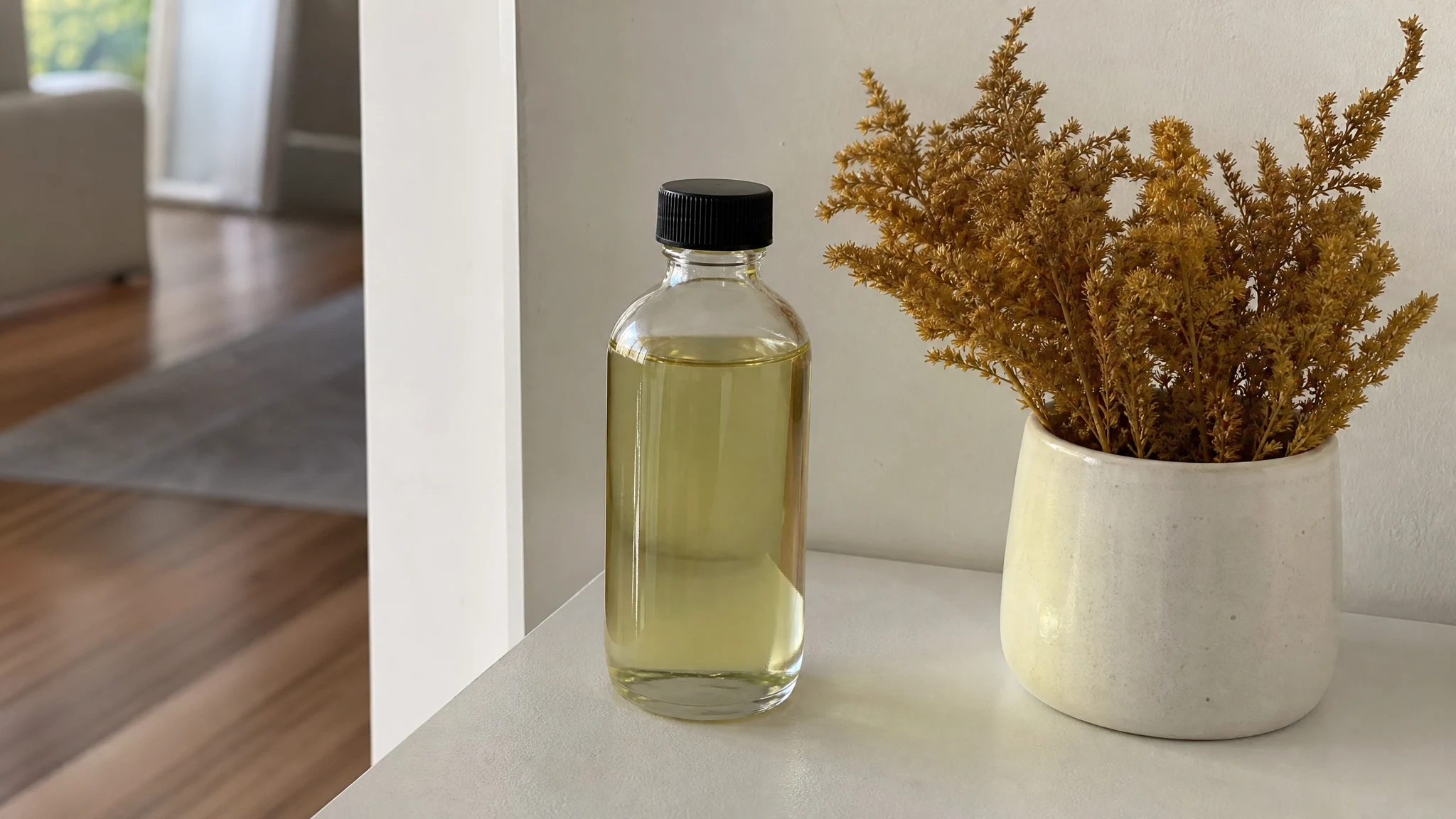
Strip away the claims and what is left is a lovely smell. Put a drop on a paper strip, wave it under your nose, and you will notice honey and cut grass first, then a floral lift, and after a few minutes a soft, dry, hay-like sweetness underneath. It is the scent of a field in late afternoon light, and that is exactly why we love it. You do not need a myth to make that worth a bottle.
Three questions for any claim you meet
Here is the little habit we would hand to anyone browsing essential oils, ours or anybody else's.
- Which plant, and which part? "Goldenrod" names a whole genus, and the herb, a tea and a distilled oil are three different things.
- Is the claim about a smell, or is it a promise about your body? A smell is something anyone can judge for themselves. A promise about your body belongs in front of a professional.
- Can the seller show you a Latin name, a lot number and a certificate that matches the bottle?
It takes about a minute, and it will save you from most of the nonsense online.
If a claim touches your health, a physician or pharmacist is the right person to ask. We sell goldenrod oil for its honeyed, grassy aroma, and that is all we say about it.
Goldenrod Essential Oil
Goldenrod Essential Oil from our own shop, in sizes from 0.5 oz to bulk.
From $17.99
Shop Now →Sources & Further Reading
- American Academy of Allergy, Asthma and Immunology. Ragweed Allergy: Plants Packed with Pollen. aaaai.org ragweed allergy
- U.S. Food and Drug Administration. Aromatherapy. fda.gov/cosmetics/cosmetic-products/aromatherapy
- Almanac.com. Goldenrod: The Fall Flower That's Not Causing Your Allergies. almanac.com
- European Medicines Agency. Solidaginis virgaureae herba (herbal medicine page). ema.europa.eu/en/medicines/herbal/solidaginis-virgaureae-herba
- Elshafie H.S. et al., 2019. Antimicrobial Activity and Chemical Composition of Essential Oil Extracted from Solidago canadensis L. Growing Wild in Slovakia. Molecules 24(7):1206. PMC6479883
- Fursenco C. et al., 2020. Solidago virgaurea L.: A Review of Its Ethnomedicinal Uses, Phytochemistry, and Pharmacological Activities. Biomolecules 10(12):1619. PMC7761148
- FTC. Health Products Compliance Guidance. ftc.gov health products compliance guidance