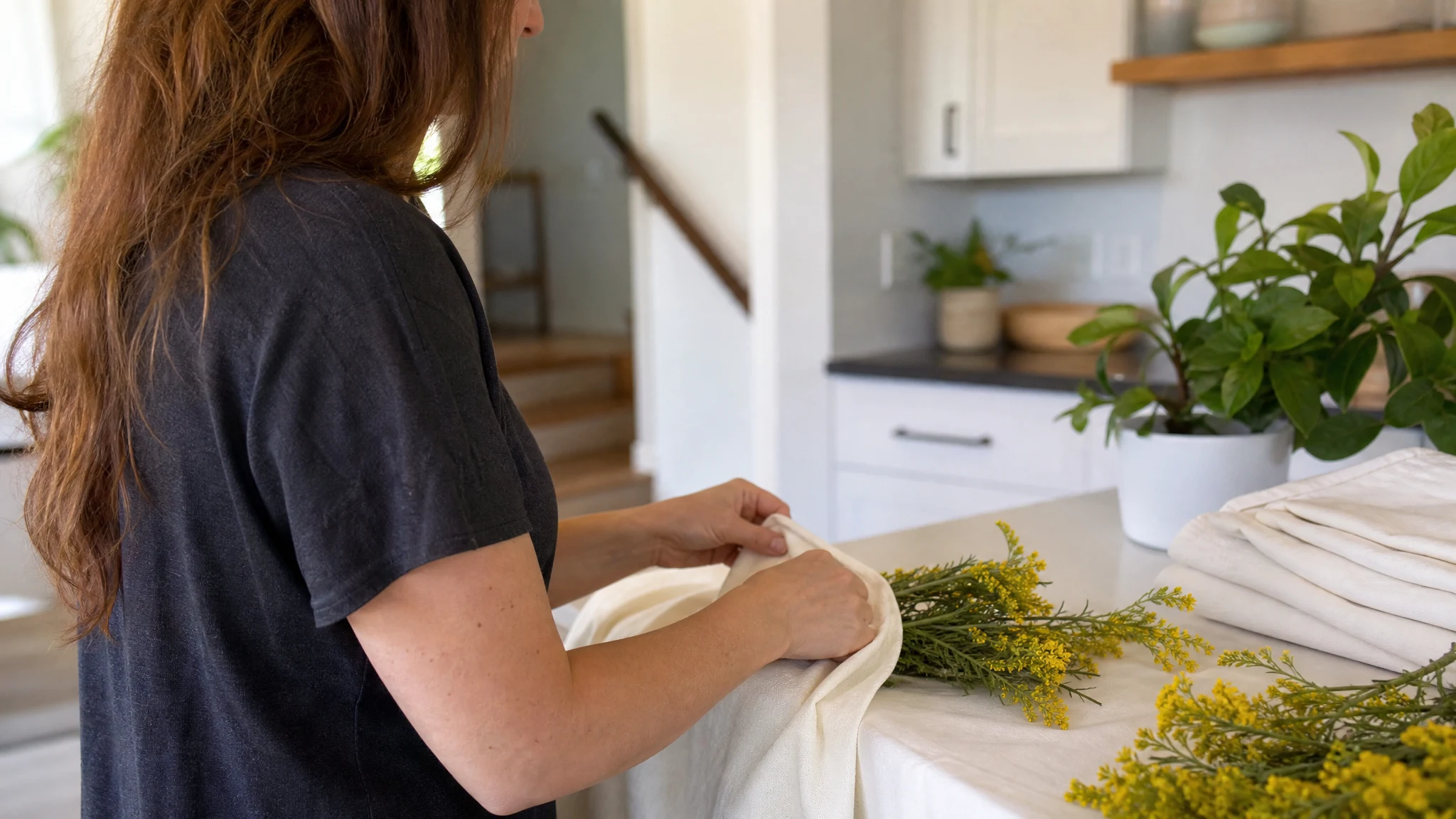
How to Make a Goldenrod Salve: Weights and Method
A salve is just oil set with wax, which makes it forgiving and a little humbling: it is only as good as the oil you put in. For goldenrod that means starting with the infused oil and being honest about what it brings, which is a gentle, meadowy base. If you want a scent people can actually notice, a small amount of goldenrod essential oil is what carries it. Here is a formulation, by weight, worked out from published guidance.
Goldenrod Essential Oil
Our own Goldenrod Essential Oil, in sizes from 0.5 oz to bulk.
From $17.99
Shop Now →Start with the infused oil
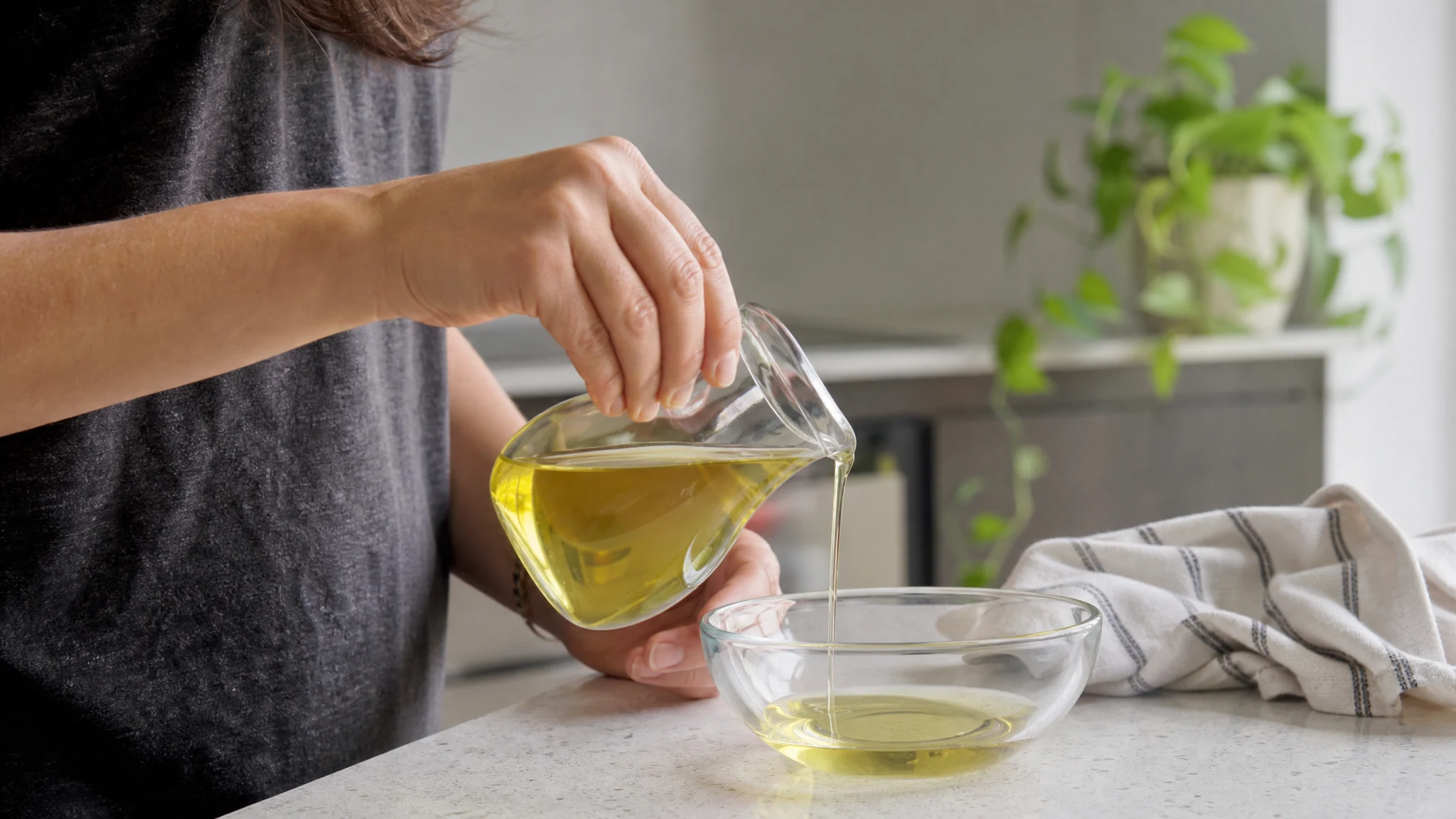
The University of Maine Cooperative Extension bulletin Safe Homemade Flavored and Infused Oils says that fresh herbs most likely carry Clostridium botulinum spores along with moisture, and that dried herbs are the safest way to make infused oils. It is food guidance, but moisture in a wax-and-oil product is worth avoiding for any purpose. So the rule here is simple: use an oil made from fully dried plant. Our infused-oil method article covers that, and our comparison explains why an infused oil and an essential oil are different products.
Gather everything first
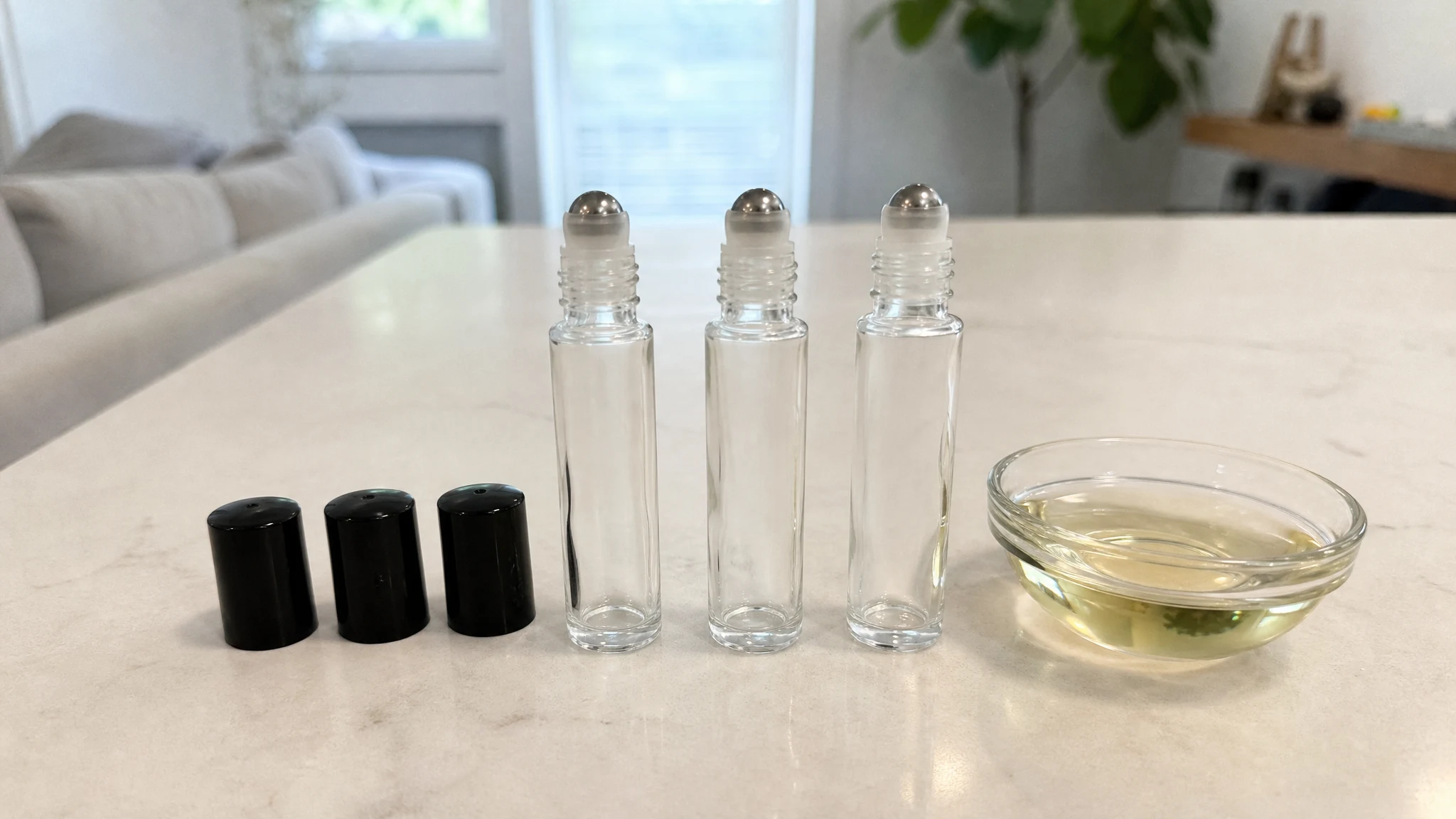
Salve making moves quickly once the wax melts, so it pays to have every tool ready. Lay out your scale, a heatproof bowl, a spoon, clean dry tins and a label for each one. Have a chilled spoon waiting in the freezer for the firmness test. A calm, organized start is the difference between a satisfying batch and a rushed one.
The formula
A widely used supplier recipe from Mountain Rose Herbs uses 1 oz of beeswax to 4 oz of infused oil, more oil for softer and more wax for firmer. We work by weight because a scale is more accurate than a measuring cup. Treat the ratio as a starting point, not a standard.
| Ingredient | For 100 g | For a 30 g tin |
|---|---|---|
| Infused oil (dried plant) | 80 g | 24 g |
| Beeswax | 20 g | 6 g |
| Goldenrod essential oil (optional) | 0.5 g, about 11 drops | 0.15 g, about 3 drops |
The optional essential oil comes to 0.5% of the total, a quarter of the top of our 0.5% to 2% guidance. The Tisserand Institute gives 0.2% to 1% for reaction-prone skin and 1% to 3% for body products, with no goldenrod-specific figure, so 0.5% sits comfortably inside both. Drop counts use the 0.880 relative density on the Certificate of Analysis for one batch and the rough convention of 20 drops to the milliliter. At 1%, double the figures.
Method
- Dry every tool, tin and jar. Water is the one thing a wax-and-oil product has no defense against.
- Melt the beeswax with the infused oil in a heatproof bowl over barely simmering water, stirring until clear.
- Test the firmness. Chill a metal spoon in the freezer, drip a little salve on it, give it a minute or two, and press with a finger. Add oil to soften or wax to firm, then retest.
- Take the bowl off the heat before stirring in the essential oil. Essential oils are volatile, so adding them to hot wax would drive off part of the scent.
- Pour at once into dry tins, leave uncovered until set, then cap.
What you will notice
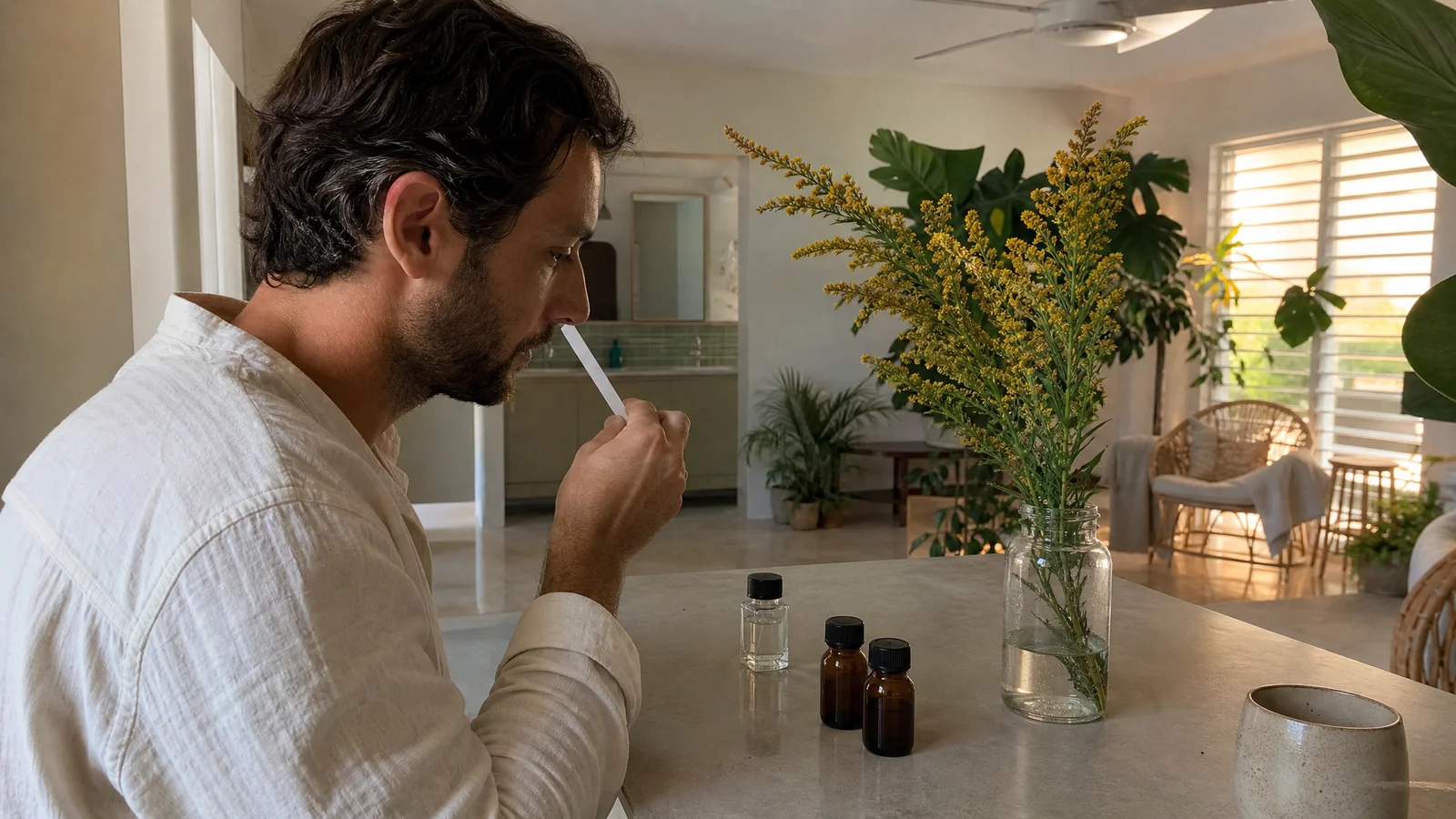
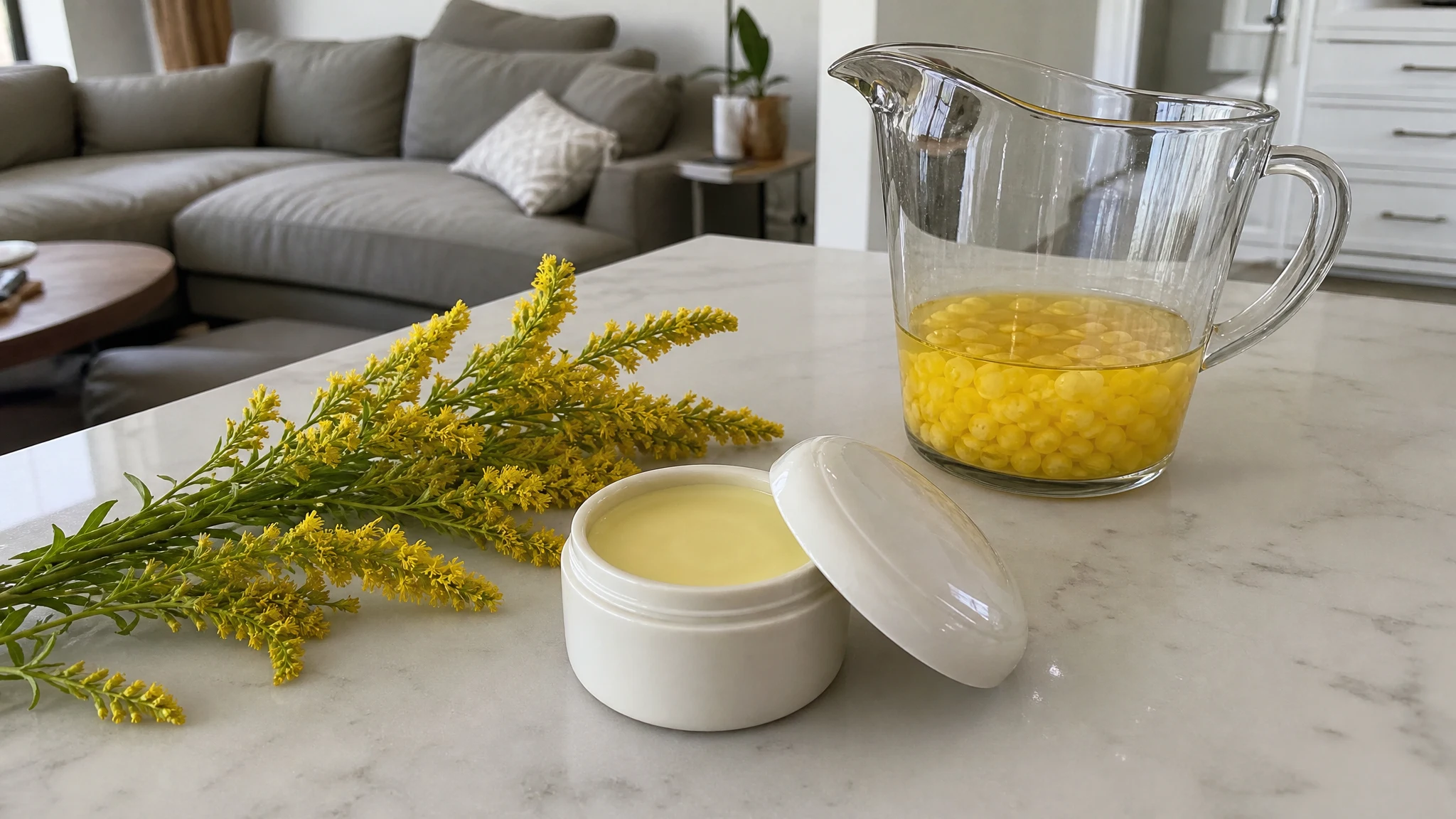
A finished salve should look glossy and even, with no grains and no beaded liquid. Press a fingertip into it and it should soften and glide rather than crumble. The scent is where goldenrod shows up: you will notice a light honeyed, grassy aroma that becomes quieter as the salve sits on the shelf, with a soft, hay-like warmth underneath. If the smell seems too faint, resist adding more oil to the same tin; make the next batch with a slightly higher amount within the range, and keep notes.
Keep the first batch plain
Skip water, aloe, hydrosol, honey and fresh plant material. Each brings moisture, and once water is present a product needs a proper preservative system. Add a second essential oil only after the first batch has passed a patch test, and keep the total of all essential oils under one ceiling. Label each tin with the date, the ingredients and a note that it contains a daisy-family plant.
How long it keeps
The sources range widely. The Maine bulletin says not to keep homemade infused oil beyond three months and to label the date. Mountain Rose puts a finished salve at 1 to 3 years in a cool place. Practical Self Reliance says oil made with dried herbs keeps up to a year. None of these tested goldenrod. Our suggestion is to follow the strictest: date the tin, use it within three months, and discard it if it smells off, changes color, or shows mold or a cloudy, bubbly texture. The carrier usually goes rancid before anything else, which our carrier-oil article explores.
Who should skip it
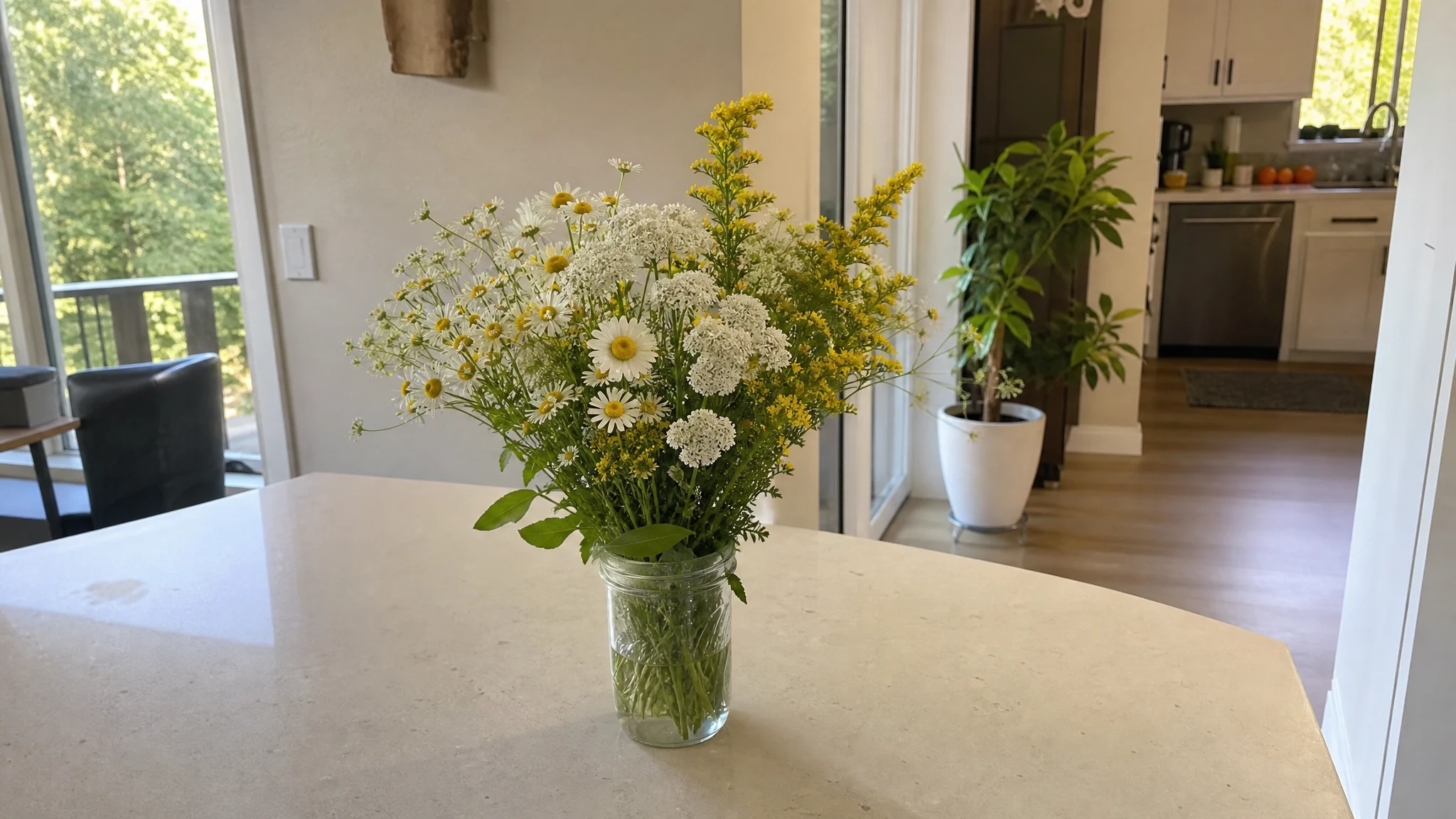
Goldenrod is a daisy-family plant, and DermNet places the main allergens, sesquiterpene lactones, in the resin of leaf, stem and flower. An oil infused with the plant could reasonably carry some, so if ragweed, daisies or chamomile bother you, check with a dermatologist or allergist. Patch test the finished salve on the inner forearm and wait a day. Eczema, open skin and any skin condition belong with a dermatologist, and questions about children, pregnancy or pets belong with a pediatrician, physician or veterinarian. Keep tins out of reach of children and pets.
We sell the goldenrod essential oil only. Beeswax, carrier oil and dried goldenrod come from craft or herb suppliers, and the finished salve is a scented balm, nothing more. A tin that smells faintly of hay and flowers is the whole point.
Goldenrod Essential Oil
Goldenrod Essential Oil from our own shop, in sizes from 0.5 oz to bulk.
From $17.99
Shop Now →