Goldenrod and Frankincense Diffuser Blend Ratios
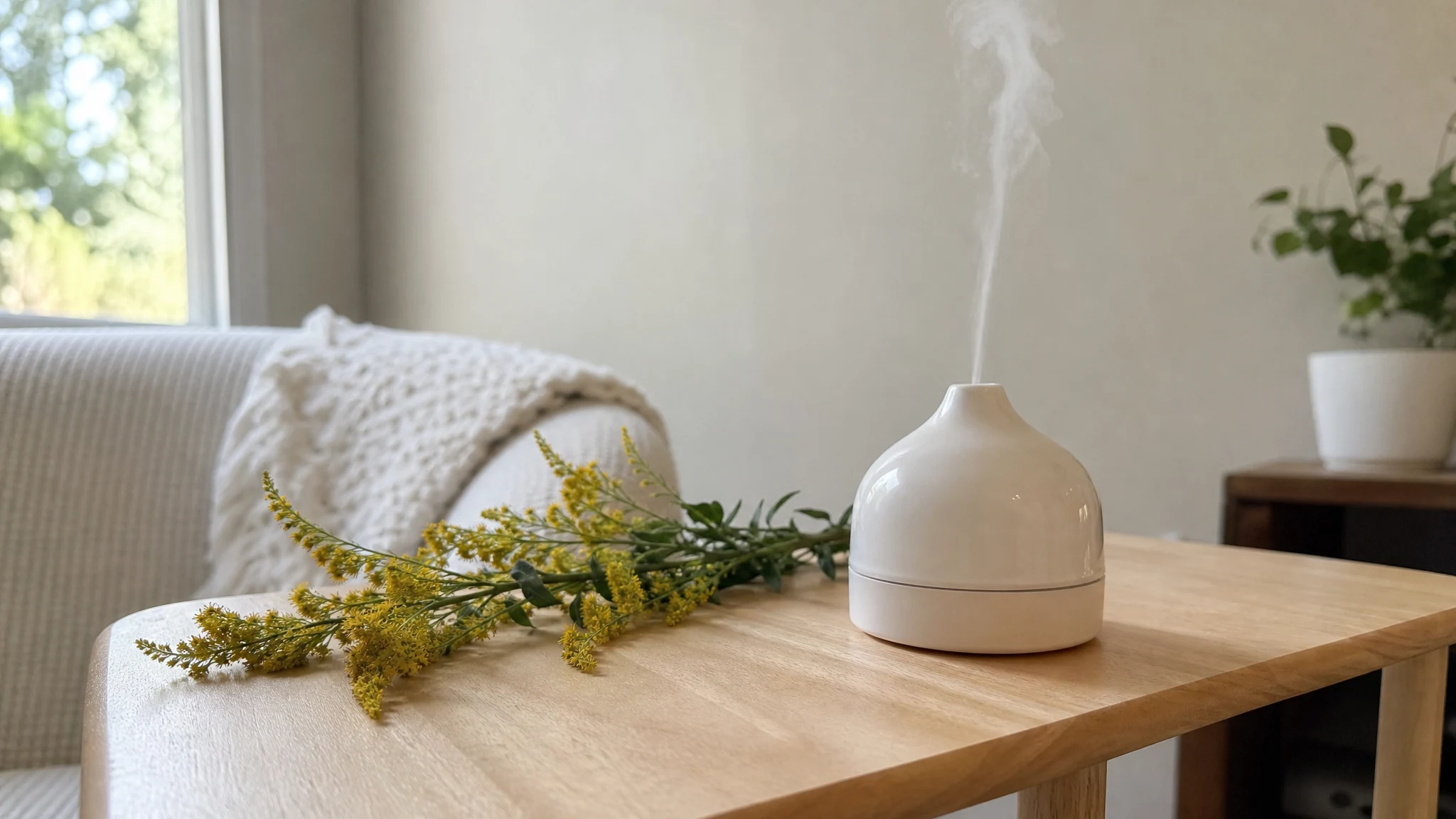
Picture a cool evening in early autumn: a window open a crack, a diffuser going, and a scent that is half meadow and half old church. Goldenrod's honeyed, hay-like sweetness and the resinous depth of frankincense are a natural pairing on paper, and here is how we would set it up.
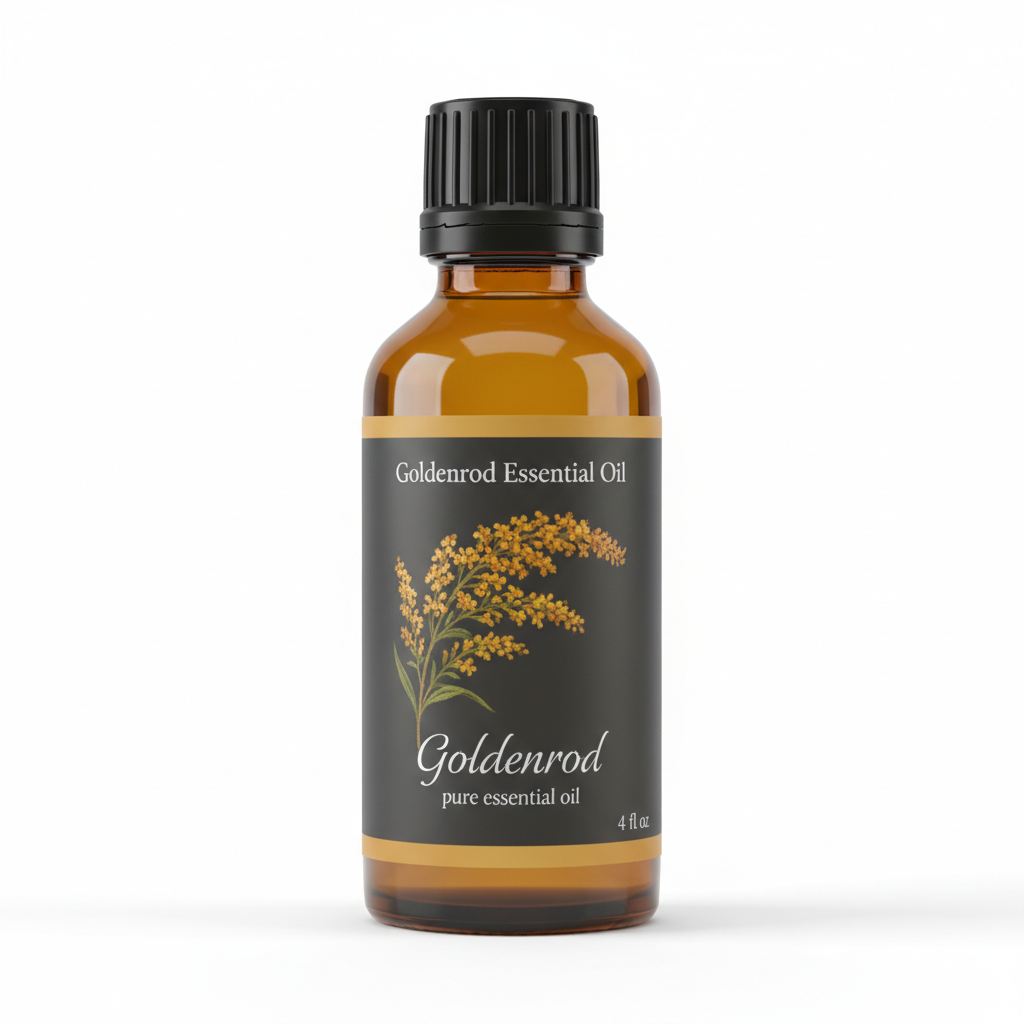
Goldenrod Essential Oil
Our own Goldenrod Essential Oil, in sizes from 0.5 oz to bulk.
From $17.99
Shop Now →What each oil brings
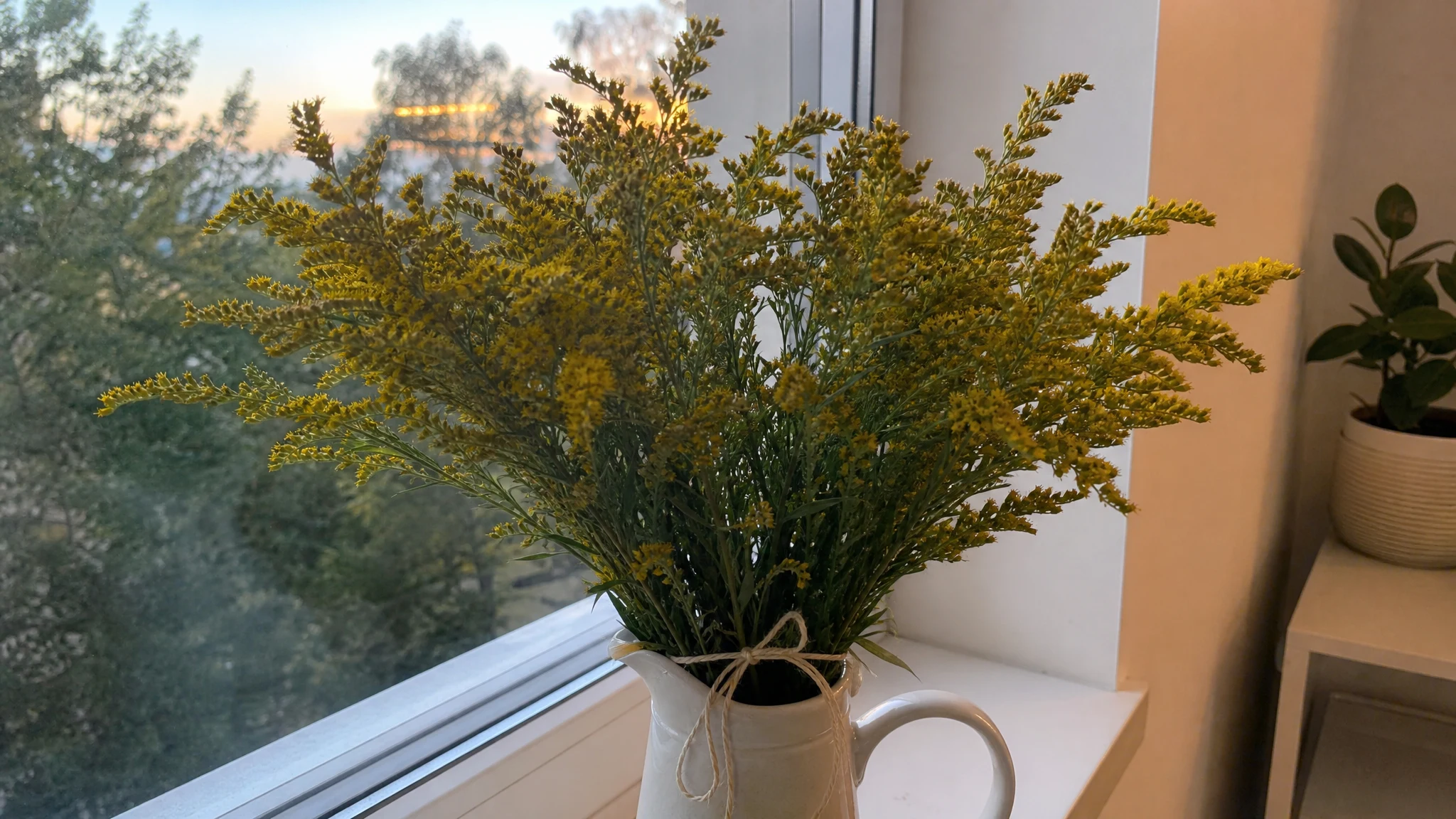
We describe our goldenrod as honeyed, grassy and floral over a faintly balsamic, hay-like base, and it is a middle note. Frankincense serrata, from Boswellia serrata, is the resin side of the pairing, and we do not sell it, so you will find it at a supplier of essential oils.
One thing worth knowing is that "serrata" on a label is less specific than it sounds. A 2026 PLoS One study of hydrodistilled serrata gum resin found octyl acetate as the leading compound at 41.09%, with nerolidol at 13.64%. A 2023 Natural Product Research study of serrata extracted with superheated steam found alpha-pinene as the major compound instead. Two published serrata oils, two quite different profiles, and the differences may come from the resin, the distillation method or the supplier. So smell your bottle before you commit to a ratio.
Smell them side by side first
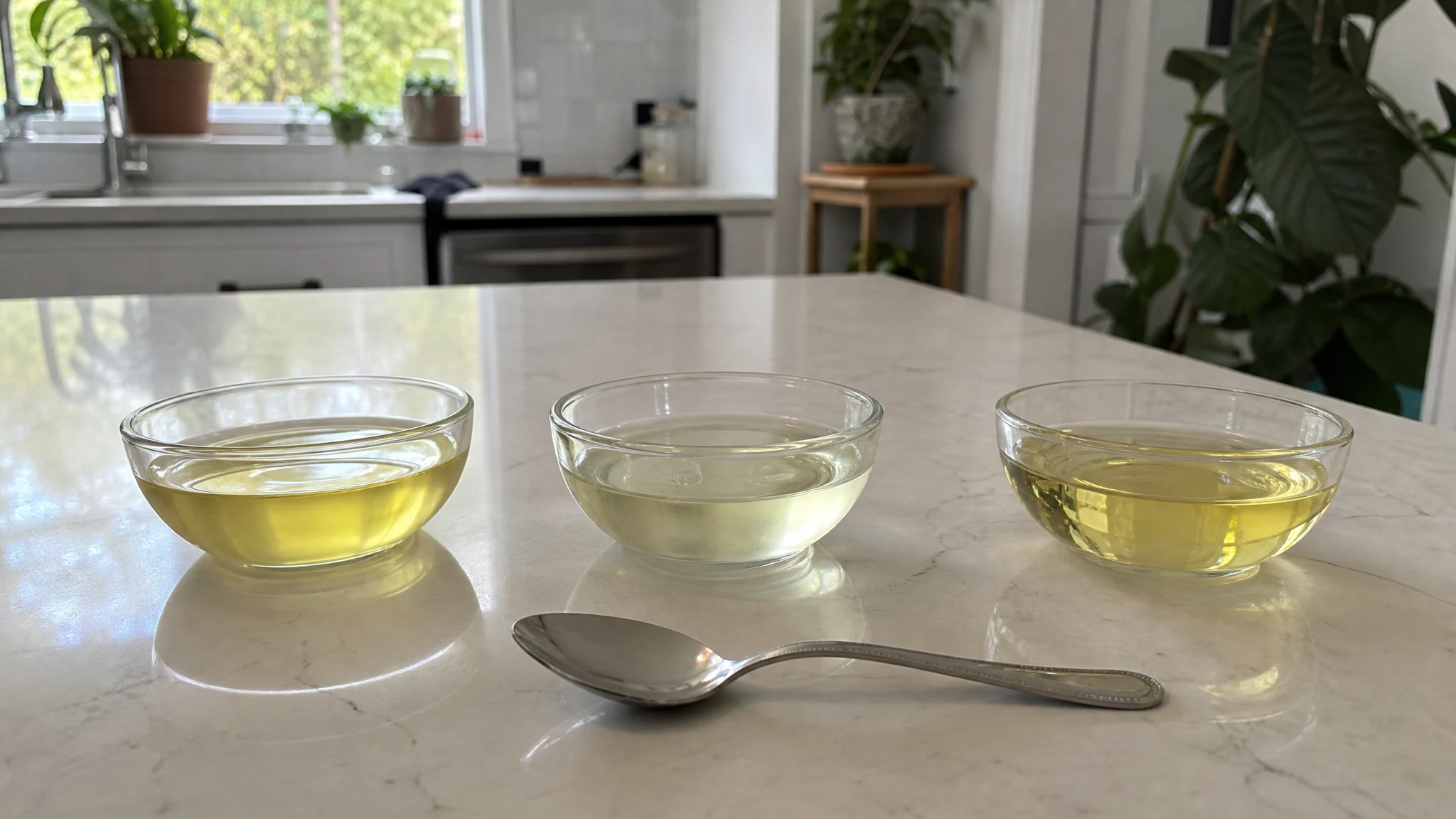
Before you drop anything into a diffuser, put a drop of each on its own paper blotter or a clean strip of card, and hold them together a few centimeters from your nose. Wave them gently. Goldenrod will come across honeyed and grassy. The resin will feel drier, a little smoky and cool. If the two seem to share a thread, a ratio will probably come easily. If they seem like strangers, plan on a lighter hand with whichever one is louder.
Why they might get along
The one detailed analysis of Solidago canadensis oil we know of, a Slovak laboratory study, found germacrene D leading, then limonene and alpha-pinene. If your serrata is the alpha-pinene kind, both oils share a pinene thread and the blend will likely read as one continuous piney, grassy accord. If it is the octyl acetate kind, they have much less in common and the result is more like layering. Both are reasonable outcomes, and neither is a measurement, so trust your nose over these tables.
Three ratios to start from
Ratios are by drop count, and the total number of drops for your device comes from its manual.
| Pattern | Goldenrod | Frankincense serrata | Reach for it when |
|---|---|---|---|
| Goldenrod lead | 3 parts | 1 part | You want the hay and flower first, with a resinous finish |
| Even | 1 part | 1 part | Your serrata is gentle on the strip and you want both heard |
| Resin lead | 1 part | 2 parts | You love the frankincense and want goldenrod as a quiet accent |
Say your diffuser takes six drops. A 3 to 1 ratio is 4.5 and 1.5, which rounds to 5 and 1 or 4 and 2, and either is fine as long as you note which you picked. Change one thing at a time and write down both lot numbers.
Keep a small notebook
This is the part we enjoy most about home blending. A tiny notebook beside the diffuser turns guesswork into a record. Write the date, the ratio, the lot numbers, and one line on how it smelled after ten minutes and again after thirty. The next time you reach for a blend you'll know exactly what to repeat and what to change.
Scent also shifts with the room. A blend that seems rich in a small bedroom can seem thin in a big kitchen, so give each new blend a few sessions before you decide it is wrong.
Diffusing well
The Tisserand Institute suggests diffusing 30 to 60 minutes on and 30 to 60 minutes off, with some fresh air exchange, which also suits an evening blend nicely. It adds that people with asthma may find certain oils trigger an attack, so anyone with asthma or a lung condition should ask their physician before diffusing. Goldenrod belongs to the daisy family, and DermNet notes that people who react to one member often react to others, so our allergy article is worth a read first. If there are children or pets in the house, Poison Control advises keeping every oil bottle locked up out of sight and reach, and a veterinarian is the right person to ask about diffusing around animals; our pets article collects what sources say. Pregnant or nursing readers should ask their obstetric clinician. Our breathing article has more.
Setting the mood
This pairing suits a particular kind of evening: early dark, a lamp on, something simmering in the kitchen. Run it low and let it drift. Resin-and-hay blends are slow scents, so they do their best work in a room where nobody is rushing.
If you want the goldenrod to stay in the foreground, put it in first and add the frankincense a drop at a time. It is easier to deepen a blend than to lift one that has gone too heavy.
Before you buy the resin
Ask the frankincense seller for the species, the part distilled, the method and lot information, the same questions we would expect to answer for ours. The Certificate of Analysis we publish is for one batch and gives density, refractive index and optical rotation, and if you need a profile for your lot you can ask us in writing through our contact page. For the oils side by side, see goldenrod against frankincense, and for more partner ideas, our partner guide.
Start small, run it in short sessions, and let your nose decide the final ratio.
Goldenrod Essential Oil
Goldenrod Essential Oil from our own shop, in sizes from 0.5 oz to bulk.
From $17.99
Shop Now →Sources & Further Reading
- El-Nashar et al., 2026. PLoS One 21(5):e0348178. europepmc.org
- Ayub et al., 2023. Boswellia serrata oleo-gum-resin essential oil extracted by superheated steam. Nat Prod Res. europepmc.org
- Elshafie H.S. et al., 2019. Molecules 24(7):1206. pmc.ncbi.nlm.nih.gov
- Tisserand Institute. Safety guidelines. tisserandinstitute.org
- DermNet. Compositae allergy. www.dermnetnz.org
- Poison Control. Essential oils. www.poison.org