How to Tell If Goldenrod Oil Has Gone Off
Goldenrod oil does not spoil the way milk does. There is no sour morning, no sudden turn. What happens instead is slow and quiet: the oil meets oxygen, and over months and years the honeyed, hay-like sweetness we love in it starts to lose its brightness. Knowing what that looks and smells like is the whole skill.
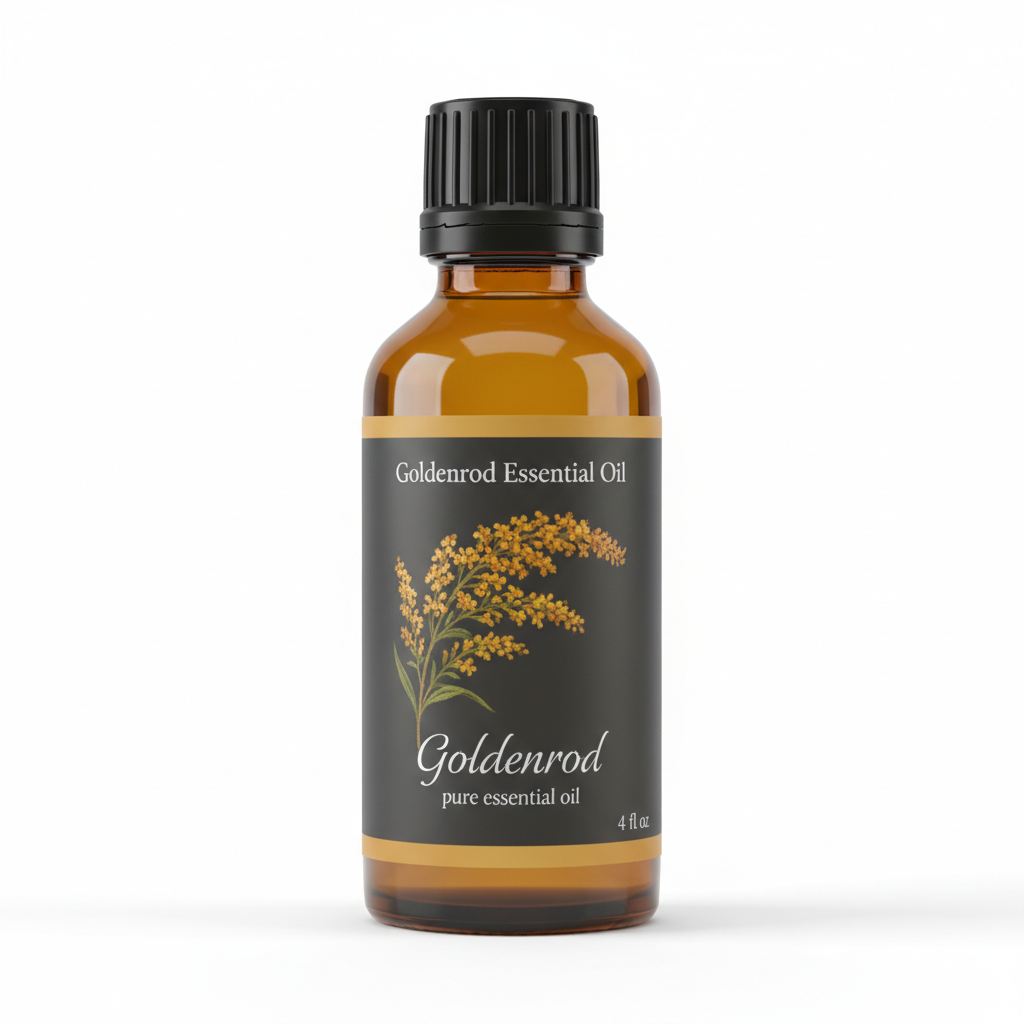
Goldenrod Essential Oil
Our own Goldenrod Essential Oil, in sizes from 0.5 oz to bulk.
From $17.99
Shop Now →What is actually happening in the bottle
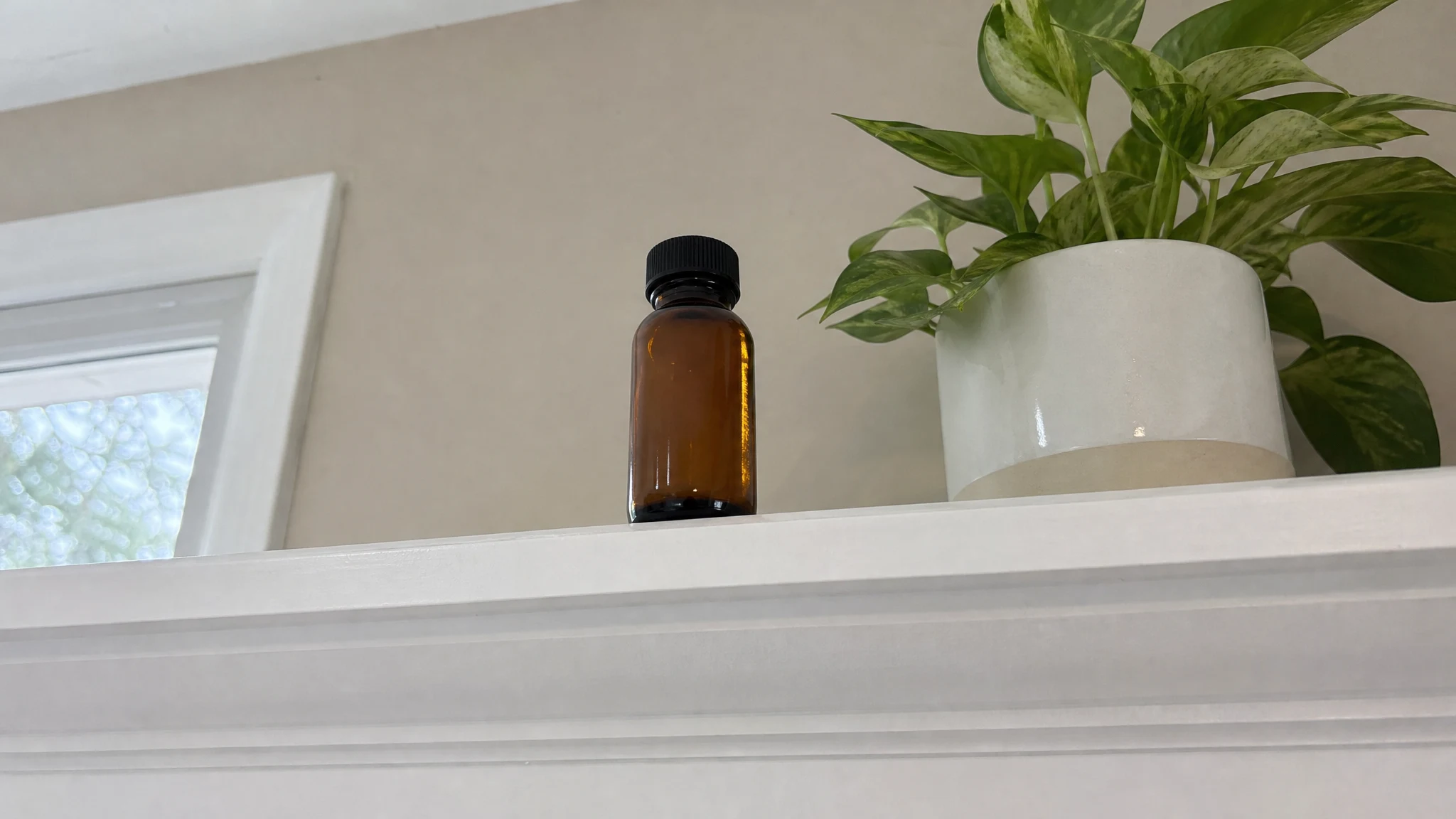
Essential oils are mixtures of terpenes, small aroma molecules that react with oxygen. The Tisserand Institute, which publishes safety guidance for essential oils, says oxidation is encouraged by three things: heat, light and moisture, and that the more air there is in a bottle, the faster an oil will oxidize. That is why we sell goldenrod oil in amber glass, and why a bottle that has been three-quarters emptied ages faster than a full one. More headspace means more oxygen sitting on the oil.
Goldenrod oil is rich in exactly the kind of molecules that are open to this. A 2025 analysis of Solidago canadensis oil from flowers found alpha-pinene at about 18% and limonene at about 13%, among dozens of other compounds. Those figures come from one plant sample in China and will not match any particular bottle, but they show that monoterpenes are a big part of the story in this species. That is our reasoning, not a prediction about your bottle: terpene-rich oils change with age, so the habits matter.
The signs, from first to last
Your nose notices first. The Tisserand Institute describes oxidized oils as losing some brightness or freshness. For goldenrod, think of the opening: we describe the aroma as honeyed, grassy and floral, settling into a faintly balsamic, hay-like base. An aged bottle may smell flatter, sharper or less floral than you remember, with the sweetness thinning out first.
Other changes are less common and usually take a long time:
- Thickening. Very old oils can turn viscous, but this usually takes years.
- Cloudiness. The Tisserand page links cloudiness (mostly seen in citrus oils) to moisture entering the bottle. If goldenrod oil turns hazy, something has gotten in.
- Colour drift. The Certificate of Analysis we publish gives the expected appearance as a colorless to pale yellow liquid. A distinctly deeper shade than you remember is worth noticing.
Treat these as a set. One sign on its own, such as a slightly softer scent after a year, is normal ageing. Several together suggest it is time to stop putting the oil on skin and keep it for something else.
Why it matters for skin
This is the part worth taking seriously. The Tisserand Institute notes that oxidation products are slightly toxic and can raise the risk of adverse skin reactions. Research points the same way: a study of 1,511 dermatitis patients at six European centres found that about 1.3% reacted to oxidized linalool and about 0.5% to oxidized caryophyllene. Those were referred patients being tested for allergy, and goldenrod oil was not part of it, so read it as a reason for good habits and not as a forecast. It does explain why we recommend diluting to 0.5% to 2% in a carrier oil and patch testing first, as our skin dilution article walks through, and why an old bottle is better kept for the diffuser than for your arm.
How long a bottle lasts
We describe a typical shelf life of two to three years when the oil is kept in a cool, dark place away from heat and sunlight. The Tisserand Institute is more conservative for essential oils in general: most keep well for at least one to two years. It also says refrigeration will about double an oil's useful life. Our advice is to plan around the shorter figure and treat the longer one as what careful storage can reach.
Two habits do most of the work. Write the date you opened the bottle on a piece of tape (the Tisserand Institute recommends noting the purchase or opening date), and pick a size you will actually finish. Our first-bottle article helps with that, and how to store goldenrod oil covers the cupboard, the cap and decanting in more detail.
What to do with an older bottle
If it still smells like itself, use it as usual. If the scent has gone flat and you are unsure, keep it for the diffuser or a simple room spray, where there is no skin contact, and buy a fresh bottle for anything you put on your body. If it smells properly off or has thickened, retire it, and keep it capped and out of reach of children and pets until it goes; our children and pets articles cover the basics. For a large quantity, your local household hazardous waste service can tell you how to dispose of it.
Goldenrod is a late-summer plant, so it suits an oil you enjoy while it is bright and finish by the following autumn.
Goldenrod Essential Oil
Goldenrod Essential Oil from our own shop, in sizes from 0.5 oz to bulk.
From $17.99
Shop Now →Sources & Further Reading
- Tisserand Institute, "Is my bottle of essential oil oxidized or no longer good to use?"
- Matura M, et al. "Selected oxidized fragrance terpenes are common contact allergens." Contact Dermatitis 2005;52(6):320-328.
- Yang et al. "Multivariate Statistical Analysis of Solidago canadensis L. Essential Oil and Its Antifungal Mechanism Against Mulberry Sclerotinia Diseases." Int J Mol Sci 2026;27(1):49.