Germacrene D in Essential Oils: Why Numbers Differ
Search for oils rich in germacrene D and you will find tidy lists with one neat percentage beside each name. The research is messier, and a lot more interesting. Within goldenrod alone, the same compound has been reported at 3.3% to 4.0% in one oil and 34.9% in another. That spread is the real story, and it tells you how to read any composition number you meet.
Goldenrod Essential Oil
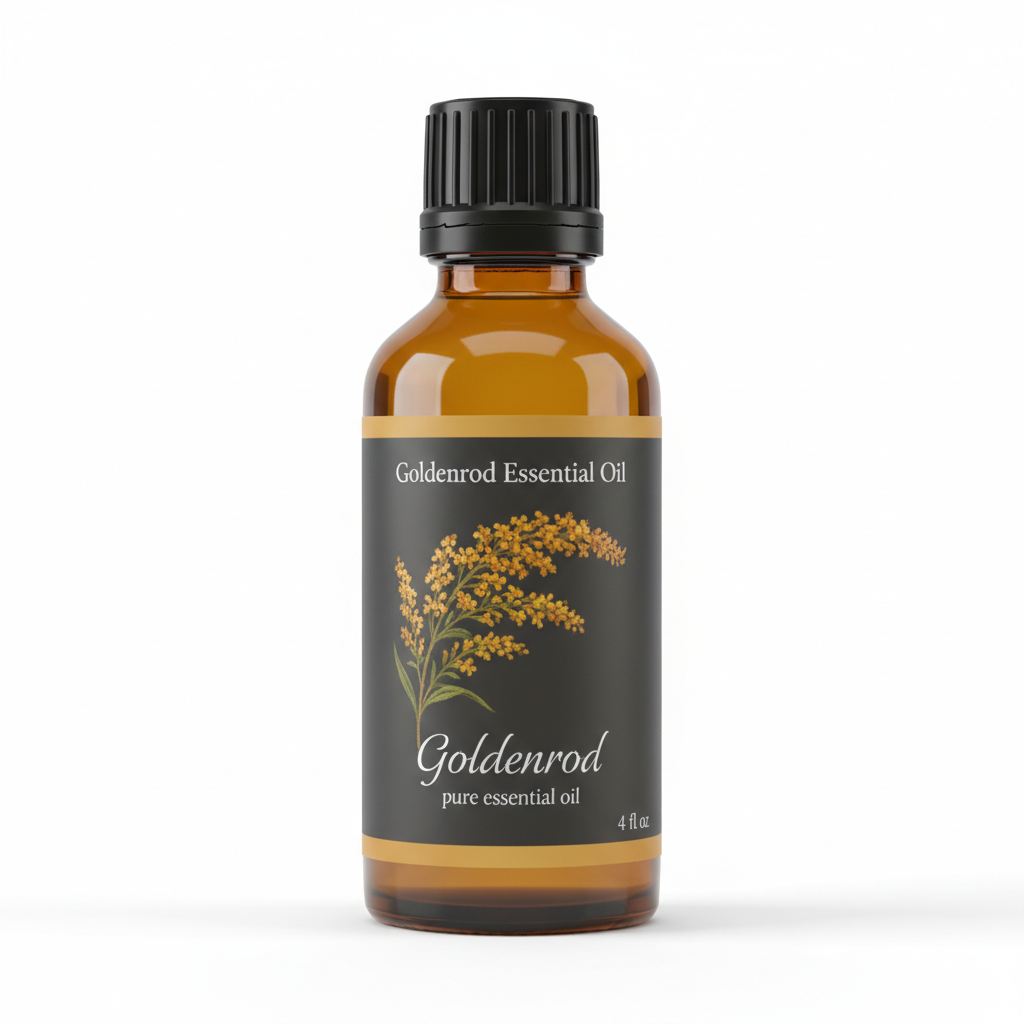
Our own Goldenrod Essential Oil, in sizes from 0.5 oz to bulk.
From $17.99
Shop Now →Three oils, three very different numbers
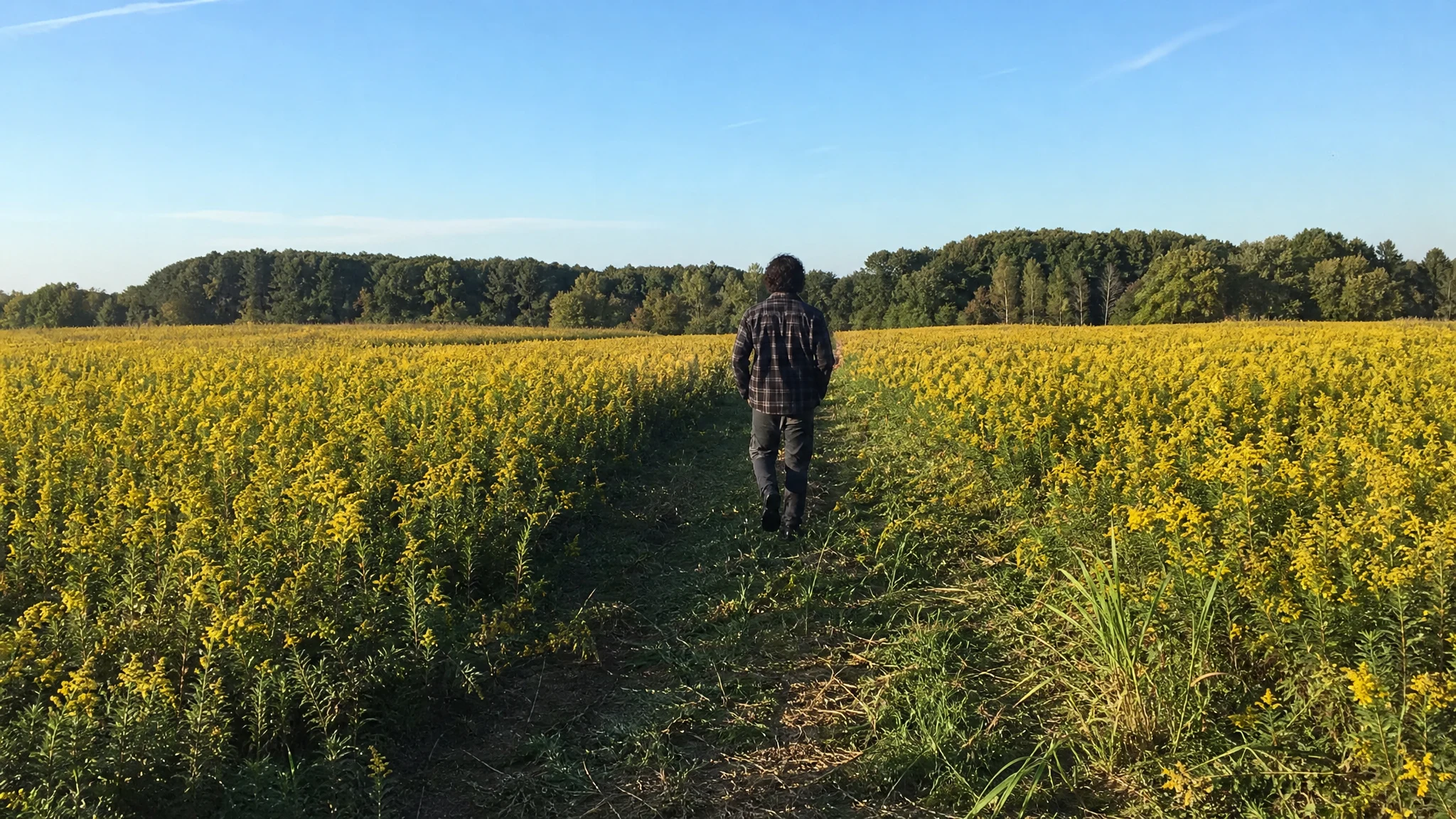
Start with Solidago canadensis. A Slovak team hydrodistilled dried aerial parts of wild plants at full bloom in August 2016 and found germacrene D at 34.9% of an oil made up of 32 identified components (Elshafie and colleagues). They also note a literature range of 19.8% to 39.2% across earlier studies, with origins and plant parts mixed.
Giant goldenrod, S. gigantea, tells another story. Hungarian researchers distilled inflorescences cut at peak flowering from three wild sites, and germacrene D came in at just 3.27% to 3.98%, while cyclocolorenone and alpha-pinene led (Filep and colleagues). Two relatives in the same genus, roughly a ten-fold difference in one compound.
Outside goldenrod, kenanga (Cananga odorata) steam-distilled from fresh flowers had germacrene D at 17.23%, though caryophyllene at 36.44% was its largest peak (Pujiarti). And in five Bursera trees, leaf volatiles carried 15.1% to 56.2% (Noge and Becerra). The compound is clearly widespread in plants. What it never is, is a fixed trait of a plant name.
Why numbers rarely line up
Four things sit between any two rows in a table like this, and they explain most of the spread.
- The part of the plant. Flower heads, leaves and whole aerial parts give different oils, and in goldenrod leaves often carry more germacrene D.
- The method. A distilled oil, a solvent extract and a headspace sample are different chemical mixtures, so they should not share a column.
- Season, site and genetics. The Slovak authors state that composition depends on ecological and climatic conditions, growth stage, harvest and isolation methods.
- How the number is made. Both goldenrod papers report area percentages, a standard convention in which each peak is expressed as a share of the total.
So a three-point gap between two oils is hardly worth discussing, while a gap like 3% against 35% reflects real differences in the oils.
A percentage is a share, not an amount
A percentage tells you how the oil is divided, and nothing about how much oil a plant gives. The Slovak lot yielded 0.27% oil by dry weight, so 100 g of dried herb gave about 0.27 g of oil, and at 34.9% germacrene D that is roughly 0.094 g of the compound in total. Take a neutral example: if an oil were 20% germacrene D, a gram of it holds 0.20 g, and if it were 39%, the same gram holds 0.39 g. Same weight of oil, nearly double the compound. We did not find a source tying germacrene D percentage to aroma quality, so we would not use the number to predict how an oil smells.
How we would use a table like this
We read a composition table the way you might read a map of a city you have never visited: it tells you roughly what is there, not what it feels like to stand in the street. The numbers are a good reason to ask a seller better questions. They are a poor reason to expect a particular smell.
So we suggest a simple habit: read the table, then open the bottle. Smell the oil on a paper strip at the start, after ten minutes and the next day, and write down your own words. Honey, hay and green grass will tell you more about whether the oil suits your project than any single percentage. There is also a quiet pleasure in knowing that two bottles with the same name can differ a little, the way two jars of honey from different summers do.
It is easy to feel that a bigger number means a better oil, and nothing we have read supports that. A high figure for one compound is a description, not a score. If a seller tries to sell you on a single percentage, ask what the number is for, and what you are supposed to do with it.
Where that leaves our oil
The Certificate of Analysis we publish for one earlier batch (GLRQGUSCCAC002A, best by 01/31/2026) records physical constants: a relative density of 0.880 against a range of 0.860 to 0.885, a refractive index of 1.487 against 1.480 to 1.490, and an optical rotation of -8.16 degrees against -25 to -5. Those show a sample sits inside an accepted window for Solidago canadensis oil. They do not break the oil into compounds. If a constituent profile matters for your work, ask us in writing through the contact page, and ask for the report itself, with the method, column and date stated, not a summary of it.
It also helps to bring the same questions to any seller's page: which species, which plant part, distilled or extracted, which year, which laboratory, and whether the figures are calibrated or area percentages. Our guides to vetting a seller and reading a label follow that thread, the compounds behind the scent goes deeper on chemistry, and the species guide sorts out the goldenrods.
Germacrene D is a real and frequent part of goldenrod oil, but its share belongs to the lot and not to the plant name. If someone gives you a single figure for "goldenrod oil", the right follow-up is: which lot?
Goldenrod Essential Oil
Goldenrod Essential Oil from our own shop, in sizes from 0.5 oz to bulk.
From $17.99
Shop Now →Sources & Further Reading
- Elshafie et al., 2019. Antimicrobial Activity and Chemical Composition of Essential Oil Extracted from Solidago canadensis L. Growing Wild in Slovakia. Molecules
- Filep et al., 2026. Geographical variation in the chemical profile and antimicrobial activity of Solidago gigantea essential oils. Front Microbiol
- Pujiarti et al. Kualitas, Komposisi Kimia, dan Aktivitas Anti Oksidan Minyak Kenanga (Cananga odorata). Jurnal Ilmu Kehutanan
- Noge and Becerra, 2009. Germacrene D, a common sesquiterpene in the genus Bursera (Burseraceae). Molecules